




How Do I Develop an App for Small Business? Complete Guide
Learn how to develop an app for small business with step-by-step guidance, cost insights, technology choices, and expert development strategies.
How Do I Develop an App for Small Business?
If you’re a business owner wondering, how do I develop an app for small business?, you’re not alone. Mobile apps are no longer limited to large enterprises. Today, small businesses use mobile applications to improve customer engagement, streamline operations, increase sales, and strengthen brand loyalty.
Whether you run a retail store, restaurant, healthcare clinic, logistics company, or service-based business, a well-designed mobile app can provide direct communication with customers, enable online bookings, simplify payments, and automate workflows.
However, developing an app requires planning, budgeting, choosing the right platform, and selecting the proper development approach. Small businesses must focus on scalability, affordability, and user experience to ensure long-term success.
This complete guide explains the process, cost, technology stack, features, and best practices for developing a mobile app tailored to small business growth.
Why This Service Is Important
Developing an app for your small business helps you:
Increase customer engagement
Improve brand visibility
Offer seamless digital services
Enable mobile payments and bookings
Improve operational efficiency
Collect valuable customer data
Gain competitive advantage
A mobile app strengthens your digital presence and builds direct relationships with customers.
Types of App Development Solutions for Small Businesses
Depending on your goals to develop an app for small business can be:
Customer-Facing Apps
E-commerce apps
Booking & appointment apps
Loyalty and rewards apps
Internal Business Apps
Employee management tools
Inventory tracking apps
CRM & workflow apps
On-Demand Service Apps
Delivery apps
Home services apps
Marketplace apps
Progressive Web Apps (PWA)
Budget-friendly web-based apps
Faster deployment
Cross-device compatibility
Choosing the right solution depends on your target audience and business model.
Key Features of a Small Business Mobile App
Successfully to develop an app for small business should include:
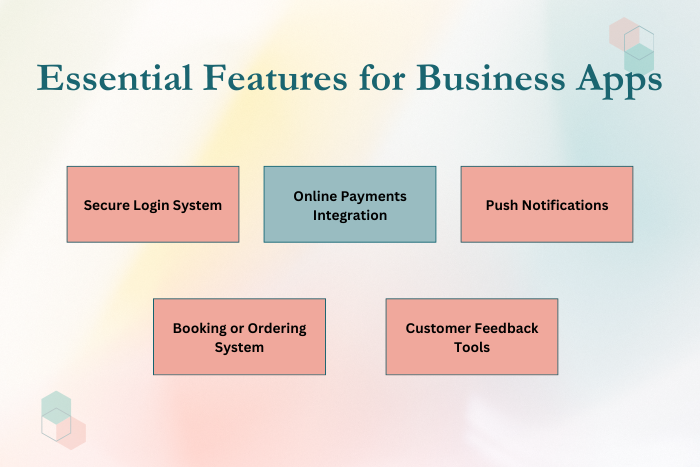
User registration & login
Secure payment gateway integration
Push notifications
In-app chat or support
Booking or ordering system
Analytics dashboard
Customer feedback system
Social media integration
Features should align with your business goals and customer needs.
Development Process
Developing an app for small business typically involves:
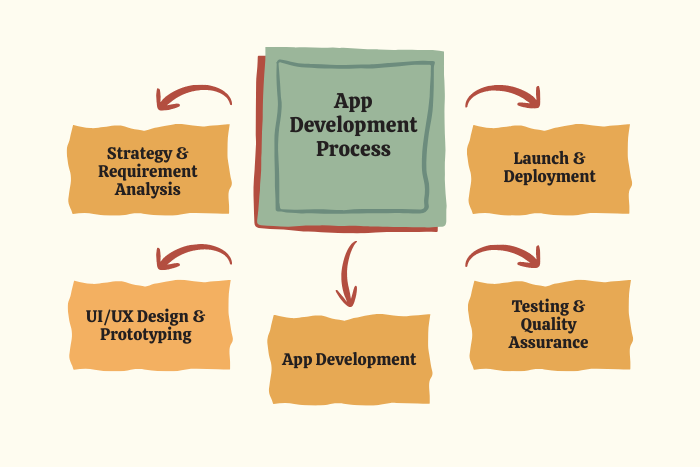
Business Analysis & Goal Definition
Identify target audience and define app objectives.Market Research & Competitor Study
Understand industry trends and customer expectations.UI/UX Design & Prototyping
Create user-friendly and intuitive interfaces.App Development
Frontend and backend coding using agile methodology.Testing & Quality Assurance
Functional, usability, and security testing.Launch & App Store Submission
Deploy on Google Play and Apple App Store.Maintenance & Updates
Continuous improvements and feature upgrades.
A structured approach ensures better ROI and smoother execution.
Technology Stack
A modern tech stack to develop an app for small business typically includes:
Front-End Technologies:
Kotlin (Android), Swift (iOS), Flutter (Cross-platform), React Native (Cross-platform), HTML5, CSS3, JavaScriptBack-End Technologies:
Node.js, Python, PHP, Java, .NETDatabase Solutions:
MySQL, PostgreSQL, MongoDB, FirebaseCloud Platforms:
AWS, Google Cloud, Microsoft AzurePayment Integrations:
Stripe, Razorpay, PayPal
This stack ensures scalability, security, and performance.
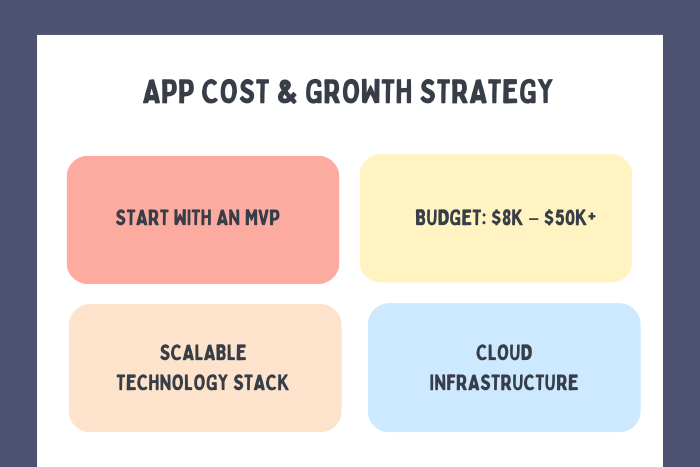
Cost Factors
The cost to develop an app for small business depends on:
App complexity
Platform choice (Android, iOS, cross-platform)
Custom design requirements
Third-party integrations
Backend infrastructure
Ongoing maintenance
Typical cost range:
Basic app: $8,000 – $20,000
Mid-level app: $20,000 – $50,000
Advanced app: $50,000+
Small businesses often start with an MVP (Minimum Viable Product) to reduce initial investment.
Latest Trends in Small Business App Development
Modern small business apps include:
AI-powered chatbots
Cloud-based infrastructure
Contactless payment systems
Subscription models
In-app marketing automation
Data-driven personalization
Cross-platform frameworks
Adopting modern trends helps small businesses stay competitive.
Why Choose Us to Develop Your Small Business App?
If you’re asking, how do I develop an app for small business successfully?, choosing the right partner is critical.
We provide:
Affordable development packages
Custom solutions for small businesses
Transparent pricing
Agile development methodology
Secure coding standards
Post-launch support
We help small businesses turn ideas into scalable digital products.
Ready to build your small business app?
Let’s create a solution tailored to your growth goals.
Contact us today for a free consultation and cost estimate.
Key Points :
- Developing an app for small business improves customer engagement and brand visibility.
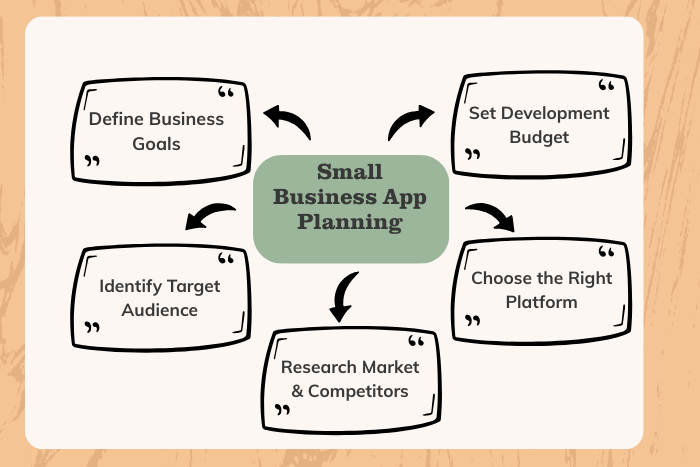
- Start with clear business goals and target audience research before development.
- Choosing between Android, iOS, or cross-platform depends on your market.
- An MVP approach helps small businesses reduce initial development costs.
- Essential features include secure login, payments, push notifications, and analytics.
- App development costs for small businesses typically range from $8,000 to $50,000+.
- Regular maintenance and updates are crucial for performance and security.
FAQ's
It typically takes 2–6 months depending on features and complexity.
Costs usually range from $8,000 to $50,000+.
It depends on your target audience and market research.
Yes, starting with an MVP reduces initial investment.
Yes, apps improve customer engagement and brand loyalty.
Secure login, payments, notifications, and analytics are key.
Yes, apps can be continuously improved post-launch.
Yes, regular updates ensure performance and security.