


How Do I Maintain and Update an App? Complete Guide
Learn how to maintain and update an app with best practices for bug fixes, security, performance optimization, and long-term scalability.
How Do I Maintain and Update an App?
Launching your mobile application is only the beginning. Many business owners ask, how do I maintain and update an app? because long-term success depends not just on development—but continuous improvement.
Mobile apps require regular updates to remain compatible with new operating systems, secure against cyber threats, optimized for performance, and aligned with user expectations. Without ongoing maintenance, even a well-built app can suffer from bugs, crashes, declining ratings, and reduced user retention.
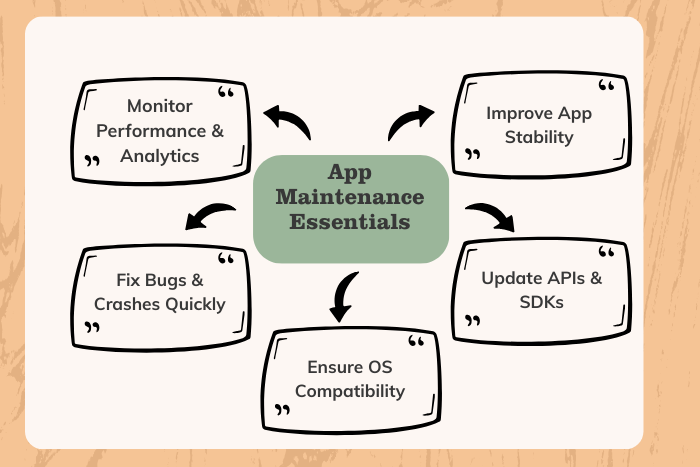
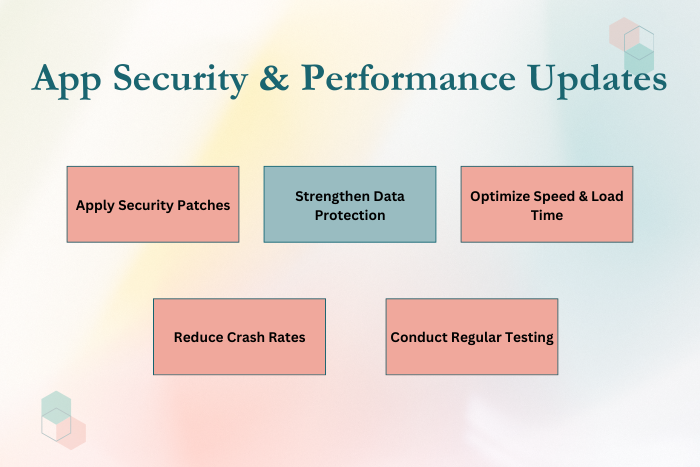
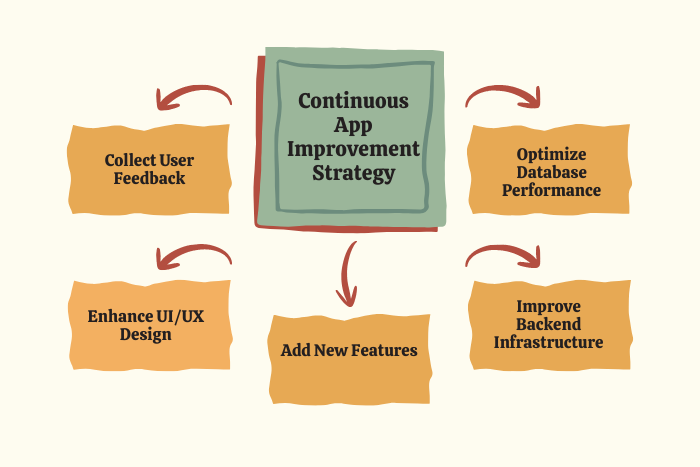
App maintenance involves monitoring performance, fixing issues, enhancing UI/UX, improving backend infrastructure, and adding new features. Updates ensure compatibility with the latest Android and iOS versions, strengthen data security, and improve user engagement.
This guide explains the complete process of app maintenance and updates, including strategies, costs, technologies, and best practices to keep your mobile application scalable, secure, and competitive.
Why This Service Is Important
App maintenance and updates are essential for:
Ensuring OS compatibility
Fixing bugs and performance issues
Enhancing security
Improving user experience
Adapting to market trends
Increasing retention and engagement
Protecting your brand reputation
Apps that are not updated regularly risk losing users and store rankings. Continuous maintenance ensures business continuity and long-term ROI.
Types of Solutions to Maintain and Update an App
Mobile app maintenance typically includes:
Corrective Maintenance
Bug fixes
Crash resolution
Error correction
Adaptive Maintenance
OS updates compatibility
Device compatibility updates
Third-party API updates
Perfective Maintenance
UI/UX improvements
Feature enhancements
Performance optimization
Preventive Maintenance
Code refactoring
Security audits
Infrastructure upgrades
Each type ensures stability and long-term scalability.
Key Features Required to Maintain and Update an App
Effective app maintenance services include:
Real-time performance monitoring
Crash analytics tracking
Security patch management
Regular version updates
API and SDK upgrades
Cloud infrastructure optimization
Database maintenance
User feedback integration
These features help improve app ratings and customer satisfaction.
Development Process for Maintaining and Updating an App
A structured maintenance process includes:
Performance Monitoring & Analytics Review
Analyze user behavior, crash logs, and engagement metrics.Bug Identification & Resolution
Prioritize critical issues and implement fixes.Compatibility Testing
Test against new OS versions and device updates.Security Enhancement
Apply patches and strengthen encryption protocols.Feature Improvements
Add new functionalities based on user feedback.Deployment & App Store Submission
Release updated versions to app stores.Post-Update Monitoring
Track performance after each release.
This lifecycle ensures continuous improvement.
Technology Stack
A modern app maintenance tech stack includes:
Front-End Technologies:
Kotlin, Java, Swift, Flutter, React NativeBack-End Technologies:
Node.js, Python, Java, .NETDatabase Solutions:
MySQL, PostgreSQL, MongoDB, FirebaseMonitoring & Analytics Tools:
Firebase Analytics, Crashlytics, Google AnalyticsCloud Platforms:
AWS, Google Cloud, Microsoft AzureSecurity Technologies:
SSL Encryption, OAuth 2.0, Secure APIs
These tools help maintain stability, performance, and security.
Cost Factors to Maintain and Update an App
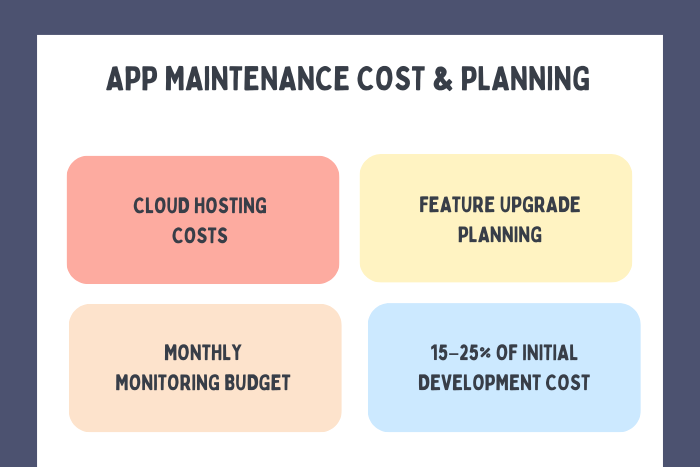
App maintenance typically costs 15–25% of the original development cost annually.
Cost depends on:
App complexity
Platform (Android, iOS, cross-platform)
Frequency of updates
Backend infrastructure
Security requirements
Feature upgrades
Typical monthly maintenance costs:
Small app: $500–$1,500
Medium app: $1,500–$4,000
Enterprise app: $5,000+
Regular updates prevent costly overhauls in the future.
Latest Trends in App Maintenance
Modern app update strategies include:
Continuous integration & deployment (CI/CD)
Automated testing pipelines
Cloud-native infrastructure
AI-driven analytics
Predictive performance monitoring
In-app update mechanisms
Zero-downtime deployments
Adopting these practices ensures faster and safer releases.
Why Choose Us for App Maintenance and Updates?
If you’re wondering, how do I maintain and update an app effectively?, partnering with the right team makes all the difference.
We offer:
Dedicated maintenance team
Proactive monitoring
Agile release cycles
Security-first approach
Transparent pricing
Long-term scalability support
We ensure your app remains high-performing, secure, and competitive in the market.
Need expert app maintenance support?
Let’s keep your app optimized and future-ready.
Contact us today for a free maintenance consultation.
Key Points :
- Regular app maintenance ensures compatibility with the latest Android and iOS updates.
- Bug fixes and performance optimization improve user retention and app ratings.
- Security patches and data protection updates prevent cyber threats.
- App maintenance typically costs 15–25% of the original development cost annually.
- Monitoring analytics helps identify crashes and user behavior patterns.
- UI/UX improvements enhance engagement and customer satisfaction.
- Continuous updates help maintain competitive advantage in app stores.
FAQ's
Most apps require updates every 4–8 weeks, depending on user feedback and OS changes.
You risk compatibility issues, security vulnerabilities, and declining user engagement.
Maintenance costs are typically 15–25% of the initial development cost annually.
Yes, platform-specific updates may require individual attention.
Maintenance focuses on stability; updates may include new features and enhancements.
Yes, regular updates and performance improvements positively impact rankings.
Absolutely—maintenance ensures user retention and sustainable growth.