


How to Find a Mobile App Developer in 2026
Discover how to find a mobile app developer with expert hiring tips, evaluation checklist, cost insights, and step-by-step guidance.
How to Find a Mobile App Developer?
If you’re asking how to find a mobile app developer, you’re already taking the first step toward building a successful digital product. Whether you’re a startup founder, enterprise decision-maker, or business owner exploring mobile expansion, choosing the right developer directly impacts your app’s performance, scalability, security, and long-term profitability.
With thousands of freelancers, development agencies, and offshore teams available globally, finding the right talent can feel overwhelming. Beyond technical coding skills, a reliable mobile app developer should understand UI/UX principles, backend architecture, API integrations, cloud deployment, security best practices, and app store compliance.
This comprehensive guide explains how to hire a mobile app developer strategically — minimizing risk, optimizing costs, and ensuring your application is built for growth. If you want a scalable, high-performance mobile solution, the following insights will help you make the right hiring decision.
Why Finding the Right Mobile App Developer Is Important
Mobile apps are no longer optional — they are business-critical digital assets. A poorly developed application can result in:
Slow performance and crashes
Security vulnerabilities
Poor user experience
App store rejection
High maintenance costs
Scalability limitations
On the other hand, the right mobile app developer ensures:
Clean, scalable code architecture
Optimized performance across devices
Secure integrations and data protection
Seamless UI/UX implementation
Faster time-to-market
Long-term maintainability
Understanding how to properly evaluate and hire mobile app developers protects your investment and increases your product’s success rate.
Types of Solutions for Hiring a Mobile App Developer
When exploring how to find a mobile app developer, you’ll typically choose from the following options:
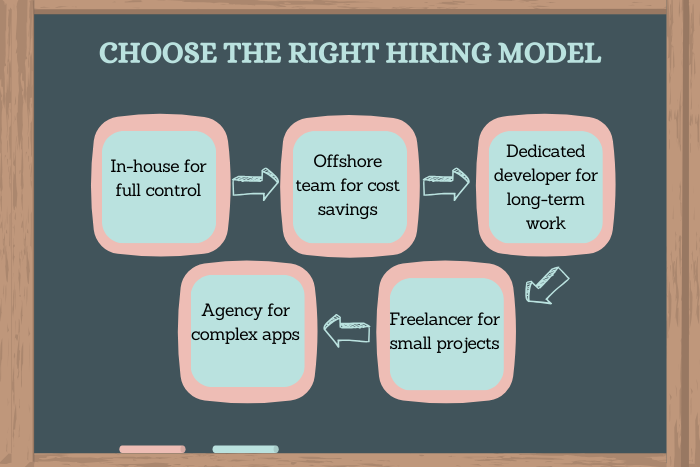
Freelance Mobile App Developers
Ideal for small projects, MVPs, or short-term feature development. Cost-effective but may require strong internal management.Dedicated Remote Developers
Full-time professionals working exclusively on your project. Suitable for startups and growing businesses needing ongoing support.Mobile App Development Agencies
Best for complex apps requiring designers, backend engineers, QA testers, and project managers under one structured workflow.In-House Development Teams
Provides long-term control and alignment but requires recruitment costs, salaries, and infrastructure investment.Offshore Development Companies
Cost-efficient access to global talent with scalable team models and established processes.
Selecting the right hiring model depends on your project size, timeline, security needs, and budget.
Key Features to Look for in a Mobile App Developer
When evaluating candidates, consider these critical features:
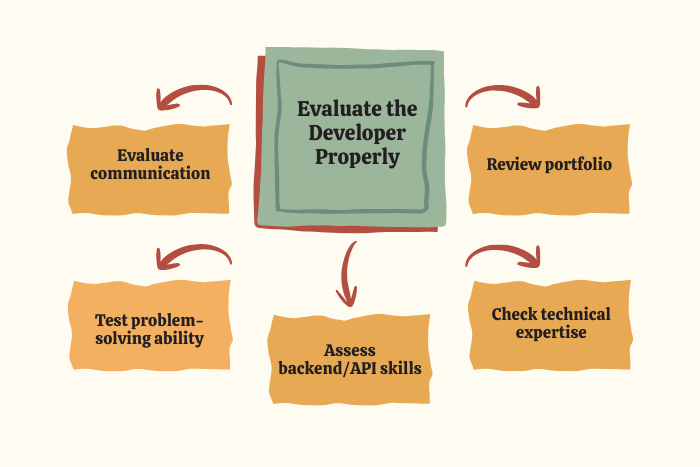
Expertise in iOS (Swift), Android (Kotlin), or cross-platform frameworks (Flutter, React Native)
Strong portfolio with live, published apps
Knowledge of UI/UX best practices
API development and third-party integrations
Backend and database architecture understanding
Cloud deployment experience (AWS, Azure, GCP)
Secure coding practices and data protection compliance
Performance optimization capabilities
App Store and Google Play submission experience
Clear communication and documentation skills
The best developers act as strategic partners — not just coders.
Development Process
To successfully find and work with a mobile app developer, follow this structured process:
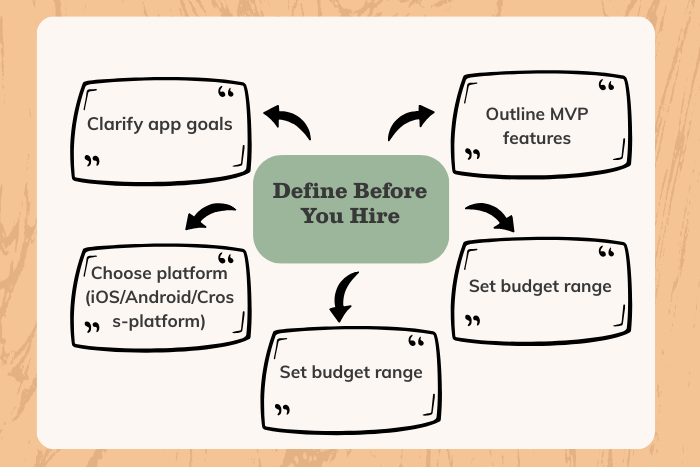
Define your business objectives and app requirements
Identify target users and core features
Choose the appropriate hiring model
Shortlist candidates based on experience and portfolio
Conduct technical interviews and skill assessments
Discuss architecture, scalability, and technology stack
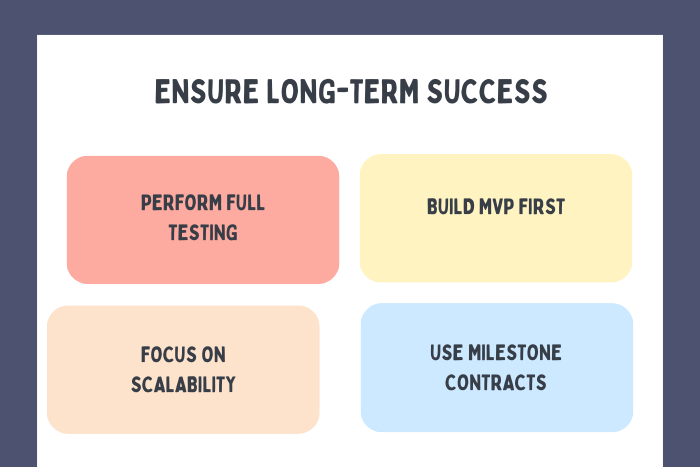
Sign NDA and finalize milestone-based contracts
Develop a Minimum Viable Product (MVP)
Perform thorough testing and quality assurance
Launch on app stores and gather user feedback
Plan ongoing maintenance and updates
A structured development approach reduces risks and ensures smoother collaboration.
Technology Stack
Understanding the technology stack helps you evaluate developer expertise effectively.
Mobile Development Technologies:
Swift, Kotlin, Flutter, React Native
Backend Technologies:
Node.js, Django, Laravel, Spring Boot
Databases:
Firebase, MongoDB, PostgreSQL, MySQL
Cloud Platforms:
AWS, Microsoft Azure, Google Cloud
APIs & Integrations:
RESTful APIs, GraphQL, payment gateways, social authentication
DevOps & Deployment:
CI/CD pipelines, Docker, containerized environments
A professional developer should recommend technologies based on scalability, security, and long-term growth , not just convenience.
Cost Factors
The cost of hiring a mobile app developer varies based on:
App complexity and number of features
Native vs cross-platform development
Platform selection (iOS, Android, or both)
UI/UX customization requirements
Backend infrastructure and API integrations
Security and compliance standards
Developer location and experience
Post-launch maintenance and support
A simple MVP typically requires a smaller investment, while enterprise-level applications with real-time features or AI integration demand higher budgets.
Flexible pricing models may include hourly rates, fixed-cost projects, or dedicated monthly retainers.
Latest Trends in Mobile App Development (2026)
Staying updated helps you hire future-ready developers:
AI-powered mobile applications
Cross-platform dominance using Flutter
Cloud-native and serverless backend systems
Advanced mobile app security frameworks
IoT and wearable integrations
Voice-enabled user interfaces
Low-code and rapid prototyping tools
Super app ecosystems
Developers aligned with these trends bring strategic long-term value.
Why Choose Us
Finding the right mobile app developer doesn’t have to be complicated. We simplify the process by combining technical expertise with structured hiring strategies.
Here’s what sets us apart:
Pre-vetted mobile app development experts
Experience across iOS, Android, Flutter, and React Native
Scalable architecture planning from day one
Security-first development practices
Agile and transparent workflows
Dedicated project management
Clear, milestone-based pricing
Long-term maintenance and optimization support
We don’t just help you understand how to find a mobile app developer — we help you hire the right one and build a scalable, secure, high-performance application.
Ready to hire the right mobile app developer?
Let’s discuss your project requirements today.
Contact us for a free consultation and expert guidance.
Key Points :
- Finding the right mobile app developer requires clear project requirements, defined goals, and a structured evaluation process.
- Choosing between freelancers, agencies, dedicated developers, or offshore teams depends on project complexity and budget.
- Reviewing portfolios, technical expertise, and published apps helps assess a developer’s real-world experience.
- Evaluating knowledge of iOS, Android, and cross-platform frameworks ensures the right technology fit.
- Understanding cost factors such as app features, platform choice, and backend requirements prevents budget overruns.
- Developers aligned with latest trends like AI integration, cloud-native architecture, and cross-platform tools add long-term value.
- Ongoing maintenance, security practices, and scalability planning are essential when hiring a mobile app developer.
FAQ's
Start by defining your requirements, reviewing portfolios, checking references, and conducting technical interviews before signing contracts.
Freelancers are ideal for smaller projects. Agencies are better suited for complex applications requiring multiple specialists.
Costs vary depending on project complexity, features, platform choice, and developer expertise.
An MVP can take 2–4 months, while a full-scale enterprise app may take 6–9 months or more.
Technical expertise, UI/UX understanding, API integration, security best practices, and communication skills are crucial.
Yes, it reduces development time and cost, but native development may offer better performance depending on your app needs.
Most professional developers offer ongoing maintenance, updates, and performance optimization services.
Use milestone-based payments, sign NDAs, define clear deliverables, and maintain consistent communication throughout development.