App Development Company for Healthcare
Build secure digital health solutions with an app development company for healthcare offering telemedicine, patient apps, and HIPAA-compliant platforms.
App Development Company for Healthcare
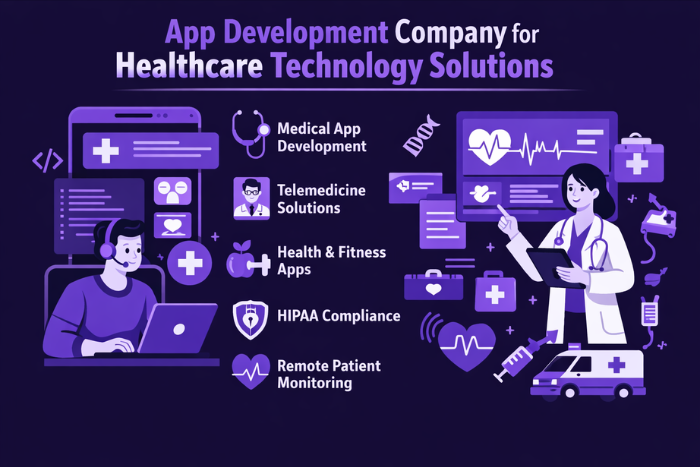
Healthcare technology has transformed how medical services are delivered, managed, and experienced by patients. From telemedicine platforms and remote patient monitoring systems to hospital management applications, digital healthcare solutions are rapidly becoming essential for modern healthcare providers. Partnering with a reliable app development company for healthcare enables hospitals, clinics, startups, and healthcare organizations to create secure, efficient, and scalable digital platforms.
Mobile and web applications help healthcare providers streamline workflows, improve patient engagement, and deliver better medical services. Patients can book appointments, access medical records, receive remote consultations, and monitor health conditions through mobile apps. Healthcare professionals can also manage patient data, collaborate with colleagues, and access real-time analytics to support medical decision-making.
However, healthcare applications require advanced security standards, compliance with regulations such as HIPAA and GDPR, and seamless integration with healthcare systems like Electronic Health Records (EHR) and medical devices. A professional healthcare app development partner ensures that applications meet these strict requirements while delivering exceptional user experiences.
By choosing a trusted app development company for healthcare, organizations can build innovative health technology solutions that improve patient outcomes, enhance operational efficiency, and support the future of digital healthcare.
Why Healthcare App Development is Important
Healthcare organizations are increasingly adopting digital technologies to enhance patient care and optimize medical operations. Mobile applications play a crucial role in enabling healthcare providers to offer accessible and efficient services.
One of the primary benefits of healthcare apps is improved patient engagement. Patients can easily access healthcare services, schedule appointments, track medical records, and communicate with doctors through mobile applications.
Another important advantage is enhanced operational efficiency. Healthcare applications streamline administrative tasks such as appointment scheduling, patient management, billing, and data reporting. This helps medical staff focus more on delivering quality care rather than handling manual processes.
Healthcare apps also support remote healthcare services. Telemedicine platforms allow doctors to conduct virtual consultations, monitor patients remotely, and provide medical guidance without requiring in-person visits.
Furthermore, mobile applications enable real-time health monitoring through wearable devices and connected health systems. This allows healthcare professionals to track patient health metrics and detect potential issues early.
By leveraging an experienced app development company for healthcare, organizations can build secure digital platforms that improve healthcare delivery and patient satisfaction.
Types of Healthcare App Development Solutions
Healthcare app development companies create various types of digital health solutions tailored to different medical needs and business models.
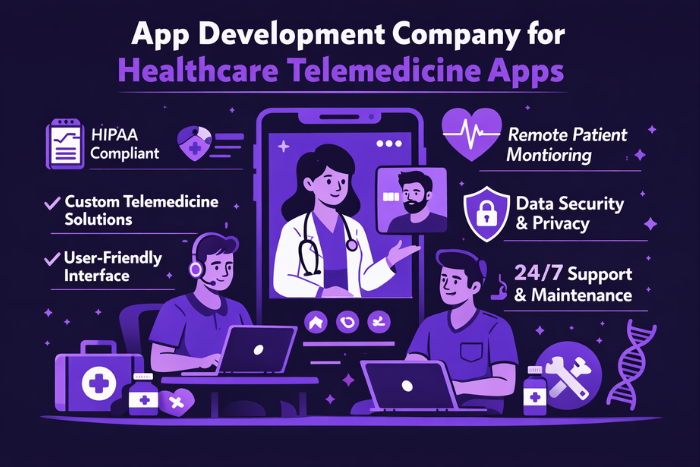
Telemedicine App Development
Applications that enable virtual consultations between patients and healthcare professionals through video calls, messaging, and remote diagnostics.Patient Engagement Apps
Mobile platforms that allow patients to access medical records, schedule appointments, receive reminders, and communicate with healthcare providers.Hospital Management Systems
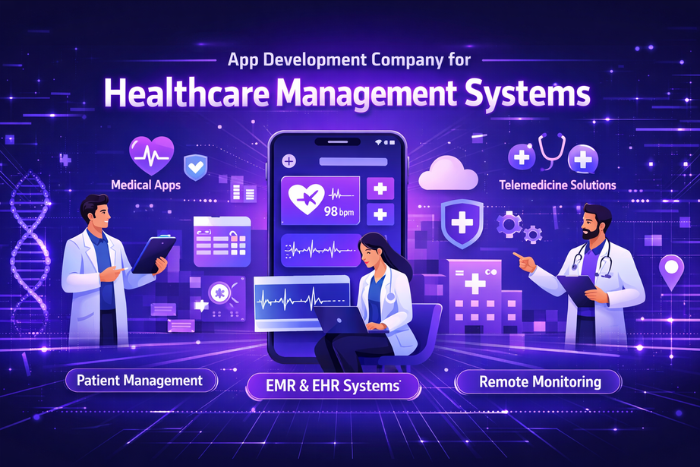
Applications designed to manage hospital operations including patient registration, billing, appointment scheduling, and staff management.Electronic Health Record (EHR) Applications
Systems that securely store and manage patient health data while enabling seamless information sharing between healthcare providers.Remote Patient Monitoring Apps
Applications connected to wearable devices that track patient health metrics such as heart rate, blood pressure, and glucose levels.Medical Billing and Practice Management Software
Applications that automate billing, insurance claims processing, and healthcare practice management tasks.Healthcare Marketplace Platforms
Platforms that connect patients with doctors, pharmacies, diagnostic labs, and healthcare service providers.Healthcare IoT Applications
Apps integrated with smart medical devices to monitor patient health in real time.
These solutions help healthcare providers improve efficiency while delivering better patient care.
Key Features of Healthcare Applications
Healthcare apps require advanced features that ensure security, usability, and seamless communication between patients and medical professionals.
Essential features include:
Secure user authentication and patient data protection
Appointment scheduling and reminders
Telemedicine and video consultation capabilities
Electronic health record (EHR) integration
Real-time patient monitoring and alerts
Prescription management and digital pharmacy integration
Health analytics and reporting dashboards
HIPAA and GDPR compliance for healthcare data security
These features ensure that healthcare applications deliver reliable, safe, and efficient digital health services.
Healthcare App Development Process
Developing a healthcare application requires a structured development process that ensures compliance, functionality, and security.
1. Requirement Analysis and Research
Developers analyze healthcare workflows, compliance requirements, and technical needs.
2. Product Strategy and Planning
The development team defines application architecture, system integrations, and user journey.
3. UI/UX Design
Designers create user-friendly interfaces that provide seamless experiences for patients and healthcare professionals.
4. Application Development
Developers build the application using secure coding practices and modern frameworks.
5. Integration with Healthcare Systems
The application integrates with EHR systems, medical devices, and healthcare APIs.
6. Testing and Quality Assurance
Security testing, usability testing, and compliance verification ensure reliable performance.
7. Deployment and Launch
The application is launched on mobile app stores or deployed within healthcare organizations.
8. Maintenance and Updates
Ongoing updates improve performance, security, and functionality.
This process ensures that healthcare applications meet strict medical industry standards.
Technology Stack
Healthcare app development uses modern technologies that ensure performance, scalability, and security.
Mobile Development: Swift, Kotlin, Java, Dart
Cross-Platform Frameworks: Flutter, React Native, Xamarin
Frontend Technologies: HTML5, CSS3, JavaScript, TypeScript
Backend Technologies: Node.js, Python, Java, .NET
Databases: PostgreSQL, MongoDB, MySQL, Firebase
Cloud Platforms: AWS, Google Cloud Platform, Microsoft Azure
Healthcare Integrations: HL7, FHIR, EHR/EMR systems
Security Technologies: OAuth 2.0, JWT authentication, HIPAA-compliant encryption
These technologies help developers build secure and scalable healthcare platforms.
Cost Factors in Healthcare App Development
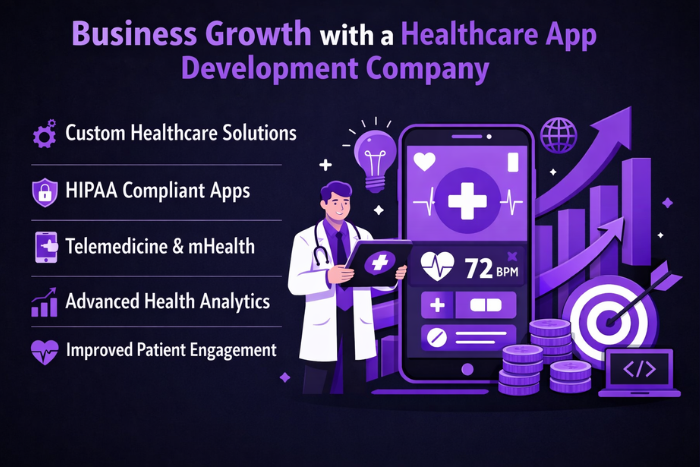
The cost of developing a healthcare application depends on several factors related to project scope and technical complexity.
Important factors include:
Application complexity and feature set
Integration with healthcare systems and devices
Compliance with healthcare regulations
UI/UX design customization
Platform selection (Android, iOS, or cross-platform)
Security implementation and data protection
Development timeline and team size
Maintenance and support services
Healthcare organizations can start with an MVP version and gradually expand the application with additional features.
Latest Trends in Healthcare App Development
Healthcare technology continues to evolve rapidly with innovative solutions transforming the medical industry.
Major trends include:
AI-powered healthcare applications and diagnostics
Remote patient monitoring through IoT devices
Telemedicine and virtual healthcare platforms
Blockchain for secure medical data sharing
Wearable health technology integration
Cloud-based healthcare platforms
Data analytics and predictive healthcare insights
Voice-enabled healthcare assistants and chatbots
Organizations adopting these technologies can deliver more efficient and personalized healthcare services.
Why Choose Us as Your App Development Company for Healthcare
Selecting the right development partner is crucial for building secure and compliant healthcare applications.
Healthcare Industry Expertise
Our team understands the unique requirements of healthcare systems and medical workflows.
Compliance-Focused Development
We build applications that follow industry regulations including HIPAA, GDPR, and healthcare security standards.
Secure and Scalable Architecture
Our applications are designed to handle sensitive medical data while supporting long-term scalability.
Advanced Technology Integration
We integrate AI, IoT, and cloud technologies to deliver innovative healthcare solutions.
User-Centered Design
Our apps provide intuitive experiences for both patients and healthcare professionals.
End-to-End Development Support
From concept to deployment and ongoing maintenance, we provide complete development services.
Ready to build an innovative healthcare application?
Let our experts develop a secure and scalable digital health solution for your organization.
Contact us today for a free consultation and project estimate.
Key Points :
- App development company for healthcare builds secure mobile and web applications for hospitals, clinics, and digital health platforms.
- Healthcare apps enable telemedicine, appointment scheduling, patient record management, and remote health monitoring.
- Solutions include telemedicine apps, patient apps, hospital management systems, EHR/EMR software, and medical billing platforms.
- Advanced technologies used include AI, IoT, cloud platforms, wearable integrations, and secure healthcare APIs.
- Healthcare apps follow strict compliance standards such as HIPAA, GDPR, and secure data encryption.
- Professional development ensures scalable, secure, and user-friendly healthcare applications for better patient care.
FAQ's
A healthcare app development company builds mobile and web applications designed for hospitals, clinics, and digital health platforms.
Development timelines vary depending on complexity, but most healthcare apps take between 3 to 9 months to complete.
Costs depend on features, integrations, compliance requirements, and development complexity.
Yes, professional developers implement advanced encryption, authentication, and compliance standards to protect medical data.
Common features include appointment scheduling, telemedicine, patient records access, notifications, and secure messaging.
Healthcare apps must comply with standards such as HIPAA, GDPR, and other regional healthcare data regulations.
Yes, ongoing support includes updates, security improvements, performance monitoring, and new feature development.