


Discover app development cost breakdowns, pricing factors, and budget estimates for iOS, Android, and cross-platform apps in 2025.
App Development Cost
Understanding App Development Cost is one of the most critical steps before starting a mobile application project. Whether you’re building a startup MVP, an enterprise solution, or a feature-rich on-demand platform, having clarity on development pricing helps you plan budgets, timelines, and resources effectively.
The cost to develop an app varies widely depending on complexity, platform choice (iOS, Android, or cross-platform), features, integrations, design requirements, and the development team’s location. A simple mobile app may cost significantly less than a scalable, AI-powered, multi-platform solution with advanced integrations.
Our App Development Cost guide provides a transparent breakdown of pricing components, helping you understand what influences development expenses and how to optimize your investment. We focus on delivering scalable, secure, and performance-driven applications while ensuring cost efficiency and long-term ROI.
If you’re planning to build a mobile application and want a realistic cost estimate, this comprehensive guide will help you make informed decisions.
Why This Service is Important
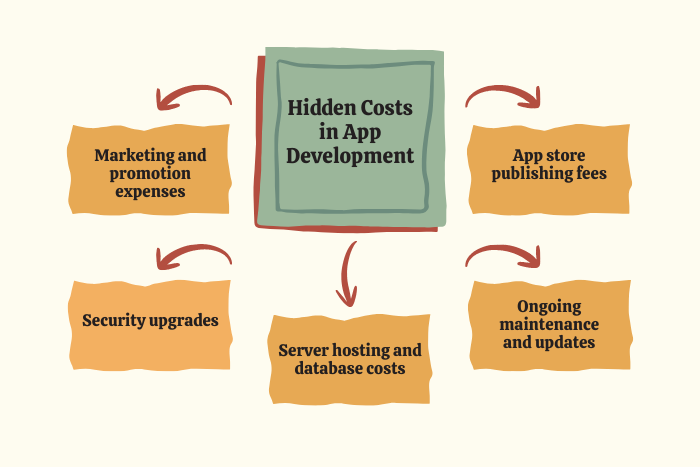
Knowing the actual App Development Cost prevents budget overruns and project delays. Many businesses underestimate costs due to hidden factors such as maintenance, third-party APIs, infrastructure, and security compliance.
Accurate cost planning helps you:
Allocate resources effectively
Choose the right platform strategy
Prioritize essential features
Avoid hidden expenses
Ensure scalable architecture
Plan long-term maintenance budgets
Improve ROI and investment decisions
A well-defined cost strategy ensures your app development project stays aligned with your business goals and financial expectations.
Types of App Development Solutions
Application Development Cost depends heavily on the type of solution you want to build:
Native App Development (iOS & Android)
High-performance apps built specifically for one platform.Cross-Platform App Development
Apps built using frameworks like Flutter or React Native to run on multiple platforms.Web App Development
Browser-based applications accessible across devices.Hybrid App Development
Combination of web and native technologies.Enterprise Mobile Applications
Large-scale apps with advanced integrations and security layers.On-Demand Apps
Taxi, food delivery, grocery, and service booking applications.eCommerce Mobile Apps
Online shopping platforms with secure payment integration.SaaS & Subscription-Based Apps
Recurring revenue platforms with scalable backend systems.
Key Features That Influence App Development Cost
Several features directly impact mobile app pricing:
User authentication and profile management
Real-time chat and messaging
Payment gateway integration
Push notifications
Geolocation and GPS tracking
API integrations
Admin dashboard and analytics
Cloud data storage
AI/ML functionality
AR/VR features
The more complex the feature set, the higher the development cost.
Development Process
A structured development process helps manage and control App Development Cost effectively:
Requirement Analysis & Cost Estimation
Identifying features, platforms, and technical requirements.UI/UX Design Planning
Designing wireframes and interactive prototypes.Backend & Frontend Development
Building core functionality and server-side infrastructure.Testing & Quality Assurance
Performance testing, security audits, and bug fixing.Deployment & App Store Publishing
Launching on Google Play and Apple App Store.Maintenance & Updates
Continuous improvements and feature upgrades.
Proper planning at each stage reduces unexpected expenses.
Technology Stack
The choice of technology influences both performance and App Development Cost:
Mobile Platforms: Swift (iOS), Kotlin (Android), Flutter, React Native
Backend Technologies: Node.js, Django, Laravel, .NET Core
Databases: MySQL, PostgreSQL, MongoDB, Firebase
Cloud Services: AWS, Google Cloud, Microsoft Azure
APIs & Integrations: Payment gateways, social logins, analytics tools
Security: SSL encryption, OAuth 2.0, JWT authentication
Advanced technologies may increase initial costs but provide better scalability and long-term value.
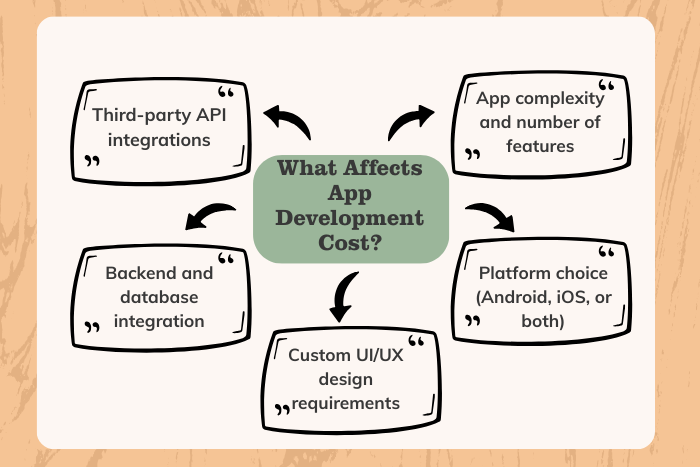
App Development Cost Factors
The App Development Cost depends on multiple variables:
1. App Complexity
Basic App: $10,000 – $25,000
Medium Complexity App: $25,000 – $60,000
Complex App: $60,000 – $150,000+
2. Platform Choice
Developing for both iOS and Android increases cost compared to single-platform apps.
3. Design Requirements
Custom animations, interactive UI, and advanced UX increase design expenses.
4. Development Team Location
Rates vary by region (USA, UK, India, Eastern Europe).
5. Third-Party Integrations
Payment gateways, maps, AI services, and APIs affect pricing.
6. Maintenance & Support
Annual maintenance typically costs 15–25% of initial development cost.
7. Infrastructure & Hosting
Cloud storage and server requirements add recurring costs.
Understanding these factors helps you create a realistic project budget.
Latest Trends Affecting App Development Cost
AI-powered mobile applications
Blockchain integration
Progressive Web Apps (PWA)
Super apps and multi-service platforms
IoT-enabled mobile apps
Voice-enabled interfaces
Subscription-based business models
Enhanced cybersecurity frameworks
While modern features may increase initial investment, they enhance competitiveness and long-term profitability.
Why Choose Us for Accurate App Development Cost Estimation?
Choosing the right development partner ensures transparency and cost efficiency.
Here’s why businesses trust us:
Transparent Pricing Structure – Clear cost breakdown with no hidden fees.
Scalable Architecture – Designed for long-term growth.
MVP-Focused Approach – Launch faster with optimized budgets.
Cost-Effective Development Models – Fixed, hourly, or dedicated teams.
Experienced Development Team – Skilled in iOS, Android, and cross-platform apps.
Security & Compliance Expertise – Built with industry standards.
Post-Launch Support – Continuous improvement and optimization.
We help you maximize ROI while maintaining quality and performance.
Want a personalized App Development Cost estimate?
Let’s analyze your requirements and provide a transparent pricing breakdown.
Contact us today for a free consultation and detailed cost assessment.
Key Points :
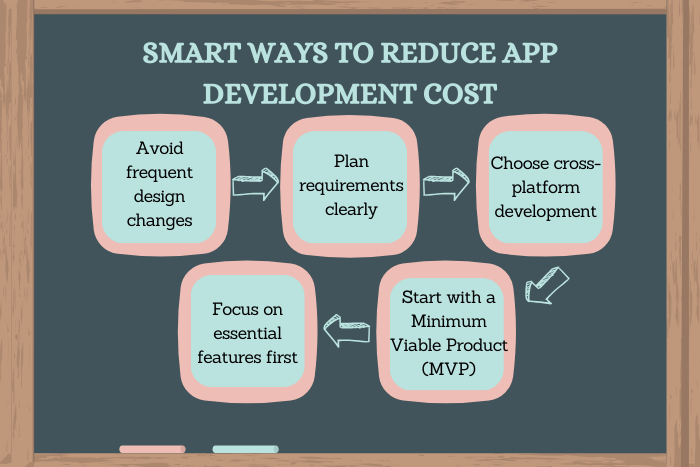
- App Development Cost depends on app complexity, including features, design, and functionality.
- Platform choice affects overall cost, as developing for both Android and iOS increases the budget.
- Custom UI/UX design impacts pricing, but it improves user experience and app success.
- Starting with an MVP helps small businesses manage mobile app development expenses effectively.
- Cross-platform development can lower the overall app development budget compared to native development.
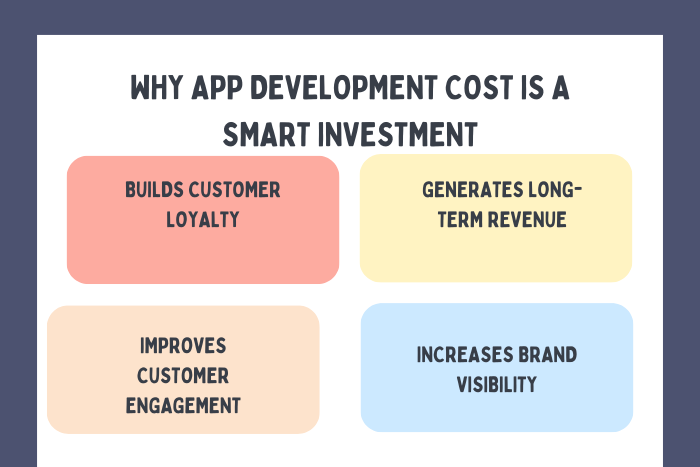
- Professional development ensures better long-term ROI, making the investment worthwhile.
FAQ's
The average cost ranges from $10,000 to $150,000 depending on complexity and features.
Yes, developing separate native apps for iOS and Android increases costs.
Development timelines range from 2–6 months depending on complexity.
Annual maintenance typically costs 15–25% of the initial development budget.
Yes, by building an MVP first and prioritizing essential features.
Yes, both Apple and Google charge publishing fees.
Yes, cross-platform frameworks can reduce costs compared to separate native apps.