
Custom Asset Management System with real-time tracking, lifecycle management, automation, and seamless ERP integrations.
Asset Management System
An Asset Management System is a powerful software solution that enables organizations to track, manage, and optimize their physical and digital assets throughout their lifecycle. From IT equipment and machinery to vehicles, tools, and infrastructure, assets represent a significant investment for any organization. Without a centralized system, businesses often face inefficiencies such as lost assets, inaccurate depreciation calculations, compliance risks, and rising operational costs.
A modern Asset Management System provides real-time tracking, automated maintenance scheduling, lifecycle visibility, financial reporting, and seamless system integrations. It replaces spreadsheets and disconnected tools with a unified platform that enhances operational transparency and accountability.
Whether you are a growing company or a large enterprise managing assets across multiple locations, implementing a customized solution helps reduce costs, improve asset utilization, and ensure long-term scalability.
Why This Service is Important
Managing assets manually leads to errors, duplication, and financial loss. As businesses expand, asset tracking becomes increasingly complex. A structured digital system eliminates guesswork and brings operational clarity.
Here’s why investing in an Asset Management System is critical:
Prevents asset loss and misplacement
Improves budgeting and financial forecasting
Ensures accurate depreciation tracking
Reduces downtime through preventive maintenance
Strengthens compliance and audit readiness
Enhances operational transparency
Optimizes asset lifecycle performance
By centralizing asset data and automating workflows, organizations gain full control over their asset portfolio while improving overall efficiency.
Types of Asset Management System Solutions
We design scalable and customizable solutions tailored to different business needs:
IT Asset Management (ITAM)
Track hardware, software licenses, cloud subscriptions, and network infrastructure.Enterprise Asset Management (EAM)
Manage manufacturing equipment, utilities, facilities, and operational infrastructure.Fixed Asset Control System
Handle financial asset tracking, depreciation methods, taxation compliance, and reporting.Digital Asset Management
Organize digital files, media libraries, contracts, and documentation with structured access control.Inventory & Asset Tracking Solutions
Use barcode, QR, RFID, or GPS-based tracking for real-time asset visibility.Cloud-Based Asset Management Platforms
Secure, centralized, and accessible systems for multi-location enterprises.
Each solution is built with scalability, automation, and long-term efficiency in mind.
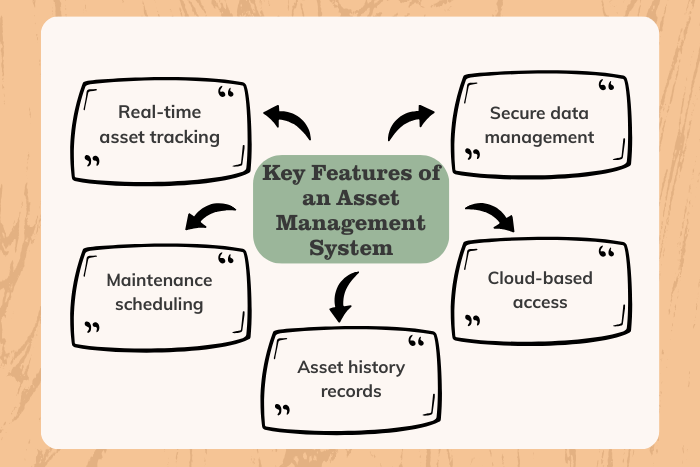
Key Features of Our Asset Management System
Our platform is designed to deliver complete visibility, automation, and control.
Centralized Asset Repository
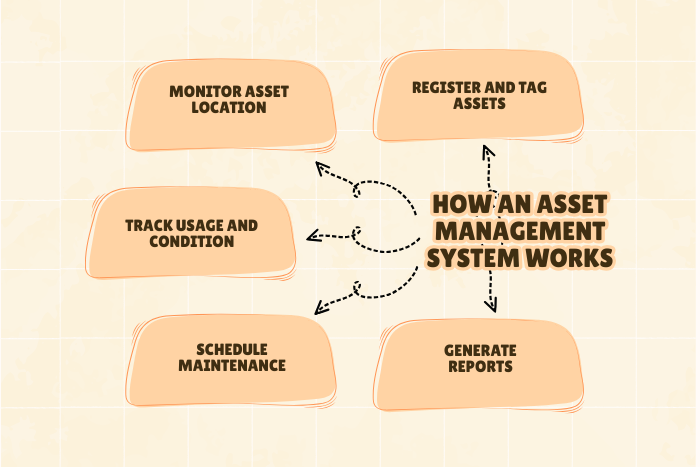
Maintain a unified database containing asset location, ownership, condition, warranty, and service history.Full Asset Lifecycle Management
Monitor assets from procurement and deployment to maintenance and disposal.Real-Time Asset Tracking
Enable barcode, RFID, IoT, or GPS tracking for accurate location monitoring.Preventive Maintenance Automation
Schedule automated service reminders to minimize downtime and extend asset lifespan.Depreciation & Financial Reporting
Apply multiple accounting methods and generate audit-ready reports.Role-Based Access Control
Protect sensitive asset data with permission-based access management.Custom Reports & Dashboards
Gain actionable insights with real-time analytics and KPI tracking.Seamless ERP & CRM Integrations
Connect your Asset Management System with accounting, procurement, and inventory systems.Mobile Accessibility
Manage and update asset data on the go through mobile-friendly interfaces.
Asset Management System Development Process
We follow a structured, agile approach to ensure high-quality implementation:
Requirement Analysis
Identify asset categories, operational workflows, and compliance requirements.System Architecture Planning
Design a scalable and secure infrastructure tailored to your organization.UI/UX Design
Develop intuitive dashboards for easy asset monitoring.Custom Development
Build modules for tracking, reporting, automation, and maintenance management.Integration & Data Migration
Connect with ERP, CRM, and legacy systems while ensuring secure data transfer.Testing & Quality Assurance
Perform functional, performance, and security testing.Deployment & Training
Ensure smooth rollout and provide user onboarding.Ongoing Maintenance & Support
Continuous system updates, monitoring, and optimization.
Technology Stack
We use enterprise-grade technologies to ensure performance and scalability:
Front-End: React.js, Angular, Vue.js
Back-End: Node.js, .NET Core, Laravel, Django
Databases: PostgreSQL, MySQL, MongoDB, MS SQL Server
Cloud Services: AWS, Microsoft Azure, Google Cloud Platform
APIs: REST APIs, GraphQL, third-party ERP/CRM integrations
DevOps: Docker, Kubernetes, CI/CD pipelines
Security: SSL/TLS encryption, OAuth 2.0, role-based access control, multi-factor authentication
This modern stack ensures secure, scalable, and future-ready Asset Management System development.
Cost Factors for Asset Management System Development
The cost of developing an Asset Control System depends on several variables:
Number and complexity of asset categories
Custom feature requirements
Real-time tracking technologies (RFID, IoT, GPS)
Integration complexity with existing systems
Deployment model (cloud or on-premise)
Reporting and analytics capabilities
User roles and security configurations
Ongoing maintenance and support scope
We offer flexible pricing models based on your business size, industry, and technical requirements.
Latest Trends in Asset Management System Technology
AI-powered predictive maintenance
IoT-enabled real-time monitoring
Blockchain-based asset verification
Mobile-first asset tracking applications
SaaS-based cloud platforms
Advanced analytics and business intelligence dashboards
Automation-driven compliance workflows
Integration with digital twin technology
These innovations are reshaping how organizations manage, monitor, and optimize assets.
Why Choose Us
Selecting the right development partner is essential for long-term success.
Here’s why organizations trust us:
Expertise in custom enterprise software development
Industry-specific Asset Management System solutions
Scalable and secure architecture
Seamless integration capabilities
Agile development methodology
Transparent communication and timely delivery
Dedicated post-launch support
We focus on delivering measurable ROI, operational efficiency, and long-term scalability.
Ready to streamline your asset operations?
Contact us today for a free consultation and customized quote.
Let’s build a high-performance Asset Management System tailored to your business needs.
Key Points :
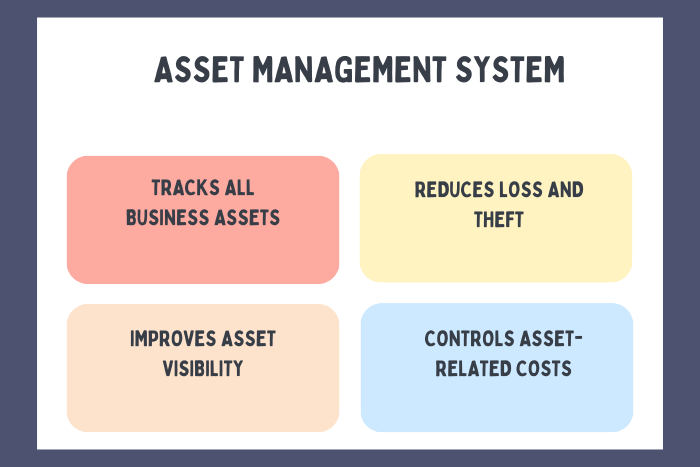
- An Asset Management System helps businesses track, monitor, and manage physical and digital assets from one central platform.
- It improves asset visibility by providing real-time information on asset location, condition, and usage.
- Using an Asset Management System reduces asset loss, theft, and duplicate purchases, saving business costs.
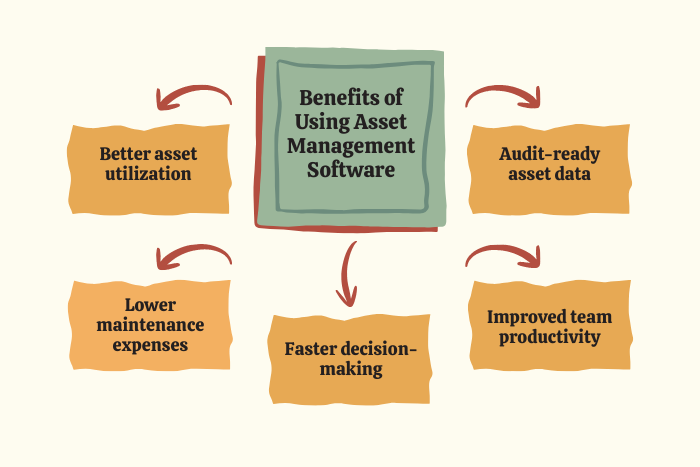
- The system automates asset maintenance schedules, helping extend asset life and reduce repair expenses.
- A cloud-based Asset Control System allows teams to access asset data anytime, anywhere.
- Strong security features protect valuable asset data and ensure controlled user access.
- Asset Management Systems support better decision-making through detailed reports and asset performance insights.
- Businesses across industries use Asset Management Systems to improve efficiency, compliance, and overall productivity.
FAQ's
An Asset Management System is software that helps organizations track, manage, and optimize assets throughout their lifecycle.
Businesses in manufacturing, healthcare, logistics, IT, construction, education, and government sectors benefit significantly.
Yes. We provide seamless integrations with ERP, CRM, accounting, and inventory platforms.
It reduces downtime, prevents asset loss, and ensures proper maintenance scheduling.
Yes. We implement encryption, authentication protocols, and role-based access controls.
Typically 6–16 weeks depending on customization and integration requirements.
Yes. We implement barcode, QR, RFID, GPS, and IoT-based tracking.
Absolutely. Our architecture is designed for long-term scalability.