Learn how to develop an app for both iOS and Android using cross-platform frameworks, modern tools, and scalable development strategies.
Can I Develop an App for Both iOS and Android?
A common question entrepreneurs, startups, and businesses ask is: Can I develop an app for both iOS and Android? The answer is yes. Modern app development technologies make it possible to build applications that run seamlessly on both platforms without having to create two completely separate apps.
Traditionally, mobile apps were developed using native development, meaning developers created separate codebases for iOS and Android. While this approach provides high performance, it often requires more time, resources, and development costs. Today, many companies prefer cross-platform app development, which allows developers to build a single application that works across multiple platforms using shared code.
Frameworks like Flutter, React Native, and .NET MAUI enable developers to create apps that run on both iOS and Android while maintaining excellent performance and user experience. This approach helps businesses launch apps faster, reduce development costs, and reach a broader audience.
Whether you’re building a startup MVP, enterprise application, or consumer mobile app, cross-platform development offers an efficient way to target both operating systems simultaneously. In this guide, we’ll explore how to develop apps for both iOS and Android, the technologies involved, development strategies, and best practices for creating high-quality cross-platform mobile applications.
Why Developing Apps for Both iOS and Android Is Important
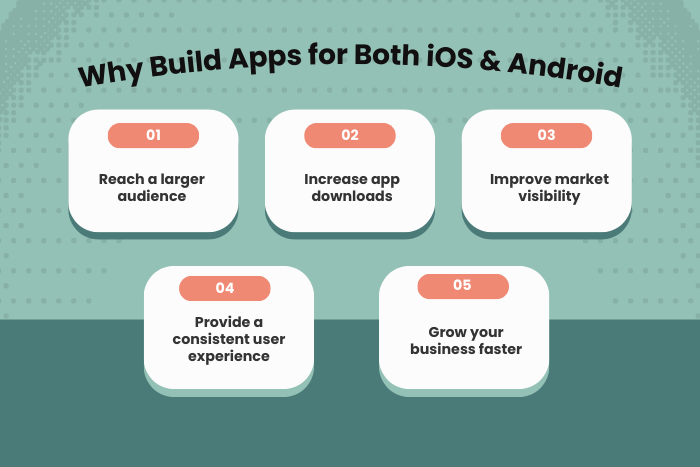
Releasing an application on both iOS and Android platforms is essential for businesses looking to maximize their reach and user base.
Here’s why cross-platform app development matters:
Reach a Larger Audience
Android and iOS dominate the global smartphone market, so supporting both platforms increases potential users.Improved Market Competitiveness
Apps available on both platforms are more competitive in the digital marketplace.Consistent User Experience
Businesses can deliver a unified experience across devices and operating systems.Faster Product Launch
Cross-platform frameworks allow developers to release apps simultaneously.Reduced Development Costs
Shared codebases lower development and maintenance expenses.Simplified Updates and Maintenance
Updates can be applied across platforms with minimal additional effort.
Developing apps for both platforms helps businesses maximize growth opportunities while optimizing development resources.
Types of Solutions to Develop iOS and Android Apps
Businesses can choose from several development approaches depending on performance requirements, budget, and project complexity.
Native App Development
Separate apps are built for each platform using platform-specific programming languages.
iOS: Swift or Objective-C
Android: Kotlin or Java
Native development offers excellent performance but requires maintaining two codebases.
Cross-Platform App Development
A single codebase is used to build apps for multiple platforms.
Popular frameworks include:
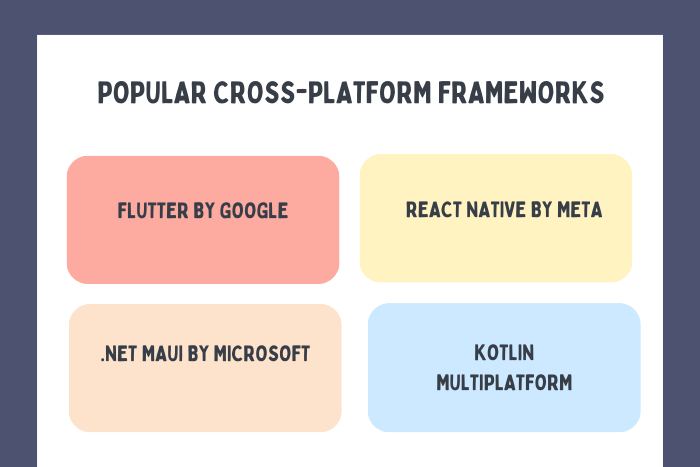
Flutter – High-performance UI framework by Google
React Native – JavaScript-based framework developed by Meta
.NET MAUI – Microsoft’s cross-platform development platform
Progressive Web Apps (PWA)
Web-based applications that work on mobile devices and browsers without needing separate native apps.
Hybrid Mobile Apps
Apps built using web technologies and wrapped in a native container.
Each development method offers different advantages depending on the project’s requirements.
Key Features to Develop an App for Both iOS and Android
Modern cross-platform applications include features that ensure high performance and consistent user experiences across devices.
Key features include:
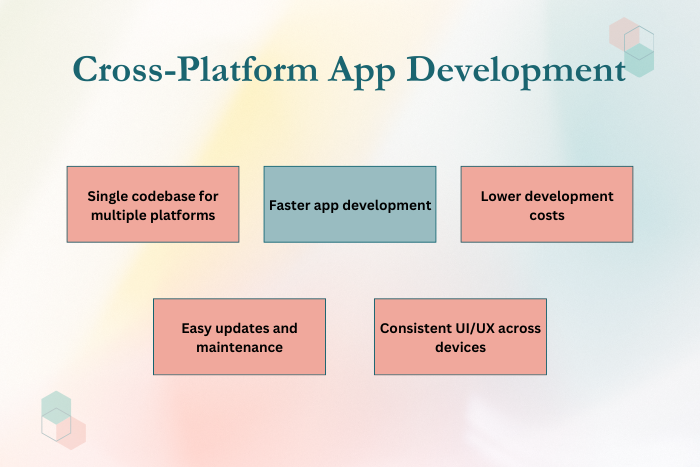
Single codebase for both Android and iOS platforms
Consistent UI/UX across multiple devices
Faster development cycles and reduced time to market
Easy maintenance and updates
Access to native device features such as camera, GPS, and notifications
Integration with third-party APIs and cloud services
Scalable architecture for future growth
High-performance frameworks with near-native performance
These features make cross-platform development an attractive option for many businesses.
Development Process
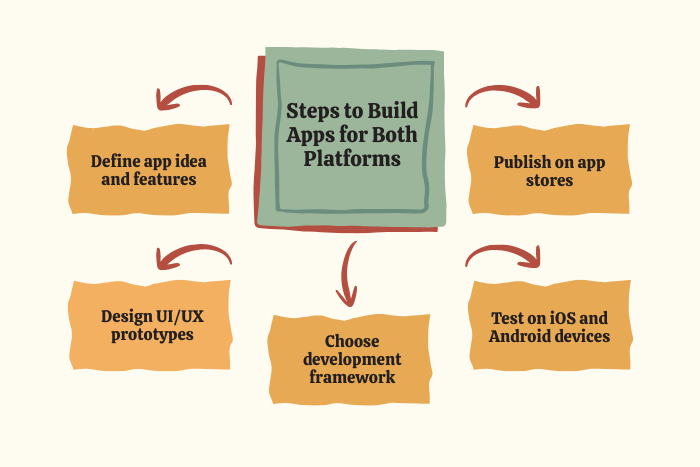
Building an application for both iOS and Android follows a structured development process.
Idea Validation and Market Research
Identify the target audience, app goals, and platform requirements.
Feature Planning and Product Roadmap
Define the core features and development milestones.
UI/UX Design
Create wireframes, mockups, and prototypes to design the user experience.
Technology Stack Selection
Choose between native, cross-platform, or hybrid development frameworks.
Application Development
Develop shared business logic and platform-specific components.
Testing Across Platforms
Ensure the application works smoothly on both Android and iOS devices.
Deployment to App Stores
Publish the application on the Apple App Store and Google Play Store.
Maintenance and Updates
Monitor performance and release updates to improve features and fix bugs.
Following this process helps ensure that the application is stable, scalable, and user-friendly.
Technology Stack for Cross-Platform App Development
Modern cross-platform applications rely on advanced technologies and development tools.
- Programming Languages: Dart, JavaScript, TypeScript, C#
- Cross-Platform Frameworks: Flutter, React Native, .NET MAUI
- Frontend Technologies: React.js, HTML5, CSS3
- Backend Technologies: Node.js, Python, Java, Ruby on Rails
- Databases: PostgreSQL, MongoDB, MySQL, Firebase
- Cloud Platforms: AWS, Google Cloud Platform, Microsoft Azure
- DevOps Tools: Docker, Kubernetes, GitHub Actions, Jenkins
- Security Technologies: OAuth 2.0, JWT authentication, SSL encryption
Using modern technologies ensures better performance, scalability, and security.
Cost Factors in Developing Apps for Both Platforms
The cost of developing apps for both iOS and Android varies depending on several factors.
Important cost considerations include:
Complexity of app features and functionality
Native vs cross-platform development approach
UI/UX design requirements
Backend infrastructure and integrations
Testing requirements for multiple devices
Third-party APIs and services
Development team expertise
Maintenance and updates after launch
Cross-platform development can significantly reduce costs by eliminating the need for separate development teams.
Latest Trends in Both iOS and Android App Development
Cross-platform development is evolving rapidly with new technologies and frameworks.
Some key trends include:
Flutter gaining popularity for high-performance cross-platform apps
React Native improvements for better native integration
AI-powered mobile app features
Integration with wearable devices and IoT
Cloud-based mobile backend services
Serverless architectures for scalable applications
Enhanced app security and privacy compliance
5G-enabled mobile applications
These trends are helping businesses build faster, smarter, and more scalable mobile apps.
Why Choose Us for Cross-Platform App Development?
Choosing the right development partner is essential for building successful cross-platform applications. Our team specializes in creating scalable mobile apps that perform seamlessly across both iOS and Android.
Here’s why businesses choose us:
Expertise in Cross-Platform Frameworks – Skilled in Flutter, React Native, and modern development technologies.
User-Centered Design Approach – Building intuitive and engaging user experiences.
High-Performance Mobile Applications – Optimized for speed and reliability.
Agile Development Methodology – Faster delivery with continuous improvements.
Scalable Architecture – Applications designed to grow with your business.
Transparent Communication – Regular updates throughout the development process.
Secure Development Practices – Protecting user data with modern security standards.
End-to-End Development Services – From concept to deployment and maintenance.
We help businesses transform innovative ideas into powerful mobile applications.
Ready to build an app for both iOS and Android?
Let our experts develop a scalable cross-platform mobile application for your business.
Contact us today for a free consultation and project estimate.
Key Points :
- Cross-platform development allows one app to run on both iOS and Android using a shared codebase.
- Frameworks like Flutter, React Native, and .NET MAUI enable efficient multi-platform app development.
- Developing apps for both platforms helps businesses reach a larger global audience.
- Cross-platform apps reduce development time and overall project costs.
- Modern frameworks provide near-native performance and access to device features.
- A structured development process ensures smooth deployment on both Apple App Store and Google Play Store.
FAQ's
Yes. Cross-platform frameworks allow developers to build a single application that runs on both platforms.
Popular frameworks include Flutter, React Native, and .NET MAUI.
It depends on project requirements. Cross-platform development reduces costs and development time, while native apps may offer slightly better performance.
Development timelines vary depending on complexity, but most apps take between 3–6 months.
Yes. They can access features such as cameras, GPS, push notifications, and sensors.
Yes. A shared codebase reduces development and maintenance costs.
Yes. Even though the codebase is shared, the app must be submitted separately to the Apple App Store and Google Play Store.