Learn how to build a prototype or MVP for your app to validate ideas, attract investors, and launch faster with a scalable development strategy.

Can I Get a Prototype or MVP of My App?
One of the most common questions entrepreneurs and startups ask is: Can I get a prototype or MVP of my app before full development? The answer is yes—and in fact, building a prototype or a Minimum Viable Product (MVP) is often the smartest way to start an app project.
Launching a full-scale application without validating the concept can lead to wasted resources, poor user adoption, and unnecessary development costs. A prototype or MVP allows businesses to test their ideas, gather feedback, and refine product features before investing heavily in complete development.
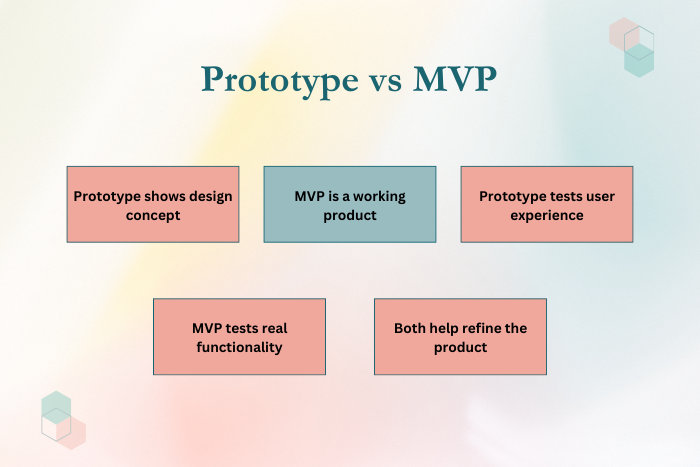
A prototype focuses on visualizing and demonstrating the user experience and product concept, while an MVP delivers a simplified but functional version of the app that real users can interact with. Both play crucial roles in modern product development strategies used by startups, enterprises, and product teams worldwide.
Whether you’re planning to launch a mobile app, SaaS platform, marketplace, or digital product, building a prototype or MVP can significantly reduce risk and accelerate your path to market. In this guide, we’ll explain how prototypes and MVPs work, their benefits, development processes, and how businesses can use them to validate ideas and build successful applications.
Why Prototype or MVP Development is Important
Before committing to full-scale application development, validating your product idea is essential. Building a prototype or MVP helps reduce risk while ensuring the final product aligns with real user needs.
Here are the key reasons why businesses start with prototypes or MVPs:
Idea Validation
Test whether your app concept solves a real problem before investing heavily in development.Faster Time to Market
MVP development focuses on core features, allowing faster product launch.User Feedback Collection
Early user feedback helps refine product features and improve usability.Lower Development Costs
Developing a prototype or MVP requires fewer resources compared to building a full application.Investor and Stakeholder Demonstration
Startups often use prototypes or MVPs to secure funding and partnerships.Reduced Product Risk
Testing ideas early helps avoid building products that users don’t need.
By validating product concepts early, businesses can make smarter decisions and build applications with a higher chance of success.
Types of Prototype and MVP Solutions
Depending on the stage of your idea and business goals, different types of prototypes and MVP solutions can be developed.
Concept Prototype
A basic representation of the app idea designed to demonstrate the concept, layout, and overall user journey.
Clickable UI/UX Prototype
Interactive design prototypes that simulate user interactions and workflows without full backend functionality.
Functional Prototype
A partially functional application demonstrating core features and basic logic for testing product feasibility.
Minimum Viable Product (MVP)
A simplified version of the application with essential features that real users can use.
Proof of Concept (PoC)
A technical validation used to test whether a specific feature, integration, or technology is feasible.
Pilot Product Version
A limited-release version of the application tested with a small group of users before public launch.
Each solution helps validate different aspects of the product—from concept and usability to real-world functionality.
Key Features of Prototype and MVP Development
Developing an app prototype or MVP involves focusing on essential product capabilities while maintaining scalability for future growth.
Key features typically include:
User-focused interface design and simplified navigation
Core feature implementation for testing product value
Interactive workflows and realistic user journeys
Scalable architecture for future feature expansion
Integration with essential APIs and backend services
Data collection for user behavior and analytics
Secure authentication and basic user management
Rapid development and iteration cycles
These features ensure that the prototype or MVP provides meaningful insights while maintaining development efficiency.
Development Process
A structured development process ensures that prototypes and MVPs effectively validate the product concept and provide actionable insights.
Idea Discovery and Requirement Analysis
Define the app’s purpose, target audience, and core problem it solves.
Feature Prioritization
Identify the essential features required for the first version of the product.
Wireframing and UI/UX Design
Create design layouts, user flows, and interactive prototypes.
Architecture and Technology Planning
Design scalable system architecture for both prototype and MVP development.
Prototype Development
Build a visual or functional prototype for concept validation.
MVP Development
Develop the working product with core functionality and essential integrations.
Testing and Feedback Collection
Conduct usability testing and gather feedback from real users.
Iteration and Product Improvement
Improve features, refine the user experience, and prepare for full-scale product development.
This agile process allows businesses to refine their applications based on real data and user insights.
Technology Stack for Prototype and MVP Development
Modern prototypes and MVPs use scalable technologies that support rapid development and future growth.
- Mobile Development: Swift, Kotlin, Flutter, React Native
- Frontend Technologies: React.js, Vue.js, Angular, Next.js
- Backend Technologies: Node.js, Python, Ruby on Rails, PHP
- Databases: PostgreSQL, MongoDB, MySQL, Firebase
- Cloud Platforms: AWS, Google Cloud Platform, Microsoft Azure
- Prototyping Tools: Figma, Adobe XD, Sketch, InVision
- DevOps Tools: Docker, Kubernetes, GitHub Actions, Jenkins
- Security Tools: OAuth 2.0, JWT authentication, SSL encryption, RBAC
Using modern development tools ensures fast deployment and scalability when transitioning from MVP to full product.


Cost Factors in Prototype and MVP Development
The cost of building an app prototype or MVP depends on several factors, including complexity and feature scope.
Important cost factors include:
Number of features included in the MVP
Complexity of UI/UX design
Platform requirements (iOS, Android, or web)
Backend infrastructure and integrations
Third-party APIs and services
Development team size and expertise
Testing and quality assurance requirements
Ongoing updates and improvements
A basic clickable prototype can be developed relatively quickly, while a functional MVP with backend services and integrations may require a larger investment. However, both options help reduce long-term product development costs.
Latest Trends
Product development strategies continue to evolve with new technologies and agile methodologies.
Some key trends shaping MVP and prototype development include:
AI-powered product validation tools
Low-code and no-code MVP platforms
Rapid prototyping using advanced design tools
Lean startup development methodologies
Microservices-based MVP architecture
Cloud-native development environments
User behavior analytics integration
Continuous product iteration using agile workflows
These trends help startups and businesses launch digital products faster while maintaining flexibility for future growth.
Why Choose Us for Prototype or MVP Development?
Choosing the right development partner can significantly impact how effectively your prototype or MVP validates your product idea. Our team specializes in building fast, scalable, and user-focused digital products designed to reduce risk and accelerate innovation.
Here’s why businesses choose us:
Startup-Focused Development Strategy – We help founders validate ideas quickly and efficiently.
Lean MVP Development Approach – Focus on essential features that deliver maximum value.
Expert Product Strategy Consulting – Guidance on feature prioritization and market validation.
Scalable Architecture Design – Build MVPs that can evolve into full-scale applications.
Rapid Development Cycles – Agile workflows enable faster product launches.
Modern Technology Stack – Using proven technologies for performance and scalability.
Investor-Ready Prototypes – Build compelling prototypes for pitching investors and stakeholders.
End-to-End Product Development – From idea validation to full product launch.
We help transform innovative ideas into validated products that are ready for growth.
Ready to validate your app idea with a prototype or MVP?
Let our experts help you build a scalable and market-ready application.
Contact us today for a free consultation and project estimate.
Key Points :
- A prototype is an early visual or interactive representation of an app used to demonstrate the concept and user experience.
- An MVP (Minimum Viable Product) is a simplified but functional version of an application with essential features.
- Prototypes help validate design ideas, workflows, and user experience before development begins.
- User feedback from MVP testing helps improve features and usability.
- The development process includes idea validation, design, development, testing, and iteration.
- Starting with a prototype or MVP reduces long-term development costs and improves product success.
FAQ's
A prototype demonstrates the app’s design and concept, while an MVP is a functional version of the product with core features that users can interact with.
Yes, but prototypes are useful for validating design and user experience before investing in development.
A clickable prototype can typically be created within 1–3 weeks depending on design complexity.
An MVP usually takes between 6–12 weeks depending on features, integrations, and platform requirements.
Costs vary based on complexity, features, and technology stack. Basic MVPs cost significantly less than full application development.
Many startups build both. A prototype helps validate the concept, while an MVP validates the product with real users.
MVP development is widely used in SaaS platforms, fintech apps, healthcare technology, marketplaces, and mobile applications.