Discover the critical features of an education app including live classes, progress tracking, interactive learning tools, and secure digital classrooms.
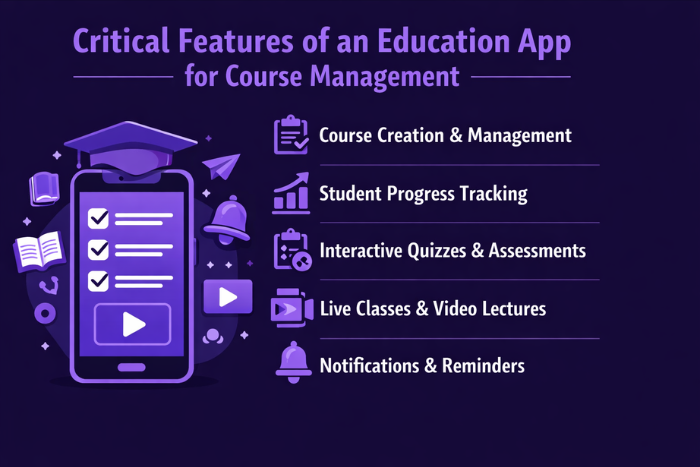
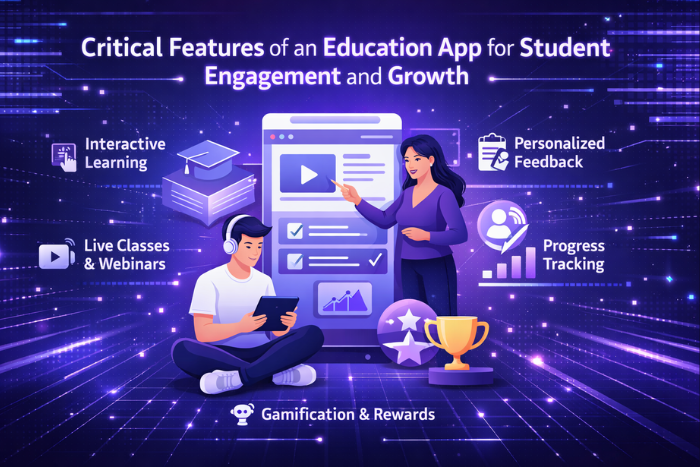
Critical Features of an Education App
Education technology has transformed how students access learning resources and how educators deliver knowledge. With the rise of online learning platforms, mobile education apps have become essential tools for schools, universities, training institutes, and edtech startups. These applications provide interactive learning experiences, personalized study plans, and easy access to educational materials anytime and anywhere. Understanding the critical features of an education app is essential for developing effective digital learning platforms that engage students and improve learning outcomes.
A well-designed education app combines interactive content, live learning capabilities, progress tracking tools, and seamless communication between teachers and students. Features such as video lectures, quizzes, personalized dashboards, and push notifications help learners stay motivated and organized. At the same time, educators benefit from content management systems, student analytics, and virtual classroom tools that simplify teaching processes.
Modern education apps also integrate advanced technologies such as artificial intelligence, gamification, and cloud-based systems to create personalized and engaging learning experiences. By implementing the right features, educational platforms can enhance accessibility, improve student performance, and provide scalable digital learning solutions.
Why Critical Features of an Education App Are Important
Educational applications must deliver engaging and effective learning experiences. The critical features of an education app determine how well students interact with course materials and how efficiently educators manage the learning process.
Here’s why these features are important:
Improved Learning Accessibility
Students can access educational content anytime and from any location.Enhanced Student Engagement
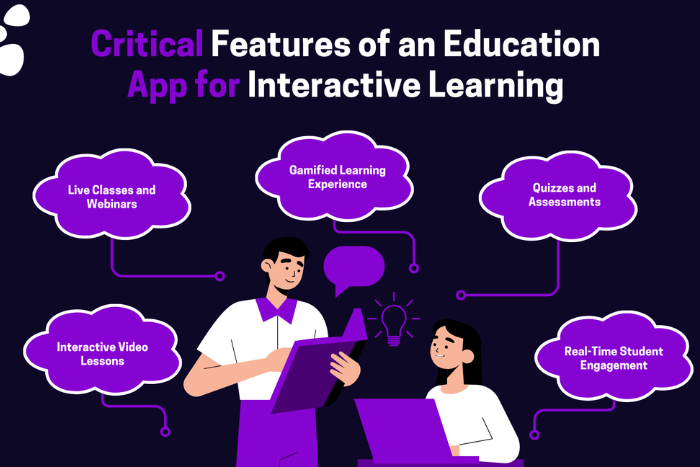
Interactive tools such as quizzes, videos, and gamified lessons make learning more engaging.Better Progress Monitoring
Analytics dashboards help track student performance and learning progress.Efficient Communication
Built-in messaging systems allow seamless interaction between teachers and students.Flexible Learning Environments
Students can learn at their own pace through personalized content.Scalable Educational Platforms
Education apps can support thousands of students simultaneously.
Implementing these features helps education platforms deliver effective digital learning experiences.
Types of Education App Platforms and Features
Education apps can serve various learning needs depending on the target audience and educational objectives.
E-Learning Platforms
Apps that provide online courses, video lectures, and digital study materials.Language Learning Apps
Platforms designed to teach new languages through interactive lessons and exercises.Exam Preparation Apps
Applications that help students prepare for competitive exams with practice tests and study guides.Learning Management System (LMS) Apps
Platforms used by schools and organizations to manage courses, assignments, and assessments.Skill Development Apps
Apps designed to teach professional skills such as coding, design, or business management.
Each solution requires specialized features to support different learning goals.
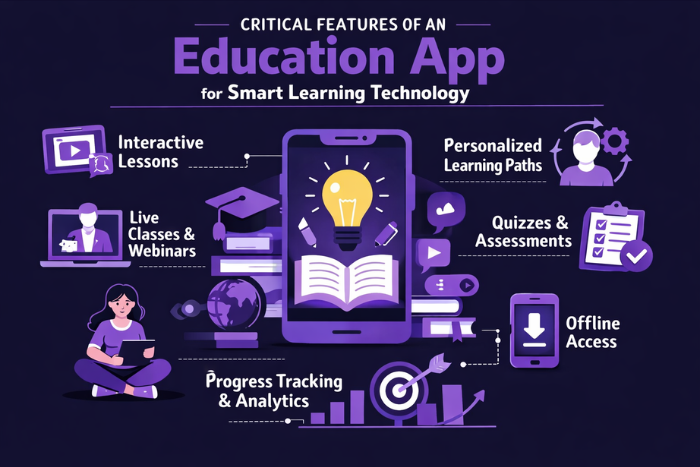
Key Features of an Education App
A successful education app must include powerful features that enhance both learning and teaching experiences.
User Registration and Student Profiles
Students and teachers can create accounts and manage learning activities.Interactive Learning Content
Video lectures, quizzes, and multimedia materials enhance learning engagement.Live Classes and Virtual Classrooms
Students can attend real-time online classes and interact with instructors.Course Management System
Educators can create, organize, and manage course materials.Progress Tracking and Analytics
Students can monitor learning progress and performance through dashboards.Push Notifications and Reminders
Alerts keep students informed about upcoming classes, assignments, and deadlines.Offline Learning Mode
Students can download materials and access lessons without internet connectivity.Secure File Sharing
Teachers can share documents, assignments, and learning resources securely.Gamification Elements
Leaderboards, rewards, and achievements motivate students to complete lessons.In-App Messaging and Discussion Forums
Communication tools enable collaboration between students and teachers.
These features help education apps provide engaging and effective digital learning experiences.
Development Process for an Education App
Developing a high-quality education app requires a structured development approach.
Market Research and Requirement Analysis
Identify the target audience, educational goals, and core features.Feature Planning and System Architecture
Define app functionalities and design the technical infrastructure.UI/UX Design and Prototyping
Create intuitive interfaces that improve learning engagement.Frontend and Backend Development
Develop the user interface and backend systems for data management.Content Management Integration
Implement tools for uploading and managing educational materials.Testing and Quality Assurance
Conduct usability testing, performance testing, and security checks.Deployment and App Launch
Release the application on app stores or web platforms.Maintenance and Continuous Updates
Improve functionality and add new features based on user feedback.
This process ensures that education apps remain reliable and scalable.
Technology Stack for Education App Development
Developing an education app requires advanced technologies to support interactive learning and scalable performance.
Frontend Technologies: React Native, Flutter, Swift, Kotlin
Backend Technologies: Node.js, Python, Java, PHP
Databases: MongoDB, PostgreSQL, MySQL
Cloud Platforms: AWS, Google Cloud Platform, Microsoft Azure
Video Streaming Tools: WebRTC, Zoom API, Twilio
DevOps Tools: Docker, Kubernetes, CI/CD pipelines
Security Technologies: SSL encryption, OAuth authentication
These technologies enable education apps to deliver real-time learning experiences and secure data management.
Cost Factors in Education App Development
The cost of developing an education app depends on multiple technical and business factors.
Complexity of features and functionalities
Platform choice (iOS, Android, or cross-platform)
Integration with video streaming tools and LMS systems
Custom UI/UX design requirements
Cloud hosting and database infrastructure
Third-party API integrations
Security and data protection measures
Maintenance and feature updates
Education apps with advanced AI learning tools and virtual classrooms require higher development investment.
Latest Trends in Education App Development
The education technology sector continues to evolve with innovative learning technologies.
AI-Powered Personalized Learning
Artificial intelligence customizes learning paths based on student performance.Augmented Reality Learning Experiences
AR technology creates immersive learning environments.Virtual Reality Classrooms
VR enables students to experience interactive educational simulations.Gamified Learning Platforms
Game elements improve student engagement and motivation.Microlearning Modules
Short lessons help students learn quickly and efficiently.Cloud-Based Learning Systems
Cloud technology ensures scalability and easy access to learning resources.
These trends are shaping the future of digital education.
Why Choose Us for Education App Development?
Choosing the right development partner is essential when building an education platform that delivers engaging learning experiences. Our team specializes in developing advanced education apps designed to support students, educators, and institutions.
Here’s why organizations trust our services:
Experienced EdTech Developers – Skilled in building scalable digital learning platforms.
User-Centered Learning Design – Intuitive interfaces that enhance student engagement.
Advanced Video and Virtual Classroom Integration – Seamless online learning experiences.
Scalable Cloud Infrastructure – Platforms designed to support thousands of learners.
AI and Data Analytics Integration – Personalized learning insights and recommendations.
Cross-Platform Development Expertise – Apps compatible with iOS, Android, and web platforms.
Agile Development Process – Transparent workflows and continuous collaboration.
Long-Term Support and Maintenance – Regular updates and performance improvements.
We help educational institutions and edtech startups create powerful digital learning platforms that improve accessibility and engagement.
Ready to build an innovative education app?
Let our experts develop a feature-rich digital learning platform for your organization.
Contact us today for a free consultation and project estimate.
Key Points :
- Education apps should include interactive learning tools such as video lectures, quizzes, and multimedia content to improve student engagement.
- Live classes and virtual classrooms enable real-time interaction between teachers and students for effective remote learning.
- Progress tracking and analytics dashboards help students monitor performance and allow educators to evaluate learning outcomes.
- Push notifications and reminders keep students informed about upcoming lessons, assignments, and important updates.
- Secure file sharing and course management systems allow teachers to distribute study materials and manage educational content efficiently.
- Gamification features like rewards, leaderboards, and achievements motivate students to stay engaged and complete learning modules.
FAQ's
Key features of an education app include live classes, interactive content, progress tracking, push notifications, and secure communication tools.
Development timelines usually range from three to six months depending on complexity and features.
Technologies such as React Native, Node.js, MongoDB, and cloud platforms like AWS are commonly used.
Yes. Many apps integrate video streaming tools to enable live virtual classrooms.
Yes. Gamification elements such as rewards and leaderboards improve student engagement.
Yes. Regular updates ensure improved performance, security, and new learning features.
Yes. Education apps can support schools, universities, corporate training programs, and online learning platforms.