Scalable CRM (Customer Relationship Management) System to automate sales, marketing & support. Secure cloud & custom CRM solutions.
CRM (Customer Relationship Management) System
A CRM (Customer Relationship Management) System is a strategic business solution designed to centralize customer data, streamline sales processes, automate marketing campaigns, and enhance customer support operations. In today’s competitive marketplace, businesses that build strong, data-driven customer relationships outperform competitors who rely on fragmented tools and manual processes. A modern CRM platform provides a unified 360-degree view of prospects and customers, allowing teams to track interactions, monitor pipelines, and personalize engagement at every stage of the customer journey.
From lead generation and opportunity management to post-sale support and retention strategies, a CRM system acts as the backbone of customer-centric organizations. Whether you are a startup managing growing leads or an enterprise handling multi-channel interactions across regions, implementing a scalable CRM System improves collaboration, increases productivity, and drives measurable revenue growth. Our CRM solutions are built to be secure, customizable, and future-ready empowering businesses to transform customer relationships into long-term success.
Why CRM (Customer Relationship Management) System is Important
Customer expectations have evolved. Buyers expect personalized communication, fast responses, and seamless service experiences. Without a centralized CRM system, managing these expectations becomes difficult and inconsistent.
A CRM (Customer Relationship Management) System is important because it:
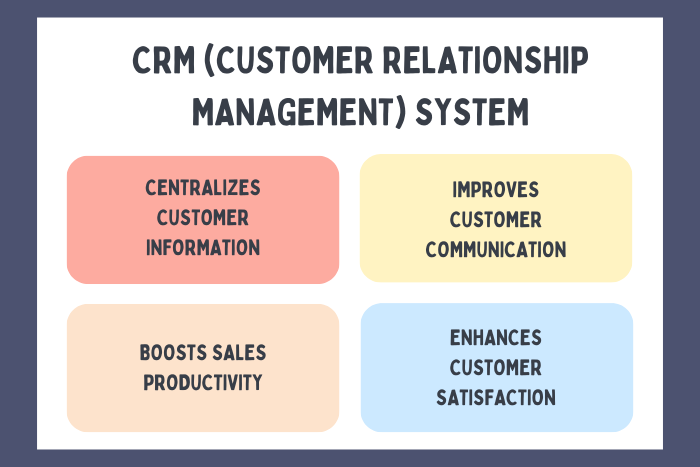
Creates a single source of truth for customer data
Eliminates communication silos between sales, marketing, and support
Automates repetitive tasks such as follow-ups and lead assignments
Improves forecasting accuracy and sales planning
Enhances customer retention and lifetime value
Provides real-time performance analytics
Strengthens data security and compliance
Organizations using CRM software gain better visibility into their sales pipeline, customer preferences, and engagement patterns. This enables smarter decision-making, faster deal closures, and improved service delivery.
Types of CRM (Customer Relationship Management) System Solutions
Operational CRM – Automates sales processes, marketing campaigns, and customer service workflows
Analytical CRM – Focuses on data analysis, reporting, predictive insights, and customer behavior tracking
Collaborative CRM – Enables seamless information sharing across departments and communication channels
Cloud-Based CRM – SaaS-based CRM system accessible from anywhere with automatic updates and scalability
On-Premise CRM – Installed within internal infrastructure for complete control and customization
Hybrid CRM – Combines cloud flexibility with on-premise data management
Industry-Specific CRM – Customized CRM solutions tailored for healthcare, real estate, finance, education, and retail
Custom CRM Development – Fully personalized CRM platforms built around unique business workflows
Key Features of CRM (Customer Relationship Management) System
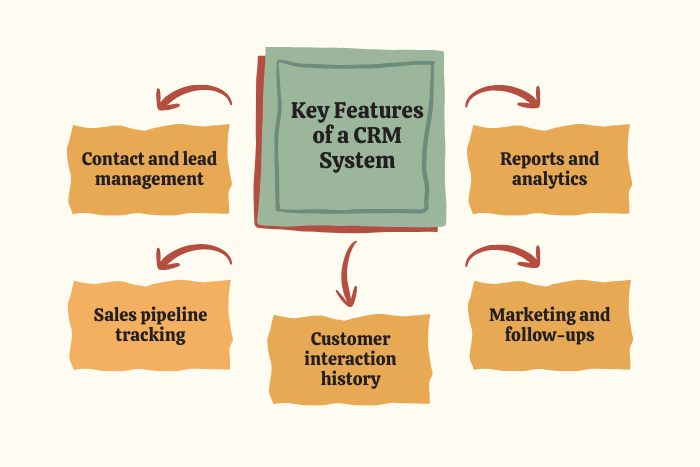
A powerful CRM system includes features that optimize every stage of the customer lifecycle:
Lead management and qualification tracking
Sales pipeline management and forecasting
Contact and account management
Marketing automation and campaign tracking
Email, SMS, and communication integration
Customer service ticketing and case management
Workflow automation and approval routing
AI-driven insights and predictive analytics
Real-time dashboards and custom reports
Multi-channel engagement tracking
Role-based access control and advanced security
Integration with ERP, accounting, and third-party tools
These features ensure businesses can manage customer relationships efficiently while improving operational productivity.
Development Process for CRM System
We follow a structured approach to develop and implement a high-performing CRM System:
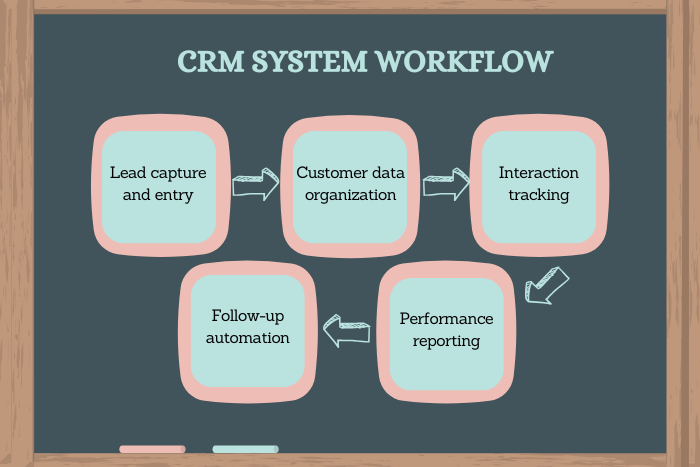
Business Analysis & CRM Strategy Planning
We assess your sales funnel, marketing strategy, and customer service workflows to design a tailored CRM solution.System Architecture & UX Design
Our team creates scalable CRM architecture with intuitive dashboards to ensure high user adoption.Custom Module Development
We build sales automation, marketing automation, and support modules based on your operational requirements.Integration & Data Migration
Secure integration with ERP systems, accounting tools, email platforms, and migration of legacy data.Testing & Quality Assurance
Functional, performance, and security testing ensure reliable CRM system performance.Deployment & Team Training
Smooth CRM deployment with structured training for teams.Post-Launch Support & Optimization
Continuous performance monitoring and feature enhancements.
Technology Stack
We use modern technologies to build scalable and secure CRM (Customer Relationship Management) System solutions:
Front-End: React.js, Angular, Vue.js
Back-End: Node.js, Python (Django), Java (Spring Boot), .NET
Databases: PostgreSQL, MySQL, MongoDB, MS SQL Server
Cloud Services: AWS, Microsoft Azure, Google Cloud Platform
APIs: RESTful APIs, GraphQL integrations
DevOps: CI/CD pipelines, Docker, Kubernetes
Security: SSL encryption, OAuth 2.0, JWT authentication, multi-factor authentication
Cost Factors of CRM (Customer Relationship Management) System
The cost of implementing a CRM (Customer Relationship Management) System depends on:
Number of users and user roles
Required modules and customization level
Deployment model (cloud, on-premise, hybrid)
Integration with ERP and third-party systems
Data migration complexity
AI and advanced analytics requirements
Compliance and security standards
Ongoing maintenance and support
Small businesses may opt for standard CRM packages, while enterprises require advanced automation, AI-driven insights, and multi-branch capabilities.
Latest Trends in CRM (Customer Relationship Management) System
Modern CRM solutions continue evolving with emerging technologies:
AI-powered predictive analytics
Generative AI for automated responses and reporting
Hyper-personalized customer journeys
Omnichannel CRM integration
Mobile-first CRM applications
Voice-enabled CRM features
Low-code CRM customization platforms
Enhanced data privacy and compliance frameworks
AI integration in CRM systems enables businesses to predict customer behavior, identify opportunities, and automate decision-making processes.
Why Choose Us for CRM System Development
Choosing the right partner for CRM (Customer Relationship Management) System development determines long-term success. We provide:
Proven expertise in enterprise CRM software development
Custom-built and scalable CRM architecture
Seamless ERP and third-party integration
AI-driven automation capabilities
Strong data security and compliance focus
User-friendly design for maximum adoption
Dedicated support and long-term optimization
Our CRM solutions are designed to increase sales efficiency, improve customer retention, and deliver measurable ROI.
Ready to streamline your customer relationships and improve operational efficiency?
Let’s implement a powerful CRM system tailored to your business goals.
Contact us today for a free consultation and customized roadmap.
Key Points :
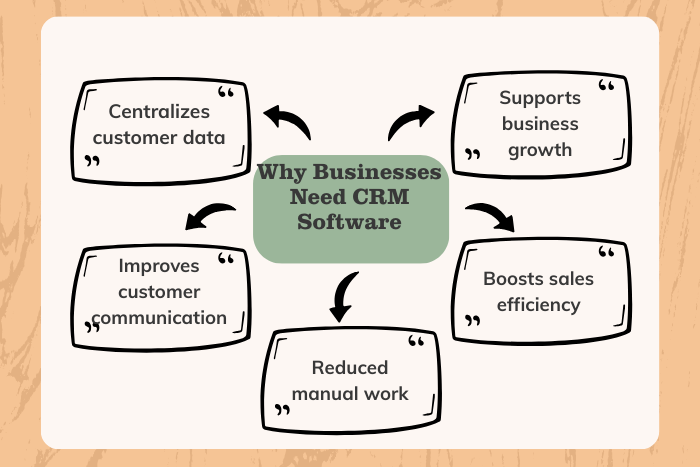
- A CRM (Customer Relationship Management) System centralizes all customer data in one platform.
- CRM software improves sales, marketing, and customer support efficiency.
- It helps businesses track leads, interactions, and follow-ups accurately.
- Cloud-based CRM Systems support remote access and scalability.
- CRM automation reduces manual work and human errors.
- CRM Systems enhance customer communication and engagement.
- Built-in CRM analytics support data-driven business decisions.
- A flexible CRM System helps businesses build long-term customer relationships.
FAQ's
A CRM system is software that helps businesses manage customer interactions, sales processes, marketing campaigns, and support services in a centralized platform.
CRM automates lead tracking, provides pipeline visibility, and enables data-driven forecasting, leading to higher conversion rates.
The main types include operational CRM, analytical CRM, collaborative CRM, cloud-based CRM, and on-premise CRM.
Yes, modern cloud CRM platforms use encryption, access controls, and compliance standards to ensure data security.
Yes, CRM systems can integrate with ERP, accounting software, marketing tools, and other business applications.
Implementation timelines depend on customization, integration, and business complexity.
Yes, CRM systems are scalable and can be customized for startups, SMEs, and enterprises.
Costs vary based on modules, user count, customization level, and deployment type.