Scalable ERP (Enterprise Resource Planning) System for finance, HR, supply chain & operations. Secure cloud & on-premise ERP solutions.
ERP (Enterprise Resource Planning) System
An ERP (Enterprise Resource Planning) System is a centralized software platform designed to integrate and manage core business processes such as finance, human resources, supply chain, procurement, manufacturing, sales, and customer management. In today’s competitive and data-driven business environment, organizations need real-time visibility, automation, and streamlined workflows to operate efficiently. Traditional disconnected systems often result in data silos, inefficiencies, and limited decision-making capabilities.
A modern ERP system consolidates multiple departments into a unified platform, enabling seamless data flow across the organization. Whether deployed on-premise or in the cloud, ERP software helps businesses improve productivity, enhance reporting accuracy, reduce operational costs, and scale efficiently. From small businesses to large enterprises, ERP solutions play a critical role in digital transformation.
Our ERP (Enterprise Resource Planning) System solutions are designed to deliver operational transparency, improved collaboration, and intelligent automation — helping organizations achieve sustainable growth and competitive advantage.
Why ERP (Enterprise Resource Planning) System is Important
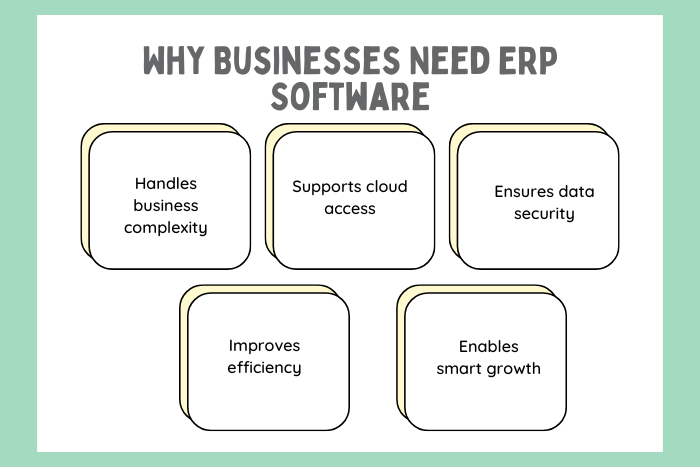
An ERP system is more than just accounting software. It serves as the digital backbone of an organization by connecting departments and automating workflows. ERP is important because it:
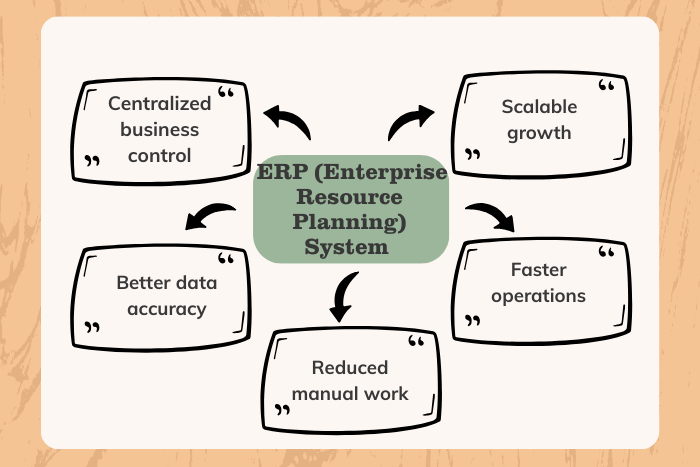
Centralizes business data into one integrated platform
Eliminates data silos across departments
Improves operational efficiency and productivity
Enhances financial reporting and compliance
Enables real-time analytics and decision-making
Supports scalability and business growth
Strengthens data security and governance
Without ERP, organizations often rely on multiple disconnected systems that lead to manual errors, duplicated data, and poor visibility. Implementing an ERP (Enterprise Resource Planning) System ensures accurate reporting, streamlined processes, and improved organizational agility.
Types of ERP (Enterprise Resource Planning) System Solutions
Cloud ERP System – SaaS-based ERP accessible anywhere with automatic updates and scalability
On-Premise ERP System – Installed within internal infrastructure for complete control
Hybrid ERP Solution – Combination of cloud and on-premise deployment
Industry-Specific ERP System – Customized modules tailored to manufacturing, retail, healthcare, education, or logistics
Small & Mid-Sized Business ERP – Scalable ERP solutions designed for growing companies
Enterprise-Grade ERP Platform – Advanced multi-location and multi-entity management systems
Custom ERP Development – Tailor-made ERP systems built to match unique operational workflows
ERP Modernization & Migration Services – Upgrading legacy systems to modern ERP platforms
Key Features of Our ERP (Enterprise Resource Planning) System
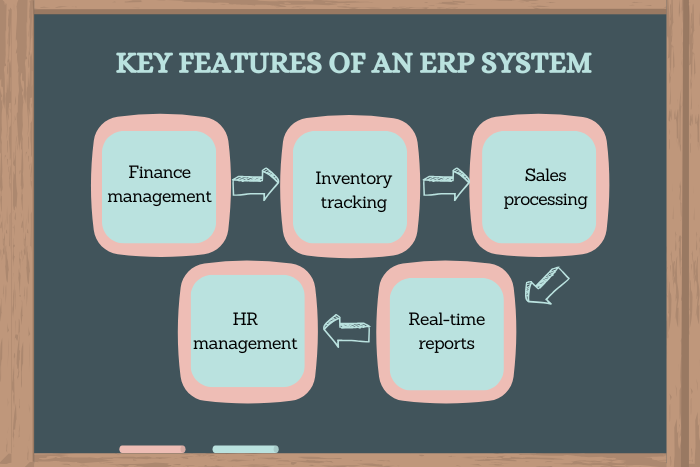
Financial management and accounting automation
Human resource management (HRMS) integration
Supply chain and inventory management
Procurement and vendor management
Sales and customer relationship management (CRM) integration
Manufacturing and production planning modules
Real-time dashboards and business intelligence reporting
Role-based access control and data security
Multi-location and multi-currency support
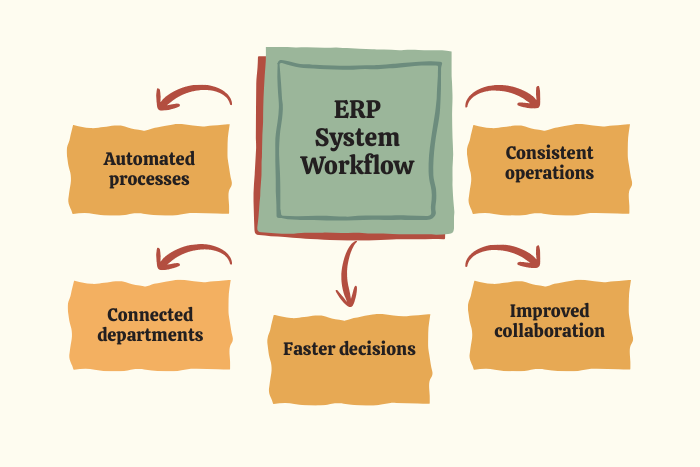
Automated workflow and approval processes
Development Process
We follow a structured and strategic ERP implementation process to ensure seamless deployment:
Business Requirement Analysis
Understanding operational workflows, challenges, and growth objectives.ERP System Design & Architecture Planning
Designing scalable and modular ERP architecture.Module Development & Customization
Building and configuring finance, HR, supply chain, and other modules.Data Migration & Integration
Migrating legacy data and integrating third-party systems.Testing & Quality Assurance
Conducting functional, performance, and security testing.Deployment & User Training
Implementing ERP system and training staff for adoption.Ongoing Support & Optimization
Continuous updates, performance monitoring, and enhancements.
Technology Stack
We leverage modern, scalable technologies to build robust ERP systems:
Front-End: React.js, Angular, Vue.js, HTML5, CSS3
Back-End: Node.js, Python (Django), Java (Spring Boot), .NET
Databases: PostgreSQL, MySQL, Oracle DB, MongoDB
Cloud Services: AWS, Microsoft Azure, Google Cloud Platform
APIs: RESTful APIs, SOAP integrations, third-party connectors
DevOps: CI/CD pipelines, Docker, Kubernetes
Security: SSL encryption, OAuth 2.0, JWT authentication, role-based access control, compliance standards
Cost Factors in ERP Implementation
The cost of implementing an ERP (Enterprise Resource Planning) System depends on:
Organization size and number of users
Required modules and customization level
Deployment model (cloud or on-premise)
Integration with existing software systems
Data migration complexity
Training and change management needs
Ongoing maintenance and support
Small businesses may adopt core ERP modules, while large enterprises require comprehensive multi-department solutions. We provide flexible pricing models tailored to organizational needs.
Latest Trends in ERP (Enterprise Resource Planning) System
AI-powered predictive analytics
Cloud-first ERP adoption
Mobile-access ERP dashboards
Low-code ERP customization tools
Industry-specific ERP vertical solutions
Real-time business intelligence integration
Blockchain integration for supply chain transparency
Enhanced cybersecurity frameworks
Why Choose Us for Your ERP (Enterprise Resource Planning) System?
Selecting the right ERP implementation partner is crucial for long-term business success. Here’s why organizations trust us:
Deep expertise in enterprise software development
Scalable and customizable ERP architecture
Strong focus on data security and compliance
Industry-specific ERP customization capabilities
Seamless integration with existing systems
Dedicated implementation, training, and support
We don’t just deploy ERP software — we deliver intelligent enterprise solutions that optimize operations and drive measurable business growth.
Ready to transform your business operations with a powerful ERP system?
Let’s implement a scalable and secure Enterprise Resource Planning solution tailored to your organization.
Contact us today for a free consultation and customized proposal.
Key Points :
- An ERP (Enterprise Resource Planning) System centralizes all business processes in one platform.
- ERP software improves data accuracy and real-time visibility across departments.
- It streamlines finance, inventory, sales, and HR management efficiently.
- Cloud-based ERP Systems support remote access and easy scalability.
- Automation in ERP reduces manual errors and operational costs.
- ERP Systems enhance team collaboration and workflow efficiency.
- Advanced ERP analytics support data-driven business decisions.
- A flexible ERP System helps businesses scale and adapt to growth.
FAQ's
An ERP system is integrated software that manages core business processes such as finance, HR, supply chain, and operations.
Accounting software focuses on financial tasks, while ERP integrates finance with other business functions like HR and inventory.
Yes, with proper encryption and compliance standards, cloud ERP solutions are highly secure.
Implementation timelines vary depending on organization size and customization needs.
Yes, ERP systems can integrate with CRM, HRMS, and third-party applications.
Yes, scalable ERP solutions are available for small and mid-sized businesses.
Manufacturing, retail, healthcare, education, logistics, and many other industries use ERP solutions.
Costs depend on modules, deployment model, customization, and number of users.