




Discover essential features of a conversion rate optimization strategy including A/B testing, user behavior analysis, UX improvements, and data-driven optimization.
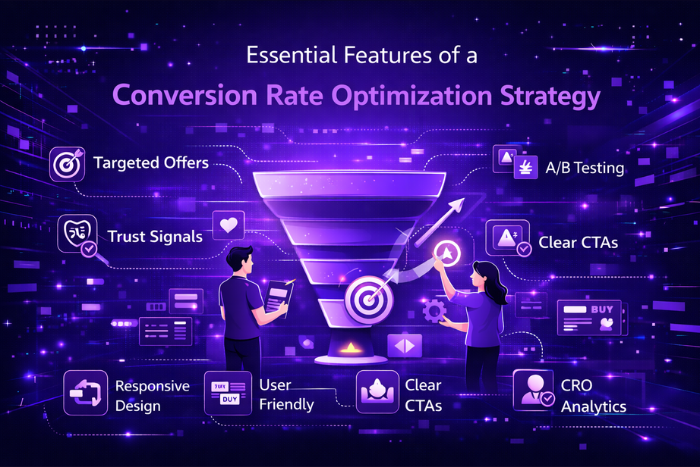

Essential Features of a Conversion Rate Optimization Strategy
Driving traffic to a website is only part of a successful digital marketing strategy. The real challenge is turning visitors into customers, leads, or subscribers. This is where understanding the essential features of a conversion rate optimization strategy becomes crucial. Conversion rate optimization (CRO) focuses on improving website performance by encouraging users to complete desired actions such as making a purchase, filling out a form, or subscribing to a newsletter.
A well-implemented CRO strategy helps businesses maximize the value of existing traffic rather than relying solely on increasing visitor numbers. By analyzing user behavior, optimizing landing pages, improving website usability, and testing different design elements, businesses can significantly increase conversion rates.
Modern CRO strategies rely heavily on data-driven insights, advanced analytics tools, user experience optimization, and continuous experimentation. These strategies help identify barriers that prevent users from converting and implement improvements that enhance the overall user journey.
Whether you run an eCommerce store, SaaS platform, or corporate website, implementing the right CRO features can dramatically improve marketing performance, increase revenue, and provide a better experience for your users.
Why Essential Features of a Conversion Rate Optimization Strategy Are Important
Conversion rate optimization plays a vital role in improving the effectiveness of digital marketing efforts. Businesses that invest in CRO strategies can generate more leads and sales from the same amount of website traffic.
Here are some reasons why CRO is essential for modern businesses:
Maximize Existing Traffic
CRO focuses on improving conversions from current visitors rather than increasing advertising spend.Increase Revenue Without Extra Traffic
Higher conversion rates lead to more sales from the same number of website visitors.Improve User Experience
CRO identifies usability issues that affect user engagement and satisfaction.Reduce Customer Acquisition Costs
Optimizing conversions lowers the cost of acquiring each customer.Better Understanding of Customer Behavior
CRO strategies rely on analytics and user behavior data to improve decision-making.Improved Marketing ROI
Businesses can achieve better returns from SEO, PPC, and social media campaigns.
By focusing on these features, businesses can create a seamless and persuasive digital experience that encourages users to convert.
Types of Conversion Rate Optimization Strategy Solutions
CRO strategies involve several optimization approaches that focus on different aspects of the customer journey.
Landing Page Optimization
Improving landing page design, messaging, and call-to-action elements to increase conversions.User Experience (UX) Optimization
Enhancing navigation, layout, and usability to make websites easier to use.Checkout and Funnel Optimization
Simplifying the conversion funnel and reducing friction during checkout processes.A/B Testing and Experimentation
Testing different page elements to identify which variations perform best.Mobile Conversion Optimization
Ensuring websites provide seamless experiences for mobile users.Form Optimization
Reducing form fields and improving form design to increase submission rates.Personalization and Dynamic Content
Delivering customized experiences based on user behavior and preferences.
Each of these solutions contributes to improving the likelihood that visitors will complete desired actions.
Key Features of a Successful Conversion Rate Optimization Strategy
A successful CRO strategy incorporates several essential features that work together to improve website performance.
User Behavior Analysis
Understanding how visitors interact with website pages using heatmaps and session recordings.Clear and Compelling Call-to-Action (CTA)
Strategically placed CTAs that encourage users to take the next step.Landing Page Optimization
Designing pages that align with user expectations and marketing campaigns.A/B Testing and Multivariate Testing
Experimenting with different layouts, headlines, and CTAs to determine the most effective combinations.Mobile Optimization
Ensuring responsive design and fast loading times on mobile devices.Page Speed Optimization
Faster websites reduce bounce rates and improve user engagement.Trust Signals and Social Proof
Customer testimonials, reviews, and security badges increase credibility.Personalized User Experiences
Customizing website content based on visitor behavior and demographics.Data-Driven Decision Making
Using analytics and performance metrics to guide optimization efforts.
These features help businesses identify and eliminate obstacles that prevent visitors from converting.
Conversion Rate Optimization Development Process
Creating an effective CRO strategy involves a structured approach that combines research, testing, and continuous improvement.
Website Performance Audit
Analyze current website performance and identify conversion barriers.Data Collection and User Behavior Analysis
Use analytics tools to track visitor behavior and interaction patterns.Conversion Funnel Analysis
Identify drop-off points in the customer journey.Hypothesis Development
Develop optimization ideas based on user data and insights.A/B Testing Implementation
Test different versions of web pages to identify better-performing elements.UX and Design Improvements
Implement design changes that improve usability and engagement.Performance Monitoring and Reporting
Track metrics such as conversion rates, bounce rates, and engagement levels.Continuous Optimization and Scaling
Apply successful changes and continue testing new improvements.
This iterative process ensures that CRO strategies evolve with user behavior and market trends.
Technology Stack for CRO Strategy Implementation
Effective CRO strategies rely on advanced tools and technologies that help analyze data and test improvements.
Analytics Platforms: Google Analytics, Adobe Analytics
Heatmap and Behavior Tools: Hotjar, Crazy Egg, Microsoft Clarity
A/B Testing Tools: Google Optimize alternatives, Optimizely, VWO
User Feedback Tools: SurveyMonkey, Qualaroo
Landing Page Builders: Unbounce, Instapage, Leadpages
Website Platforms: WordPress, Shopify, Webflow
Performance Monitoring Tools: Google PageSpeed Insights, GTmetrix
These technologies provide insights into how users interact with websites and help optimize the conversion process.
Cost Factors in Conversion Rate Optimization
The cost of implementing a CRO strategy varies depending on several factors related to the complexity of the website and optimization requirements.
Website size and complexity
Number of landing pages to optimize
Required CRO tools and software subscriptions
User behavior research and testing requirements
Design and development improvements
Ongoing experimentation and analytics
Integration with marketing platforms
Expertise and CRO consulting services
While CRO requires investment, the improved conversion rates often lead to significantly higher revenue and marketing efficiency.
Latest Trends in Conversion Rate Optimization
Conversion rate optimization continues to evolve as technology and user expectations change.
Key trends shaping CRO strategies include:
AI-Powered Personalization
Artificial intelligence helps deliver customized user experiences.Predictive Analytics for Conversion Optimization
Machine learning models predict user behavior and conversion likelihood.Voice and Conversational Interfaces
Chatbots and voice assistants help guide users through the conversion process.Interactive and Dynamic Website Content
Interactive elements increase user engagement.Mobile-First CRO Strategies
Optimizing websites primarily for mobile users.Behavior-Based Marketing Automation
Automated responses triggered by user actions.Data Privacy and Trust Optimization
Transparent data practices that build customer trust.
These trends highlight how CRO strategies are becoming more intelligent and personalized.
Why Choose Us for Conversion Rate Optimization Services?
Choosing the right CRO partner can significantly impact your digital marketing performance. Our CRO specialists focus on improving website usability, user engagement, and conversion rates through data-driven strategies.
Here’s why businesses trust our CRO services:
Data-Driven Optimization Approach – Every optimization decision is based on analytics and user behavior insights.
Expert UX and Conversion Specialists – Our team combines design expertise with marketing strategy.
Continuous Testing and Experimentation – We use A/B testing to identify the most effective website improvements.
Advanced Analytics and Reporting – Clear insights into conversion performance and improvement opportunities.
Customized CRO Strategies – Tailored solutions based on your business goals and audience behavior.
Improved Marketing ROI – Turning more visitors into customers increases the value of your traffic.
We help businesses transform website visitors into loyal customers through strategic conversion optimization.
Ready to improve your website’s conversion rate and maximize your marketing results?
Let our CRO experts analyze your website and identify high-impact optimization opportunities.
Contact us today for a free CRO consultation and website audit.
Key Points :
- A conversion rate optimization (CRO) strategy focuses on turning website visitors into customers, leads, or subscribers by improving user experience and website performance.
- Essential CRO features include user behavior analysis, landing page optimization, clear call-to-action (CTA), and personalized user experiences.
- A/B testing and multivariate testing help identify the most effective page designs, headlines, and conversion elements.
- CRO strategies use tools like heatmaps, analytics, and session recordings to understand how users interact with a website.
- Improving page speed, mobile responsiveness, and website usability helps reduce bounce rates and increase conversions.
- Continuous testing, data analysis, and optimization ensure long-term improvements in conversion rates and marketing ROI.
FAQ's
Key features include user behavior analysis, A/B testing, landing page optimization, personalized experiences, and analytics tracking.
Conversion rate optimization (CRO) is the process of improving a website to increase the percentage of visitors who complete desired actions.
Conversion rate is calculated by dividing the number of conversions by total visitors and multiplying by 100.
A/B testing allows businesses to compare different page variations and determine which performs better.
Common tools include Google Analytics, Hotjar, VWO, Optimizely, and Crazy Egg.
Initial improvements may appear within weeks, but continuous optimization provides long-term benefits.
Yes, CRO can improve performance for eCommerce websites, SaaS platforms, landing pages, and service websites.
SEO focuses on increasing website traffic, while CRO focuses on converting existing traffic into leads or customers.