Discover the essential features of a social media app including profiles, messaging, feeds, security, and AI tools to build a scalable platform.
Essential Features of a Social Media App
Social media platforms have transformed the way people communicate, share content, and build online communities. From connecting with friends to promoting businesses and creating digital content, social networking apps have become an essential part of everyday life. For businesses and startups planning to build a new platform, understanding the essential features of a social media app is crucial for creating a successful and engaging user experience.
A modern social media application is more than just a messaging or content-sharing platform. It combines powerful features such as personalized news feeds, real-time messaging, multimedia sharing, notifications, and privacy controls. These elements help users interact seamlessly while encouraging engagement and community growth. At the same time, administrators need robust management tools to moderate content, analyze user behavior, and maintain platform security.
Successful platforms like Instagram, Facebook, and TikTok demonstrate that the right combination of features can drive user retention and long-term growth. In this guide, we explore the essential features required to build a high-performing social media application, along with development processes, technology stacks, cost factors, and emerging trends shaping the future of social networking platforms.
Why Essential Features of a Social Media App Are Important
The success of any social media platform depends on how effectively it enables communication, content sharing, and community interaction. Essential features play a critical role in ensuring user engagement, platform security, and long-term scalability.
Here’s why these features are important:
Improved User Engagement
Interactive features such as comments, likes, and sharing encourage users to spend more time on the platform.Stronger Community Building
Follow systems, groups, and messaging tools allow users to build meaningful connections.Seamless Content Sharing
Users can easily upload images, videos, and posts to express ideas and share experiences.Enhanced User Retention
Personalized feeds and recommendations keep users returning to the app.Platform Security and Privacy
Strong security systems protect user data and prevent misuse of the platform.Scalable Infrastructure
Advanced features support the growth of users, creators, and businesses on the platform.
Implementing the right features ensures a balanced ecosystem that benefits both users and platform owners.
Types of Social Media Platform Solutions
Social media platforms can serve different purposes depending on their target audience and business goals.
Social Networking Platforms
Apps designed for connecting friends, family, and communities through posts, messaging, and interactions.Content Sharing Platforms
Applications focused on sharing photos, videos, or creative content.Professional Networking Apps
Platforms designed for career networking, professional communication, and recruitment.Community-Based Platforms
Apps built around shared interests such as hobbies, education, or local communities.Live Streaming Social Apps
Platforms that allow users to broadcast live video and interact with audiences in real time.
Each type of solution requires specific features and functionality tailored to the platform’s purpose.
Key Features of a Social Media App
A successful social media application requires several essential features that enhance user engagement and platform functionality.
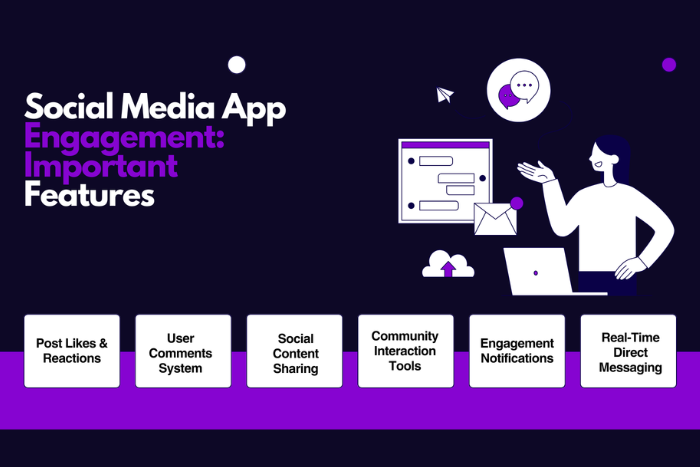
User Registration and Profile Creation
Users should be able to create accounts, customize profiles, and manage personal information.Personalized News Feed
An intelligent feed that displays relevant posts based on user interests and interactions.Content Creation and Sharing
Users can upload photos, videos, stories, and posts to share with their audience.Follow and Friend System
Allows users to connect with others, follow creators, or build communities.Real-Time Messaging and Chat
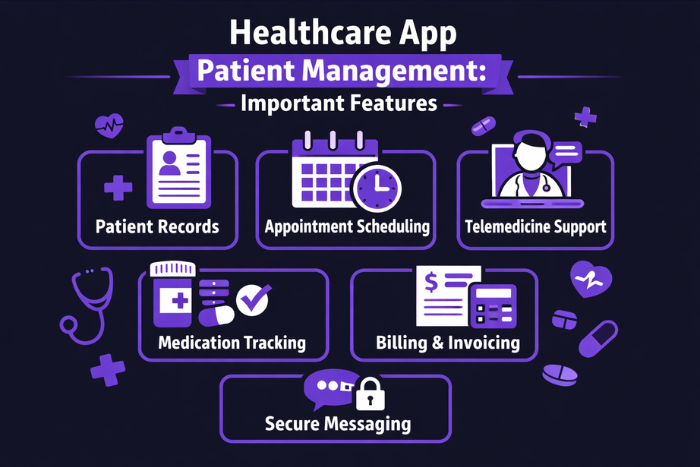
Private messaging features enable direct communication between users.Likes, Comments, and Reactions
Interactive engagement tools encourage conversations and user participation.Push Notifications
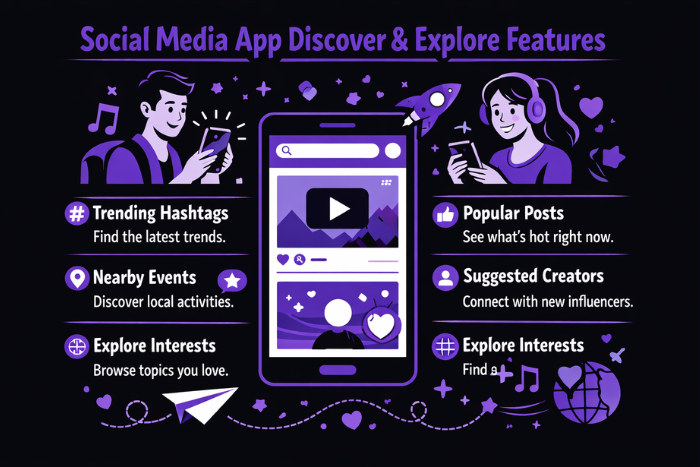
Users receive alerts for new messages, interactions, or updates.Search and Discovery Features
Advanced search tools help users find profiles, posts, and trending content.Privacy and Security Controls
Settings allow users to control who can view their content and interact with them.Content Moderation Tools
Automated and manual moderation helps maintain a safe and respectful community.
These features form the core foundation of a successful social networking platform.
Development Process for a Social Media Application
Developing a scalable and user-friendly social media app requires a structured development process.
Market Research and Requirement Analysis
Identify the target audience, platform goals, and unique value proposition.Feature Planning and Architecture Design
Define the essential features and create the system architecture.UI/UX Design and Prototyping
Design intuitive interfaces that encourage user engagement.Frontend and Backend Development
Develop the application’s user interface and server-side infrastructure.API Integration and Real-Time Features
Implement messaging systems, notifications, and third-party integrations.Testing and Quality Assurance
Conduct functional, performance, and security testing.Deployment and Launch
Release the application on mobile and web platforms.Maintenance and Continuous Updates
Improve features and performance based on user feedback.
A well-planned development process ensures stability, scalability, and long-term platform success.
Technology Stack for Social Media App Development
Modern social media apps rely on advanced technologies to support high traffic and real-time interactions.
Frontend Technologies: React Native, Flutter, Swift, Kotlin
Backend Technologies: Node.js, Python, Java, Ruby on Rails
Databases: MongoDB, PostgreSQL, MySQL, Firebase
Cloud Platforms: AWS, Google Cloud Platform, Microsoft Azure
Real-Time Communication: WebSockets, Firebase, Socket.io
Analytics Tools: Google Analytics, Mixpanel
DevOps Tools: Docker, Kubernetes, CI/CD pipelines
Security Technologies: SSL encryption, OAuth 2.0, JWT authentication
These technologies ensure fast performance, secure communication, and scalable infrastructure.
Cost Factors in Social Media App Development
The cost of building a social media application depends on multiple technical and business considerations.
App complexity and feature requirements
Platform choice (iOS, Android, or cross-platform)
UI/UX design customization
Real-time communication infrastructure
Third-party integrations and APIs
Cloud hosting and database management
Security and privacy implementation
Maintenance and long-term updates
A basic MVP version can be developed with essential features, while advanced platforms with AI recommendations require higher investment.
Latest Trends in Social Media App Development
Social media technology continues to evolve as new features improve user engagement and platform capabilities.
AI-Based Content Recommendations
Machine learning algorithms personalize user feeds.Short-Form Video Platforms
Video-based content continues to dominate social media engagement.Live Streaming and Real-Time Interaction
Users can broadcast events and interact with audiences instantly.Augmented Reality Filters
AR tools enhance photos and videos with interactive effects.Creator Monetization Tools
Platforms allow influencers to earn through subscriptions and tips.Social Commerce Integration
Users can purchase products directly within the platform.Enhanced Privacy Controls
Advanced data protection features build user trust.
These trends are shaping the next generation of social networking platforms.
Why Choose Us for Social Media App Development?
Choosing the right development partner plays a crucial role in building a scalable and feature-rich social media platform. Our team specializes in creating innovative digital products designed to drive user engagement and business growth.
Here’s why businesses choose our services:
Experienced Social Media App Developers – Skilled in building high-performance networking platforms.
User-Centered Design Approach – Creating intuitive interfaces that improve user engagement.
Scalable Cloud Architecture – Apps designed to support millions of users and large content volumes.
Advanced Security and Data Protection – Implementing modern privacy standards and encryption.
Real-Time Communication Expertise – Seamless messaging, notifications, and live streaming capabilities.
Cross-Platform Development – Build apps for iOS, Android, and web platforms efficiently.
Agile Development Process – Transparent workflows with continuous collaboration.
Long-Term Support and Optimization – Regular updates and performance improvements.
We help businesses build powerful social media platforms that engage users and create thriving digital communities.
Ready to build your own social media platform?
Let our experts develop a feature-rich social networking app tailored to your vision.
Contact us today for a free consultation and project estimate.
Key Points :
- A successful social media app must include customizable user profiles that allow users to create identities and share personal information.
- A personalized news feed helps users discover relevant posts, videos, and updates based on their interests and interactions.
- Content sharing features enable users to upload photos, videos, stories, and posts to engage with their audience.
- Real-time messaging and chat systems allow users to communicate privately and build stronger connections.
- Engagement tools such as likes, comments, and reactions encourage interaction and community participation.
- Strong privacy settings and security features help protect user data and maintain a safe platform environment.
FAQ's
Key features of social media app include user profiles, news feeds, content sharing, messaging, notifications, search tools, and privacy controls.
Development timelines vary based on complexity but typically range from three to six months for a standard platform.
The cost depends on features, platform choice, integrations, and design requirements.
Common technologies include React Native, Flutter, Node.js, MongoDB, and cloud platforms such as AWS.
Yes. AI can power recommendation systems, content moderation, and personalized feeds.
Yes. Messaging features improve user engagement and allow direct communication between users.
Yes. Many modern platforms include live streaming features to increase engagement and interaction.
Yes. Continuous updates, security improvements, and feature enhancements are essential for maintaining platform performance.