



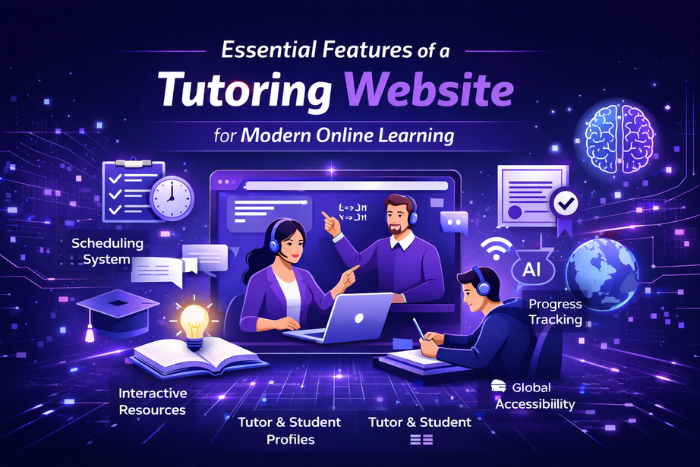
Discover the essential features of a tutoring website including virtual classrooms, tutor dashboards, booking systems, payments, and learning analytics.


Essential Features of a Tutoring Website
Online tutoring has rapidly transformed the education landscape, making learning accessible to students anytime and anywhere. Schools, educators, coaching institutes, and independent tutors are increasingly building digital platforms to deliver personalized learning experiences. To create a successful platform, understanding the essential features of a tutoring website is crucial. A well-developed tutoring website should not only connect tutors with learners but also provide seamless communication, scheduling, payments, and interactive teaching tools.
Modern tutoring platforms go beyond simple video calls. They incorporate advanced features such as virtual classrooms, tutor and student dashboards, real-time collaboration tools, automated scheduling, secure payment gateways, and learning analytics. These features help tutors manage their sessions efficiently while enabling students to track their progress and stay engaged with learning.
Whether you are building a tutoring marketplace, a private tutoring website, or a full-scale eLearning platform, integrating the right features ensures smooth operations and high user satisfaction. A robust tutoring platform also helps educators expand their reach globally, attract more students, and create scalable education businesses.
In this guide, we explore the essential features of a tutoring website, the development process, and the technologies needed to build a powerful online tutoring platform.
Why Essential Features of a Tutoring Website Are Important
A tutoring website serves as a digital learning environment where tutors and students interact, schedule sessions, and track educational progress. Without the right features, managing tutoring sessions, communication, and payments can become complicated.
Here’s why implementing the essential features of a tutoring website is important:
Improved Learning Experience
Interactive tools such as video classrooms and whiteboards make online learning more engaging.Efficient Tutor Management
Tutor dashboards allow instructors to manage schedules, sessions, and student communication easily.Seamless Student Interaction
Students can browse tutors, book sessions, track progress, and access learning materials.Automated Scheduling and Payments
Integrated booking systems and payment gateways simplify session management.Scalable Online Education Platforms
With the right infrastructure, tutoring websites can support thousands of learners and tutors simultaneously.Better Performance Tracking
Analytics and progress tracking help students and tutors measure learning outcomes.
A feature-rich tutoring platform helps educational organizations deliver high-quality learning experiences while streamlining operations and improving user engagement.
Types of Essential Tutoring Website Solutions
Tutoring platforms can be designed for different educational models depending on the target audience and teaching approach.
Online Tutoring Marketplace Platforms
These platforms connect multiple tutors with students, allowing learners to choose tutors based on expertise, ratings, and pricing.
Private Tutor Websites
Individual tutors or coaching institutes use these websites to offer personalized tutoring services.
Subject-Specific Tutoring Platforms
Platforms focused on specific subjects such as mathematics, language learning, science, or test preparation.
Corporate Training Tutoring Platforms
Businesses use tutoring platforms to provide employee training, skill development, and professional certification.
Live Classroom-Based Tutoring Platforms
These platforms simulate classroom environments with video conferencing, collaboration tools, and interactive whiteboards.
Each tutoring solution requires a combination of communication, scheduling, and learning management features to ensure smooth operations.
Key Features of a Tutoring Website
A successful tutoring website includes features that support tutors, students, and administrators while providing an interactive learning experience.
User-Friendly Interface
A clean and intuitive design ensures that students can easily find tutors, schedule lessons, and access learning resources.
Tutor Profiles and Expertise Listings
Detailed tutor profiles should include qualifications, teaching experience, subject expertise, hourly rates, and reviews.
Advanced Search and Filtering
Students should be able to search tutors based on subjects, availability, ratings, and price range.
Online Booking and Scheduling System
Integrated booking tools allow students to schedule tutoring sessions according to tutor availability.
Virtual Classroom Integration
Live video sessions, screen sharing, chat tools, and virtual whiteboards make remote tutoring interactive.
Student and Tutor Dashboards
Separate dashboards allow tutors and students to manage schedules, sessions, assignments, and communication.
Secure Payment Gateway
Payment systems enable students to pay for tutoring sessions securely through credit cards, digital wallets, or subscriptions.
Ratings and Review System
Student feedback helps maintain tutor quality and improves trust on the platform.
Learning Progress Tracking
Analytics dashboards allow students and tutors to track learning progress and course completion.
Mobile Compatibility
A responsive design or mobile app ensures students can attend sessions from smartphones and tablets.
Notifications and Reminders
Automated reminders help students and tutors stay informed about upcoming sessions.
Admin Management Panel
Administrators can manage users, courses, payments, and platform analytics from a centralized dashboard.
These features ensure the tutoring website delivers a complete learning ecosystem for students, tutors, and platform administrators.
Development Process
Developing a tutoring website involves careful planning and the integration of multiple technologies to create a seamless learning platform.
Requirement Analysis
Define the platform’s target audience, business model, and feature requirements.
Platform Architecture Planning
Design the system architecture including user roles, scheduling systems, and communication tools.
UI/UX Design
Create intuitive interfaces for tutors, students, and administrators.
Backend and Frontend Development
Implement features such as tutor profiles, booking systems, virtual classrooms, and payment gateways.
Integration with Communication Tools
Integrate video conferencing, chat systems, and collaborative learning tools.
Testing and Quality Assurance
Perform usability testing, performance optimization, and security checks.
Deployment and Cloud Setup
Deploy the tutoring platform on scalable cloud infrastructure.
Maintenance and Feature Upgrades
Continuous improvements ensure the platform adapts to evolving educational needs.
Following a structured development process ensures the tutoring platform operates efficiently and supports future growth.
Technology Stack for Tutoring Website Development
Building a reliable tutoring platform requires a robust and scalable technology stack.
Frontend Technologies: React.js, Angular, Vue.js, Next.js
Backend Technologies: Node.js, Python, PHP, Java
Databases: PostgreSQL, MySQL, MongoDB
Video Communication Tools: WebRTC, Zoom API, Twilio Video
Cloud Infrastructure: AWS, Google Cloud Platform, Microsoft Azure
Payment Gateways: Stripe, PayPal, Razorpay
Security Technologies: OAuth authentication, SSL encryption, role-based access control (RBAC)
DevOps Tools: Docker, Kubernetes, GitHub Actions, CI/CD pipelines
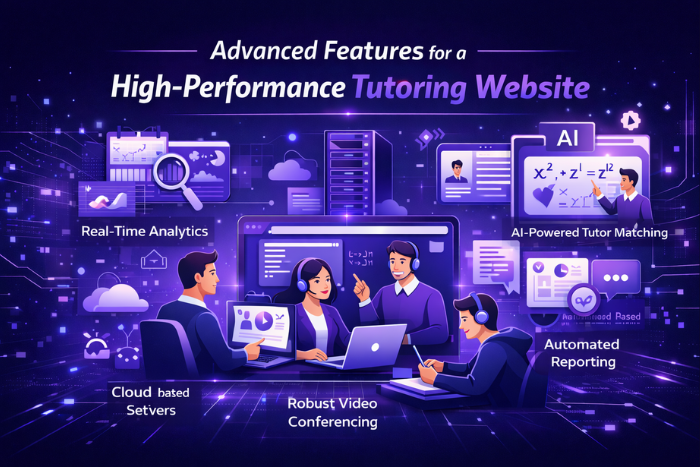
These technologies help create secure, scalable, and high-performance tutoring platforms.
Cost Factors in Tutoring Website Development
The cost of developing a tutoring website depends on various technical and business factors.
Key factors include:
Platform complexity and feature set
Virtual classroom and video integration
Booking and scheduling system development
Payment gateway implementation
Mobile compatibility and app development
Security and compliance requirements
Third-party integrations
Hosting and infrastructure costs
Maintenance and ongoing support
A simple tutoring website may require moderate investment, while a full-featured tutoring marketplace with advanced analytics and integrations may require a larger development budget.
Organizations should evaluate their long-term scalability goals when planning their tutoring platform.
Latest Trends in Tutoring Website Development
Online tutoring platforms are evolving with new technologies and learning methodologies.
Key trends include:
AI-powered tutoring assistants for personalized learning support
Interactive virtual classrooms with collaborative tools
Gamification features to increase student engagement
Microlearning modules for flexible education
Mobile-first tutoring platforms optimized for remote learners
AI-driven learning analytics to track student performance
Subscription-based tutoring services for continuous learning
Global tutoring marketplaces connecting students and tutors worldwide
These innovations are shaping the future of online tutoring platforms.
Why Choose Us for Tutoring Website Development?
Creating a successful tutoring website requires technical expertise, scalable infrastructure, and deep understanding of the education technology ecosystem. Our team specializes in building high-performance tutoring platforms designed to deliver seamless online learning experiences.
Here’s why educational organizations and tutors choose us:
Custom Tutoring Platform Development – Tailored solutions designed to meet your specific educational goals and business models.
Interactive Virtual Classroom Integration – Advanced tools including video conferencing, whiteboards, and collaboration features.
Scalable Learning Platforms – Infrastructure designed to support thousands of students and tutors simultaneously.
Secure Payment and Booking Systems – Reliable scheduling and payment solutions for smooth tutoring operations.
User-Centered Platform Design – Intuitive dashboards and interfaces for students, tutors, and administrators.
Cloud-Based Performance Optimization – High availability and fast performance using modern cloud technologies.
Flexible Feature Customization – Add features such as analytics dashboards, tutor ratings, and course management tools.
Long-Term Technical Support – Ongoing maintenance, updates, and platform improvements.
We help educators, training organizations, and startups build tutoring platforms that drive learning success and business growth.
Ready to build a powerful tutoring platform?
Let’s create a feature-rich tutoring website tailored to your learning goals.
Contact us today for a free consultation and customized development plan.
Key Points :
- A tutoring website should include tutor profiles, search filters, and booking systems to help students easily find and schedule sessions with the right tutor.
- Virtual classroom tools such as video conferencing, screen sharing, and whiteboards create an interactive online learning experience.
- Student and tutor dashboards allow users to manage schedules, track progress, communicate, and access learning resources.
- Secure payment gateways enable safe transactions for tutoring sessions, subscriptions, or course packages.
- Progress tracking and analytics help tutors monitor student performance and improve learning outcomes.
- Mobile-friendly design and notifications ensure students can attend sessions and receive updates from any device.
FAQ's
Key features include tutor profiles, booking systems, virtual classrooms, secure payment gateways, student dashboards, and learning progress tracking.
Students browse tutors, schedule sessions, attend virtual classes, and track their learning progress through the platform.
Yes, modern tutoring platforms integrate video conferencing tools such as WebRTC, Zoom, or Twilio.
Payment gateways allow students to pay securely for tutoring sessions using cards, digital wallets, or subscription plans.
Platforms include tutoring marketplaces, private tutor websites, subject-based tutoring portals, and corporate training platforms.
Development timelines vary depending on complexity, but basic platforms may take 4–6 weeks, while advanced platforms may take several months.
Yes, modern tutoring websites are designed with responsive layouts or dedicated mobile applications.
Yes, analytics and progress tracking tools allow tutors and students to monitor learning outcomes and performance improvements.