




Discover the features of a good content marketing strategy including audience research, SEO, content planning, distribution, and analytics.
Features of a Good Content Marketing Strategy
Content marketing has become one of the most effective digital marketing approaches for businesses looking to build brand authority, attract audiences, and generate long-term customer relationships. Instead of relying solely on traditional advertising, modern brands use valuable and informative content to educate, inspire, and engage their target audience. Understanding the features of a good content marketing strategy is essential for businesses that want to create meaningful connections with customers and drive consistent online growth.
A well-designed content marketing strategy focuses on delivering the right message to the right audience at the right time. This includes creating blog articles, videos, infographics, guides, and social media content that provide genuine value to users. When executed properly, content marketing improves search engine visibility, builds trust, and supports lead generation.
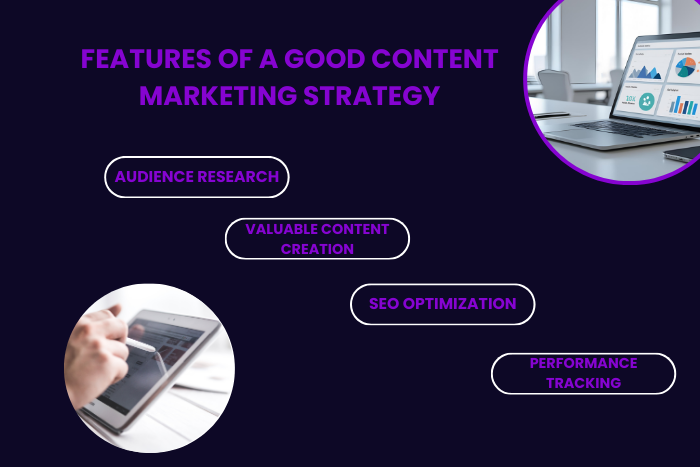
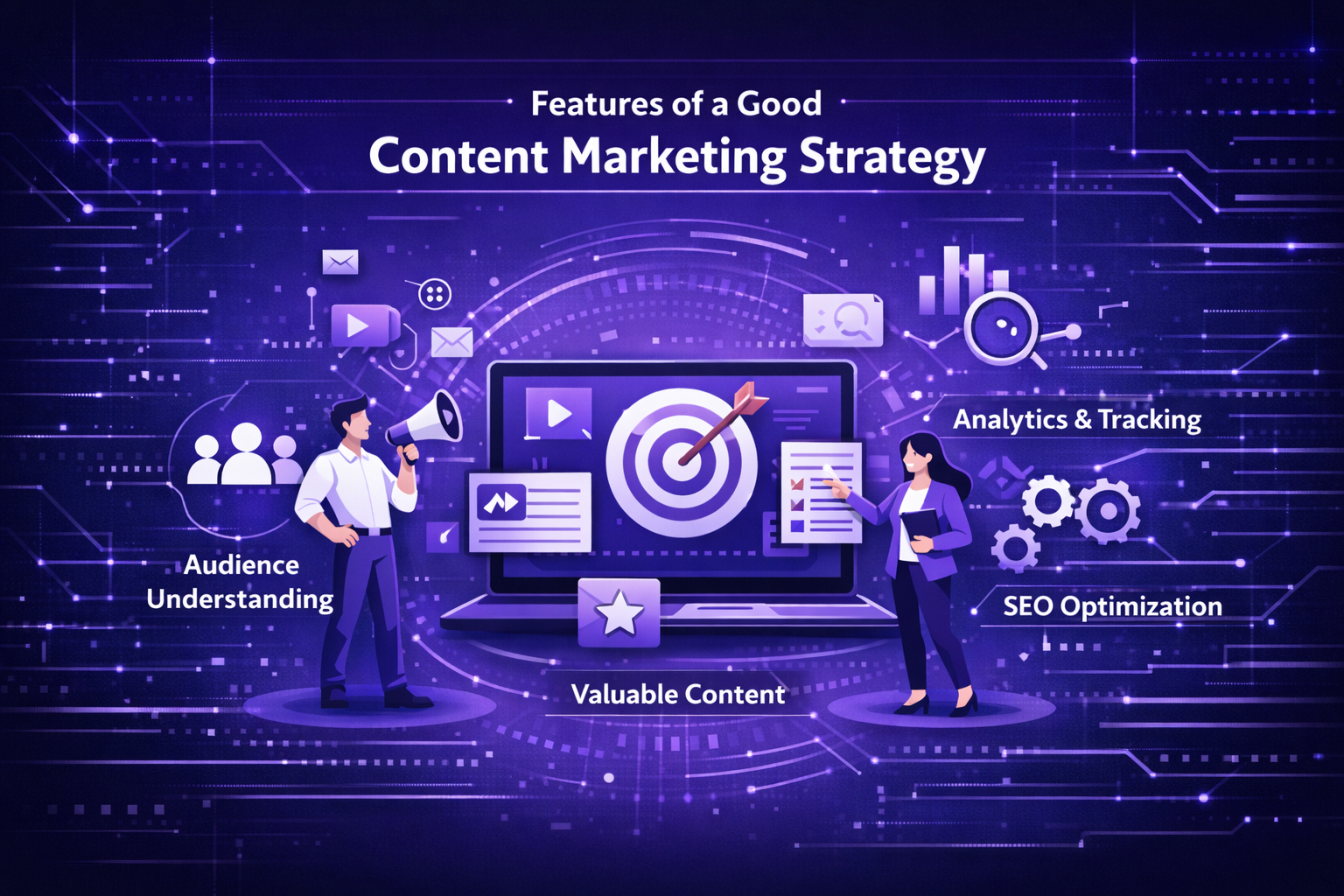
Successful strategies also involve audience research, search engine optimization (SEO), content planning, and performance tracking. Businesses that invest in these components can create a powerful content ecosystem that consistently attracts traffic and converts visitors into loyal customers.
In this guide, we will explore the key elements and features that define a successful content marketing strategy, along with best practices, tools, and trends shaping modern digital marketing.
Why This Service Is Important
A strong content marketing strategy helps businesses communicate effectively with their audiences while establishing authority in their industry. Without a clear strategy, content efforts may lack direction and fail to produce measurable results.
Here’s why the features of a good content marketing strategy are important:
Improves Brand Authority
Valuable content positions businesses as industry experts.
Increases Website Traffic
SEO-focused content attracts users through search engines.
Builds Customer Trust
Informative content helps customers make better decisions.
Supports Lead Generation
Strategic content guides users through the buying journey.
Enhances Customer Engagement
Engaging content encourages sharing and interaction.
Provides Long-Term Value
High-quality content continues to generate traffic over time.
Implementing these features ensures that content marketing contributes directly to business growth.
Types of Content Marketing Strategy Solutions
Businesses can adopt different types of content marketing strategies depending on their goals and audience needs.
Educational Content Strategy
Focuses on providing informative guides, tutorials, and industry insights.
SEO Content Strategy
Targets keywords and search intent to improve search engine rankings.
Social Media Content Strategy
Uses engaging posts, visuals, and videos to reach audiences on social platforms.
Lead Generation Content Strategy
Includes downloadable resources such as ebooks and whitepapers.
Brand Storytelling Strategy
Uses storytelling to build emotional connections with audiences.
Video Content Strategy
Leverages videos to increase engagement and share information quickly.
Each strategy type can be combined to create a comprehensive marketing approach.
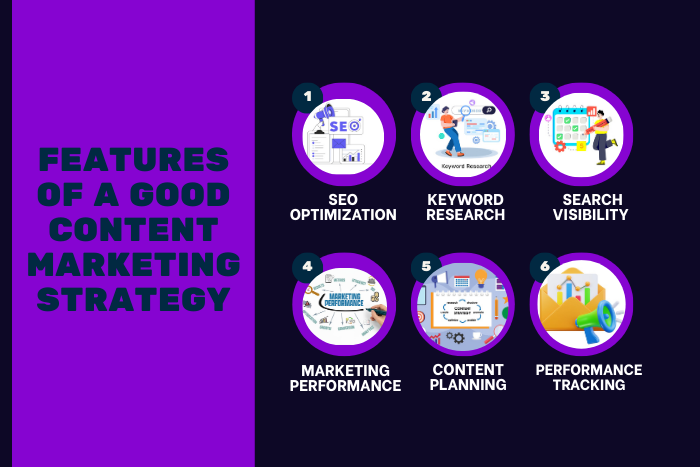
Key Features of a Good Content Marketing Strategy
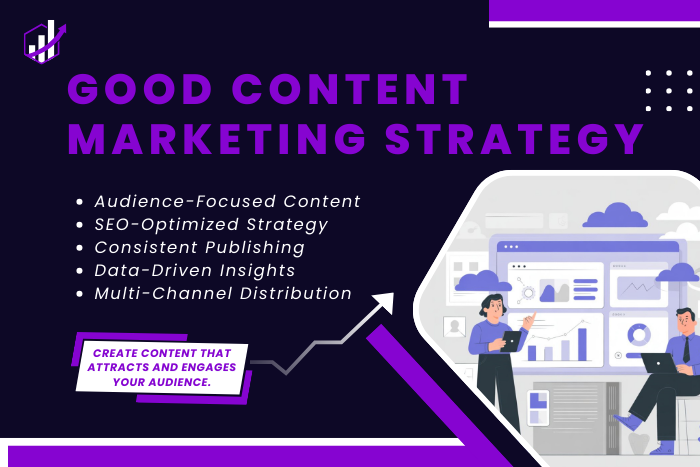
A successful content marketing strategy includes several essential elements that work together to produce results.
Clear Marketing Goals
Define objectives such as traffic growth, lead generation, or brand awareness.
Audience Research and Buyer Personas
Understanding your audience ensures content relevance and effectiveness.
SEO Optimization
Keyword research and on-page SEO improve content discoverability.
Content Planning and Editorial Calendar
Planning content in advance ensures consistency and organization.
High-Quality and Valuable Content
Content should solve problems and provide meaningful insights.
Multi-Channel Content Distribution
Sharing content across blogs, social media, email, and other channels expands reach.
Content Repurposing
Transforming blogs into videos, infographics, or social posts maximizes content value.
Consistent Branding and Messaging
Maintaining a consistent voice strengthens brand recognition.
Audience Engagement and Interaction
Encouraging comments, discussions, and feedback builds stronger relationships.
Performance Analytics and Optimization
Tracking metrics helps refine strategies and improve results.
These features help businesses create content that attracts audiences and drives meaningful engagement.
Development Process for a Content Marketing Strategy
Developing a strong content marketing strategy requires a structured process.
Goal Identification
Define marketing objectives and expected outcomes.
Audience Research
Analyze target demographics, interests, and pain points.
Keyword and Topic Research
Identify relevant keywords and trending topics.
Content Planning
Develop a content calendar with planned topics and formats.
Content Creation
Produce high-quality articles, videos, and visual content.
Content Distribution
Publish and promote content across multiple channels.
Audience Engagement
Interact with readers through comments and social media.
Performance Monitoring
Track metrics such as traffic, engagement, and conversions.
This process ensures consistent and effective content marketing efforts.
Technology Stack for Content Marketing
Businesses often use various tools to manage and optimize their content marketing strategies.
SEO Tools: SEMrush, Ahrefs, Google Search Console
Content Management Systems: WordPress, Webflow
Design Tools: Canva, Adobe Photoshop
Video Editing Tools: Adobe Premiere Pro, CapCut
Content Planning Tools: Notion, Trello
Analytics Tools: Google Analytics, HubSpot
Automation Tools: Zapier, Buffer
Email Marketing Platforms: Mailchimp, ConvertKit
These tools streamline the content creation, distribution, and tracking processes.
Cost Factors in Content Marketing Strategy
The cost of implementing a content marketing strategy can vary depending on several factors.
Important cost considerations include:
Content creation and copywriting
Graphic design and multimedia production
SEO tools and keyword research software
Content management systems
Marketing automation tools
Paid promotion and advertising
Influencer collaborations
Analytics and reporting tools
Businesses can start with organic strategies and gradually expand investments as results grow.
Latest Trends in Content Marketing
Content marketing continues to evolve as new technologies and consumer behaviors emerge.
Key trends include:
AI-assisted content creation
Interactive content such as quizzes and polls
Short-form video content
Voice search optimization
Personalized content experiences
Influencer and creator collaborations
Content repurposing across platforms
Data-driven marketing strategies
Staying updated with these trends helps businesses maintain a competitive advantage.
Why Choose Us for Content Marketing Strategy Development?
Creating a successful content marketing strategy requires expertise in SEO, storytelling, and audience engagement. Our team helps businesses design strategies that generate traffic, build authority, and convert audiences into customers.
Here’s why businesses choose us:
Strategic Content Planning
Customized strategies aligned with business goals.
SEO-Optimized Content Creation
Keyword-driven content that improves search rankings.
High-Quality Visual and Multimedia Content
Engaging visuals that increase audience interaction.
Content Distribution and Promotion
Multi-channel promotion strategies for maximum reach.
Performance Tracking and Analytics
Data-driven insights to improve marketing results.
Brand Storytelling Expertise
Content that builds emotional connections with audiences.
Audience Growth Strategies
Techniques to attract and retain readers.
Long-Term Marketing Support
Continuous strategy optimization for sustainable growth.
We help businesses create powerful content marketing strategies that deliver measurable results.
Ready to build a powerful content marketing strategy?
Let our experts help you create content that attracts and converts audiences.
Contact us today for a free consultation and customized content marketing plan.
Key Points :
- A good content marketing strategy starts with clear goals and a deep understanding of the target audience.
- High-quality, informative content helps build brand authority and trust among potential customers.
- SEO optimization using relevant keywords improves search engine visibility and organic traffic.
- A well-planned content calendar ensures consistent publishing across multiple platforms.
- Audience engagement through comments, shares, and discussions strengthens relationships with readers.
- Analytics and performance tracking help measure results and refine future content strategies.
FAQ's
Key features include audience research, SEO optimization, content planning, distribution strategies, and analytics tracking.
Content marketing helps attract audiences, build trust, and generate leads.
Common types include blog posts, videos, infographics, podcasts, and social media posts.
Consistency matters more than frequency, but many businesses publish weekly or monthly.
SEO involves optimizing content with keywords and structure to improve search rankings.
Tools such as Google Analytics, SEMrush, WordPress, and Canva are commonly used.
Yes, content marketing is a cost-effective strategy that helps small businesses reach wider audiences.