




Discover the key features of a good content website including SEO optimization, fast performance, user-friendly design, and engagement tools.
Features of a Good Content Website
Content websites have become the backbone of digital communication, education, marketing, and online publishing. From blogs and news portals to educational resources and media platforms, content websites deliver valuable information to audiences worldwide. However, building a successful platform requires more than publishing articles. Understanding the features of a good content website is essential for creating a platform that attracts visitors, engages readers, and performs well in search engines.
A well-designed content website focuses on user experience, content organization, and search engine optimization. It should provide clear navigation, responsive design, fast loading speeds, and structured content layouts that help users easily access information. At the same time, it should include powerful content management tools that allow administrators to publish and manage large volumes of content efficiently.
Modern content platforms also integrate analytics tools, social media sharing features, and personalization systems to enhance engagement and reach wider audiences. These technologies help businesses, publishers, and creators track performance and continuously improve content strategies.
Whether you are developing a blog, media website, educational platform, or digital publishing portal, implementing the right features ensures better visibility, improved reader engagement, and long-term growth.
Why Features of a Good Content Website Are Important
Content websites play a critical role in attracting visitors, delivering information, and building authority in a specific niche. Without the right features, even high-quality content may struggle to reach its intended audience.
Here are some key reasons why the features of a good content website are important:
Improved User Experience
Clear layouts and navigation make it easier for users to access relevant content.
Higher Search Engine Rankings
SEO-friendly structures help content websites rank better in search results.
Better Content Organization
Categories, tags, and archives allow readers to explore related topics easily.
Audience Engagement
Interactive elements encourage readers to spend more time on the website.
Brand Credibility
Professional design and reliable performance increase trust among visitors.
Scalable Content Management
Efficient systems allow websites to manage hundreds or thousands of articles.
By implementing these features, content websites can effectively deliver information while maintaining high usability and performance.
Types of Content Website Solutions
Content websites can serve different purposes depending on their audience and content strategy.
Blog Websites
Platforms designed to publish articles, guides, and thought leadership content.
News and Media Websites
Online publications that deliver real-time news, interviews, and editorial content.
Educational Content Platforms
Websites that provide tutorials, courses, and informational resources.
Corporate Content Websites
Businesses use these websites to publish marketing content, case studies, and industry insights.
Community and Knowledge Platforms
Platforms where users contribute content, discussions, and shared knowledge.
Each type of content website requires specialized features for managing content, improving engagement, and supporting growth.
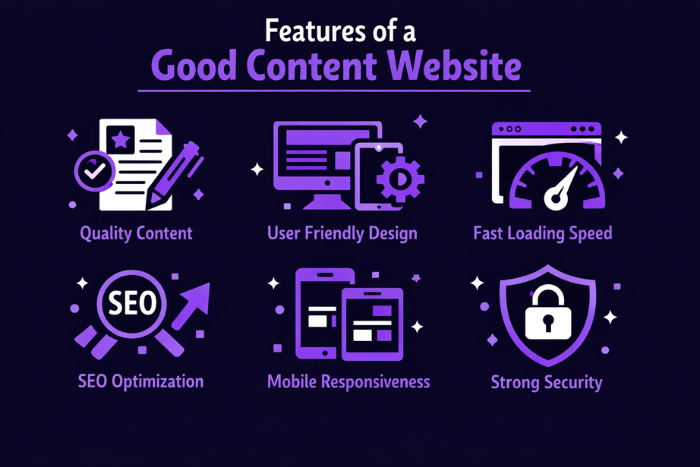
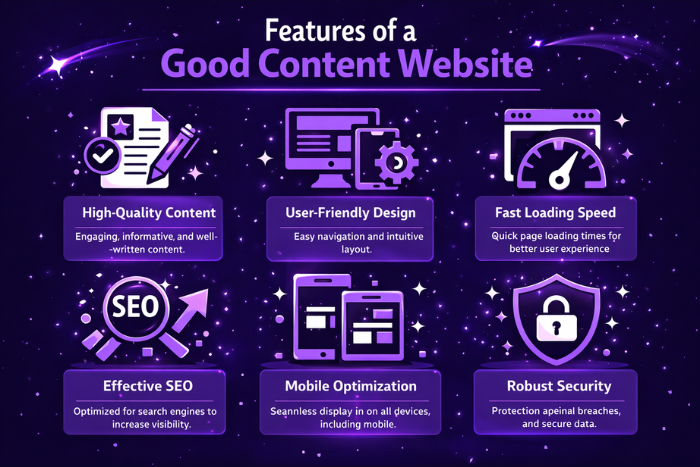
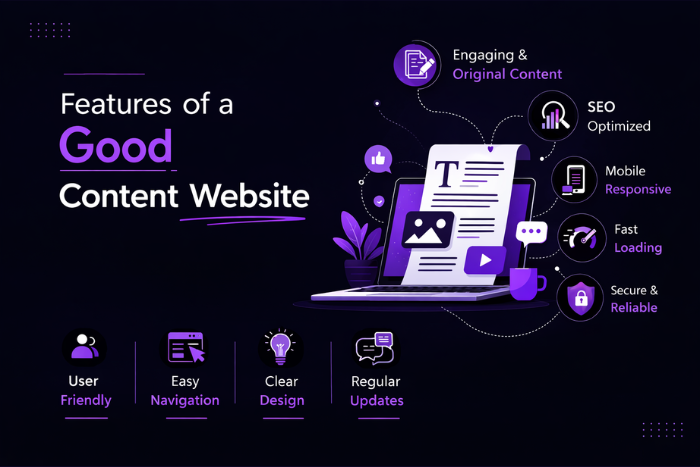
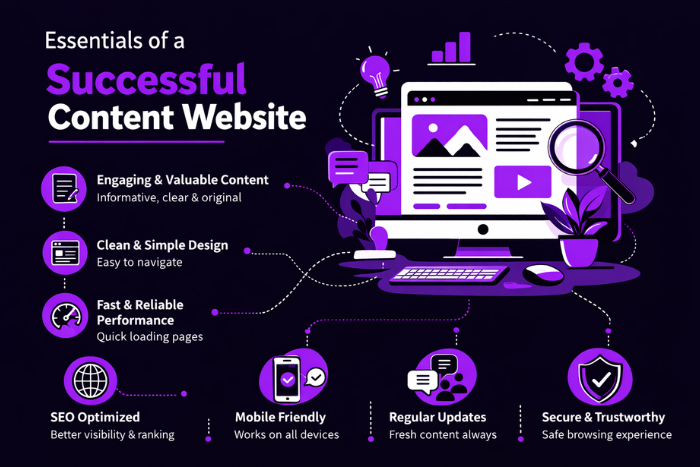
Key Features of a Good Content Website
A successful content website includes multiple features designed to improve usability, discoverability, and reader engagement.
User-Friendly Website Design
Clean layouts and intuitive navigation help users easily explore the website.
Content Management System (CMS)
A powerful CMS allows administrators to create, edit, and publish content efficiently.
SEO Optimization
Built-in SEO tools help optimize content for search engines and increase organic traffic.
Responsive and Mobile-Friendly Design
Mobile optimization ensures content is accessible across smartphones, tablets, and desktops.
Fast Website Performance
Optimized loading speeds improve user experience and search engine rankings.
Structured Content Organization
Categories, tags, and archives help users discover related content.
Search Functionality
On-site search allows visitors to quickly find specific articles or topics.
Social Media Integration
Sharing features enable users to distribute content across social networks.
Content Personalization
Recommendation systems suggest relevant content based on user interests.
Analytics and Performance Tracking
Data analytics tools help track traffic, engagement, and content performance.
Security and Data Protection
Secure infrastructure protects both website content and user data.
Clear Calls-to-Action (CTAs)
CTAs guide users to subscribe, download resources, or explore additional content.
These features ensure that content websites provide a smooth user experience while maximizing reach and engagement.
Development Process
Developing a successful content website with key features requires strategic planning and technical implementation.
Content Strategy Planning
Define the website’s purpose, target audience, and content categories.
Information Architecture Design
Plan the website structure including navigation menus and content organization.
UI/UX Design
Create visually appealing and user-friendly interfaces.
CMS Development
Implement content management systems for publishing and editing articles.
SEO and Performance Optimization
Optimize the website for search engines and fast loading speeds.
Integration with Marketing Tools
Connect the platform with analytics, social media, and email marketing systems.
Testing and Quality Assurance
Conduct usability, performance, and security testing.
Deployment and Content Publishing
Launch the website and begin publishing high-quality content.
This structured development process ensures the content platform remains efficient, scalable, and user-friendly.
Technology Stack for Content Website Development
Modern content platforms rely on advanced technologies to ensure performance and scalability.
Frontend Technologies: HTML5, CSS3, JavaScript, React.js, Vue.js
Backend Technologies: Node.js, PHP, Python
Content Management Systems: WordPress, Drupal, Ghost
Databases: MySQL, PostgreSQL, MongoDB
Analytics Tools: Google Analytics, Search Console
Cloud Platforms: AWS, Google Cloud Platform, Microsoft Azure
SEO Tools: XML sitemaps, schema markup, SEO plugins
Security Technologies: SSL encryption, authentication systems
DevOps Tools: Docker, CI/CD pipelines
These technologies help build scalable content platforms that support large audiences and high traffic volumes.
Cost Factors in Content Website Development
The cost of developing a content website with advanced features depends on several factors.
Key cost considerations include:
Custom design and branding
Content management system implementation
SEO optimization and performance features
Integration with analytics and marketing tools
Hosting infrastructure and scalability
Security and data protection measures
Custom development for personalization features
Maintenance and ongoing support
Businesses and publishers should consider both development costs and long-term operational expenses.
Latest Trends in Content Platform Development
Content platforms continue to evolve with new technologies improving content delivery and audience engagement.
Key trends include:
AI-powered content recommendations for personalized reading experiences
Voice search optimization for modern search engines
Interactive multimedia content including videos, podcasts, and infographics
Mobile-first content platforms optimized for smartphone users
Subscription-based content models for premium content access
Data-driven content strategies using advanced analytics
Integrated social media publishing tools for wider reach
Headless CMS architecture for flexible content delivery
These innovations are shaping the future of digital content platforms.
Why Choose Us for Content Website Development?
Building a high-performing content website with essential features requires expertise in web design, SEO optimization, and scalable architecture. Our team specializes in developing powerful content platforms designed to deliver exceptional user experiences and maximize content reach.
Here’s why businesses and publishers choose us:
Custom Content Website Development
Tailored platforms designed for your audience and content strategy.
SEO-Optimized Website Architecture
Websites built to rank higher in search engine results.
User-Centered Design
Interfaces designed to improve readability and navigation.
Scalable Content Management Systems
Efficient tools for managing large content libraries.
Performance Optimization
Fast-loading websites that enhance user engagement.
Advanced Analytics Integration
Data insights that help improve content strategies.
Security and Reliability
Secure infrastructure that protects content and user data.
Long-Term Support and Maintenance
Continuous improvements to keep your platform competitive.
We help organizations build powerful content websites that attract readers, increase engagement, and drive growth.
Ready to launch your professional content website?
Let’s build a feature-rich platform designed for content success.
Contact us today for a free consultation and customized development plan.
Key Points :
- A good content website should have a strong content management system (CMS) to easily create, edit, and publish articles.
- SEO optimization helps content rank higher in search engines and attract organic traffic.
- Clear navigation, categories, and search functionality help users quickly find relevant content.
- Mobile-responsive design ensures the website works smoothly across smartphones, tablets, and desktops.
- Fast loading speed improves user experience and reduces bounce rates.
- Analytics tools help track visitor behavior, engagement, and content performance.
FAQ's
Important features include SEO optimization, responsive design, content management systems, analytics tools, and fast performance.
SEO helps content rank higher in search engines, attracting more organic traffic.
Popular options include WordPress, Ghost, Drupal, and custom CMS solutions.
Basic platforms may take 3–6 weeks, while complex websites may require more development time.
Yes, they can generate revenue through advertising, subscriptions, affiliate marketing, and sponsored content.
Modern content websites are designed with responsive layouts to support all devices.
Interactive features such as comments, social sharing, and personalized recommendations improve engagement.