




Discover the features of a good user experience (UX) design including usability, accessibility, intuitive navigation, and user-centered design principles.
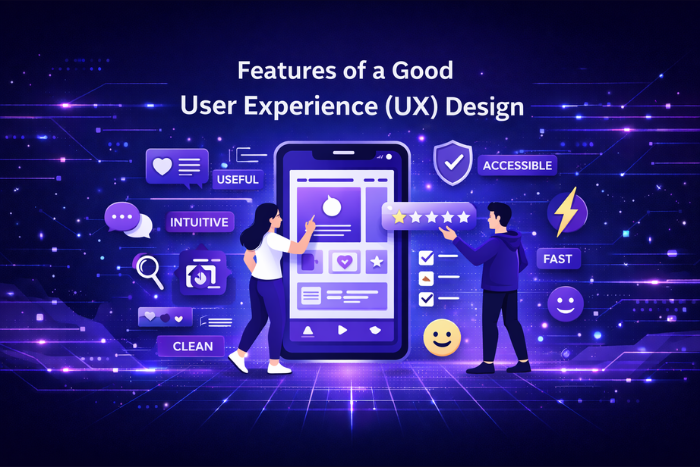
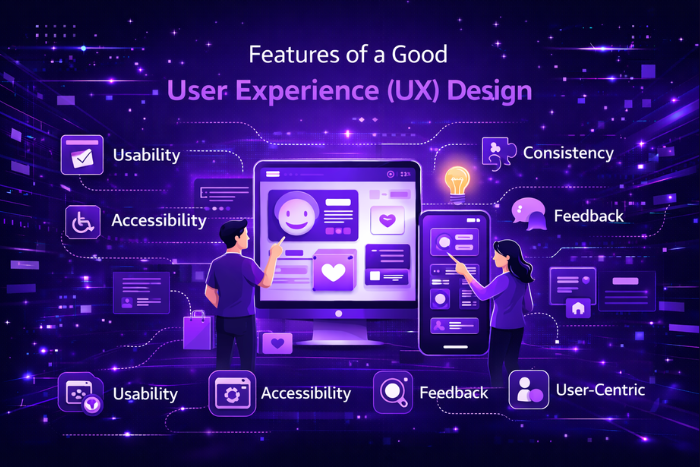
Features of a Good User Experience (UX) Design
In today’s digital world, users expect websites and applications to be intuitive, fast, and easy to use. Businesses that prioritize user satisfaction gain a competitive advantage by delivering seamless digital experiences. Understanding the features of a good user experience (UX) design is essential for building digital products that engage users, reduce friction, and improve customer satisfaction.
User experience design focuses on how users interact with a product, website, or application. It ensures that the product meets user needs efficiently while providing a smooth and enjoyable experience. A well-designed UX not only improves usability but also strengthens brand perception and increases conversion rates.
Successful UX design combines user research, interface design, usability testing, and continuous improvements based on user feedback. It involves understanding user behavior, designing intuitive navigation, and ensuring that digital products are accessible to a wide audience.
Whether developing a website, mobile application, or SaaS platform, incorporating the key features of effective UX design helps businesses deliver products that are functional, engaging, and aligned with user expectations.
Why Features of a Good User Experience (UX) Design Are Important
User experience design plays a crucial role in determining how users perceive and interact with digital products. Poor user experience often leads to frustration, high bounce rates, and lost business opportunities.
Here are several reasons why the features of a good UX design are important:
Improved User Satisfaction
A well-designed interface helps users accomplish tasks easily and efficiently.Higher Conversion Rates
Intuitive design encourages users to complete actions such as purchases or form submissions.Reduced User Frustration
Simplified workflows and clear navigation minimize confusion.Stronger Brand Loyalty
Positive user experiences build trust and encourage repeat interactions.Better Accessibility
Inclusive design ensures products are usable by a broader audience.Improved Product Adoption
Easy-to-use interfaces increase engagement and long-term usage.
By implementing strong UX design principles, businesses can deliver digital products that are both functional and enjoyable for users.
Types of User Experience (UX) Design Solutions
UX design encompasses several specialized areas that work together to create effective digital experiences.
Website UX Design
Designing websites that provide intuitive navigation and engaging user journeys.Mobile App UX Design
Optimizing interfaces and interactions for smartphones and tablets.Product UX Design
Designing digital products such as SaaS platforms and enterprise software.Interaction Design
Creating interactive elements that guide users through digital interfaces.Information Architecture Design
Organizing content and features to improve usability and navigation.Usability Testing and Optimization
Evaluating user interactions to identify improvement opportunities.UX Research and User Journey Mapping
Studying user behavior to design better digital experiences.
These UX solutions help ensure that digital products are easy to use and aligned with user expectations.
Key Features of a Good User Experience (UX) Design
A successful UX design incorporates several essential features that enhance usability, accessibility, and engagement.
User-Centered Design
Designing products based on user needs, behaviors, and preferences.Intuitive Navigation
Clear menus and logical structure that help users find information easily.Usability and Simplicity
Interfaces designed to minimize complexity and maximize ease of use.Consistent Design Patterns
Consistency in layout, colors, typography, and interface elements.Accessibility and Inclusivity
Ensuring products are usable by individuals with different abilities.Responsive Design
Seamless user experiences across desktops, tablets, and mobile devices.Visual Hierarchy
Structuring content to guide users toward important information.Fast Performance and Loading Speed
Optimized performance to reduce waiting times.Clear Feedback and Interaction
Providing users with responses and confirmations for their actions.Continuous Testing and Improvement
Iterative design processes that refine the user experience over time.
These features create digital products that are easy to navigate, engaging, and efficient.
UX Design Development Process
Designing a successful user experience requires a structured process that combines research, design, testing, and iteration.
User Research and Analysis
Gather insights about target users, behaviors, and expectations.Problem Definition and Strategy Planning
Identify key usability challenges and design goals.Information Architecture and User Flow Design
Organize content and define navigation pathways.Wireframing and Prototyping
Create low- and high-fidelity prototypes of the user interface.User Interface Design
Design visual elements such as layouts, icons, and interactive components.Usability Testing
Test designs with real users to identify usability issues.Implementation and Development Collaboration
Work closely with developers to ensure accurate design implementation.Continuous Improvement and Iteration
Collect user feedback and refine the product continuously.
This design process ensures that digital products are optimized for usability and user satisfaction.
Technology Stack for UX Design
UX designers rely on various tools and technologies to create and test digital experiences.
Design Tools: Figma, Adobe XD, Sketch
Prototyping Tools: InVision, Marvel, Axure
User Research Tools: UserTesting, Maze, Optimal Workshop
Analytics Tools: Google Analytics, Hotjar, Microsoft Clarity
Collaboration Tools: Notion, Miro, Slack
Front-End Technologies: HTML5, CSS3, JavaScript
These tools enable designers to visualize concepts, test usability, and collaborate effectively with development teams.
Cost Factors in UX Design
The cost of UX design services varies depending on several project-related factors.
Project complexity and scope
Number of screens or pages to design
User research and testing requirements
Prototyping and interactive design complexity
Integration with development teams
Required UX tools and technologies
Continuous optimization and updates
Investing in UX design often results in improved product performance and higher return on investment.
Latest Trends in UX Design
UX design continues to evolve with emerging technologies and user behavior trends.
Some of the most influential trends include:
AI-Powered Personalization
Interfaces that adapt content based on user preferences.Voice User Interfaces (VUI)
Designing interactions for voice-enabled devices.Micro-Interactions and Animation
Small interactive elements that improve engagement.Dark Mode and Adaptive Interfaces
Flexible display options for different user preferences.Inclusive and Accessible Design
Prioritizing accessibility for users with diverse needs.Immersive Experiences with AR/VR
Integrating augmented and virtual reality interactions.Minimalist Interface Design
Simplified layouts that focus on usability and clarity.
These trends demonstrate how UX design is becoming increasingly user-focused and technologically advanced.
Why Choose Us for UX Design Services?
Choosing the right UX design partner is essential for creating digital products that users love. Our team focuses on building intuitive, engaging, and user-centered experiences that improve usability and drive conversions.
Here’s why businesses trust our UX design services:
User-Centered Design Approach – We prioritize user needs and behavior in every design decision.
Comprehensive UX Research – Data-driven insights guide our design strategies.
Modern and Intuitive Interfaces – Designs that enhance usability and visual appeal.
Collaborative Development Process – Seamless collaboration between designers and developers.
Continuous Testing and Optimization – Iterative improvements based on user feedback.
Scalable Design Solutions – UX strategies that grow with your business.
Our goal is to create digital experiences that not only look great but also perform effectively.
Ready to improve the user experience of your website or application?
Let our UX design experts create intuitive digital products that engage users and drive conversions.
Contact us today for a free UX consultation and project discussion.
Key Points :
- Good UX design focuses on user-centered design, ensuring products meet user needs and expectations.
- Intuitive navigation and clear interface structure help users find information quickly and easily.
- Responsive design ensures seamless experiences across desktops, tablets, and mobile devices.
- Fast loading speed and optimized performance improve user satisfaction and reduce bounce rates.
- Accessibility and inclusive design make digital products usable for people with different abilities.
- Continuous usability testing and user feedback help refine and improve the overall user experience.
FAQ's
Key features include usability, intuitive navigation, accessibility, responsive design, fast performance, and user-centered design principles.
UX design improves usability, enhances user satisfaction, and increases conversions.
Popular tools include Figma, Adobe XD, Sketch, InVision, and user research platforms.
Well-designed user experiences make it easier for users to complete actions such as purchases or sign-ups.
Yes, better UX improves site usability, engagement, and page experience, which indirectly supports SEO.
UX design timelines depend on project complexity but typically range from several weeks to a few months.