Explore the features of a successful online community including member engagement tools, discussion forums, moderation systems, and community analytics.
Features of a Successful Online Community
Online communities have become powerful platforms for connecting people, sharing knowledge, and building strong digital ecosystems around brands, interests, and professional networks. Whether created for customers, learners, creators, or enthusiasts, a well-designed community platform can foster meaningful conversations and long-term engagement.
Understanding the features of a successful online community is essential for organizations and creators who want to build thriving digital spaces. A strong online community encourages collaboration, allows members to share experiences, and helps businesses gain valuable insights into user needs and preferences.
Modern community platforms include tools such as discussion forums, user profiles, moderation systems, event management features, and analytics dashboards. These features make it easier to manage members, encourage participation, and maintain a healthy and productive environment.
By implementing the right technology and engagement strategies, online communities can become powerful assets for businesses, brands, and organizations, helping them build loyalty, encourage collaboration, and create lasting relationships with their audience.
Why the Features of a Successful Online Community Are Important
Online communities are more than discussion spaces. They act as hubs for engagement, collaboration, and support among members.
Implementing the right features offers several benefits:
Increased member engagement and participation
Stronger relationships between members and organizations
Knowledge sharing and collaborative learning
Improved customer support through peer discussions
Enhanced brand loyalty and trust
Successful online communities help organizations build deeper relationships with their audiences while providing valuable insights and feedback.
Types of Online Community Solutions and Their Key Features
Different types of communities serve different audiences and purposes. Understanding these solutions helps organizations design effective platforms.
Customer Communities
Platforms where customers discuss products, share feedback, and seek support.Learning Communities
Educational communities where students and instructors collaborate and share knowledge.Interest-Based Communities
Communities built around hobbies, passions, or niche topics.Professional Communities
Networking platforms for professionals to share expertise and career opportunities.Brand Communities
Communities built around brands where users engage with products and services.
Each type requires specific features to ensure active participation and long-term engagement.
Key Features of a Successful Online Community
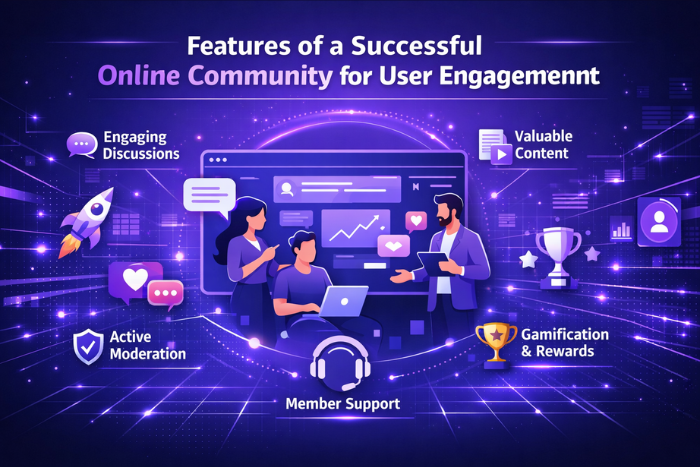
A successful online community platform should provide tools that encourage interaction, collaboration, and knowledge sharing.
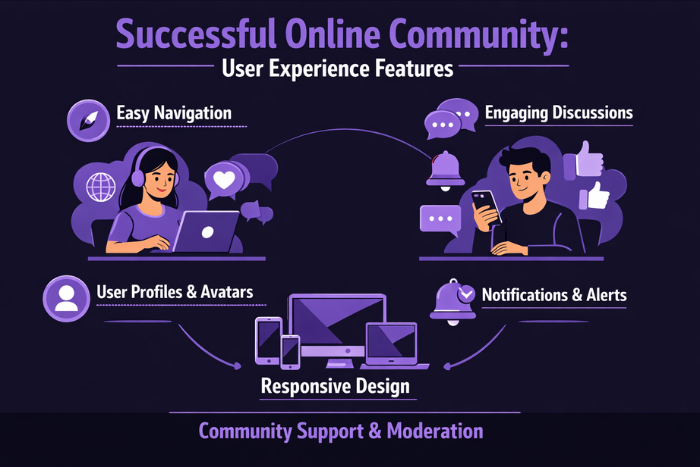
User Profiles and Member Accounts
Personalized profiles allow members to showcase interests, expertise, and achievements.Discussion Forums and Topic Channels
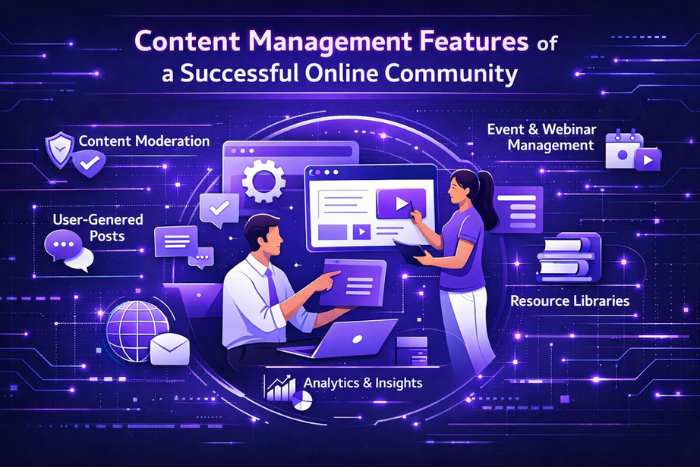
Structured discussion areas help members participate in meaningful conversations.Content Sharing and Media Support
Members should be able to share images, videos, and documents.Moderation and Community Guidelines
Moderation tools ensure respectful interactions and maintain community standards.Notification and Messaging Systems
Real-time notifications keep members informed about discussions and updates.Search and Content Organization
Advanced search functionality helps users find discussions and resources easily.Gamification and Rewards
Points, badges, and leaderboards motivate members to stay active.Events and Community Activities
Event management tools allow communities to host webinars, meetups, and discussions.Mobile-Friendly and Responsive Design
Community platforms must work seamlessly across devices.Analytics and Community Insights
Data tools help administrators track engagement and growth.
Online Community Development Process
Creating a successful online community requires strategic planning and effective implementation.
Community Strategy and Goal Definition
Identify the purpose of the community and the target audience.Platform Selection and Architecture Planning
Choose technologies and define the platform structure.User Experience and Interface Design
Design intuitive layouts that encourage participation.Feature Development and Integration
Implement discussion tools, user profiles, and moderation features.Content and Community Guidelines Setup
Establish clear rules and engagement policies.Testing and Quality Assurance
Ensure smooth performance across devices and browsers.Community Launch and Member Onboarding
Introduce the platform and encourage early participation.Continuous Engagement and Optimization
Monitor community activity and improve features over time.
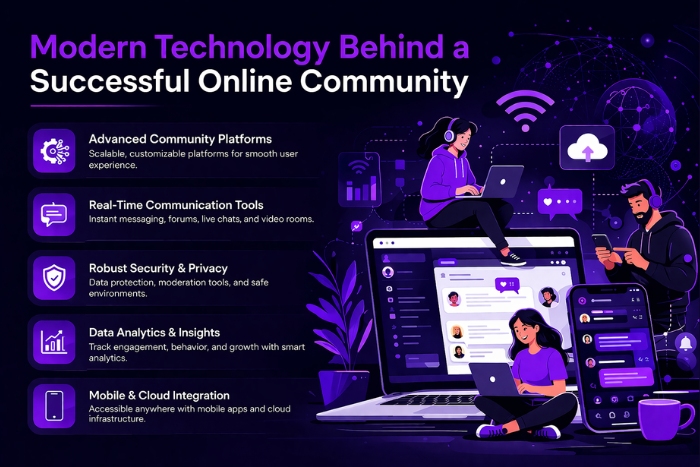
Technology Stack for Online Community Platforms
Selecting the right technology stack is essential for building scalable and reliable community platforms.
Front-End: HTML5, CSS3, JavaScript, React.js
Back-End: Node.js, Python, PHP
Community Platforms: Discourse, BuddyPress, Circle, Tribe
Database: MySQL, PostgreSQL, MongoDB
Cloud Hosting: AWS, Google Cloud Platform, Microsoft Azure
Analytics Tools: Google Analytics, Mixpanel
Security: SSL encryption, authentication systems
These technologies ensure performance, scalability, and secure user interactions.
Cost Factors in Online Community Development
The cost of building an online community platform depends on several factors.
Platform complexity and customization
Number of features and integrations
UI/UX design requirements
Community moderation tools
Hosting and infrastructure
Maintenance and support services
Third-party integrations
Organizations may choose between ready-made platforms or fully custom community solutions depending on their budget and requirements.
Latest Trends in Online Community Platforms
Online communities continue to evolve with new technologies and engagement strategies.
AI-powered content recommendations
Gamified community experiences
Live events and virtual meetups
Mobile-first community platforms
Integrated learning and knowledge hubs
Community-driven product development
Advanced community analytics
Blockchain-based community governance
These trends help communities become more interactive, personalized, and engaging.
Why Choose Us for Online Community Platform Development
Building a thriving online community requires more than just technology—it requires thoughtful design, engagement strategies, and scalable infrastructure.
Our team specializes in developing community platforms that foster collaboration and meaningful interactions.
Our strengths include:
Custom online community platform development
User-friendly and engaging interface design
Scalable and secure architecture
Advanced moderation and engagement tools
Mobile-responsive community platforms
Community analytics and reporting dashboards
Ongoing maintenance and optimization services
We help organizations build vibrant online communities that encourage participation, strengthen relationships, and drive long-term growth.
Ready to build a thriving online community platform?
Let’s create a digital space where your audience can connect and collaborate.
Contact us today for a free consultation and project quote.
Key Points :
- User profiles and member accounts help personalize the experience and allow members to build identities within the community.
- Discussion forums and topic channels enable structured conversations and knowledge sharing among members.
- Content sharing tools allow users to post images, videos, links, and documents to enrich discussions.
- Moderation and community guidelines maintain a safe, respectful, and organized environment.
- Gamification features such as badges, points, and leaderboards encourage active participation.
- Community analytics and engagement tracking help administrators monitor growth and improve interaction.
FAQ's
Successful online communities include discussion forums, user profiles, moderation tools, event management, and engagement features.
Online communities help businesses build stronger relationships with customers and gather valuable feedback.
Common types include customer communities, learning communities, interest-based communities, and professional networks.
Communities encourage discussions, collaboration, and shared learning among members.
Development timelines typically range from 4 to 12 weeks depending on features.
Yes. Communities can generate revenue through memberships, courses, sponsorships, and events.
Growth strategies include creating valuable content, encouraging member participation, and hosting community events.