




Discover the essential features of a successful online course website including course management, secure payments, analytics, and engaging learning tools.

Features of a Successful Online Course Website
Online education has experienced tremendous growth as learners increasingly seek flexible ways to gain knowledge and develop new skills. A successful online course website enables instructors, institutions, and organizations to deliver structured learning experiences through digital platforms. These websites allow users to enroll in courses, watch video lectures, complete assignments, and track their learning progress—all from a single platform.
Whether you are launching an educational startup, creating a training platform for your organization, or offering professional courses online, having the right set of features is essential. A well-designed course website must provide seamless course management, secure payment systems, engaging learning tools, and analytics that help instructors monitor student performance.
Modern online course platforms combine learning management systems (LMS), multimedia content delivery, interactive assessments, and marketing tools to create a complete learning ecosystem. By integrating these capabilities, businesses can deliver scalable and engaging learning experiences to thousands of students worldwide.
In this guide, we will explore the features of a successful online course website, along with development processes, technologies, cost considerations, and the latest trends shaping digital education.
Why an Online Course Website is Important
Online course websites play a vital role in expanding access to education and professional training. They allow organizations to deliver knowledge efficiently while enabling learners to study at their own pace.
Key benefits include:
Global reach: Instructors can teach students from anywhere in the world.
Flexible learning: Students can access courses anytime and from any device.
Scalable education models: Businesses can train thousands of learners simultaneously.
Cost-effective learning: Digital courses reduce the need for physical classrooms.
Data-driven learning insights: Analytics help improve course effectiveness and student engagement.
With the right features and architecture, an online course website becomes a powerful platform for delivering education and generating sustainable revenue.
Types of Online Course Website Solutions
Different organizations require different types of online learning platforms depending on their goals.
Instructor-Led Course Platforms
Designed for individual educators or coaches who want to sell courses online.
Includes video lessons, downloadable resources, and certification programs.
Corporate Training Platforms
Used by companies to train employees in technical skills, compliance, or leadership.
Includes reporting dashboards and employee progress tracking.
Educational Institution Platforms
Universities and schools use these platforms to deliver digital learning programs.
Supports structured curriculum and academic assessments.
Marketplace Course Platforms
Allows multiple instructors to publish and sell courses.
Includes course discovery systems, reviews, and ratings.
Membership-Based Learning Platforms
Users subscribe to access a library of courses and learning materials.
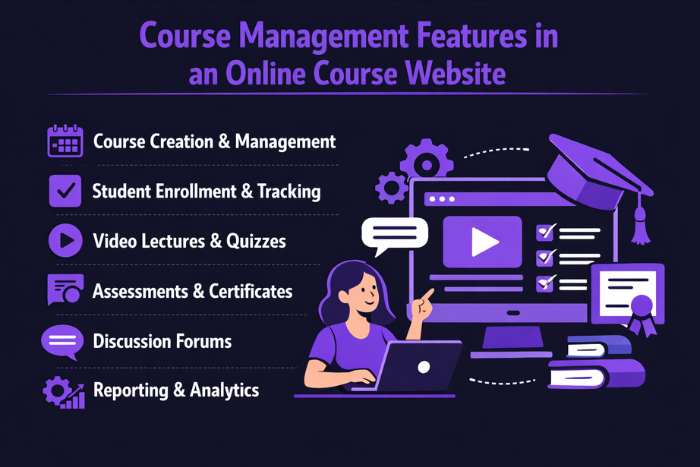
Key Features of a Successful Online Course Website
To create a highly engaging and scalable learning platform, several features must be included.
User Registration and Profiles
Users should be able to sign up, manage their profiles, track enrolled courses, and monitor learning progress.
Course Creation and Management
Instructors need tools to upload videos, organize lessons, create modules, and update course materials.
Video-Based Learning System
High-quality video streaming is essential for delivering lectures, tutorials, and demonstrations.
Interactive Assessments and Quizzes
Assessments help measure learner understanding and reinforce knowledge retention.
Secure Payment Integration
Payment gateways allow students to purchase courses using credit cards, digital wallets, or subscription plans.
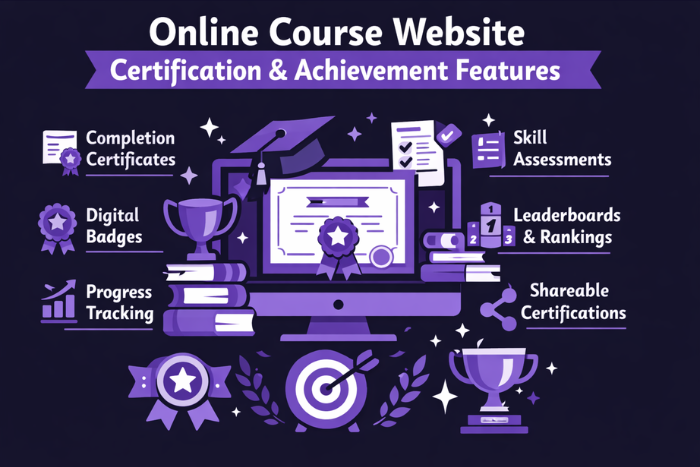
Progress Tracking Dashboard
Students and instructors should be able to view learning progress, completion rates, and performance statistics.
Certification System
Digital certificates motivate learners and validate skill acquisition.
Mobile-Friendly Design
Responsive design ensures the platform works seamlessly on smartphones and tablets.
Community and Discussion Forums
Discussion boards enable interaction between students and instructors.
Marketing and Promotion Tools
Features such as landing pages, email integrations, and discount coupons help promote courses.
Development Process
Building a successful online course website involves several key stages.
Market Research and Strategy
Identify target learners, analyze competitors, and define the platform’s goals.Feature Planning and Architecture
Decide on core features such as course management, payment integration, and analytics.UI/UX Design
Create intuitive interfaces that make course navigation simple and engaging.Platform Development
Develop both the frontend and backend infrastructure.Testing and Quality Assurance
Conduct functional and performance testing to ensure reliability.Deployment and Launch
Launch the website and optimize it for performance and security.Maintenance and Updates
Continuously update the platform with new features and improvements.
Technology Stack
Selecting the right technologies ensures scalability, security, and performance.
Frontend: React.js, Angular, Vue.js
Backend: Node.js, Django, Laravel
Mobile Compatibility: React Native, Flutter
Database: MySQL, PostgreSQL, MongoDB
Cloud Hosting: AWS, Google Cloud, Microsoft Azure
Video Streaming: Vimeo API, AWS Media Services
Payment Gateways: Stripe, PayPal, Razorpay
Analytics Tools: Google Analytics, Mixpanel

Cost Factors
The cost of developing an online course website varies depending on several factors.
Platform Complexity
Advanced features such as AI personalization and live classes increase development costs.
Number of Features
More features require additional development time and resources.
UI/UX Design Quality
Premium designs improve user engagement but add to development cost.
Content Creation
Producing professional course materials requires investment in production and instructional design.
Third-Party Integrations
Payment systems, email tools, and analytics platforms may require integration costs.
Maintenance and Updates
Continuous updates and support are essential for long-term success.
Latest Trends in Online Course Websites
Digital learning technologies continue to evolve rapidly.
AI-Powered Learning Personalization
Artificial intelligence can recommend courses and lessons based on user behavior.
Microlearning Modules
Short, focused lessons improve retention and engagement.
Gamified Learning
Badges, leaderboards, and rewards encourage course completion.
Live Interactive Classes
Real-time virtual classrooms enable direct interaction with instructors.
Mobile-First Learning
Most learners now access courses via smartphones.
Virtual and Augmented Reality Learning
Immersive experiences help learners understand complex concepts.
Why Choose Us
Building a high-performing online course website requires expertise in technology, design, and digital education.
Experienced Development Team
Our developers have extensive experience creating scalable learning platforms.
Custom Platform Solutions
We design tailored platforms that align with your business goals.
User-Centric Design Approach
We focus on intuitive interfaces that maximize learner engagement.
Advanced Technology Integration
Our solutions incorporate AI, analytics, and cloud technologies.
Scalable Infrastructure
Our platforms support thousands of concurrent users without performance issues.
Long-Term Support
We provide ongoing maintenance and feature upgrades.
Ready to launch your online course website?
Contact us today for a free consultation and customized quote.
Let’s build a powerful platform that delivers engaging digital learning experiences.
Key Points :
- Online course websites allow instructors and organizations to deliver structured learning programs to global audiences.
- Key features include course management systems, video-based lessons, secure payment gateways, and learner dashboards.
- Interactive quizzes, assignments, and certifications help improve engagement and validate skills.
- Community tools like discussion forums and live classes encourage collaboration between learners and instructors.
- Development costs depend on platform complexity, UI/UX design, integrations, and scalability requirements.
- Trends include AI-powered learning recommendations, gamified education, microlearning modules, and mobile-first learning platforms.
FAQ's
An online course website is a digital platform where instructors can host and sell educational courses to learners worldwide.
Important features include course management systems, video streaming, payment integration, analytics dashboards, and certification tools.
Development typically takes 3 to 8 months, depending on the complexity and number of features.
The cost varies depending on features, design complexity, and technology stack.
Yes, AI can enable personalized learning paths, automated assessments, and course recommendations.
Common revenue models include course sales, subscriptions, certifications, and membership plans.
Yes, modern platforms use responsive design or mobile apps to support learning on smartphones and tablets.