Learn the difference between a freelancer and an app development company. Compare cost, reliability, scalability, and which option suits your project.

What Is the Difference Between a Freelancer and an App Development Company?
When planning to build a mobile or web application, one of the most common questions businesses ask is: “What is the difference between a freelancer and an app development company?” Choosing the right development partner can significantly impact the quality, scalability, and long-term success of your application.
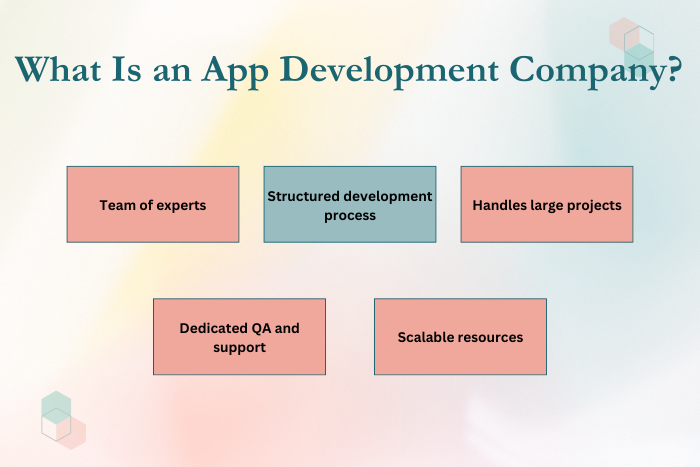
Both freelancers and app development companies offer software development services, but they differ in terms of expertise, resources, reliability, and project management capabilities. Freelancers typically work independently and may specialize in a particular technology or development task. On the other hand, an app development company provides a complete team of professionals including developers, designers, project managers, testers, and support specialists.
Startups or small businesses sometimes choose freelancers due to lower upfront costs, while larger businesses often prefer development companies for their structured processes, scalability, and long-term support. Each option has its advantages and limitations depending on the project size, timeline, and complexity.
Understanding the key differences between freelancers and app development companies helps businesses make informed decisions. In this guide, we’ll explore the advantages, challenges, development approaches, and factors to consider when choosing the right development partner for your application project.
Why Understanding the Difference Is Important
Selecting the right development partner is one of the most critical decisions in the app development journey. The choice between a freelancer and an app development company can influence project quality, delivery speed, communication efficiency, and ongoing support.
Here are several reasons why understanding this difference is important:
Project Complexity Management
Larger and more complex projects typically require multiple specialists and structured workflows.Quality and Reliability
Development companies usually have quality assurance processes that ensure stable and high-performing applications.Resource Availability
Companies provide teams with diverse skills such as UI/UX design, backend development, testing, and DevOps.Project Timeline and Scalability
Development teams can scale resources to meet deadlines more efficiently.Long-Term Support and Maintenance
Companies usually provide ongoing maintenance and technical support after project completion.Risk Management
Working with a professional development company reduces risks related to project delays or incomplete work.
Understanding these factors helps businesses choose the development model that best fits their technical requirements and budget.
Types of App Development Solutions Between a Freelancer and an App Development Company
Depending on your project requirements, both freelancers and development companies can offer different types of development solutions.
Freelance App Development
Freelancers are independent developers who typically handle smaller or specialized development tasks.
Ideal for small projects or MVPs
Lower initial development costs
Flexible hiring options
Often focused on specific technologies
App Development Company Services
App development companies provide complete end-to-end development services.
Dedicated teams of developers, designers, and testers
Structured development processes
Enterprise-level solutions
Long-term maintenance and support
Hybrid Development Model
Some businesses use a hybrid approach that combines freelancers with internal teams or development agencies.
Flexible workforce scaling
Access to specialized expertise
Cost optimization strategies
Each solution offers different advantages depending on business goals, project complexity, and available resources.
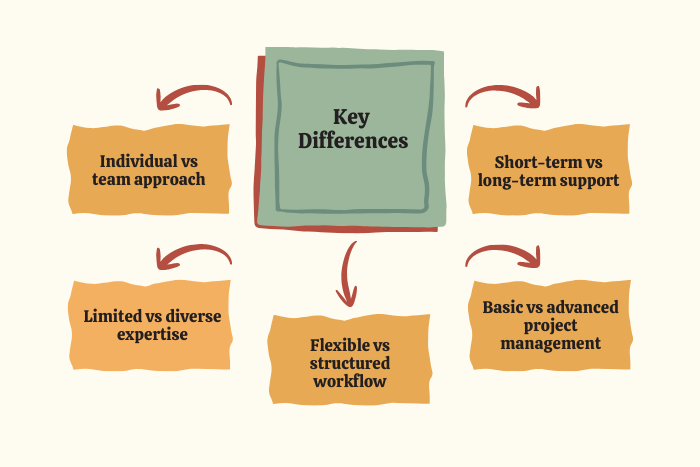
Key Differences Between a Freelancer and an App Development Company
Understanding the key differences helps businesses select the most suitable development partner.
Team Size and Expertise
Freelancers work individually, while development companies provide teams with multiple specialists including designers, developers, testers, and project managers.
Project Management
Freelancers usually manage projects independently, whereas companies follow structured workflows with dedicated project managers.
Scalability
Companies can easily scale development teams to handle larger projects or tight deadlines.
Quality Assurance
Development agencies typically include testing teams that ensure higher software quality.
Communication and Collaboration
Companies provide structured communication channels, documentation, and project tracking tools.
Security and Compliance
Development companies usually follow security standards, NDAs, and data protection policies.
Long-Term Maintenance
Companies offer ongoing support and maintenance services, while freelancers may not always provide long-term availability.
These differences help businesses evaluate which option aligns best with their project requirements.
Development Process: Between a Freelancer and an App Development Company
Whether working with a freelancer or an app development company, a structured development process is essential for successful application development.
Project Requirement Analysis
Identify business objectives, features, target audience, and technical requirements.Technology Selection
Choose appropriate programming languages, frameworks, and development tools.UI/UX Design
Create user-friendly interfaces and application workflows.Application Development
Implement frontend and backend functionality using modern development frameworks.Testing and Quality Assurance
Perform functional testing, security testing, and performance optimization.Deployment and Launch
Release the application on app stores or web platforms.Maintenance and Updates
Provide ongoing improvements, bug fixes, and performance enhancements.
Development companies usually follow structured Agile or DevOps methodologies to manage this process efficiently.
Technology Stack
Both freelancers and development companies rely on modern technologies to build scalable applications.
Mobile Development: Swift, Kotlin, Flutter, React Native
Frontend Technologies: HTML5, CSS3, JavaScript, TypeScript
Backend Technologies: Node.js, Python, Java, PHP, .NET
Databases: PostgreSQL, MongoDB, MySQL, Firebase
Cloud Platforms: AWS, Microsoft Azure, Google Cloud Platform
DevOps Tools: Docker, Kubernetes, Jenkins, GitHub Actions
Security Technologies: OAuth 2.0, JWT authentication, SSL encryption
Using the right technology stack ensures application performance, security, and scalability.
Cost Factors
Cost is often a major factor when deciding between a freelancer and an app development company.
Several factors influence development costs:
Project complexity and required features
Development timeline and deadlines
Number of developers required
UI/UX design requirements
Security and compliance requirements
Maintenance and support services
Integration with third-party APIs and platforms
Freelancers usually offer lower upfront costs, while development companies may require higher budgets but provide more comprehensive services and reliability.
Businesses should evaluate long-term value rather than focusing only on short-term cost savings.
Latest Trends in App Development Hiring
The software development industry is evolving, and businesses are adopting new strategies for hiring development talent.
Some major trends include:
Remote development teams and global hiring
Agile and DevOps-driven development processes
Hybrid development teams combining freelancers and agencies
Increased focus on security-first development
AI-assisted coding and development tools
Cloud-native and microservices architecture
Outsourcing development to specialized agencies
These trends allow businesses to build scalable applications while optimizing development costs.
Why Choose Us for App Development Services?
Choosing the right development partner can determine the success of your application. Our development team provides the reliability, expertise, and scalability that businesses need to build high-performing digital products.
Here’s why businesses choose us:
Experienced Development Team – Skilled developers, designers, and engineers with expertise in modern technologies.
End-to-End Development Services – From concept validation to deployment and ongoing support.
Scalable Development Resources – Teams that can grow with your project requirements.
Quality Assurance and Testing – Dedicated QA teams ensuring stable and secure applications.
Agile Development Methodology – Transparent workflows with regular updates and milestone tracking.
Security-First Development Approach – Implementation of industry-standard security practices.
Long-Term Maintenance and Support – Continuous updates, improvements, and technical assistance.
Proven Industry Experience – Delivering scalable solutions for startups, enterprises, and SaaS platforms.
We help businesses build reliable, scalable, and future-ready applications that drive growth and innovation.
Planning to build a mobile or web application?
Let our experts help you choose the right development approach for your project.
Contact us today for a free consultation and customized development strategy.
Key Points :
- Freelancers work independently, while app development companies provide a full team of developers, designers, and testers.
- App development companies offer structured project management and professional development processes.
- Freelancers are usually more affordable, making them suitable for small projects or MVPs.
- Development companies provide scalable resources for complex or large-scale applications.
- Quality assurance and testing are stronger in development companies due to dedicated QA teams.
- App development companies offer long-term maintenance and support, which freelancers may not always provide.
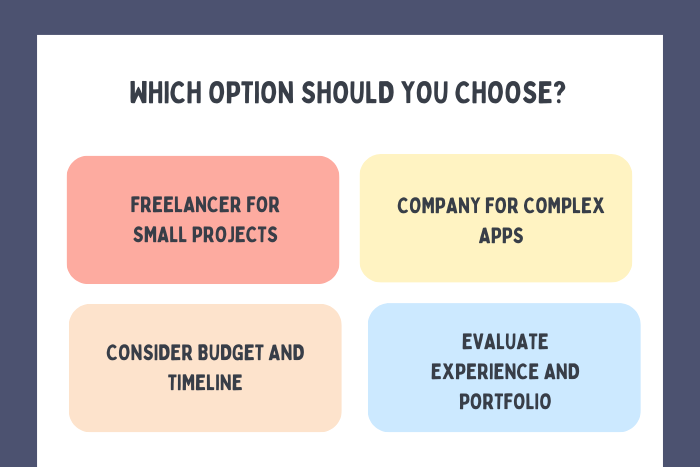
- Choosing the right option depends on project complexity, budget, timeline, and support needs.
FAQ's
A freelancer works independently on projects, while an app development company provides a team of specialists including developers, designers, and project managers.
Freelancers often have lower initial costs, but development companies provide more structured workflows, quality assurance, and long-term support.
Businesses should consider hiring a development company for complex applications, enterprise solutions, or projects requiring multiple specialists.
Freelancers can be reliable for smaller projects or specific tasks, but large projects often benefit from structured teams.
Yes, some businesses use a hybrid model that combines freelancers with internal teams or development agencies.
Startups sometimes begin with freelancers for MVP development, but may later switch to development companies as the product scales.
Evaluate factors such as experience, portfolio, communication, development process, pricing, and long-term support options.