Learn how to communicate effectively with your app development team using the right tools, workflows, and strategies for successful project delivery.

How Do I Communicate With the App Development Team?
One of the most common questions businesses ask during a digital product project is: How do I communicate with the app development team effectively? Clear communication plays a critical role in the success of any software or mobile app development project. Whether you’re working with an in-house development team or a remote development agency, structured communication ensures that ideas, requirements, feedback, and project updates are shared accurately and efficiently.
App development projects involve multiple stakeholders including product owners, developers, designers, testers, and project managers. Without proper communication channels and processes, misunderstandings can arise, leading to delays, scope creep, or misaligned expectations.
Modern development teams rely on a combination of communication tools, documentation, agile workflows, and regular progress meetings to keep projects on track. Clear collaboration helps translate business ideas into technical solutions while ensuring transparency throughout the development lifecycle.
By implementing the right communication strategies, businesses can stay involved in the project, track progress, provide timely feedback, and ensure that the final product aligns with their goals. In this guide, we’ll explore how to communicate effectively with an app development team, the tools used for collaboration, best practices for project communication, and how businesses can maintain smooth coordination during the entire development process.
Why Communication With the App Development Team is Important
Effective communication between clients and development teams directly impacts the quality, speed, and success of a software project. Poor communication can cause misunderstandings, missed requirements, and costly revisions.
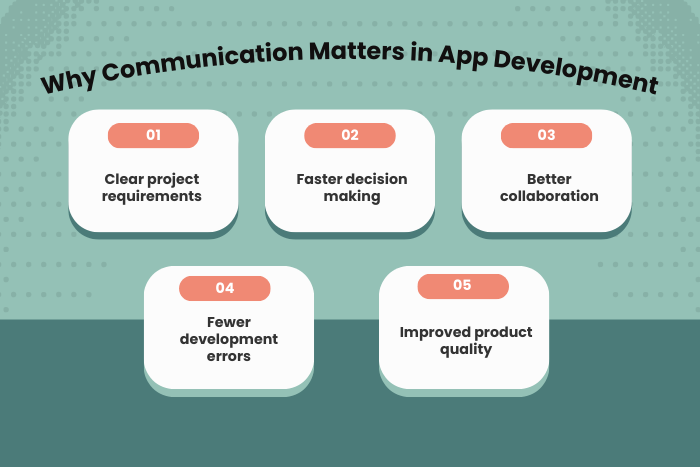
Here are the main reasons why communication is critical in app development:
Clear Understanding of Project Requirements
Developers need precise instructions to build features that align with your business goals.Faster Decision-Making
Regular communication helps resolve questions quickly and keeps the project moving forward.Transparency and Progress Tracking
Clients can monitor development progress through updates, sprint reports, and milestone reviews.Reduced Development Errors
Clear discussions minimize misinterpretation of requirements and reduce rework.Better Collaboration Between Teams
Designers, developers, and product managers can coordinate efficiently through structured communication.Improved Product Quality
Continuous feedback ensures the final product meets expectations and user needs.
Strong communication creates a collaborative environment where both clients and developers work toward the same project objectives.
Types of Communication Solutions for App Development Team
Different communication approaches are used during various stages of app development to ensure smooth collaboration.
Project Kickoff Meetings
Initial meetings where stakeholders discuss project goals, timelines, features, and expectations.
Regular Sprint Meetings
Agile teams hold weekly or bi-weekly sprint meetings to review progress and upcoming tasks.
Daily Stand-Up Updates
Short meetings where developers share what they are working on and identify potential blockers.
Project Management Platforms
Task management tools allow clients and developers to track tasks, milestones, and deliverables.
Visual Communication Tools
Wireframes, prototypes, and design mockups help explain app features clearly.
Documentation and Knowledge Sharing
Technical documents, requirement specifications, and user stories ensure everyone understands the project scope.
Using multiple communication methods ensures that project updates and feedback flow smoothly.
Key Features of Effective Communication With App Development Team
Successful app development projects rely on structured communication systems and collaborative tools.
Key features include:
Centralized communication channels for all project discussions
Real-time messaging and collaboration tools
Transparent task tracking and milestone reporting
Clear documentation of requirements and updates
Visual design communication using prototypes and wireframes
Regular progress reports and sprint reviews
Feedback management and issue tracking systems
Dedicated project managers or team leads
These features help ensure clarity, accountability, and transparency throughout the development process.
Development Process and Communication Workflow
Communication with the development team follows a structured workflow aligned with the app development lifecycle.
Project Discovery and Requirement Gathering
Stakeholders discuss the app idea, business goals, target users, and feature requirements.
Project Planning and Roadmap Creation
The development team creates a project timeline, feature roadmap, and sprint schedule.
UI/UX Design Collaboration
Designers present wireframes and prototypes while clients provide feedback on layouts and user experience.
Development Sprint Updates
Agile development cycles include regular updates and sprint reviews to demonstrate progress.
Testing and Quality Assurance Communication
Bug reports, testing feedback, and improvements are shared through project management systems.
Deployment and Launch Coordination
Teams collaborate to prepare the application for release on app stores or web platforms.
Post-Launch Monitoring and Updates
Continuous communication supports maintenance, updates, and feature enhancements.
This communication framework ensures that both clients and developers stay aligned throughout the project.
Technology Stack for Development Team Communication
Modern app development teams use advanced collaboration and project management tools to maintain efficient communication.
- Communication Tools: Slack, Microsoft Teams, Zoom, Google Meet
- Project Management Platforms: Jira, Trello, Asana, ClickUp
- Design Collaboration Tools: Figma, Adobe XD, Sketch, InVision
- Documentation Tools: Confluence, Notion, Google Docs
- Version Control Systems: GitHub, GitLab, Bitbucket
- DevOps and CI/CD Tools: Docker, Jenkins, GitHub Actions
- Cloud Platforms: AWS, Google Cloud Platform, Microsoft Azure
These tools allow teams to collaborate effectively regardless of location or time zone.
Cost Factors in App Development Communication
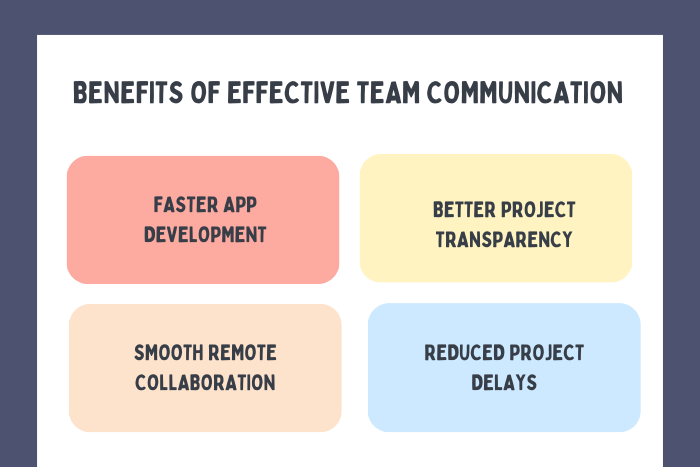
Communication itself may not seem like a cost factor, but inefficient communication can significantly increase development costs.
Key factors influencing project costs include:
Number of stakeholders involved in the project
Complexity of the application and feature set
Frequency of meetings and reporting requirements
Documentation and requirement management
Collaboration tools and project management platforms
Project management and team coordination resources
Time spent resolving misunderstandings or revisions
Investing in clear communication processes helps reduce delays and optimize project budgets.
Latest Trends in App Development Communication
Communication methods for software development teams continue to evolve with new technologies and remote collaboration models.
Some emerging trends include:
Remote-first development teams
AI-powered project management tools
Automated progress tracking dashboards
Real-time collaboration platforms
Agile and DevOps communication frameworks
Integrated documentation systems
Visual collaboration using interactive prototypes
Global distributed development teams
These trends allow businesses to collaborate efficiently with development teams located anywhere in the world.
Why Choose Us for App Development Collaboration?
Choosing the right development partner ensures that communication remains smooth, transparent, and productive throughout the entire project lifecycle.
Here’s why businesses trust us:
Dedicated Project Managers – A single point of contact for all project communication and updates.
Transparent Development Process – Regular progress reports and milestone reviews.
Agile Collaboration Workflow – Structured sprint meetings and iterative feedback cycles.
Modern Collaboration Tools – Real-time communication and project tracking platforms.
Client-Centric Communication Approach – Your feedback is incorporated at every stage of development.
Global Remote Team Experience – Expertise in managing distributed teams across time zones.
Clear Documentation and Reporting – Detailed project documentation and requirement management.
Long-Term Partnership Support – Ongoing collaboration for maintenance and product improvements.
We ensure seamless communication so your app development project stays on schedule and aligned with your vision.
Ready to collaborate with a professional app development team?
Let’s discuss your project goals and communication workflow.
Contact us today for a free consultation and development roadmap.
Key Points :
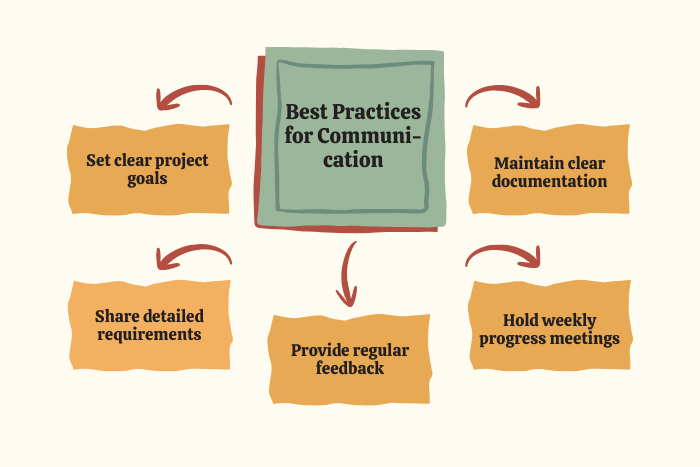
- Clear communication with the app development team ensures successful project execution and fewer misunderstandings.
- Using collaboration tools like Slack, Jira, Trello, and Zoom helps maintain smooth communication throughout development.
- Regular meetings such as sprint reviews and progress updates keep stakeholders informed about project status.
- Visual tools like wireframes, prototypes, and mockups help explain app features more effectively.
- Transparent documentation and task tracking help avoid delays and reduce development errors.
- Dedicated project managers act as the communication bridge between clients and development teams.
FAQ's
You can communicate through project management tools, video meetings, messaging platforms, and regular progress updates.
Common tools include Slack, Microsoft Teams, Zoom, Jira, Trello, and Figma.
Most projects involve weekly or bi-weekly meetings, with additional updates during development sprints.
No. A good development team will explain technical concepts clearly and use visual tools to help you understand the project.
A project manager acts as the main communication bridge between the client and the development team.
Yes. Project management tools and sprint reviews allow clients to monitor development progress.
Remote teams use collaboration tools, scheduled meetings, and documentation systems to maintain clear communication.
Prepare a clear description of your app idea, target audience, desired features, and business goals.