




Learn how to develop a travel app with features, tech stack, costs, and trends. Build scalable travel booking and tourism apps successfully.

How Do I Develop a Travel App?
If you’re asking, “How do I develop a travel app?”, you’re exploring a high-growth digital opportunity in the global tourism and hospitality industry. Travel apps have transformed how people search, plan, book, and manage trips — from flight and hotel reservations to itinerary planning and real-time navigation. Whether you want to build a travel booking app, trip planner, hotel aggregator, or tourism marketplace, success depends on strategic planning, strong technology, and seamless user experience.
Developing a travel app requires more than listing hotels and flights. It involves integrating real-time APIs, enabling secure payment gateways, designing intuitive interfaces, ensuring data security, and creating scalable backend architecture capable of handling high user traffic. With increasing competition in the travel-tech market, businesses must focus on personalization, performance, and innovation.
This complete guide explains how to develop a travel app step by step — covering business models, essential features, technology stack, cost factors, and emerging trends to help you build a scalable and profitable travel platform.
Why Travel App Development Is Important
The travel industry has become mobile-first. Travelers expect instant bookings, digital itineraries, price comparisons, and real-time updates directly from their smartphones.
Here’s why developing a travel app is important:
Enables instant booking of flights, hotels, and activities
Improves customer engagement and loyalty
Offers personalized recommendations
Generates recurring revenue through commissions
Automates operations for travel agencies
Provides real-time updates on schedules and prices
Travel apps enhance customer convenience while opening new revenue streams through commissions, subscriptions, advertisements, and merchant partnerships.
Types of Travel App Development Solutions
Travel apps vary based on their target audience and service offerings.
Flight Booking Apps
Platforms that allow users to search, compare, and book flights in real time.Hotel & Accommodation Booking Apps
Aggregator apps for hotel listings, property management, and reservations.Travel Planning & Itinerary Apps
Apps that help users plan trips, schedule activities, and manage bookings.Navigation & Map-Based Travel Apps
Real-time GPS tracking and route optimization solutions.Travel Guide Apps
Apps providing destination information, attractions, local events, and reviews.Transportation & Ride Booking Apps
Airport transfers, car rentals, and local ride-sharing integrations.
Each type requires different API integrations, user flows, and backend structures.
Key Features of a Travel App
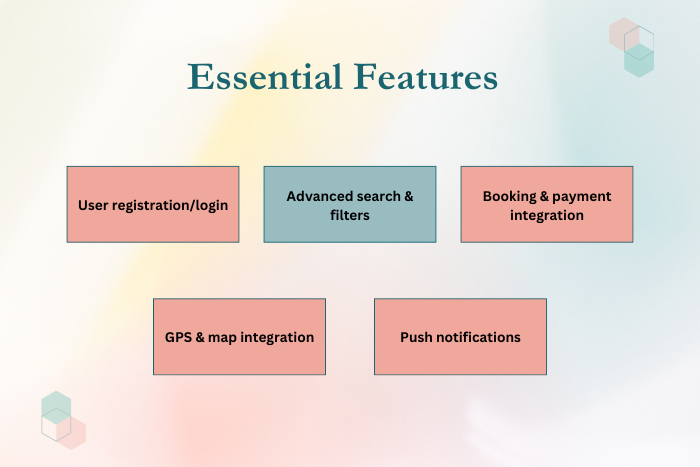
A competitive travel app must include robust features for customers, agents, and administrators to successfully develop a travel app.
User Panel Features
Secure sign-up and profile management
Advanced search and filter functionality
Real-time booking and availability updates
In-app payment gateway integration
Trip details and itinerary management
Push notifications for booking alerts
Reviews and ratings
Multi-currency and language support
Agent/Partner Panel Features
Property or package listing management
Booking and cancellation management
Payment and commission tracking
Analytics and reporting dashboard
Admin Panel Features
User and partner management
Commission configuration
Advertisement and promotion management
Data analytics and insights
Seamless integration with travel APIs ensures real-time flight and hotel data.
Travel App Development Process
Developing a travel app requires a systematic and scalable approach.
Market Research & Business Model Planning
Identify your niche, competitors, and monetization strategy.Feature Definition & MVP Planning
Define essential features for initial launch.UI/UX Design
Create intuitive and mobile-friendly interfaces.Backend Architecture Development
Build scalable infrastructure to manage bookings and payments.API Integration
Integrate third-party travel APIs for flight, hotel, and payment data.App Development (iOS & Android)
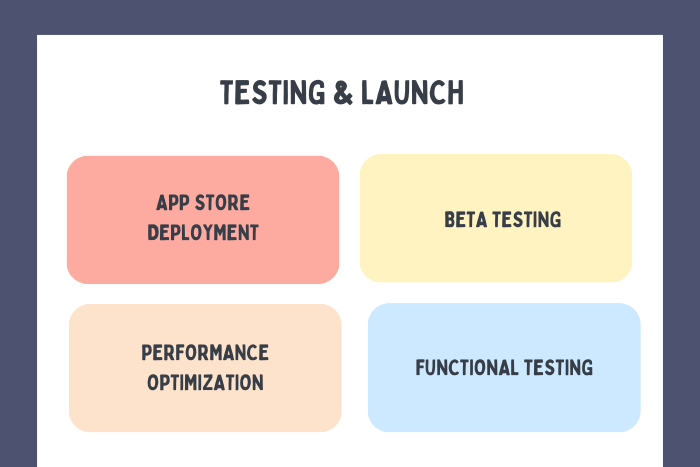
Develop cross-platform or native applications.Testing & Quality Assurance
Conduct functional, performance, and security testing.Deployment & Launch
Publish on app stores and configure cloud hosting.Maintenance & Scaling
Monitor performance, release updates, and optimize features.
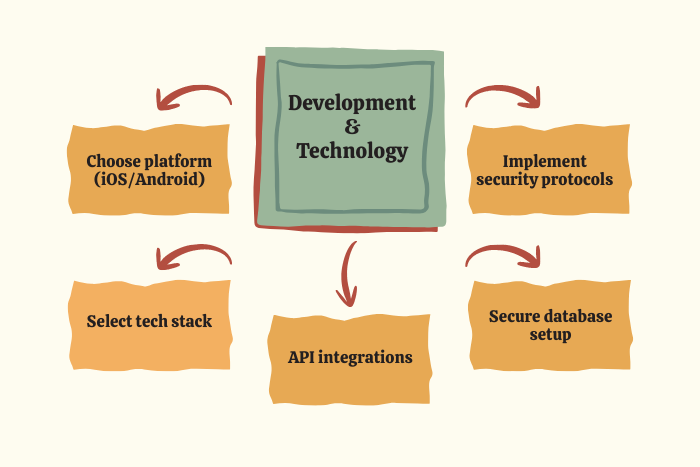
Technology Stack for Travel App Development
A reliable tech stack ensures high performance and scalability.
Mobile Development: React Native, Flutter, Swift, Kotlin
Backend Development: Node.js, Django, .NET Core
Database: PostgreSQL, MongoDB
Cloud Infrastructure: AWS, Microsoft Azure, Google Cloud
APIs & Integrations: Amadeus API, Skyscanner API, Stripe, PayPal
DevOps: Docker, Kubernetes, CI/CD pipelines
Security: SSL encryption, OAuth 2.0, multi-factor authentication
Scalable cloud infrastructure ensures the app handles seasonal traffic spikes.
Cost Factors in Travel App Development
The cost of developing a travel app depends on several variables:
App complexity and feature set
Real-time API integrations
Platform selection (iOS, Android, Web)
UI/UX customization level
Backend architecture choice
Security and compliance requirements
Ongoing maintenance and updates
A basic MVP travel app may require moderate investment, while a fully featured multi-vendor travel marketplace demands higher development costs.
Latest Trends in Travel App Development
The travel industry is rapidly evolving with advanced technologies.
AI-powered personalized travel recommendations
Chatbots for automated customer support
Blockchain for secure travel transactions
AR/VR virtual destination previews
Voice search and booking capabilities
Predictive pricing analytics
Sustainable travel tracking features
Incorporating these trends enhances user engagement and competitive differentiation.
Why Choose Us to Develop Your Travel App?
Developing a travel app requires expertise in scalable systems, real-time APIs, and seamless user experience.
Here’s why clients partner with us:
Scalable & Secure Architecture – Built to handle high traffic and secure transactions.
Travel API Integration Expertise – Real-time flight and hotel data integration.
Custom UI/UX Design – Intuitive interfaces for better user retention.
Cloud-Native Deployment – Reliable hosting with auto-scaling.
Agile Development Process – Transparent milestones and faster releases.
Post-Launch Support – Continuous optimization and feature enhancements.
We help travel startups and agencies transform innovative ideas into high-performing digital platforms.
Ready to develop your travel app?
Let’s build a scalable and revenue-generating travel solution.
Contact us today for a free consultation and cost estimate.
Key Points :
- Travel app development starts with market research, niche selection, and clear monetization strategy.
- Popular travel app types include flight booking, hotel reservation, itinerary planning, and travel guide apps.
- Core features include real-time search, booking management, secure payments, push notifications, and reviews.
- Development requires scalable backend architecture and third-party travel API integrations.
- Technology stack includes Node.js, React Native, Flutter, and cloud platforms like AWS.
- Cost depends on app complexity, API integrations, platform choice, and UI/UX customization.
- Post-launch maintenance and performance optimization are essential for long-term growth.
FAQ's
To develop an app from scratch, start with market research, define your niche, create an MVP, integrate travel APIs, build scalable backend systems, test thoroughly, and launch strategically.
Costs vary depending on features, integrations, and scalability requirements. A simple booking app costs less than a multi-vendor marketplace.
Technologies include React Native, Flutter, Node.js, cloud platforms, and real-time API integrations.
Revenue models include commission fees, merchant models, advertisements, and subscription plans.
Yes, through APIs like Amadeus, Skyscanner, and other travel data providers.
An MVP may take 3–4 months, while complex platforms can take 6–9 months.
Integration complexity, real-time data accuracy, scalability, and strong competition.
Yes, we offer ongoing monitoring, updates, and infrastructure optimization for long-term success.