



How Do I Develop an App for Education Sector? Guide
Learn how to develop an app for the education sector with features, tech stack, cost factors, and trends. Build scalable, secure eLearning solutions.
How Do I Develop an App for Education Sector?
If you’re asking, “How do I develop an app for education sector?”, you’re exploring one of the most transformative areas of digital innovation. Education apps have reshaped how students learn, teachers teach, and institutions manage academic operations. From K-12 learning platforms and language apps to corporate training systems and university portals, educational technology (EdTech) solutions are driving global accessibility and engagement.
Developing an education app involves much more than uploading video lessons. It requires strategic planning, user-centric design, scalable backend infrastructure, secure data management, interactive features, and seamless performance across devices. Whether you’re building an online learning platform, exam preparation app, tutoring marketplace, or school management system, the right development approach ensures long-term success.
This comprehensive guide explains how to develop an app for the education sector, covering essential features, types of solutions, development processes, cost factors, technology stack, and future trends shaping modern digital learning.
Why Education App Development Services Are Important
The education industry is rapidly embracing digital transformation. Learners expect flexible, on-demand, and personalized experiences.
Here’s why investing in education app development services is crucial:
Enables remote and hybrid learning models
Improves student engagement through interactive content
Expands access to global learners
Supports personalized learning journeys
Streamlines communication between teachers and students
Enhances institutional management efficiency
Enables subscription-based and scalable monetization
Educational apps empower institutions and businesses to deliver knowledge efficiently while improving measurable learning outcomes.
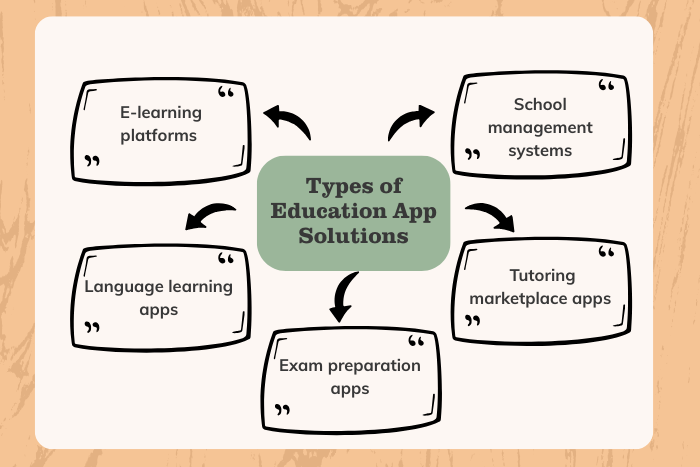
Types of Solutions to Develop an App for Education Sector
Education app development services support various learning models and audiences:
E-Learning Platforms
Comprehensive online learning systems with courses, videos, quizzes, and certifications.Language Learning Apps
Interactive vocabulary building, speech recognition, and gamified lessons.Exam Preparation Apps
Practice tests, mock exams, performance analytics, and progress tracking.Tutoring & Marketplace Apps
Platforms connecting students with certified tutors for live sessions.School & College Management Apps
Attendance tracking, fee management, announcements, and student records.Corporate Training Apps
Employee skill development, compliance training, and certification management.Gamified Learning Apps
Interactive quizzes, points, rewards, and leaderboard-based engagement.Special Education Apps
Tools designed for learners with specific educational needs.
Each solution requires a tailored architecture based on user demographics and objectives.
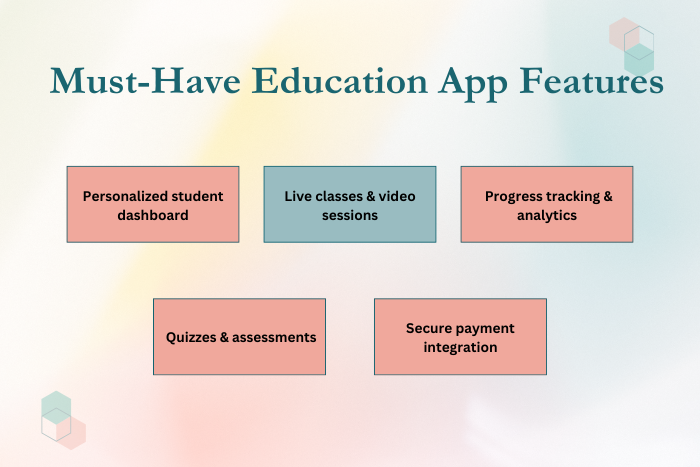
Key Features of an Education App
A successful education app must balance content delivery with interactive engagement.
Student Features:
Secure registration and login
Personalized dashboard
Course catalog and advanced search
Video streaming and recorded sessions
Live classes with chat functionality
Progress tracking and analytics
Quiz and assessment modules
Push notifications and reminders
Offline learning access
Secure payment integration
Teacher/Admin Features:
Course and content management
Assignment creation and grading
Performance analytics dashboard
Student communication tools
Role-based access control
Reporting and certification management
User experience and accessibility are central to education app success.
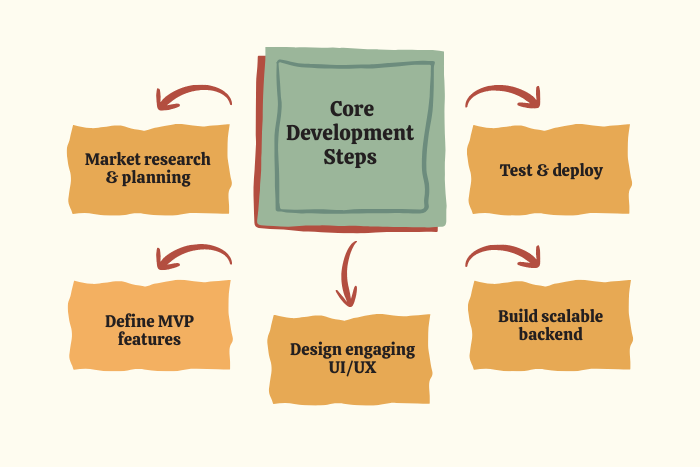
Development Process for Education Apps
A structured development roadmap ensures efficiency and scalability:
Market Research & Audience Identification
Define target users and learning objectives.Feature Planning & MVP Definition
Identify core functionalities for launch.UI/UX Design for Learning Engagement
Create intuitive interfaces optimized for students and educators.Backend Architecture & Database Planning
Design scalable infrastructure for content delivery and user data.App Development (iOS, Android, Web)
Build high-performance, cross-platform solutions.Integration of Video & Communication Tools
Enable live classes, recordings, and messaging.Testing & Quality Assurance
Ensure security, performance, and usability.Deployment & Launch Strategy
Publish to app stores and configure cloud hosting.Post-Launch Maintenance & Scaling
Continuous feature updates and optimization.
Agile development methodologies enable iterative improvements.
Technology Stack to Develop an App for Education Sector
Modern education apps rely on scalable and secure technologies:
Frontend: React Native, Flutter, Swift, Kotlin
Backend: Node.js, Python (Django), .NET Core
Database: PostgreSQL, MongoDB, Firebase
Cloud Infrastructure: AWS, Azure, Google Cloud
Video Streaming: WebRTC, AWS Media Services
AI & ML: Personalized learning algorithms
AR/VR Tools: Immersive learning experiences
Payment Gateways: Stripe, PayPal
Security: OAuth 2.0, JWT, SSL encryption
Choosing the right tech stack ensures performance and scalability.
Cost Factors in Education App Development
The cost of developing an education app depends on:
App complexity and feature set
Type of educational solution
Platform selection (iOS, Android, web)
Video streaming and live session integration
AI-based personalization features
UI/UX design complexity
Cloud hosting and storage requirements
Maintenance and post-launch updates
A basic MVP may require moderate investment, while enterprise-grade LMS platforms demand higher budgets.
Latest Trends to Develop an App for Education Sector
Education technology continues evolving with advanced innovations:
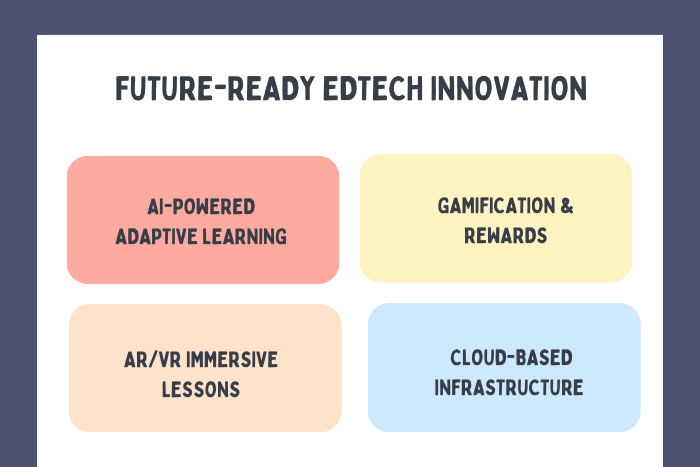
AI-driven adaptive learning paths
Gamification for improved engagement
AR/VR immersive classroom experiences
Microlearning modules
Voice-enabled learning assistants
Blockchain for certification validation
Data analytics for performance tracking
Hybrid learning ecosystems
Institutions adopting these technologies enhance learner engagement and retention.
Why Choose Us for Education App Development?
Developing a high-performing education app requires expertise in user engagement, scalable architecture, and security compliance. We provide end-to-end education app development services tailored to your learning objectives.
Here’s why clients partner with us:
Customized EdTech Solutions – Built around your educational model.
Scalable Cloud Infrastructure – Designed for global student access.
Interactive & Engaging UI/UX – Optimized for learning outcomes.
Secure & Compliant Systems – Protect sensitive student data.
AI & Gamification Expertise – Enhance personalization and retention.
Agile Development Approach – Faster time-to-market.
Ongoing Maintenance & Support – Continuous optimization.
We transform educational ideas into scalable digital learning ecosystems that drive measurable impact.
Ready to develop your education app?
Let’s build a secure, scalable, and engaging learning platform.
Contact us today for a free consultation and project estimate.
Key Points :
- Complete guide to education app development, covering planning, features, technology stack, development process, and deployment strategy.
- Comprehensive EdTech solutions including e-learning platforms, language learning apps, exam preparation apps, tutoring marketplaces, and school management systems.
- Must-have education app features such as live classes, video streaming, progress tracking, quizzes, dashboards, and secure payment integration.
- Scalable cloud-based architecture recommendations to support remote learning, global users, and high-volume content delivery
- Clear cost and timeline breakdown for MVP education apps versus enterprise-level LMS platforms.
- Secure and compliant development practices ensuring student data protection with encryption and role-based access control.
- Modern trends shaping EdTech in 2024–2025, including AR/VR learning, microlearning modules, blockchain certification, and data-driven analytics.
FAQ's
Start with market research, define features, design UI/UX, build scalable backend systems, integrate communication tools, test thoroughly, and launch with ongoing updates.
An MVP may take 3–4 months, while advanced LMS platforms may require 6–9 months.
React Native, Flutter, Node.js, cloud services, AI tools, and secure authentication systems are commonly used.
Costs depend on complexity, live streaming integration, AI features, and platform choice.
Yes. Integration with video streaming and communication tools enables real-time classes.
Monetization models include subscription plans, in-app purchases, advertisements, and certification fees.
Yes, when implemented with encryption, secure authentication, and compliance standards.
Yes, we offer maintenance, updates, scaling, and performance optimization services.