

Learn how to develop a food delivery app with features, tech stack, costs, trends, and scalable business models for success.
How Do I Develop an App for Food Delivery?
If you’re asking, “How do I develop an app for food delivery?”, you’re entering one of the fastest-growing digital markets worldwide. Online food ordering and delivery platforms have transformed the restaurant industry by connecting customers, restaurants, and delivery partners through real-time, location-based technology.
Developing a successful food delivery app requires more than just listing menus and enabling checkout. It involves choosing the right business model, integrating GPS tracking, enabling secure payments, managing multiple user panels (customers, restaurants, drivers, admin), and ensuring scalable backend architecture. Whether you’re building a startup marketplace like Uber Eats or a direct-to-consumer (D2C) restaurant app, strategic planning is critical.
In this comprehensive guide, we explain how to develop a food delivery app step-by-step, including solution types, essential features, development process, technology stack, cost factors, latest trends, and how to launch a scalable on-demand food delivery platform.
Why Food Delivery App Development Is Important
The demand for convenience, digital payments, and hyperlocal services continues to rise. Food delivery apps help businesses:
Expand customer reach beyond physical locations
Increase order volume and revenue
Automate restaurant operations
Enable real-time tracking and delivery optimization
Improve customer retention through loyalty features
Collect valuable user behavior analytics
For restaurants, cloud kitchens, and startups, investing in food delivery mobile app development creates new revenue streams while enhancing customer experience.
Types of Solutions
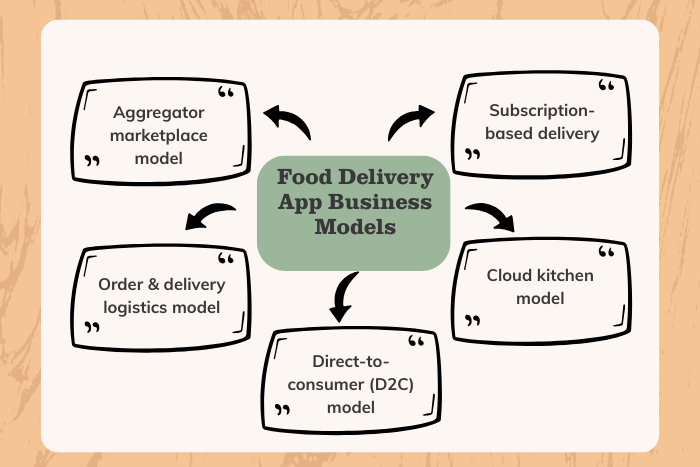
When planning how to develop an app for food delivery, selecting the right business model is essential:
Aggregator Model – Marketplace connecting multiple restaurants with customers.
Order & Delivery Model – Platform handles both orders and logistics.
Direct-to-Consumer (D2C) Model – Single restaurant brand manages its own app.
Cloud Kitchen Model – Delivery-only kitchens operating via digital platforms.
Subscription-Based Delivery Model – Membership plans offering discounted deliveries.
Hyperlocal Delivery Model – Localized food and grocery delivery services.
Each model requires different backend structures, commission systems, and logistics workflows.
Key Features of a Food Delivery Application
A successful food delivery app typically includes four panels:
Customer Panel Features
User registration & profile management
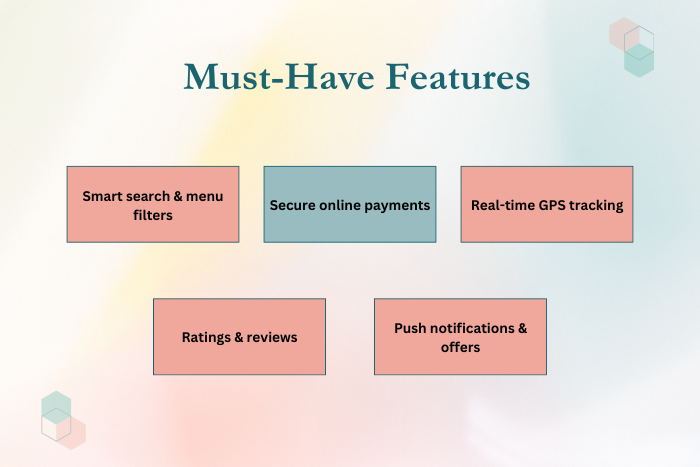
Smart search & cuisine filters
Menu browsing with customization
Add to cart & secure checkout
Multiple payment options (UPI, cards, wallets, COD)
Real-time order tracking
Ratings & reviews
Push notifications & offers
Order history & reordering
Restaurant Panel Features
Menu management
Order acceptance & preparation timing
Inventory tracking
Analytics dashboard
Discount & promotion setup
Delivery Partner Panel Features
Availability toggle
Order pickup & drop workflow
GPS navigation
Earnings dashboard
Safety & SOS features
Admin Panel Features
User & vendor management
Commission control
Order analytics
Fraud monitoring
Automated payouts
Food Delivery App Development Process
To build a scalable food delivery application, follow a structured approach:
Market Research & Competitor Analysis
Define Business Model & Revenue Strategy
Finalize MVP Features
UI/UX Design & Prototyping
Frontend & Backend Development
Payment & Map API Integration
Testing & Quality Assurance
Deployment on App Stores
Post-Launch Optimization & Scaling
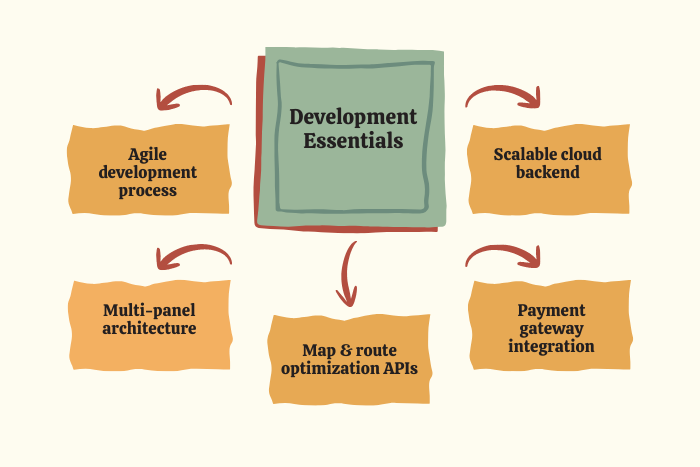
Using agile methodology ensures faster development cycles and continuous improvements.
Technology Stack for Food Delivery App Development
Choosing scalable and reliable technologies ensures smooth performance.
- Frontend (Mobile Apps):
React Native, Flutter, Swift, Kotlin - Backend:
Node.js, Python, Java Spring Boot - Database:
PostgreSQL, MongoDB - Cloud Infrastructure:
AWS, Azure, Google Cloud - Payment Gateways:
Stripe, Razorpay, PayPal - Maps & GPS:
Google Maps API - Real-Time Communication:
Firebase, WebSockets
A cloud-native architecture supports heavy traffic during peak hours.
Cost Factors in Food Delivery Application Development
The cost to develop a food delivery app depends on:
App complexity & number of panels
Custom UI/UX design
Real-time tracking integration
Payment gateway setup
Backend scalability requirements
Third-party integrations
AI-based features
Ongoing maintenance & marketing
An MVP costs less than a fully-featured multi-city marketplace platform. Clear scope definition ensures accurate budgeting.
Latest Trends in Food Delivery App Development
The food delivery ecosystem is evolving with new innovations:
AI-based personalized recommendations
ML-driven route optimization
Voice-enabled food ordering
Contactless & digital wallet payments
Drone & autonomous delivery
Eco-friendly & sustainable delivery systems
Cloud kitchen expansion
In-app gamification for loyalty
Adopting emerging technologies enhances competitive advantage.
Why Choose Us to Develop Your Food Delivery App?
Building a high-performing food delivery platform requires technical expertise, scalability planning, and seamless logistics integration. We specialize in end-to-end food delivery app development services.
Here’s why clients choose us:
Scalable cloud-native architecture
Secure payment & fraud prevention systems
Real-time GPS & route optimization expertise
Custom UI/UX for enhanced user engagement
Agile development approach
Ongoing support & performance optimization
We don’t just build apps — we create scalable digital ecosystems for long-term growth.
Ready to launch your food delivery app?
Let’s turn your idea into a high-performance on-demand platform.
Contact us today for a free consultation and development roadmap.
Key Points :
- Learn how to develop an app for food delivery with the right business model and scalable architecture.
- Explore key features for customer, restaurant, delivery, and admin panels.
- Understand the step-by-step food delivery app development process from MVP to launch.
- Discover the best technology stack for real-time tracking, payments, and cloud scalability.
- Identify major cost factors affecting custom food delivery app development.
- Stay updated with trends like AI recommendations, route optimization, and cloud kitchens.
FAQ's
To develop an app for food delivery, first start with market research, choose a business model, define features, design UI/UX, develop backend systems, integrate payments and maps, test, and launch.
An MVP may take 3–4 months, while a full-scale marketplace app can take 6–9 months.
Costs depend on complexity, features, integrations, and scalability requirements.
Aggregator and cloud kitchen models are popular for startups.
Yes, AI is used for recommendations, pricing optimization, and route planning.
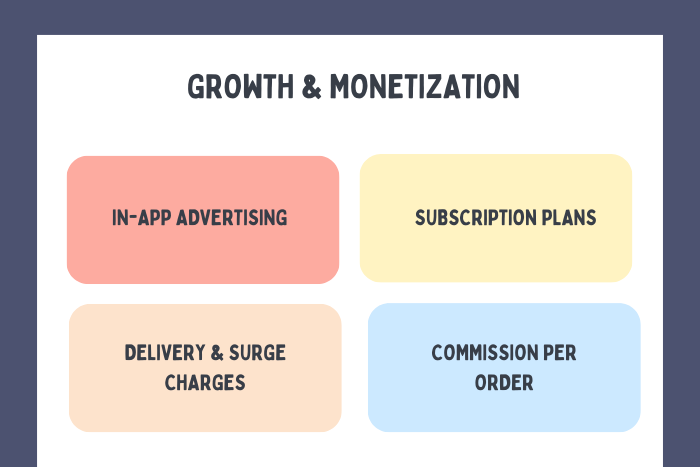
Through commission per order, delivery fees, subscription plans, advertising, and surge pricing.
Yes, we offer maintenance, scaling, and continuous optimization services.