
How Do I Develop an App for Food Ordering? Complete Guide
Learn how to develop an app for food ordering, including features, costs, tech stack, and development process for successful food delivery apps.
How Do I Develop an App for Food Ordering?
Food ordering apps have transformed the restaurant and food delivery industry by offering convenience, speed, and accessibility to customers. From local restaurants to global chains, businesses are investing in mobile applications that allow users to browse menus, place orders, track deliveries, and make secure payments—all from their smartphones.
If you’re wondering how do I develop an app for food ordering, the process involves several steps including market research, selecting the right business model, designing user-friendly interfaces, building backend systems, and ensuring secure payment integration. Popular apps like Uber Eats, DoorDash, and Zomato have proven that well-designed food delivery platforms can generate massive user engagement and business growth.
A successful food ordering app must focus on seamless user experience, real-time order tracking, and reliable restaurant partnerships. Businesses also need scalable technology, strong logistics management, and efficient payment systems to manage large volumes of orders.
In this guide, we will explore everything you need to know about developing a food ordering app, including types of solutions, key features, development process, technology stack, cost factors, and emerging trends shaping the food delivery industry.
Why This Service is Important for Food Ordering App Development
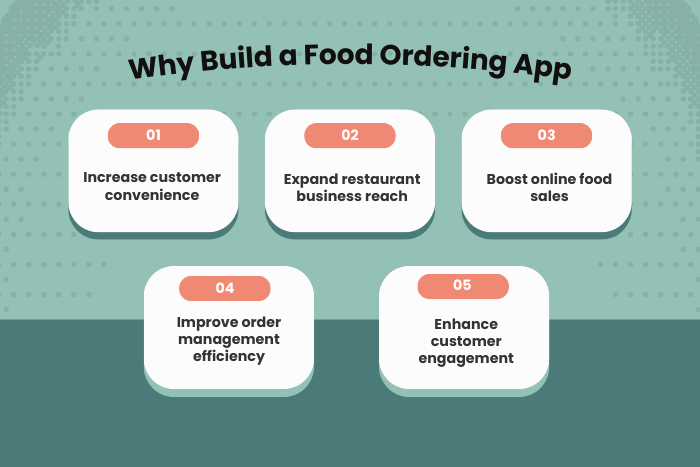
Developing a food ordering app provides significant advantages for restaurants, food startups, and delivery businesses. As consumer behavior shifts toward digital ordering and on-demand services, mobile apps have become essential for staying competitive.
One of the biggest benefits is increased customer convenience. Users can browse restaurants, compare menus, and place orders without visiting a physical location. This enhances customer satisfaction and encourages repeat orders.
Another advantage is higher revenue potential. Mobile apps allow restaurants to reach a wider audience, attract new customers, and increase order volume through digital promotions and loyalty programs.
Food delivery apps also enable efficient order management. Restaurants can automate order processing, manage delivery partners, and monitor customer preferences through integrated dashboards.
Additionally, food ordering apps provide valuable data insights. Businesses can analyze customer behavior, popular dishes, peak order times, and purchasing patterns to improve operations and marketing strategies.
With growing demand for convenience and quick delivery, developing a food ordering app is now a strategic move for restaurants and food entrepreneurs.
Types of Solutions for Food Ordering Applications
Different business models exist for food ordering apps depending on the operational structure and delivery management.
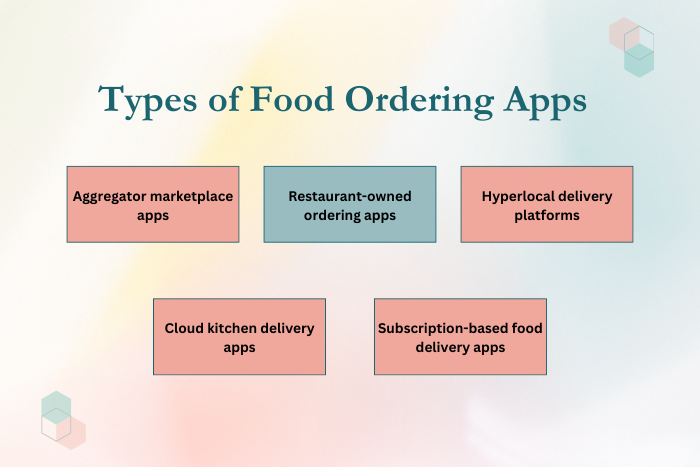
- Aggregator Model – This model connects customers with multiple restaurants on a single platform. The app handles restaurant listings, menu browsing, and order placement while restaurants manage deliveries.
- Order and Delivery Model – In this solution, the platform manages both order processing and delivery logistics. Delivery partners are integrated into the system to handle customer orders.
- Restaurant-Owned App – Restaurants develop their own food ordering apps to manage direct orders, reduce third-party commission fees, and build stronger customer relationships.
- Cloud Kitchen Model – Cloud kitchens operate without physical dining spaces and rely entirely on delivery apps for food orders.
- Subscription-Based Delivery Services – Users subscribe to monthly delivery plans offering discounted or free deliveries.
Each model offers unique benefits depending on the scale of operations and business goals.
Key Features of a Food Ordering App
A successful food ordering app must include essential features that support customers, restaurants, delivery partners, and administrators.
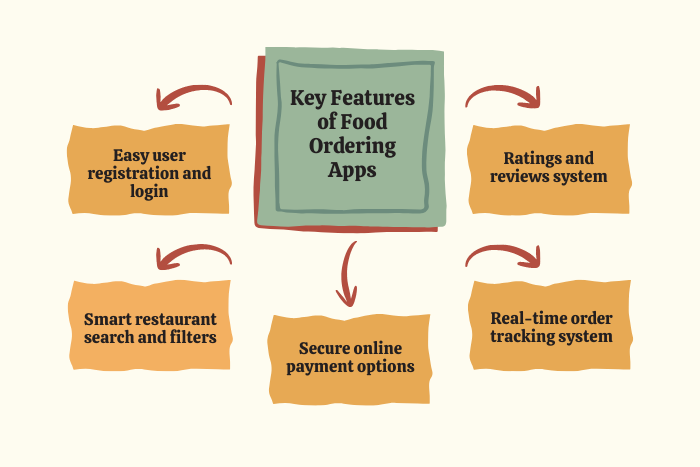
Customer features typically include user registration, restaurant search filters, menu browsing, order customization, real-time delivery tracking, secure payment options, and push notifications for promotions.
Restaurant panels allow vendors to manage menus, accept or reject orders, update food availability, monitor sales, and track customer feedback.
Delivery partner features include order notifications, navigation assistance, delivery status updates, and earnings dashboards.
Admin panels manage platform operations, including user management, commission structures, analytics, marketing campaigns, and fraud detection systems.
Additional advanced features such as AI-based recommendations, loyalty programs, and personalized offers can significantly enhance user engagement.
Development Process for a Food Ordering Application
Building a food ordering app requires a structured development approach to ensure reliability and scalability.
Market Research and Planning
Understanding customer needs, competitor platforms, and local market demand helps define the app’s business strategy.Choosing the Business Model
Decide whether your app will operate as an aggregator, restaurant-owned platform, or delivery service model.UI/UX Design and Prototyping
Design intuitive interfaces that allow users to browse menus, place orders, and track deliveries easily.App Development
Develop frontend and backend components while integrating essential APIs such as payment gateways and mapping services.Testing and Quality Assurance
Conduct extensive testing to ensure smooth functionality, fast performance, and secure transactions.Launch and Deployment
Publish the app on app stores and implement marketing strategies to attract users.Maintenance and Updates
Continuous monitoring, updates, and feature improvements help maintain app performance and user satisfaction.
Technology Stack for Food Ordering App Development
Selecting the right technology stack ensures performance, scalability, and security.
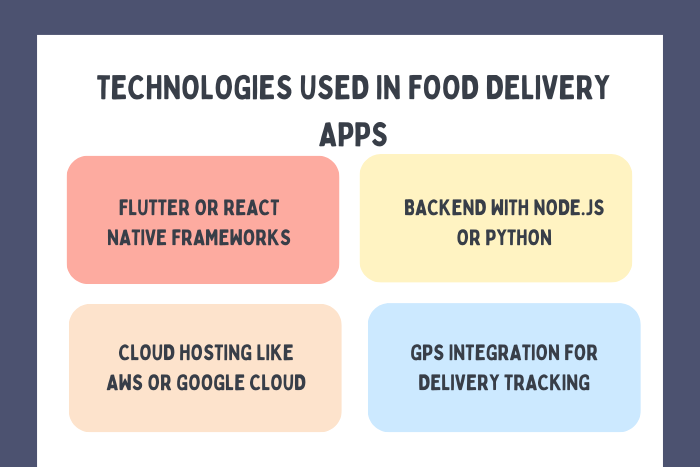
• Frontend Development: React Native, Flutter, Swift, Kotlin
• Backend Development: Node.js, Python, Ruby on Rails
• Database: MongoDB, PostgreSQL, MySQL
• Cloud Services: AWS, Google Cloud, Microsoft Azure
• Real-Time Tracking: Google Maps API, Mapbox
• Payment Integration: Stripe, PayPal, Razorpay
• Push Notifications: Firebase Cloud Messaging
Using modern frameworks and cloud infrastructure helps deliver seamless user experiences even during peak order times.
Cost Factors in Food Ordering App Development
The cost of building a food ordering app depends on several factors including features, technology stack, and development team expertise.
One major factor is app complexity. Basic food ordering apps with limited features cost less, while complex platforms with advanced functionalities require higher investment.
Another cost factor is platform selection. Developing separate apps for Android and iOS increases cost, whereas cross-platform frameworks can reduce expenses.
UI/UX design also influences pricing. Custom interfaces with animations and user personalization features require additional design effort.
Third-party integrations such as payment gateways, mapping services, and notification systems may add extra development costs.
Additionally, businesses must consider maintenance and updates, which include server costs, security patches, and feature upgrades.
Latest Trends in Food Ordering App Development
Technology advancements are continuously shaping the food delivery industry.
Artificial intelligence is being used for personalized food recommendations and demand forecasting. AI algorithms analyze customer preferences to suggest meals and promotions.
Voice-based ordering is gaining popularity with integrations for smart assistants like Alexa and Google Assistant.
Automation and robotics are transforming delivery operations with drone deliveries and autonomous vehicles in certain markets.
Sustainability trends are also influencing the industry, with businesses adopting eco-friendly packaging and electric delivery vehicles.
Another emerging trend is multi-category delivery platforms where food delivery apps also deliver groceries, medicines, and daily essentials.
These innovations are helping food delivery platforms remain competitive and future-ready.
Why Choose Us for Food Ordering App Development
Our team specializes in developing scalable and feature-rich food ordering applications tailored to business requirements.
We provide end-to-end development services, from idea validation and UI/UX design to deployment and ongoing maintenance. Our developers use modern frameworks and cloud technologies to ensure high performance and reliability.
We focus on building intuitive user interfaces that enhance customer engagement while ensuring smooth order management for restaurants and delivery partners.
Security and scalability are at the core of our solutions. We implement secure payment systems, data protection mechanisms, and cloud infrastructure capable of handling large order volumes.
Whether you’re launching a restaurant delivery platform or a large-scale food marketplace, our team delivers customized solutions designed for long-term growth.
Ready to launch your food ordering app?
Contact us today for a free consultation and customized quote.
Let’s build a powerful food delivery platform for your business.
Key Points :
- Food ordering apps allow customers to browse menus, place orders, and track deliveries in real time.
- Popular food delivery app models include aggregator platforms, restaurant-owned apps, and cloud kitchen solutions.
- Essential features include restaurant listings, menu browsing, secure payments, order tracking, and push notifications.
- Technologies like Flutter, React Native, Node.js, and cloud platforms are commonly used for development.
- Development costs depend on app complexity, platform choice, integrations, and UI/UX design.
- Emerging trends include AI-based recommendations, voice ordering, drone delivery, and smart logistics optimization.
FAQ's
Developing a food ordering app involves market research, selecting a business model, designing the UI/UX, building backend systems, integrating payment gateways, testing the app, and launching it on app stores.
Essential features include restaurant listings, menu browsing, order customization, secure payments, real-time delivery tracking, push notifications, and user reviews.
Development timelines typically range from three to six months depending on the app’s complexity and number of features.
Costs vary depending on features, technology stack, and platform choice, but basic apps are generally less expensive than enterprise-level platforms.
Yes, AI can be used for personalized recommendations, route optimization, demand forecasting, and customer support chatbots.
Revenue models include commission per order, delivery fees, subscription plans, in-app advertisements, and promotional partnerships with restaurants.
Yes, restaurants can develop dedicated apps to manage direct orders, reduce third-party commissions, and improve customer loyalty.