


How Do I Develop an App for iOS and Android? Complete Guide
Learn how to develop an app for iOS and Android. Explore development methods, tools, frameworks, costs, and best practices for cross-platform apps.
How Do I Develop an App for iOS and Android?
Developing a mobile application that works on both iOS and Android platforms is a common goal for businesses looking to reach a wider audience. With billions of smartphone users worldwide, companies want their apps to be accessible across multiple devices without compromising performance or user experience. If you are wondering how do I develop an app for iOS and Android, the process typically involves choosing the right development approach, selecting suitable programming languages and frameworks, designing an intuitive user interface, and ensuring compatibility across different devices.
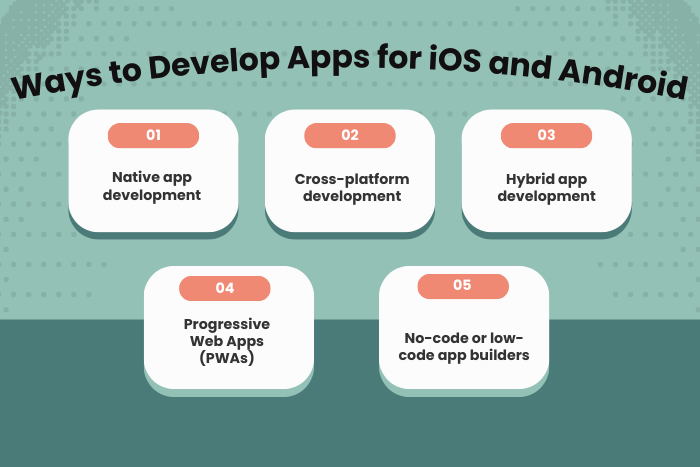
There are several ways to build apps for both platforms. Businesses can choose native development, where separate apps are built for iOS and Android, or opt for cross-platform development, which allows developers to write one codebase and deploy it across multiple platforms. Modern frameworks like Flutter, React Native, and .NET MAUI have made cross-platform development more efficient than ever.
Developing a multi-platform mobile app requires careful planning, strong technical expertise, and the right technology stack. From idea validation and UI/UX design to development, testing, and app store deployment, each stage plays a vital role in creating a successful mobile application.
In this guide, we will explore the best methods, tools, and practices to build mobile applications for both iOS and Android platforms effectively.
Why Developing Apps for Both iOS and Android is Important
Launching an app on both major mobile platforms significantly increases reach, user engagement, and revenue opportunities.
Here are some key reasons why businesses choose multi-platform app development:
Wider Audience Reach
Publishing on both Apple App Store and Google Play Store ensures maximum user coverage.Higher Business Growth Potential
Access to both iOS and Android users increases potential downloads and revenue.Improved Brand Visibility
A presence on multiple platforms strengthens brand credibility and recognition.Better User Accessibility
Users can access the app regardless of their device preferences.Competitive Advantage
Businesses offering apps on both platforms gain a strategic edge over competitors.
By targeting both platforms, companies ensure their applications are accessible to a global audience.
Types of Solutions for Developing Apps for iOS and Android
There are several approaches to building applications that work across both platforms.
Native App Development
Native development involves creating separate applications for each platform using platform-specific languages.
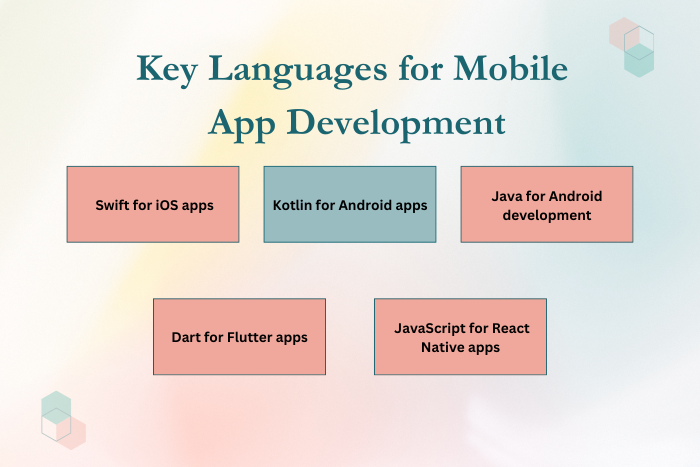
iOS apps developed using Swift or Objective-C
Android apps developed using Kotlin or Java
Best performance and full access to device features
Cross-Platform App Development
Cross-platform development uses a single codebase to create apps for both platforms.
Flutter (Dart) for fast UI development
React Native (JavaScript) for reusable components
.NET MAUI (C#) for multi-platform development
Progressive Web Apps (PWAs)
PWAs are web-based applications that behave like mobile apps and run on browsers.
Built using HTML, CSS, and JavaScript
Installable on mobile devices
Lower development costs
Hybrid App Development
Hybrid apps combine web technologies with native components.
Frameworks like Ionic and Cordova
Faster development with shared code
Each approach offers different advantages depending on the project requirements, budget, and desired performance.
Key Features of Successful iOS and Android Apps
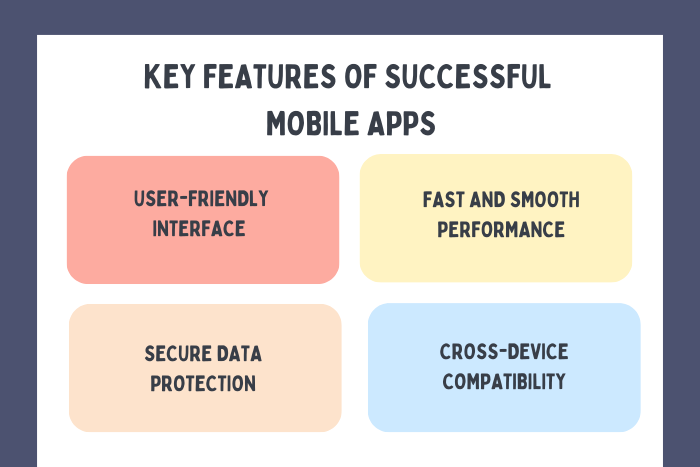
Building an app for multiple platforms requires focusing on features that ensure performance, usability, and scalability.
Important features include:
Responsive and intuitive user interface
Smooth performance across devices
Secure data storage and authentication
Seamless integration with APIs and cloud services
Compatibility with different screen sizes
Offline functionality and push notifications
Optimized performance for mobile devices
Regular updates and bug fixes
These features help deliver a consistent user experience across both platforms.
Development Process for iOS and Android Apps
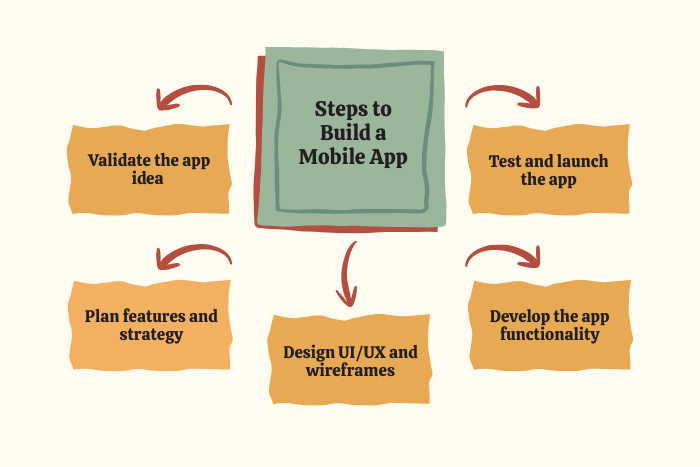
Developing a mobile application involves multiple structured stages to ensure quality and efficiency.
Idea Validation and Market Research
Analyze the target market, competitors, and user needs.App Strategy and Feature Planning
Define the app’s core features, functionality, and development approach.UI/UX Design and Prototyping
Create user-friendly interfaces and interactive prototypes.Technology Stack Selection
Choose programming languages, frameworks, and backend technologies.App Development
Build the frontend and backend using native or cross-platform frameworks.Testing and Quality Assurance
Perform functional, usability, and security testing across devices.App Store Deployment
Publish the app on Apple App Store and Google Play Store.Maintenance and Updates
Monitor performance and release updates for improvements and new features.
Following a structured development process ensures the app functions smoothly across both platforms.
Technology Stack for iOS and Android App Development
A modern mobile application requires a comprehensive technology stack.
- Mobile Development Languages: Swift, Kotlin, Java, Dart
- Cross-Platform Frameworks: Flutter, React Native, .NET MAUI
- Frontend Technologies: HTML5, CSS3, JavaScript, TypeScript
- Backend Technologies: Node.js, Python, PHP, Java
- Databases: Firebase, PostgreSQL, MongoDB, MySQL
- Cloud Platforms: AWS, Google Cloud Platform, Microsoft Azure
- DevOps Tools: Docker, Kubernetes, GitHub Actions, Jenkins
- Security Tools: OAuth 2.0, JWT authentication, SSL encryption, RBAC
This stack enables developers to create scalable and secure mobile applications.
Cost Factors in iOS and Android App Development
The cost of developing a mobile app for both platforms varies depending on several factors:
App complexity and number of features
Development approach (native vs cross-platform)
UI/UX design requirements
Backend infrastructure and APIs
Third-party integrations
Development timeline
Testing and quality assurance
Maintenance and future updates
Cross-platform development often reduces costs because developers maintain a single codebase for both platforms.
Latest Trends in iOS and Android App Development
Mobile app development is constantly evolving with new technologies and frameworks.
Key trends include:
Increasing adoption of Flutter and React Native
Integration of AI and machine learning in mobile apps
Rise of super apps and mini-app ecosystems
Growth of low-code and no-code app development platforms
Advanced mobile security and privacy frameworks
Integration with IoT devices and wearable technology
Use of cloud-based mobile backend services (MBaaS)
Expansion of AR and VR mobile applications
These innovations are shaping the future of mobile applications.
Why Choose Us for iOS and Android App Development?
Choosing the right development partner can significantly impact the success of your mobile application. Our team specializes in building scalable and high-performance apps for both iOS and Android platforms.
Here’s what sets us apart:
Expertise in Multi-Platform Development – We build applications using modern frameworks like Flutter and React Native.
User-Centered Design Approach – Our apps focus on intuitive interfaces and engaging user experiences.
Scalable Architecture – Applications designed to handle growth and high user traffic.
Secure Development Practices – Implementation of industry-standard security protocols.
Agile Development Process – Transparent workflows with regular updates and milestone delivery.
Optimized Performance – Apps built for speed, reliability, and seamless functionality.
End-to-End Development Services – From concept and prototyping to deployment and maintenance.
Continuous Support and Updates – Ensuring your app remains competitive and up-to-date.
We help businesses turn their ideas into powerful mobile applications that work seamlessly across platforms.
Ready to build a mobile app for both iOS and Android?
Let our experts help you create a high-performance cross-platform application.
Contact us today for a free consultation and customized development plan.
Key Points :
- Apps for iOS and Android can be built using native or cross-platform development methods.
- Swift and Kotlin are the primary languages for native iOS and Android development.
- Flutter, React Native, and .NET MAUI enable cross-platform app development with one codebase.
- A structured process includes planning, design, development, testing, and deployment.
- Modern mobile apps integrate cloud services, APIs, and secure authentication.
- Cross-platform frameworks help reduce development time and cost.
- Successful apps focus on performance, scalability, and user-friendly design.
FAQ's
You can develop apps for both platforms using native development or cross-platform frameworks like Flutter or React Native.
Native development offers better performance, while cross-platform development reduces cost and development time.
Swift is used for iOS development, while Kotlin and Java are used for Android development.
Popular frameworks include Flutter, React Native, and .NET MAUI.
Development timelines vary depending on complexity but usually range from a few weeks to several months.
Yes, cross-platform frameworks allow developers to maintain a single codebase for both platforms.
Costs depend on app features, design complexity, and development approach.
Yes, developers can adapt existing applications to support both iOS and Android platforms.