
Learn how to develop an app for online education with key features, development process, technology stack, cost factors, and latest edtech trends.
How Do I Develop an App for Online Education?
Online education has transformed how students learn, how teachers deliver content, and how institutions scale their educational services. With the rapid adoption of digital learning platforms, many entrepreneurs, schools, and businesses are asking the same question: how do I develop an app for online education? Building an education app allows organizations to deliver courses, conduct live classes, track student progress, and create engaging learning experiences through mobile devices.
Educational apps are widely used by schools, universities, edtech startups, and training organizations to provide flexible learning environments. These apps support features such as video lectures, interactive quizzes, progress tracking, live sessions, and collaboration tools that improve knowledge retention and accessibility. As smartphones and high-speed internet become more accessible worldwide, mobile learning solutions are becoming a powerful tool for reaching global audiences.
Developing a successful online education app requires strategic planning, a scalable technology infrastructure, and a strong focus on user experience. Whether you want to create an e-learning platform, language learning app, test preparation tool, or corporate training system, a well-designed education app can transform the learning process.
In this guide, we will explain how to develop an app for online education, including its importance, types of educational apps, essential features, development process, technology stack, cost considerations, and emerging trends shaping the future of digital learning.
Why Developing an App for Online Education is Important
Education is rapidly shifting toward digital platforms. Mobile learning apps enable institutions and organizations to deliver knowledge in more engaging and accessible ways.
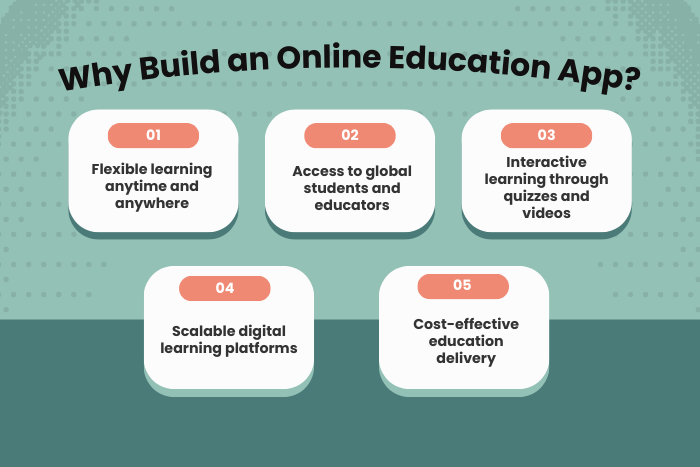
Here are key reasons why developing an online education app is important:
Global Accessibility
Students can access learning materials anytime and anywhere through mobile devices.Flexible Learning Experience
Learners can study at their own pace, revisit lessons, and complete courses according to their schedule.Interactive Learning Methods
Features such as quizzes, gamification, and live sessions increase engagement and knowledge retention.Scalable Education Platforms
Educational apps can serve thousands of users simultaneously without geographical limitations.Cost-Effective Education Delivery
Digital learning platforms reduce infrastructure costs associated with physical classrooms.Improved Student Performance Tracking
Analytics tools allow educators to track student progress and learning outcomes.
By developing an online education app, organizations can expand their reach, improve learning experiences, and create scalable digital education ecosystems.
Types of Online Education Application Solutions
Different types of education apps serve various learning purposes and audiences. Selecting the right solution depends on the learning model and target users.
E-Learning Platforms
Apps that offer structured online courses, video lectures, assignments, and certifications.Language Learning Apps
Platforms designed to teach new languages through interactive lessons, speech recognition, and quizzes.Exam Preparation Apps
Applications focused on competitive exam preparation with practice tests, mock exams, and performance analytics.Virtual Classroom Apps
Apps that support live video classes, teacher-student interaction, and collaborative learning.Skill Development Apps
Platforms offering professional courses such as programming, design, business, and digital marketing.Gamified Learning Apps
Educational apps that use game mechanics to make learning engaging and interactive.Corporate Training Apps
Apps designed for employee training, skill development, and internal knowledge sharing.
Each of these solutions addresses different learning needs while leveraging digital technologies to enhance education.
Key Features of an Online Education App
A successful online education application requires features that support both students and educators while ensuring smooth learning experiences.
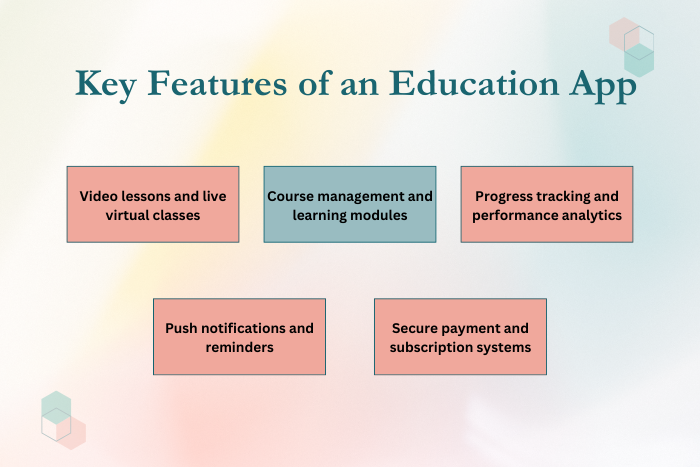
Essential features include:
User registration and profile management
Course catalog and learning modules
Video lectures and multimedia content
Live classes and virtual classroom integration
Interactive quizzes and assignments
Progress tracking and performance analytics
Push notifications for reminders and updates
Discussion forums and collaboration tools
Secure payment gateways for course purchases
Offline learning capabilities
Certificates and course completion tracking
Content management system for instructors
Personalized learning recommendations
Multi-device compatibility
These features ensure that users receive an engaging and effective learning experience through the app.
Development Process for an Online Education Application
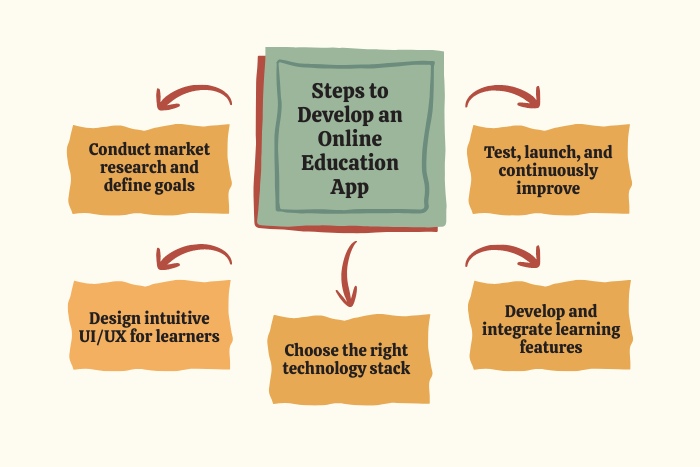
Building an online education application requires a structured development process that ensures high performance, scalability, and usability.
Market Research and Idea Validation
Identify target users, learning objectives, and competitive platforms.Define Features and Learning Model
Decide whether the app will focus on live learning, self-paced courses, or blended learning.UI/UX Design and Prototyping
Create an intuitive interface that simplifies course navigation and learning.Technology Stack Selection
Choose programming languages, frameworks, and cloud infrastructure.Backend Development
Develop scalable server architecture, databases, and API integrations.Frontend and Mobile Development
Build responsive interfaces for Android, iOS, and web platforms.Integration of Learning Tools
Implement video streaming, quizzes, analytics dashboards, and communication features.Testing and Quality Assurance
Conduct functional testing, security testing, and performance optimization.Deployment and Launch
Publish the application on mobile app stores or web platforms.Maintenance and Updates
Continuously improve the app with feature updates and performance improvements.
Following a structured development workflow ensures that the education app delivers reliable performance and engaging learning experiences.
Technology Stack for Online Education App Development
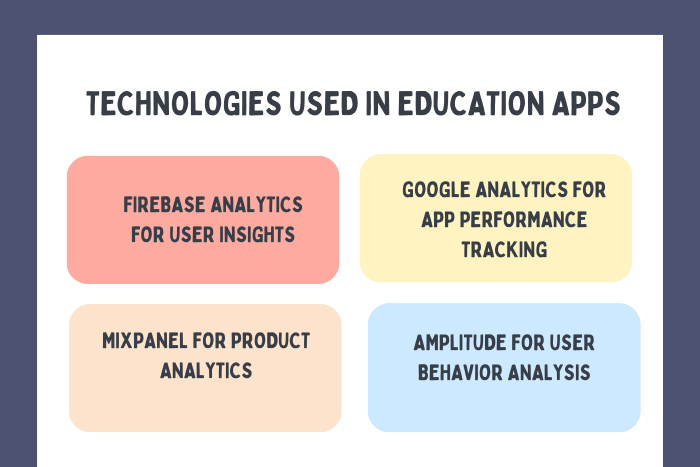
A modern technology stack ensures scalability, security, and seamless learning experiences for users.
Frontend Technologies: React.js, Angular, Vue.js, HTML5, CSS3, TypeScript
Mobile Development: Flutter, React Native, Swift, Kotlin
Backend Technologies: Node.js, Python, Java, PHP
Databases: PostgreSQL, MySQL, MongoDB, Firebase
Cloud Platforms: AWS, Google Cloud Platform, Microsoft Azure
Video Streaming Services: WebRTC, AWS Media Services, Vimeo API
DevOps Tools: Docker, Kubernetes, CI/CD pipelines
Security Technologies: SSL encryption, OAuth authentication, secure payment gateways
Using reliable technologies ensures that the application can handle large numbers of users and multimedia content efficiently.
Cost Factors in Online Education App Development
The cost of developing an online education app depends on several factors related to the complexity and features of the platform.
Important cost factors include:
App complexity and number of features
Platform choice (Android, iOS, or cross-platform)
UI/UX design requirements
Video streaming and storage infrastructure
Integration with payment gateways and APIs
Security and compliance requirements
Development team size and expertise
Cloud hosting and infrastructure costs
Maintenance and future updates
A simple MVP education app may require a moderate budget, while a fully featured learning platform with AI recommendations and live streaming may require higher investment.
Latest Trends in Online Education App Development
The education technology industry is evolving rapidly as new technologies enhance digital learning experiences.
Key trends shaping the future of online education apps include:
AI-powered personalized learning systems
Gamification to increase student engagement
AR and VR immersive learning experiences
Microlearning and short-form educational content
Interactive live classrooms and collaboration tools
Adaptive learning technologies
Blockchain-based certification systems
Advanced analytics for student performance tracking
These innovations are transforming traditional learning models into more interactive and personalized experiences.
Why Choose Us for Online Education App Development?
Choosing the right development partner is essential for building a successful education app. Our team specializes in creating scalable and engaging digital learning platforms tailored to modern educational needs.
Here’s why organizations choose us:
Extensive EdTech Development Experience
Our developers have expertise in building scalable education platforms and learning management systems.User-Centered Design Approach
We create intuitive interfaces that enhance learning engagement.Scalable Architecture
Our apps support thousands of concurrent users and multimedia content.Advanced Technology Integration
We integrate AI, analytics, and modern learning technologies.Cross-Platform Development Expertise
Applications are optimized for web, Android, and iOS platforms.Secure and Reliable Infrastructure
Strong data protection and secure payment integrations.Agile Development Process
Transparent workflows with milestone-based delivery.Long-Term Support and Optimization
Continuous updates and performance improvements.
Ready to build your online education app?
Let our experts create a powerful digital learning platform tailored to your goals.
Contact us today for a free consultation and project estimate.
Key Points :
- Online education apps enable flexible learning through video lessons, quizzes, and live virtual classes.
- Key features include course management, progress tracking, notifications, and secure payment systems.
- The development process involves research, UI/UX design, technology selection, development, testing, and launch.
- Popular technologies include React, Flutter, Node.js, Python, and cloud platforms like AWS.
- Education apps can support various models such as e-learning platforms, language learning apps, and exam preparation apps.
- AI-powered learning, gamification, and AR/VR experiences are shaping the future of online education apps.
FAQ's
Start by identifying your target audience, defining app features, designing the user interface, selecting a technology stack, and building the application with scalable architecture.
Common features include video lessons, quizzes, live classes, progress tracking, notifications, and secure payment systems.
Development timelines depend on complexity, but most apps take between 3–6 months for an MVP and longer for advanced platforms.
Technologies commonly include React, Flutter, Node.js, Python, cloud platforms like AWS, and databases such as MongoDB or PostgreSQL.
Costs vary depending on features, platform, and infrastructure requirements. A simple app may cost less, while advanced learning platforms require higher investment.
Revenue models include subscriptions, course purchases, advertisements, and premium learning content.
Yes. With cloud infrastructure and scalable architecture, education apps can support thousands or even millions of learners.