

How Do I Develop an App for Online Shopping? Complete Guide
Learn how to develop an app for online shopping with features, tech stack, cost factors, and step-by-step process to build a scalable eCommerce app.
How Do I Develop an App for Online Shopping?
If you’re asking, “How do I develop an app for online shopping?”, you’re stepping into one of the fastest-growing digital markets globally. eCommerce mobile apps have transformed how customers browse products, compare prices, and make purchases. With mobile commerce (mCommerce) driving a significant portion of online sales, having a dedicated shopping app is no longer optional — it’s essential for brands looking to scale.
Developing an online shopping app involves much more than uploading product listings. It requires strategic planning, intuitive UI/UX design, secure payment integration, scalable backend architecture, real-time order tracking, inventory management, and data-driven personalization. Whether you’re building a single-brand retail app or a multi-vendor marketplace platform, selecting the right development approach ensures performance, security, and long-term growth.
In this comprehensive guide, we explain how to develop an app for online shopping step by step — covering solution types, key features, development process, technology stack, cost factors, and latest trends — so you can launch a high-performing and revenue-driven eCommerce application.
Why Online Shopping App Development Is Important
Consumer behavior has shifted dramatically toward mobile-first purchasing. Customers expect seamless browsing, fast checkout, and personalized product recommendations directly from their smartphones.
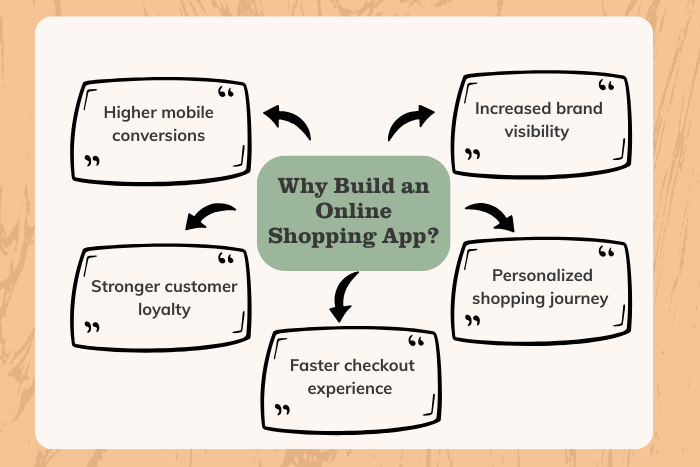
Here’s why investing in online shopping app development is critical:
Higher conversion rates compared to mobile websites
Improved customer loyalty through push notifications
Faster checkout experience with saved payment methods
Enhanced personalization using AI-driven recommendations
Real-time order tracking and updates
Reduced cart abandonment with optimized UX
Direct communication channel with customers
A mobile shopping app builds brand authority, increases repeat purchases, and creates a competitive edge in the crowded eCommerce landscape.
Types of Online Shopping Application Solutions
When deciding how to develop an app for online shopping, identifying the right business model is essential.
Single-Vendor eCommerce App
Designed for brands selling their own products directly to customers.Multi-Vendor Marketplace App
Platforms allowing multiple sellers to list and sell products under one ecosystem.On-Demand Retail App
Real-time product delivery platforms (e.g., grocery or pharmacy delivery).Subscription-Based Shopping App
Recurring purchase models for products like fashion, food, or beauty items.Social Commerce App
Integrated social sharing and influencer-driven purchasing experiences.B2B eCommerce App
Bulk purchasing platforms designed for wholesale transactions.
Choosing the right solution depends on your revenue model, target audience, and scalability goals.
Key Features of an Online Shopping App
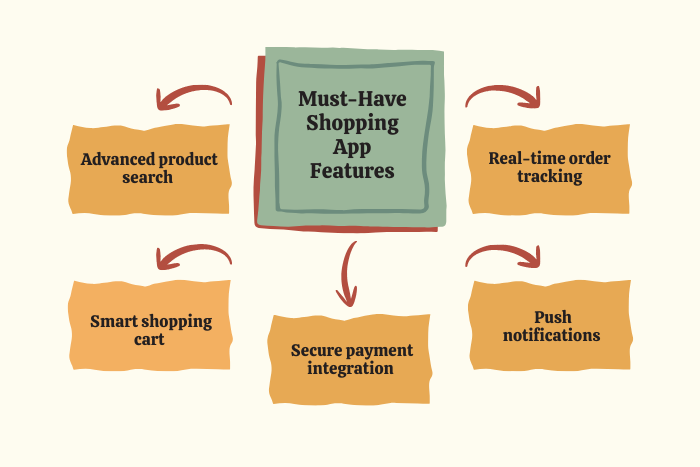
A competitive eCommerce app must include powerful and user-friendly features:
User registration and profile management
Advanced product search and filtering
Wishlist and favorites
Smart shopping cart system
Secure checkout with multiple payment gateways
Discount codes and loyalty programs
Push notifications and order alerts
Product reviews and ratings
Inventory management system
Real-time order tracking
Admin dashboard for analytics
Customer support chat integration
Product import/export management
An optimized mobile UX significantly reduces abandoned carts and increases conversions.
Development Process
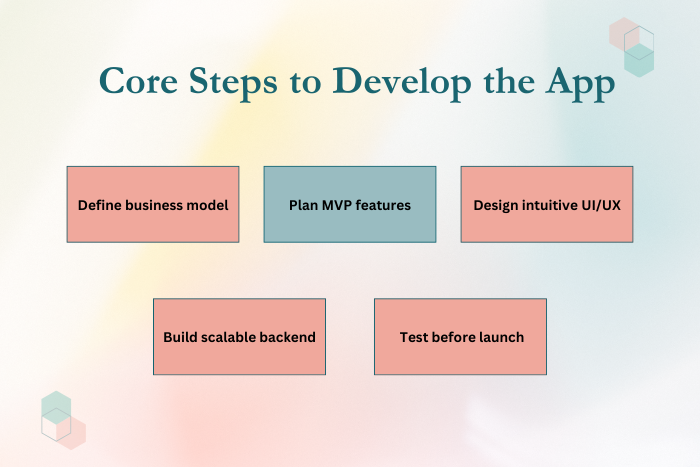
To successfully develop an online shopping app, follow this structured approach:
Market Research & Business Strategy
Identify target audience, competitors, and unique value proposition.Define Features & MVP Planning
Finalize essential features for the initial launch.UI/UX Design & Prototyping
Design intuitive and conversion-focused interfaces.Backend Architecture & Database Setup
Develop scalable infrastructure for product catalogs and user data.Frontend Development (iOS & Android)
Build native or cross-platform mobile applications.Payment & API Integration
Integrate secure payment gateways, shipping APIs, and CRM systems.Testing & Quality Assurance
Perform functional, performance, and security testing.Deployment & App Store Publishing
Launch on App Store and Google Play.Maintenance & Optimization
Monitor performance, fix bugs, and release feature updates.
An agile development methodology ensures faster delivery and continuous improvement.
Technology Stack for Online Shopping Application Development
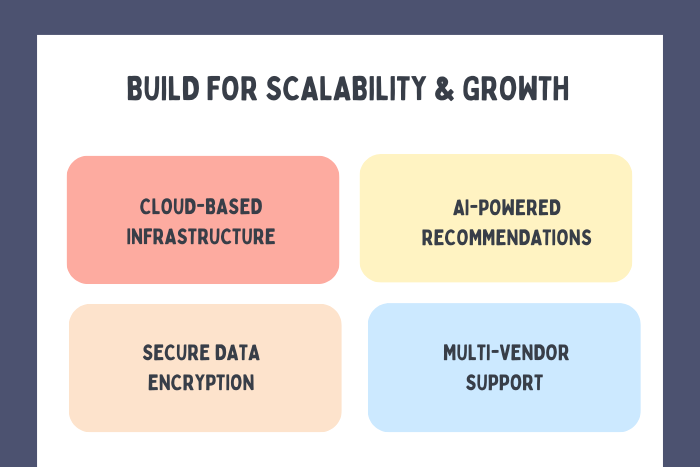
Selecting the right tech stack ensures performance and scalability.
Frontend: React Native, Flutter, Swift, Kotlin
Backend: Node.js, Django, .NET Core
Database: PostgreSQL, MongoDB
Cloud Infrastructure: AWS, Azure, Google Cloud Platform
Payment Gateways: Stripe, PayPal, Razorpay
Search Engine: Elasticsearch
APIs: RESTful APIs, GraphQL
DevOps: Docker, Kubernetes, CI/CD pipelines
Security: SSL encryption, OAuth 2.0, JWT authentication
Cloud-native architecture supports high traffic during peak sales.
Cost Factors in Online Shopping App Development
The cost of developing an online shopping app depends on:
App complexity and feature set
Single-vendor vs multi-vendor model
Native vs cross-platform development
Payment gateway integrations
Inventory and warehouse management systems
Custom UI/UX requirements
Security and compliance standards
Ongoing maintenance and support
A basic MVP shopping app may require moderate investment, while a feature-rich marketplace with AI and advanced analytics will demand a higher budget.
Latest Trends in Online Shopping App Development
The eCommerce ecosystem continues evolving with innovation:
AI-powered product recommendations
Voice-based product search
AR-based virtual try-ons
One-click checkout experiences
Personalized push notifications
Blockchain-based secure payments
Headless commerce architecture
Progressive Web Apps (PWAs)
Adopting emerging technologies enhances user engagement and drives revenue growth.
Why Choose Us to Develop Your Online Shopping App?
Building a high-performance online shopping app requires technical expertise, market insight, and conversion-focused design.
Here’s why businesses partner with us:
Scalable Cloud Architecture – Built to handle high transaction volumes.
Conversion-Optimized UI/UX – Designed to reduce cart abandonment.
Secure Payment Integration – Encrypted transactions and fraud protection.
Advanced eCommerce Features – Loyalty programs, AI personalization, and analytics dashboards.
Agile Development Process – Transparent milestones and timely delivery.
Post-Launch Support & Growth Optimization – Continuous performance enhancement.
We don’t just build shopping apps, we create revenue-generating digital commerce platforms designed for long-term success.
Ready to develop your online shopping app?
Let’s build a scalable and conversion-focused eCommerce solution tailored to your brand.
Contact us today for a free consultation and customized project estimate.
Key Points :
- Step-by-step guide to online shopping app development, covering planning, design, development, testing, and launch.
- Comprehensive feature breakdown including product search, smart cart system, secure checkout, payment integration, and order tracking.
- Scalable eCommerce technology stack recommendations with cloud infrastructure, APIs, and secure authentication.
- Clear cost and timeline insights for MVP retail apps versus full-scale multi-vendor marketplace platforms.
- Advanced shopping app capabilities such as AI-powered recommendations, loyalty programs, AR try-ons, and push notifications.
- Conversion-focused development approach designed to reduce cart abandonment, increase retention, and maximize revenue growth.
FAQ's
Start with market research, define your business model, finalize features, design UI/UX, develop backend infrastructure, integrate payments, test thoroughly, and launch with a scaling strategy.
An MVP may take 3–4 months, while a full-featured marketplace app may take 6–9 months.
Core features include product search, cart system, secure checkout, payment integration, notifications, and analytics dashboards.
Costs vary depending on complexity, platform, integrations, and scalability requirements.
Yes. Multi-vendor platforms allow multiple sellers to list products and manage orders within one ecosystem.
Revenue models include product sales margins, commission fees, subscription plans, and advertisements.
Yes. We offer continuous monitoring, updates, scalability improvements, and security enhancements to ensure long-term success.