


Learn how to develop a personal finance app with budgeting tools, expense tracking, AI insights, and secure fintech technologies.
How Do I Develop an App for Personal Finance?
Personal finance applications have become essential tools for individuals who want to manage their money, track expenses, and achieve financial goals more effectively. With the rise of digital banking, fintech innovations, and mobile-first financial services, many businesses and startups are exploring how do I develop an app for personal finance that helps users make smarter financial decisions.
A personal finance app allows users to monitor income, track expenses, manage budgets, and plan long-term financial goals in a single digital platform. These applications can also integrate with bank accounts, payment systems, and financial analytics tools to provide real-time insights into spending habits. Modern personal finance apps increasingly use artificial intelligence, predictive analytics, and automation to deliver personalized financial advice.
From budgeting tools and expense trackers to investment platforms and AI-driven financial assistants, personal finance applications empower users to take control of their financial health. Businesses entering the fintech space can leverage these solutions to build subscription-based services, provide financial education, and create innovative financial ecosystems.
In this guide, we explore how to develop a personal finance app, including the essential features, development process, technologies, costs, and emerging trends shaping the future of fintech applications.
Why Personal Banking App Development is Important
Personal finance apps have become increasingly popular as individuals look for convenient ways to manage their finances in a digital environment. These applications help users improve financial literacy, reduce unnecessary spending, and achieve savings goals.
Here are some reasons why developing a personal finance app is important:
Better Financial Awareness
Users gain insights into their spending habits and financial patterns.Automated Budget Management
Apps help users create budgets and track expenses automatically.Convenient Financial Tracking
Mobile apps allow users to monitor transactions and balances in real time.Improved Financial Planning
Tools for goal setting help users plan savings, investments, and debt management.Growing Fintech Market Opportunities
Businesses can create profitable fintech products through subscriptions and premium services.
Personal finance apps empower users with tools to make informed financial decisions.
Types of Personal Finance App Solutions
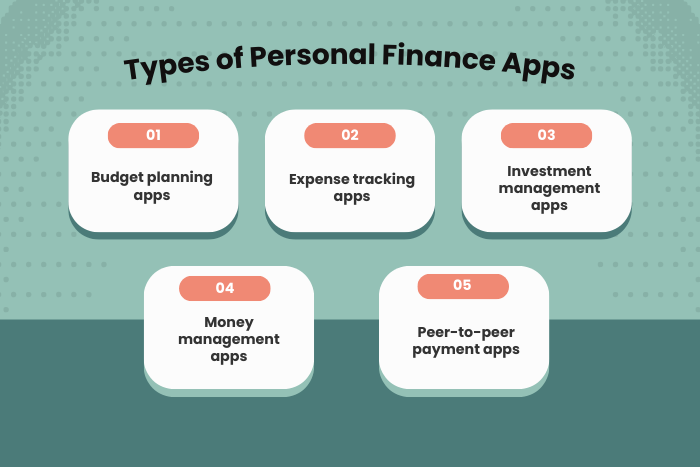
Personal finance applications can be developed for different financial needs and user preferences.
Budget Planning Apps
Applications that help users create budgets and monitor monthly expenses.Expense Tracking Apps
Tools that categorize spending and provide detailed financial reports.Investment Management Apps
Platforms that allow users to track investments, portfolios, and financial assets.Money Management Apps
Comprehensive solutions that combine budgeting, expense tracking, and financial insights.Peer-to-Peer Payment Apps
Applications enabling secure money transfers between users.Savings and Goal Tracking Apps
Apps designed to help users save money and achieve financial targets.Financial Advisory Apps
AI-powered apps that provide personalized financial advice and recommendations.
These solutions enable businesses to build versatile fintech products for diverse audiences.
Key Features of Personal Finance Apps
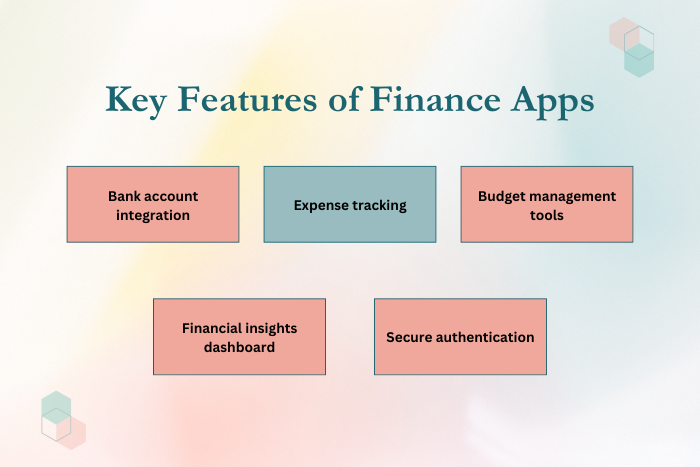
A successful personal finance app must include features that help users manage finances securely and efficiently.
Account Integration
Users can link bank accounts, credit cards, and digital wallets.Expense Tracking and Categorization
Transactions are automatically categorized to show spending patterns.Budget Planning Tools
Users can create monthly budgets and monitor spending limits.AI-Powered Financial Insights
Algorithms analyze financial behavior and offer recommendations.Goal-Based Savings Tracking
Users can set financial goals such as saving for travel or retirement.Real-Time Alerts and Notifications
Notifications for unusual spending or bill reminders.Security and Authentication
Features such as biometric login and multi-factor authentication.Financial Reports and Analytics
Visual dashboards provide insights into financial performance.
These features ensure personal finance apps remain secure, informative, and user-friendly.
Personal Finance App Development Process
Building a personal finance application requires a structured development approach.
Market Research and Target Audience Analysis
Identify the needs of users and study competing fintech applications.Define Application Objectives
Determine whether the app focuses on budgeting, investments, or comprehensive financial management.Requirement Gathering and Feature Planning
Outline core functionalities, integrations, and security requirements.UI/UX Design
Design intuitive interfaces that simplify complex financial information.Backend Development and API Integration
Build secure systems that integrate with financial institutions and payment gateways.Testing and Security Validation
Conduct security testing, performance checks, and regulatory compliance verification.Deployment and Launch
Publish the application on mobile platforms and configure cloud infrastructure.Maintenance and Continuous Updates
Improve the application through updates, bug fixes, and feature enhancements.
This process ensures the development of reliable fintech applications.
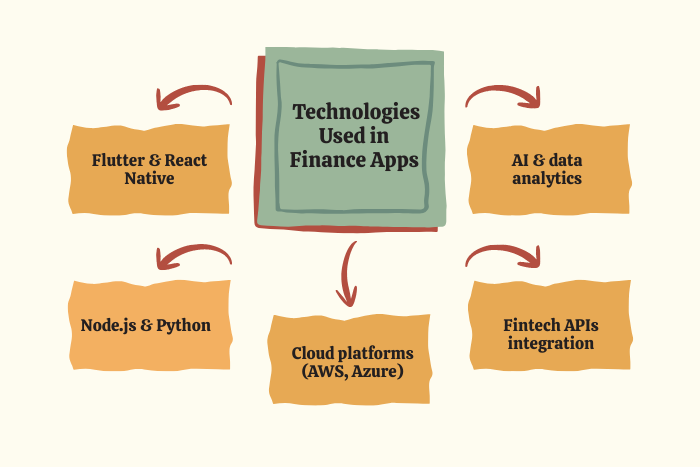
Technology Stack for Personal Finance App Development
Fintech applications require advanced technologies to ensure security, scalability, and data accuracy.
Mobile Development: Swift, Kotlin, Java, Dart
Cross-Platform Frameworks: Flutter, React Native
Frontend Technologies: HTML5, CSS3, JavaScript, TypeScript
Backend Technologies: Node.js, Python, Java, PHP
Databases: PostgreSQL, MongoDB, MySQL, Firebase
Cloud Platforms: AWS, Google Cloud Platform, Microsoft Azure
DevOps Tools: Docker, Kubernetes, GitHub Actions
Security Technologies: OAuth 2.0, SSL encryption, biometric authentication
A strong technology stack helps maintain security and performance in financial applications.
Cost Factors in Personal Finance App Development
The cost of building a personal finance application depends on multiple variables.
Complexity of financial features and analytics
Integration with banking systems and payment APIs
Security and compliance requirements
UI/UX design complexity
Cloud infrastructure and hosting
Development team expertise and location
Maintenance and support services
Basic finance apps may require moderate budgets, while AI-driven fintech platforms can involve higher development investments.
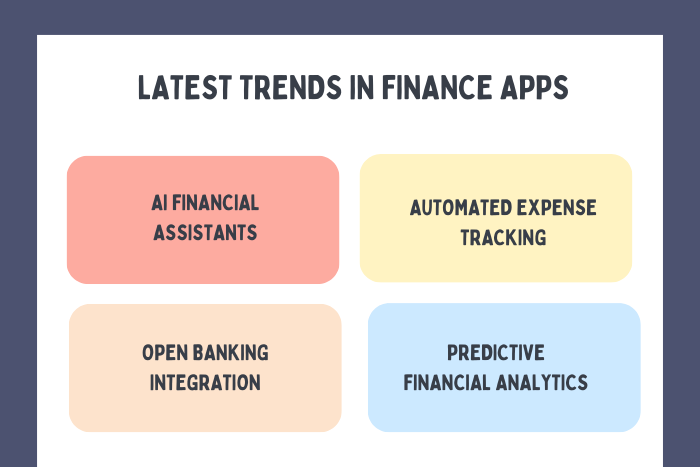
Latest Trends in Personal Finance App Development
The fintech industry continues to evolve with innovative technologies that enhance financial management experiences.
AI-Powered Financial Assistants
Intelligent systems provide personalized budgeting and financial advice.Automated Expense Tracking
Machine learning algorithms categorize transactions automatically.Open Banking Integration
Secure APIs allow apps to connect with multiple financial institutions.Predictive Financial Analytics
Data analytics tools forecast spending patterns and savings potential.Voice-Based Financial Assistance
Voice assistants help users manage finances through natural language commands.Enhanced Fraud Detection
AI algorithms monitor unusual transactions and prevent fraud.
These trends are shaping the future of fintech applications and personal finance management.
Why Choose Us for Personal Finance App Development?
Choosing the right development partner is essential when building secure and scalable fintech applications.
Our team specializes in creating innovative personal finance platforms designed for performance, security, and user engagement.
Here’s why businesses choose us:
Fintech Development Expertise – Experience building budgeting, expense tracking, and financial analytics platforms.
AI-Powered Financial Solutions – Integration of intelligent recommendations and predictive analytics.
Secure and Compliant Architecture – Implementation of modern security standards and regulatory compliance.
Cross-Platform Development Expertise – Apps built for both Android and iOS using efficient frameworks.
User-Centered Design Approach – Interfaces designed to simplify financial management.
Scalable Cloud Infrastructure – Systems capable of handling large financial data volumes.
End-to-End Development Support – From idea validation to deployment and ongoing maintenance.
We help businesses transform financial ideas into powerful fintech applications.
Ready to build a modern personal finance application?
Let our experts develop a secure and scalable fintech platform.
Contact us today for a free consultation and project estimate.
Key Points :
- Personal finance apps help users track expenses, manage budgets, and monitor financial goals in one platform.
- Popular types of finance apps include budget planners, expense trackers, investment apps, and money management tools.
- Key features include bank account integration, real-time expense tracking, financial analytics, and secure authentication.
- Development involves market research, UI/UX design, backend development, API integration, testing, and deployment.
- Technologies like Flutter, React Native, Node.js, cloud platforms, and secure fintech APIs are commonly used.
- Emerging trends include AI-powered financial advice, automated budgeting, open banking integration, and fraud detection systems.
FAQ's
A personal finance app helps users manage their money, track expenses, create budgets, and plan financial goals.
Developing a finance app involves market research, feature planning, UI design, backend development, security implementation, testing, and deployment.
Key features include expense tracking, budgeting tools, financial analytics, account integration, and security measures.
Development timelines typically range from three to six months depending on complexity.
Yes, when built with encryption, biometric authentication, and secure API integrations.
The cost depends on features, integrations, security requirements, and development complexity.
Yes, many apps integrate with banking APIs to access financial data securely.
Yes, AI can provide automated budgeting, predictive insights, and personalized financial recommendations.