Learn how do I develop an app for startups with step-by-step process, MVP strategy, cost factors, tech stack, and launch tips.
How Do I Develop an App for Startups?
If you’re an entrepreneur wondering, how do I develop an app for startups?, you’re already taking the first step toward building a scalable digital product. Startup app development is different from traditional enterprise development — it requires speed, validation, cost control, and market fit.
Startups operate in competitive, fast-moving environments. You don’t just need an app — you need a product that solves a real problem, attracts early users, secures funding, and scales efficiently. That’s why the startup app development process focuses heavily on idea validation, MVP development, agile methodology, and rapid iteration.
Whether you’re building a fintech app, eCommerce platform, SaaS product, or social networking app, success depends on smart planning, lean execution, and continuous improvement.
This guide explains everything you need to know about developing an app for startups — from idea to launch and beyond.
Why Startup App Development Services Are Important
Startup-focused app development ensures:
Faster time-to-market
Lean MVP execution
Cost-efficient product validation
Investor-ready prototypes
Scalable app architecture
Reduced technical debt
Without a structured startup app development strategy, founders often overspend on features that users don’t need. A lean, agile approach helps you test assumptions early and adapt quickly.
Types of Solutions to Develop an App for Startups
Different startup goals require different development approaches:
Minimum Viable Product (MVP) Development
Core features only
Rapid development cycle
Early market validation
Native Mobile App Development
High performance
Platform-specific (iOS or Android)
Best user experience
Cross-Platform App Development
Single codebase
Faster deployment
Cost-effective for startups
SaaS-Based Startup Applications
Subscription model
Cloud-hosted architecture
Scalable backend
Marketplace or On-Demand Apps
Multi-user roles
Payment integration
Real-time features
Choosing the right solution depends on your business model and funding stage.
Key Features Required to Develop an App for Startups
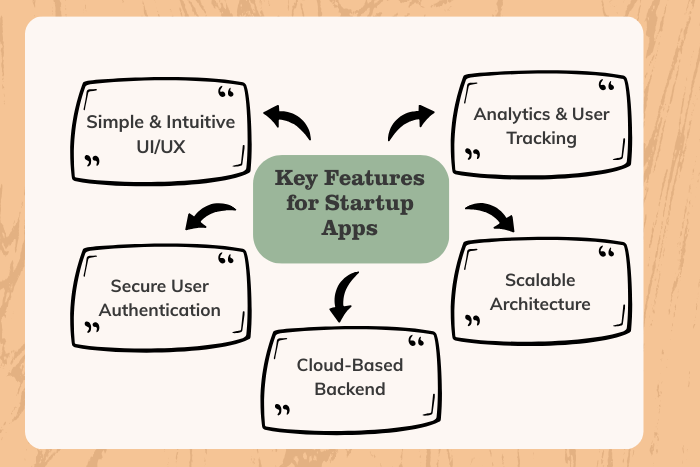
A successful startup app typically includes essential features and scalable architecture when you develop an app for startups. It includes:
Simple and intuitive UI/UX
Secure user authentication
Cloud backend integration
Push notifications
Analytics tracking
Scalable database structure
Payment gateway integration (if applicable)
Admin dashboard
These features ensure your app is launch-ready and scalable.
Development Process
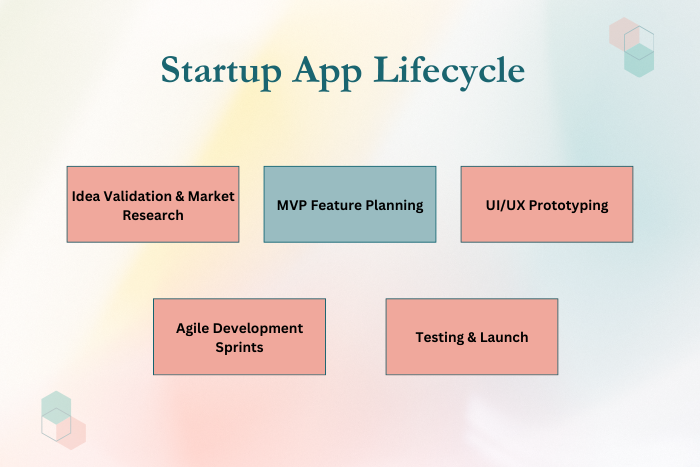
Our startup app development process follows a lean, validation-driven approach:
Idea Validation & Market Research
Identify target audience, analyze competitors, validate product-market fit.Business Model & Monetization Planning
Define revenue model (subscription, ads, freemium, marketplace fees).MVP Feature Planning
Prioritize essential features using lean methodology.UI/UX Design & Prototyping
Create wireframes and interactive prototypes.Technology Stack Selection
Choose appropriate frontend, backend, and cloud infrastructure.Agile Development Sprints
Develop app in iterative phases.Testing & Quality Assurance
Perform functional, usability, and performance testing.Launch & Market Deployment
Publish on App Store / Google Play.Post-Launch Optimization
Monitor user behavior and implement updates.
This structured startup app development lifecycle reduces risk and improves efficiency.
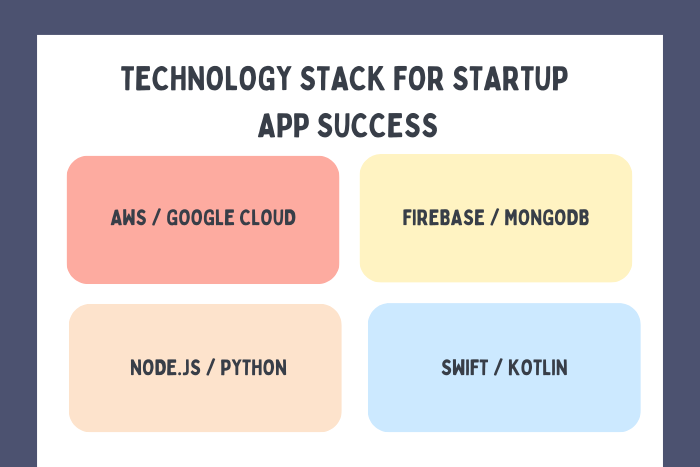
Technology Stack
A modern startup app development tech stack includes the following components:
Front-End Technologies:
Kotlin (Android), Swift (iOS), Flutter, React Native, JavaScript, HTML5, CSS3Back-End Technologies:
Node.js, Python (Django/Flask), Ruby on Rails, .NET, Java (Spring Boot)Databases:
MongoDB, PostgreSQL, MySQL, Firebase, RedisCloud Services:
AWS, Google Cloud Platform, Microsoft AzureDevOps & Deployment:
Docker, CI/CD Pipelines, GitHub ActionsSecurity Technologies:
OAuth 2.0, SSL Encryption, Two-Factor Authentication
Choosing the right stack ensures scalability and long-term growth.
Cost Factors for Startup App Development
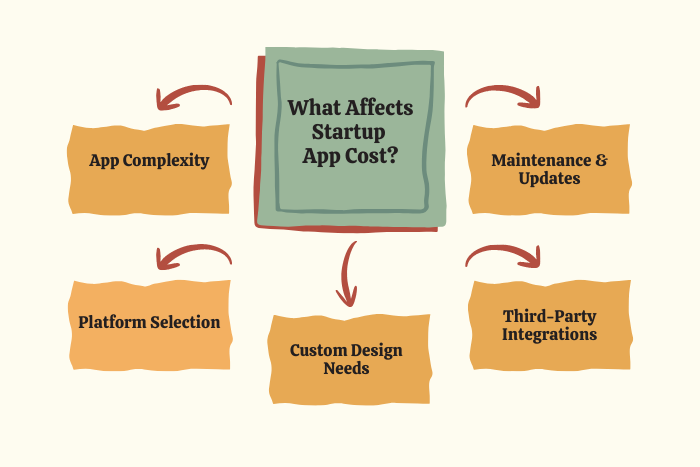
When you develop an app for startups, startup costs depend on:
App complexity
Number of features
Platform (iOS, Android, or both)
UI/UX customization
Third-party integrations
Development team location
Ongoing maintenance
Estimated cost range:
MVP app: $15,000 – $40,000
Mid-level startup app: $40,000 – $80,000
Scalable SaaS or marketplace app: $80,000+
Startups should prioritize MVP first to minimize financial risk.
Latest Trends to Develop an App for Startups
Modern startups are leveraging:
AI and machine learning integration
No-code/low-code MVP validation
Cloud-native applications
Microservices architecture
Real-time analytics dashboards
Subscription-based monetization
Blockchain for fintech startups
5G-optimized mobile apps
Adopting these trends helps startups stay competitive.
Why Choose Us for Startup App Development?
We specialize in lean startup product development with a focus on growth and scalability.
Experienced startup-focused developers
Agile development methodology
Investor-ready MVP development
Transparent pricing
Scalable architecture design
Post-launch support and iteration
We help founders turn ideas into scalable digital products that attract users and investors.
Ready to turn your startup idea into a market-ready app?
Let’s build your MVP and validate your product quickly.
Contact us today for a free startup consultation.
Key Points :
- Startup app development begins with idea validation and market research.
- Building an MVP helps startups test product-market fit quickly.
- Choosing the right platform (iOS, Android, or cross-platform) impacts cost and scalability.
- A clear monetization strategy is essential before development begins.
- Agile development methodology reduces risk and speeds up launch.
- Cloud-based backend ensures scalability for growing startups.
- Cost depends on app complexity, features, and technology stack.
- Post-launch updates and user feedback drive long-term startup success.
FAQ's
Start with an MVP, prioritize essential features, and use cross-platform frameworks.
MVP development typically takes 2–4 months.
Costs range from $15,000 to $80,000+ depending on complexity.
Cross-platform is cost-effective initially; native may be better for high-performance apps.
Through market research, surveys, prototypes, and MVP testing.
Yes, but investors often prefer an MVP or working prototype.
It depends on scalability needs, but cloud-native stacks are recommended.
Continuous updates, analytics monitoring, user feedback integration, and scaling.