


Learn how to develop a travel booking app with key features, development process, technology stack, cost factors, and latest travel app trends.
How Do I Develop an App for Travel Booking?
The travel and tourism industry has rapidly evolved with the growth of mobile technology and digital platforms. Travelers today expect convenient, fast, and personalized booking experiences directly from their smartphones. As a result, businesses across the travel sector are investing heavily in digital platforms, leading many companies to ask how do I develop an app for travel booking that delivers a seamless user experience.
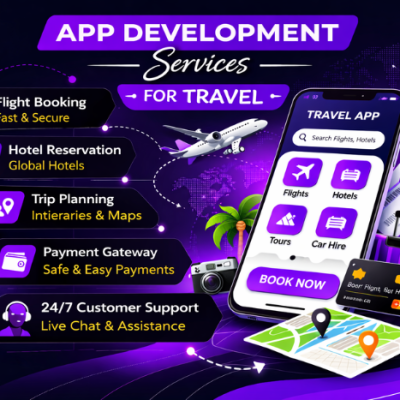
Travel booking apps allow users to search and book flights, hotels, vacation packages, car rentals, and travel activities in one place. These applications simplify the entire travel planning process by providing real-time availability, price comparisons, secure payments, and itinerary management. Popular travel apps have transformed the way people explore destinations, making travel more accessible and efficient.
Developing a successful travel booking app requires careful planning, user-focused design, robust backend infrastructure, and integration with third-party services such as airline APIs, hotel databases, and payment gateways. Additionally, features like personalized recommendations, real-time notifications, and AI-powered search enhance the user experience.
In this guide, we explore how to develop a travel booking app, including the essential services, types of solutions, features, development processes, technology stacks, cost considerations, and emerging trends shaping the travel technology industry.
Why Travel Booking App Development Is Important
Travel booking apps play a vital role in modern tourism and hospitality services. Businesses that invest in travel apps can offer customers more convenient booking experiences while improving operational efficiency.
Here are some key reasons why travel booking apps are important:
Convenient Booking Experience
Users can book flights, hotels, and travel services directly from their mobile devices.Improved Customer Engagement
Personalized recommendations and notifications enhance user interaction.Real-Time Travel Information
Apps provide instant updates on availability, prices, and travel schedules.Business Growth Opportunities
Travel apps help companies reach global customers and expand their services.Competitive Advantage
Businesses with efficient digital platforms can outperform competitors in the travel industry.
By adopting travel booking applications, companies can deliver better services while increasing revenue and customer loyalty.
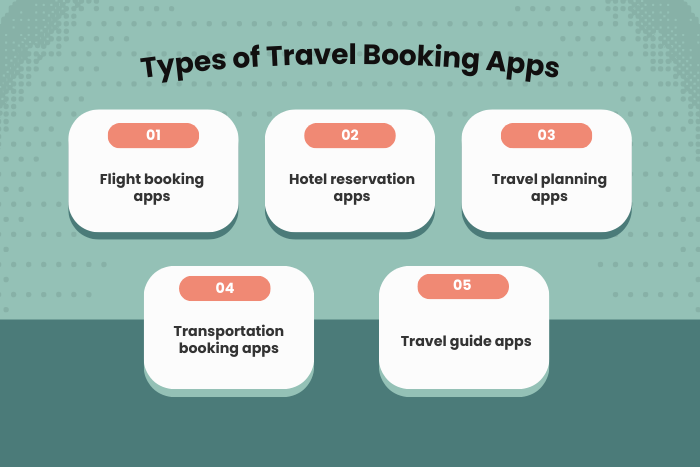
Types of Travel Booking Application Development Solutions
Travel app development services include multiple types of applications designed to support different travel services.
Flight Booking Applications
Apps that allow users to search flights, compare prices, and book airline tickets.Hotel and Accommodation Booking Apps
Platforms that provide hotel listings, room availability, and reservation services.Travel Planning and Itinerary Apps
Apps that help users organize trips, schedules, and travel activities.Transportation and Ride Booking Apps
Platforms for booking taxis, car rentals, and local transportation.Travel Guide Applications
Apps offering destination information, maps, and travel recommendations.Vacation Package Booking Apps
Platforms that combine flights, hotels, and activities into bundled packages.
These solutions support various travel industry needs and improve the travel planning experience.
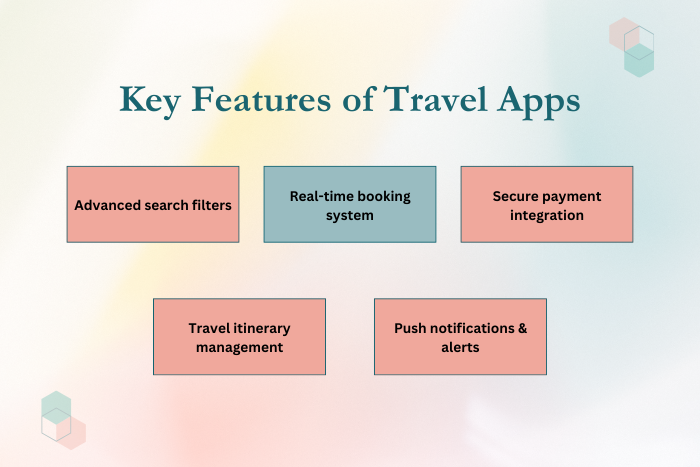
Key Features of Travel Booking Apps
Successful travel booking apps include features that simplify booking processes and improve user experiences.
User Registration and Profiles
Personalized user accounts with saved preferences and booking history.Advanced Search and Filters
Tools for searching flights, hotels, and travel services based on user preferences.Real-Time Booking and Availability
Instant updates on travel options and prices.Secure Payment Integration
Support for multiple payment methods including digital wallets and credit cards.Travel Itinerary Management
Organized trip details including bookings, schedules, and confirmations.Push Notifications and Alerts
Updates on price changes, booking confirmations, and travel reminders.Customer Support and Chat Assistance
Help centers and chat support for travelers.Reviews and Ratings System
User feedback for hotels, airlines, and travel services.
These features ensure smooth booking experiences and build trust among users.
Travel Booking Application Development Process
Developing a travel booking app involves several stages to ensure a reliable and scalable platform.
Market Research and Business Analysis
Identify target users, competitors, and market opportunities.Requirement Planning and Feature Definition
Define core functionalities and integration requirements.UI/UX Design for Travel Experiences
Create intuitive interfaces that simplify booking processes.Backend and Frontend Development
Build scalable systems for managing travel data and user interactions.Third-Party API Integration
Integrate airline, hotel, and payment service APIs.Testing and Quality Assurance
Conduct usability, performance, and security testing.Deployment and Launch
Publish the application on mobile platforms and web environments.Maintenance and Continuous Improvement
Regular updates and feature enhancements.
A structured development process ensures that travel apps deliver reliable and efficient services.
Technology Stack for Travel Booking App Development
Modern travel applications require scalable technologies to support large user bases and real-time booking systems.
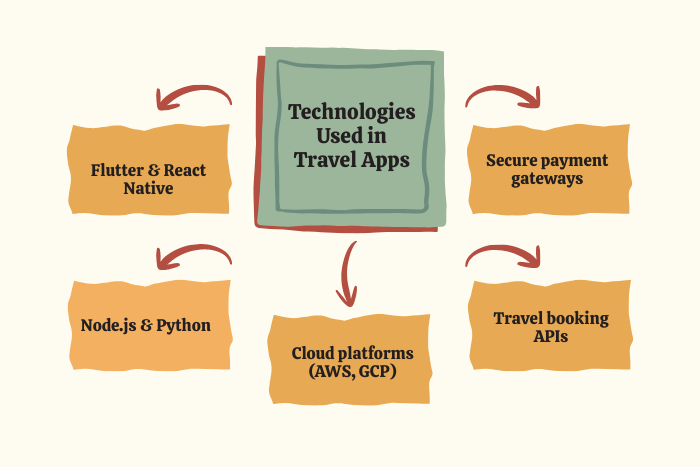
Mobile Development: Swift, Kotlin, Java, Dart
Cross-Platform Frameworks: Flutter, React Native
Frontend Technologies: HTML5, CSS3, JavaScript, TypeScript
Backend Technologies: Node.js, Python, Java, .NET
Databases: PostgreSQL, MongoDB, MySQL, Firebase
Cloud Platforms: AWS, Google Cloud Platform, Microsoft Azure
Travel APIs: Amadeus API, Skyscanner API, Expedia API
Security Tools: OAuth 2.0, SSL encryption, secure payment gateways
These technologies enable travel apps to deliver real-time booking services and seamless performance.
Cost Factors in Travel Booking App Development
The cost of developing a travel booking app depends on several variables.
Application Complexity
Advanced features like AI recommendations and real-time pricing increase costs.Platform Coverage
Developing apps for Android, iOS, and web platforms requires additional resources.Third-Party API Integrations
Travel data providers and booking APIs increase development complexity.Design and User Experience
Travel apps require visually engaging interfaces and smooth navigation.Payment and Security Systems
Secure transactions and compliance standards increase development requirements.Maintenance and Updates
Continuous improvements and infrastructure support add long-term costs.
Understanding these cost factors helps businesses plan travel app development budgets effectively.
Latest Trends in Travel Booking App Development
Travel technology continues to evolve with innovations that enhance digital travel experiences.
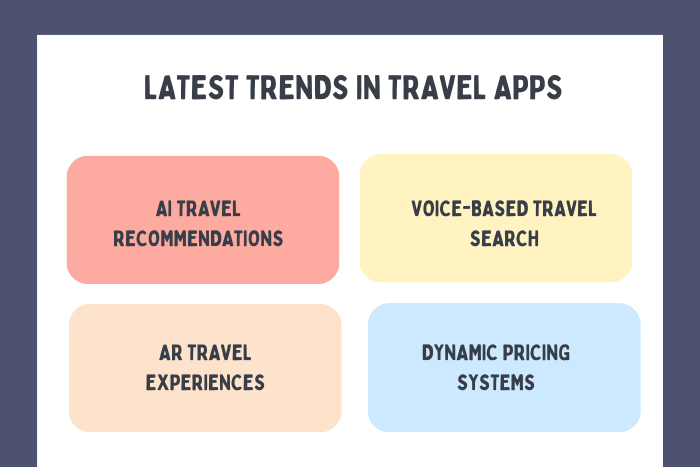
Artificial Intelligence Travel Assistants
AI tools provide personalized travel recommendations.Voice-Based Travel Search
Voice assistants help users search and book travel services.Augmented Reality Travel Experiences
AR technology allows users to explore destinations virtually.Blockchain for Secure Bookings
Blockchain improves transaction transparency and security.Dynamic Pricing Algorithms
AI-based systems provide real-time price optimization.Contactless Travel Solutions
Mobile apps support digital boarding passes and contactless payments.
These trends are shaping the future of travel booking applications.
Why Choose Us for Travel Booking App Development?
Building a successful travel booking application requires expertise in travel APIs, scalable architecture, and user-centered design. Our development team specializes in creating advanced travel technology solutions for businesses worldwide.
Here’s why companies partner with us:
Travel Technology Expertise – Extensive experience developing travel and tourism platforms.
Scalable Booking Systems – Apps designed to handle high volumes of bookings.
Advanced API Integrations – Seamless integration with airlines, hotels, and travel databases.
Cross-Platform Development – Mobile and web apps built using modern frameworks.
Secure Payment Systems – Implementation of trusted payment gateways and encryption technologies.
Agile Development Process – Efficient project delivery with transparent workflows.
End-to-End Development Support – From concept to launch and ongoing maintenance.
We help travel businesses create powerful digital platforms that simplify travel planning and booking.
Ready to build your travel booking app?
Let our experts transform your travel business into a digital platform.
Contact us today for a free consultation and development estimate.
Key Points :
- Travel booking apps allow users to search, compare, and book flights, hotels, and travel services from one platform.
- Common types include flight booking apps, hotel reservation apps, travel planning apps, and transportation booking apps.
- Key features include advanced search filters, real-time availability, secure payment gateways, and itinerary management.
- Travel apps require integration with third-party APIs for airlines, hotels, and payment systems.
- Technologies like Flutter, React Native, Node.js, and cloud platforms are widely used for travel app development.
- Modern trends include AI travel recommendations, voice search, dynamic pricing, and contactless travel solutions.
FAQ's
Developing a travel booking app involves market research, UI/UX design, backend development, API integration, testing, and deployment.
Key features include search functionality, real-time booking, payment integration, itinerary management, and notifications.
Technologies such as Flutter, React Native, Node.js, cloud platforms, and travel APIs are commonly used.
Development timelines vary depending on the complexity and features required.
Yes, secure payment gateways and encryption technologies protect transactions.
Yes, travel APIs allow apps to display real-time availability and pricing.
Yes, regular updates are required to maintain performance and support new travel services.