



Learn how to ensure app performance optimization with monitoring, caching, load balancing, testing, and scalability strategies for faster apps.
How Do I Ensure App Performance Optimization?
If you’re asking, “How do I ensure app performance optimization?”, you’re already prioritizing one of the most critical factors in digital success. App performance directly impacts user experience, retention, engagement, and revenue. Slow load times, crashes, laggy interfaces, or inefficient backend systems can quickly drive users away — often permanently.
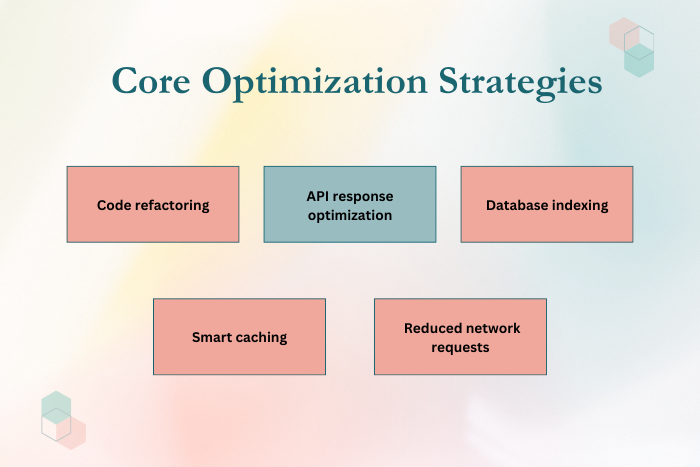
App performance optimization involves improving speed, responsiveness, stability, scalability, and resource efficiency across mobile and web platforms. It requires strategic code optimization, efficient API handling, smart caching, cloud infrastructure tuning, real-time monitoring, and continuous testing.
Whether you’re building a startup MVP, scaling an enterprise application, or improving an existing mobile app, performance optimization must be integrated from day one — not treated as an afterthought. This comprehensive guide explains how to ensure app performance optimization, covering key techniques, technologies, processes, costs, and emerging trends for 2024–2025.
Why App Performance Optimization Is Important
Performance is directly tied to business outcomes. Even minor delays can reduce conversions and retention rates.
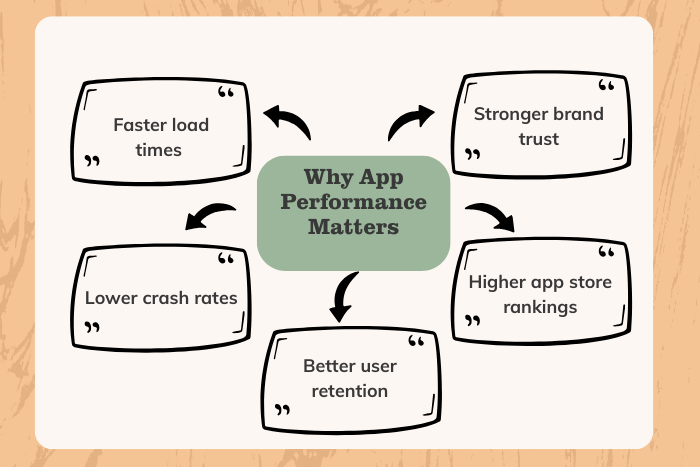
Here’s why app performance optimization matters:
Faster load times improve user satisfaction
Reduced crash rates increase retention
Efficient resource usage lowers infrastructure costs
Better responsiveness enhances engagement
Optimized backend improves scalability
Improved startup time boosts app store rankings
Enhanced performance strengthens brand reputation
Users expect seamless, real-time experiences. Performance optimization ensures your app consistently meets those expectations.
Types of Solutions
App optimization strategies vary depending on architecture and business needs:
Frontend Optimization
UI rendering improvements, lazy loading, efficient animations, and optimized assets.Backend Optimization
API performance tuning, database indexing, and server-side caching.Network Optimization
Data compression, reduced API calls, and content delivery network (CDN) integration.Database Optimization
Query optimization, schema improvements, and caching strategies.Cloud Infrastructure Optimization
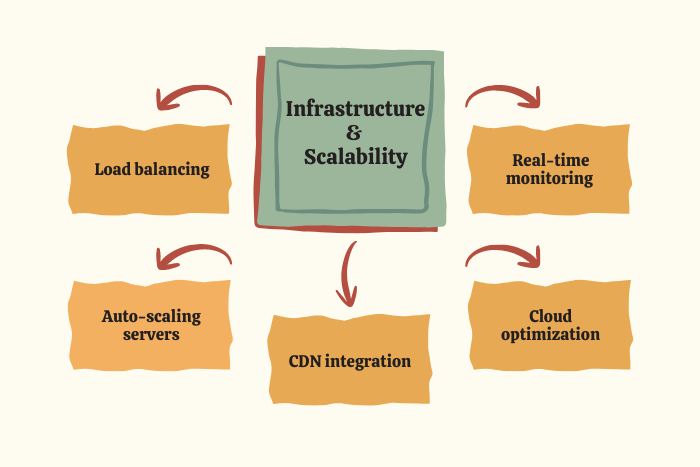
Auto-scaling, load balancing, and dynamic resource allocation.Mobile-Specific Optimization
Memory management, battery usage reduction, and startup time improvements.Continuous Monitoring & Observability
Real-time tracking of app performance metrics.
Each solution targets specific performance bottlenecks.
Key Features of Effective App Performance Optimization
A well-optimized app typically includes:
Optimized codebase and modular architecture
Efficient memory management
Reduced network requests
Smart caching mechanisms (in-memory & disk caching)
Load balancing and server auto-scaling
Database indexing and query optimization
Background task management
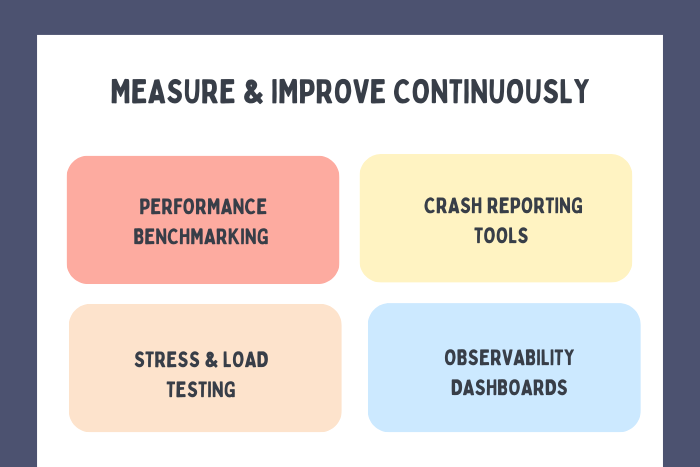
Crash reporting and logging systems
Real-time performance dashboards
Automated performance testing
These features ensure stability under both low and high traffic conditions.
Development Process
Ensuring app performance optimization requires a structured, continuous process:
Performance Audit & Benchmarking
Identify bottlenecks using profiling tools and performance metrics.Code Review & Refactoring
Clean inefficient logic and remove redundant processes.Frontend Optimization
Implement lazy loading, reduce heavy animations, and compress assets.Backend & API Optimization
Reduce response times through caching and query tuning.Network Optimization
Minimize payload sizes and use CDNs.Load Testing & Stress Testing
Simulate high traffic scenarios to measure scalability.Monitoring & Observability Setup
Implement real-time tracking and alert systems.Continuous Optimization Cycle
Regular updates based on analytics and user feedback.
Performance optimization is not a one-time task — it’s an ongoing strategy.
Technology Stack for Performance Optimization
Modern app performance optimization leverages advanced tools and technologies:
Monitoring Tools: Firebase Performance Monitoring, New Relic, Datadog
Crash Reporting: Sentry, Crashlytics
Backend Technologies: Node.js, Python, .NET
Cloud Infrastructure: AWS Auto Scaling, Azure Load Balancer
CDN Services: Cloudflare, AWS CloudFront
Caching Systems: Redis, Memcached
Database Optimization: PostgreSQL indexing, MongoDB optimization
DevOps Tools: CI/CD pipelines, automated testing tools
Selecting scalable infrastructure ensures long-term performance stability.
Cost Factors in Optimizing App Performance
Optimization costs depend on:
Application complexity
Existing code quality
Infrastructure setup
Traffic volume
Cloud hosting requirements
Third-party integrations
Continuous monitoring tools
Maintenance and testing frequency
While optimization may require upfront investment, it reduces long-term costs by improving efficiency and lowering infrastructure strain.
Latest Trends in App Performance Optimization (2024–2025)
Performance strategies continue evolving with emerging technologies:
AI-driven performance monitoring
Real-time observability platforms
Edge computing for reduced latency
Serverless architecture
Automated incident remediation
Microservices-based architecture
Advanced load balancing techniques
Predictive performance analytics
Businesses adopting these innovations gain faster, more resilient applications.
Why Choose Us for App Performance Optimization?
Ensuring optimal performance requires deep technical expertise and proactive monitoring strategies. We provide end-to-end performance optimization services tailored to your application’s architecture.
Here’s why clients trust us:
Comprehensive Performance Audits – Identify hidden bottlenecks.
Scalable Cloud Optimization – Handle high traffic without slowdowns.
Code-Level Optimization Expertise – Improve efficiency from the foundation.
Advanced Monitoring & Observability – Real-time performance tracking.
Automated Testing Integration – Prevent regressions before deployment.
Security & Stability Focus – Maintain data integrity while optimizing speed.
Continuous Support & Improvements – Ongoing performance enhancement.
We don’t just optimize apps — we engineer high-performance digital experiences.
Ready to optimize your app’s performance?
Let’s build a faster, scalable, and more reliable application.
Contact us today for a comprehensive performance audit and optimization strategy.
Key Points :
- Step-by-step framework for app performance optimization, including auditing, benchmarking, code refactoring, and continuous monitoring.
- Comprehensive optimization strategies covering frontend, backend, database, network, and cloud infrastructure performance.
- Advanced techniques like caching, load balancing, and CDN integration to reduce latency and improve response time.
- Real-time monitoring and observability tools such as performance dashboards, crash reporting, and automated alerts.
- Mobile-specific optimization practices for memory management, startup time improvement, and battery efficiency.
- Cost-benefit insights showing how performance optimization reduces infrastructure expenses and improves ROI.
FAQ's
Conduct performance audits, optimize code and APIs, reduce network requests, implement caching, and monitor continuously.
Track metrics such as load time, crash rate, response time, memory usage, and server latency.
Tools like Firebase Performance Monitoring, New Relic, and Datadog are widely used.
Yes. Efficient resource allocation lowers cloud hosting expenses.
Regularly — especially after updates or feature releases.
Yes, faster load times positively impact search engine rankings for web apps.
It distributes traffic across servers to prevent overload and downtime.
Yes, we offer continuous monitoring, optimization, and support services.