



Learn how to ensure your app is scalable using cloud architecture, microservices, caching, and performance optimization strategies.
How Do I Ensure My App Is Scalable?
As digital products grow in popularity, the ability of an application to handle increasing users, data, and transactions becomes critical. Many developers and businesses ask the question: “How do I ensure my app is scalable?” Scalability determines whether your application can support rapid growth without performance issues, downtime, or system failures.
A scalable application is designed to adapt to increasing workloads by efficiently managing resources such as servers, databases, and network infrastructure. Whether you are launching a startup app, SaaS platform, or enterprise solution, planning for scalability ensures that your application can handle future growth without requiring major architectural changes.
Poor scalability can lead to slow performance, system crashes, and negative user experiences, especially during traffic spikes. To avoid these issues, developers must implement scalable architectures, optimized databases, efficient caching systems, and cloud-based infrastructure from the early stages of development.
Modern development frameworks and cloud technologies make it easier than ever to build scalable applications. With the right strategies, businesses can design apps that support millions of users while maintaining high performance and reliability.
In this guide, we will explore how to ensure your app is scalable, including development strategies, technology stacks, infrastructure planning, and best practices for building applications that grow with your business.
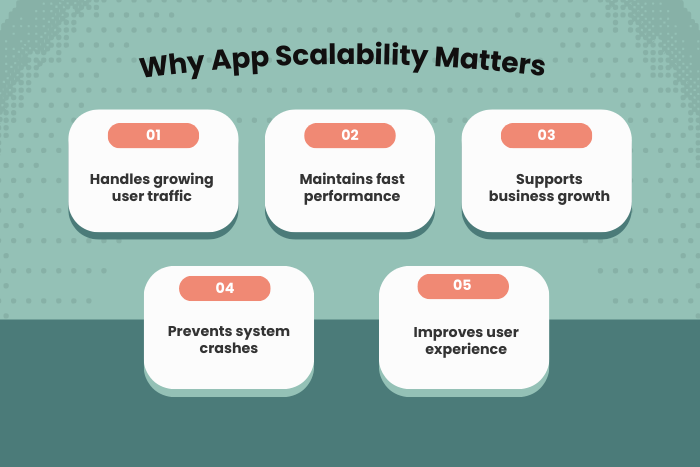
Why App Scalability Is Important
Scalability is one of the most important factors in modern application development. As user demand increases, your app must be able to maintain performance and reliability.
Here are several reasons why scalability is essential:
Handling Increased User Traffic
A scalable application can handle sudden spikes in user activity without slowing down.Improved User Experience
Fast response times and smooth performance improve user satisfaction and retention.Business Growth Support
As businesses expand into new markets, applications must support more users and data.Cost Efficiency
Scalable infrastructure allows businesses to allocate resources efficiently.Better System Reliability
Applications built with scalability in mind are less likely to crash under heavy loads.Future-Proof Development
Scalable architecture ensures the app remains adaptable to new technologies and features.
Building scalability into your application from the beginning helps prevent performance issues as your business grows.
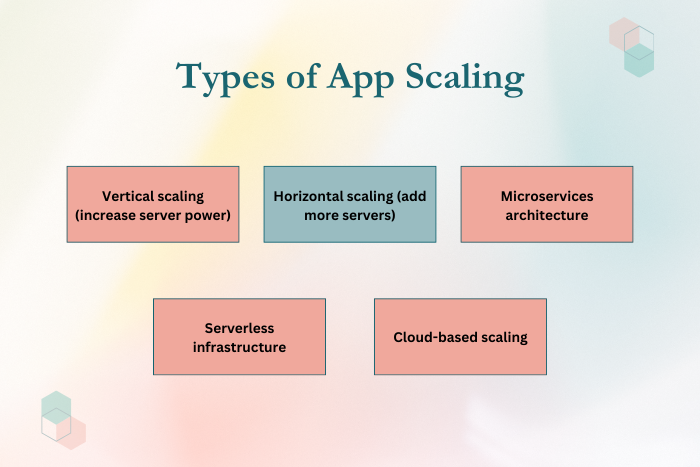
Types of Development Solutions to Ensure App Is Scalable
There are several architectural approaches developers use to build scalable applications.
Vertical Scaling
Vertical scaling involves increasing the capacity of existing servers by adding more resources such as CPU, memory, or storage.
Easy implementation
Suitable for small to medium applications
Limited long-term scalability
Horizontal Scaling
Horizontal scaling adds more servers or nodes to distribute workloads across multiple machines.
Supports high traffic volumes
Improves system reliability
Ideal for large applications
Microservices Architecture
Microservices divide applications into smaller independent services.
Independent service scaling
Improved maintainability
Faster deployment cycles
Serverless Architecture
Serverless platforms automatically manage infrastructure and scale resources based on demand.
No server management required
Automatic scaling
Cost-efficient for variable workloads
Cloud-Based Infrastructure
Cloud services provide flexible infrastructure that scales automatically with traffic.
On-demand resource allocation
High reliability
Global deployment capabilities
These solutions help developers design applications capable of handling increasing demand efficiently.
Key Features of Scalable Applications
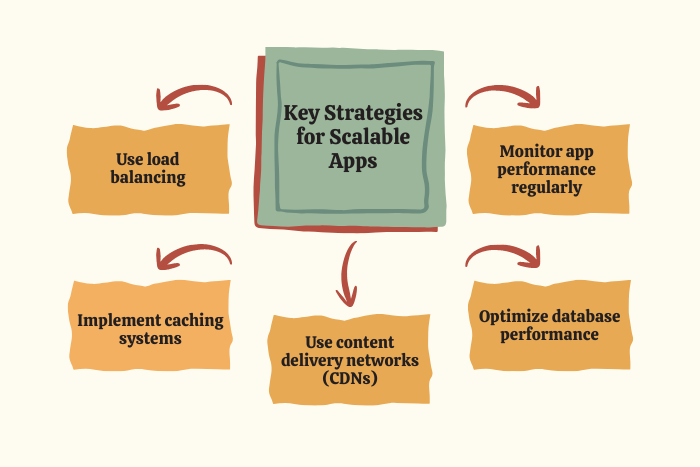
To ensure your app is scalable, several essential features must be incorporated into its architecture to support growing users, data, and traffic without affecting performance.
Modular and flexible system architecture
Load balancing for traffic distribution
Efficient database management and replication
Caching mechanisms to reduce server load
Content delivery networks (CDNs) for faster content delivery
API-first development approach
Auto-scaling infrastructure
Real-time monitoring and performance analytics
These features help maintain application performance even during high traffic periods.
Development Process for Building Scalable Applications
Creating a scalable application requires careful planning and structured development processes.
Requirement Analysis and Growth Forecasting
Identify expected user growth and future scalability needs.Architecture Design
Choose scalable architectures such as microservices or cloud-native systems.Technology Stack Selection
Select frameworks and databases that support high scalability.Database Optimization
Implement database indexing, replication, and efficient data management.Caching and Performance Optimization
Use caching systems to reduce server load and improve speed.Load Balancing Implementation
Distribute traffic across multiple servers to avoid system overload.Scalability Testing
Perform load testing and stress testing to simulate high traffic scenarios.Deployment and Continuous Monitoring
Deploy the application and monitor performance to optimize scaling strategies.
Following these steps ensures that scalability is built into the application from the start.
Technology Stack for Scalable App Development
The technology stack plays a critical role in ensuring application scalability.
Frontend Technologies: React.js, Angular, Vue.js
Mobile Development: Flutter, React Native, Swift, Kotlin
Backend Technologies: Node.js, Python, Java, .NET
Databases: PostgreSQL, MongoDB, Cassandra, Redis
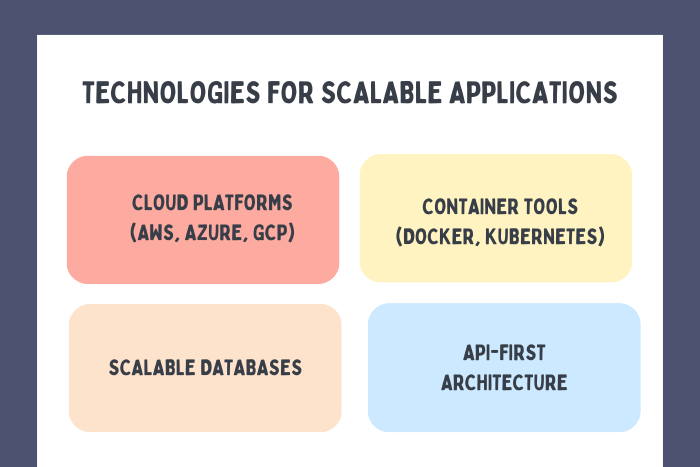
Cloud Platforms: AWS, Google Cloud Platform, Microsoft Azure
Containerization: Docker, Kubernetes
Caching Systems: Redis, Memcached
Content Delivery Networks: Cloudflare, AWS CloudFront
Monitoring Tools: Datadog, New Relic, Prometheus
Using modern technologies ensures applications can scale efficiently as demand increases.
Cost Factors to Ensure App Scalability
Building scalable applications involves several cost considerations to ensure your app is scalable and capable of handling future growth and increasing user demand.
Key cost factors include:
Cloud infrastructure and hosting services
Load balancing and server management
Database scaling and replication
Performance testing and monitoring tools
Development team expertise and time
Security and compliance measures
Maintenance and ongoing optimization
Although scalable systems may require higher initial investment, they significantly reduce long-term operational risks.
Latest Trends in App Scalability
The future of scalable application development is driven by emerging technologies and modern infrastructure models.
Key trends include:
Cloud-native application development
Serverless computing platforms
Microservices architecture adoption
Edge computing for faster data processing
AI-powered performance monitoring
Container orchestration using Kubernetes
Event-driven architecture
Scalable real-time data processing systems
These trends allow businesses to create highly flexible and scalable digital platforms.
Why Choose Us for Scalable App Development?
Building a scalable application requires deep technical expertise, strategic planning, and modern infrastructure. Our team specializes in designing high-performance applications that grow seamlessly with your business.
Here’s why businesses choose us:
Scalable Architecture Experts – Specialists in designing systems that support rapid growth.
Cloud-Native Development – Applications optimized for AWS, Azure, and Google Cloud.
Microservices and API-First Approach – Modular architectures that support flexible scaling.
Advanced Performance Optimization – Efficient database design, caching strategies, and load balancing.
Comprehensive Testing and Monitoring – Continuous performance testing to ensure stability.
Secure and Reliable Infrastructure – Implementation of strong security protocols and monitoring tools.
End-to-End Development Services – From concept and architecture design to deployment and maintenance.
Future-Ready Technology Stack – Modern frameworks designed for long-term scalability.
We help businesses build powerful applications that remain fast, reliable, and scalable as user demand grows.
Planning to build a scalable mobile or web application?
Let our experts design an architecture that supports long-term growth.
Contact us today for a free consultation and scalability strategy.
Key Points :
- App scalability ensures your application can handle growing users and data without performance issues.
- Scalable architecture like microservices and cloud infrastructure supports long-term growth.
- Horizontal and vertical scaling help manage increased traffic efficiently.
- Caching systems and CDNs improve app performance and reduce server load.
- Load balancing distributes traffic across multiple servers for better reliability.
- Scalability testing helps identify performance issues before deployment.
- Cloud platforms and container technologies enable automatic resource scaling.
FAQ's
You can ensure scalability by using cloud infrastructure, load balancing, caching, and scalable architectures like microservices.
Application scalability refers to the ability of an application to handle increasing workloads without affecting performance.
The main types are vertical scaling, horizontal scaling, and microservices-based scaling.
Scalability ensures the app can handle growing users, data, and traffic without performance issues.
Technologies such as Node.js, Kubernetes, cloud platforms, and distributed databases support scalability.
Developers use load testing and stress testing tools to simulate high traffic conditions.
Yes, cloud platforms offer auto-scaling infrastructure that adjusts resources based on demand.
Yes, we specialize in building scalable mobile and web applications designed for long-term growth.