



Learn how to ensure your app is secure with best practices like encryption, authentication, secure APIs, and regular security updates.

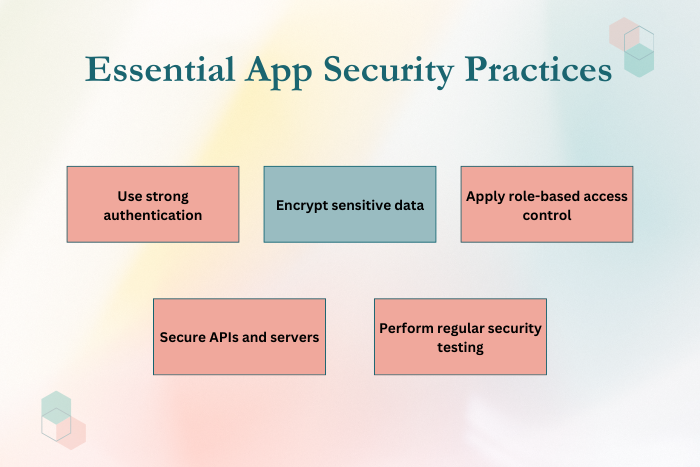
How Do I Ensure My App Is Secure?
Security is one of the most critical aspects of modern application development. With increasing cyber threats, data breaches, and privacy concerns, businesses must prioritize protecting their applications and user data. If you’re asking “How do I ensure my app is secure?”, the answer lies in implementing robust security strategies throughout the entire development lifecycle.
Applications handle sensitive information such as personal details, payment data, authentication credentials, and business transactions. Without proper security measures, these systems become vulnerable to threats such as malware, data theft, unauthorized access, and cyberattacks. A single vulnerability can compromise user trust, damage brand reputation, and lead to legal or financial consequences.
Secure application development involves a combination of technologies, coding practices, infrastructure protection, and ongoing monitoring. From implementing strong authentication systems to encrypting sensitive data and securing APIs, every layer of an application must be protected.
Businesses must also ensure compliance with industry standards and privacy regulations such as GDPR and data protection laws. A proactive security approach not only protects applications from threats but also builds trust with users.
In this guide, we’ll explore how to ensure your app is secure, including best practices, development strategies, technologies, and security trends used to protect modern applications.
Why App Security Is Important
Application security is essential for protecting user data, maintaining system integrity, and ensuring the reliability of digital platforms. As applications become more complex and interconnected, the potential attack surface for cyber threats increases.
Here are several reasons why app security is crucial:
Protection of Sensitive Data
Applications often store personal information, financial details, and authentication credentials that must be protected.Preventing Cyberattacks
Secure applications reduce the risk of malware, hacking attempts, and data breaches.Maintaining User Trust
Users expect their data to be safe when using digital platforms.Regulatory Compliance
Many industries must comply with data protection laws and security regulations.Business Continuity
Strong security prevents downtime, financial losses, and operational disruptions.Protection of Intellectual Property
Security safeguards proprietary algorithms, business logic, and company data.
Without proper security strategies, applications become vulnerable to threats that can impact both businesses and users.
Types of Solutions to Ensure App Is Secure
Securing an application requires multiple layers of protection to safeguard different aspects of the system.
Authentication Security
Authentication ensures that only authorized users can access the application.
Multi-factor authentication (MFA)
OAuth authentication
Biometric login systems
Data Encryption
Encryption protects sensitive information during storage and transmission.
End-to-end encryption
Secure data storage
TLS/SSL encryption protocols
API Security
APIs are often targeted by attackers and must be protected using secure authentication and monitoring systems.
API tokens and authentication keys
Rate limiting
API gateways
Network Security
Network security protects communication channels between servers, applications, and users.
Secure communication protocols
Firewall protection
Network monitoring tools
Application Code Security
Secure coding practices help prevent vulnerabilities such as injection attacks or cross-site scripting.
Code reviews
Static and dynamic code analysis
Secure development frameworks
Device and Platform Security
Mobile and web apps must remain secure across different operating systems and devices.
OS compatibility updates
Secure storage mechanisms
Runtime protection
These layered security solutions create a strong defense against various cyber threats.
Key Features of Secure Applications
A secure application includes several essential features that help ensure your app is secure, protect users, and maintain overall system stability.
Strong user authentication and identity management
Secure communication protocols and encrypted data transmission
Secure API integrations and access controls
Role-based access management (RBAC)
Secure data storage and database protection
Real-time monitoring and threat detection
Secure coding practices and vulnerability testing
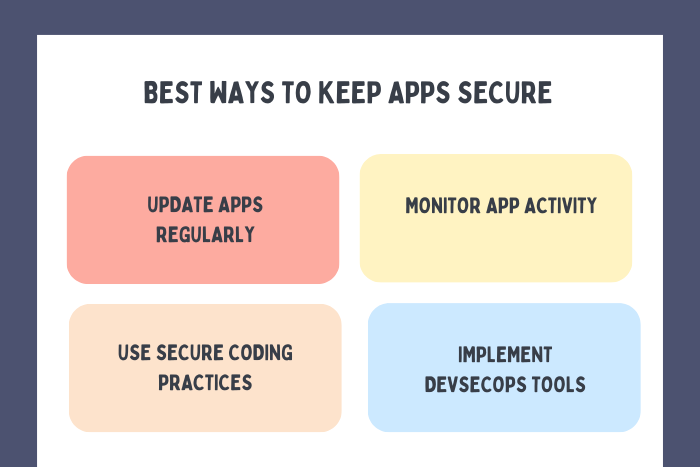
Regular updates and security patch management
Implementing these features helps maintain a secure and reliable application environment.
Development Process for Building Secure Applications
Ensuring application security requires a structured development process that integrates security at every stage of the software lifecycle.
Security Requirement Analysis
Identify potential threats, sensitive data, and compliance requirements.Secure Architecture Design
Design application architecture with security layers, authentication mechanisms, and encrypted communication channels.Secure Coding Practices
Developers follow secure coding guidelines to prevent vulnerabilities.Security Testing and Code Review
Perform penetration testing, vulnerability scanning, and code audits.Authentication and Access Control Implementation
Integrate strong authentication systems such as OAuth, MFA, or biometric login.Deployment with Security Monitoring
Deploy the application with monitoring systems that detect unusual activities.Continuous Security Updates and Maintenance
Regularly update dependencies, frameworks, and security patches.
This process ensures that security is embedded throughout the application lifecycle rather than added later.
Technology Stack to Ensure App Is Secure
Modern security solutions rely on advanced technologies and tools to protect applications.
Authentication Technologies: OAuth 2.0, JWT authentication, Multi-factor authentication
Encryption Technologies: SSL/TLS encryption, AES encryption, secure key management
Backend Technologies: Node.js, Python, Java, .NET
Frontend Technologies: React.js, Angular, Vue.js
Mobile Security Tools: Firebase App Check, Android SafetyNet, iOS Secure Enclave
Cloud Security Platforms: AWS Security Hub, Google Cloud Security Command Center, Azure Security Center
Monitoring Tools: Datadog, New Relic, Sentry
DevSecOps Tools: SonarQube, OWASP ZAP, Snyk
Using the right security technologies helps prevent vulnerabilities and improve application protection.
Cost Factors in App Security Implementation
The cost of implementing app security depends on several technical and operational factors.
Complexity of the application architecture
Type of authentication and encryption methods used
Security testing and vulnerability assessment tools
Cloud infrastructure and monitoring systems
Compliance requirements and legal standards
Security team expertise and development resources
Frequency of security audits and updates
Investing in security early in the development process is often more cost-effective than fixing vulnerabilities after a breach occurs.
Latest Trends to Ensure App Is Secure
App security continues to evolve as cyber threats become more sophisticated. Businesses are adopting new technologies and strategies to protect their applications.
Key trends include:
Zero Trust security architecture
AI-powered threat detection
Biometric authentication systems
Blockchain-based data security
Secure DevOps (DevSecOps) practices
Real-time security monitoring
API-first security frameworks
Privacy-focused application development
These trends help organizations stay ahead of emerging security threats.
Why Choose Us for Secure App Development?
Ensuring application security requires expertise, experience, and a proactive development approach. Our team specializes in building secure applications that protect user data while maintaining high performance.
Here’s why businesses trust us for secure app development:
Security-First Development Approach – Security is integrated into every stage of the development process.
Expert Security Engineers – Skilled professionals experienced in modern security technologies.
Advanced Threat Detection Systems – Continuous monitoring to identify and prevent vulnerabilities.
Secure API and Data Protection – Implementation of encryption, authentication, and secure communication protocols.
Compliance with Industry Standards – Support for GDPR, data protection regulations, and security best practices.
DevSecOps Integration – Automated security testing integrated into development pipelines.
Scalable and Cloud-Secure Architecture – Security solutions designed for modern cloud-based applications.
Ongoing Security Maintenance – Continuous updates, patches, and vulnerability monitoring.
We help businesses build applications that are secure, reliable, and trusted by users.
Want to build a secure and reliable application?
Let our experts implement advanced security solutions for your app.
Contact us today for a free consultation and security assessment.
Key Points :
- App security protects sensitive user data and prevents cyber threats such as hacking and data breaches.
- Strong authentication methods like MFA, OAuth, and biometric login help prevent unauthorized access.
- Data encryption (SSL/TLS, AES) ensures secure communication and safe storage of sensitive information.
- Secure APIs and access controls help prevent attacks on backend services and integrations.
- Regular security testing and code reviews help identify and fix vulnerabilities early.
- Continuous monitoring and threat detection help maintain long-term app security.
- Compliance with data protection regulations ensures legal and user trust in your application.
FAQ's
By implementing strong authentication, encryption, secure APIs, regular security testing, and continuous monitoring.
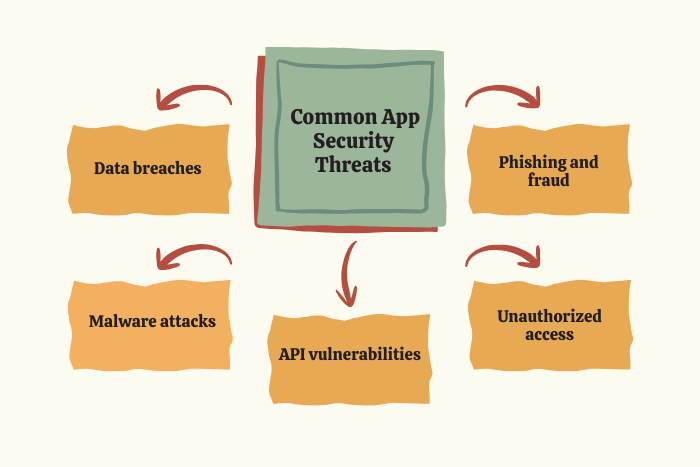
Common threats include data breaches, malware, phishing attacks, insecure APIs, and unauthorized access.
Encryption protects sensitive data by converting it into unreadable formats that can only be accessed with secure keys.
Multi-factor authentication (MFA) requires users to verify their identity using multiple authentication methods.
Security testing should be performed regularly, especially before major updates or releases.
DevSecOps integrates security practices into the development and DevOps workflow to detect vulnerabilities early.
Yes, we provide comprehensive security services including vulnerability assessments, penetration testing, and continuous monitoring.