




How Do I Integrate API in an App? Complete Guide
Learn how to integrate API in an app. Discover API types, integration process, tools, benefits, and best practices for scalable applications.
How Do I Integrate API in an App?
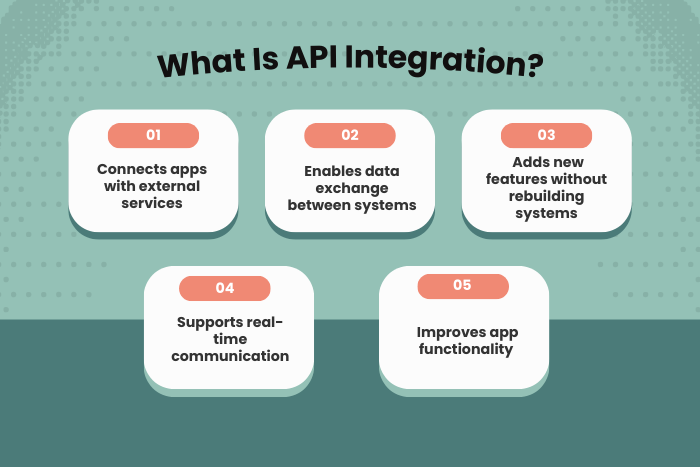
Modern applications rely heavily on APIs to connect with external services, exchange data, and extend functionality. If you’re wondering how do I integrate API in an app, the process involves connecting your application with external or internal services through structured endpoints that allow systems to communicate with each other. APIs, or Application Programming Interfaces, act as bridges between different software systems, enabling developers to add powerful features without building everything from scratch.
API integration allows apps to access services such as payment gateways, social media platforms, cloud storage, mapping systems, and third-party analytics tools. For example, an eCommerce application might integrate APIs for payment processing, shipping services, and customer authentication. Similarly, mobile apps often use APIs to fetch real-time data, synchronize with cloud servers, and interact with external platforms.
Proper API integration improves application performance, scalability, and flexibility. It also allows businesses to automate processes, streamline data exchange, and create more advanced digital products. From RESTful APIs to GraphQL and WebSocket integrations, modern API technologies provide developers with powerful ways to enhance applications.
In this guide, we will explore how API integration works, the different types of API solutions, the development process, technologies used, and best practices for implementing APIs in modern applications.
Why API Integration is Important
API integration plays a vital role in modern application development because it allows systems to communicate and share data efficiently.
Here are several reasons why API integration is essential to Integrate API in an App:
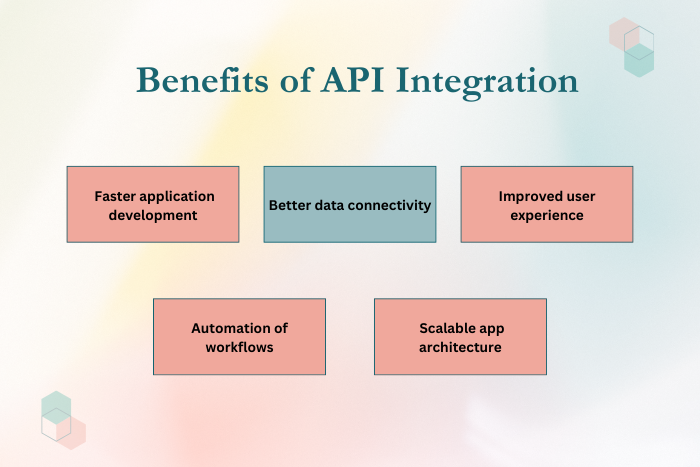
Extends Application Functionality
APIs allow developers to add advanced features such as payment processing, messaging services, and location tracking.Improves Data Connectivity
Applications can fetch and exchange data from different platforms in real time.Enhances User Experience
APIs enable smooth interactions with services like login authentication, maps, and social media integration.Supports Scalable Architecture
API-based systems make applications more modular and scalable.Reduces Development Time
Developers can use existing APIs instead of building complex systems from scratch.Enables Automation
APIs automate workflows and integrate multiple services seamlessly.
By leveraging APIs, businesses can build more dynamic and connected applications.
Types of Solutions to Integrate API in an App
There are different types of API integration approaches depending on how systems communicate.
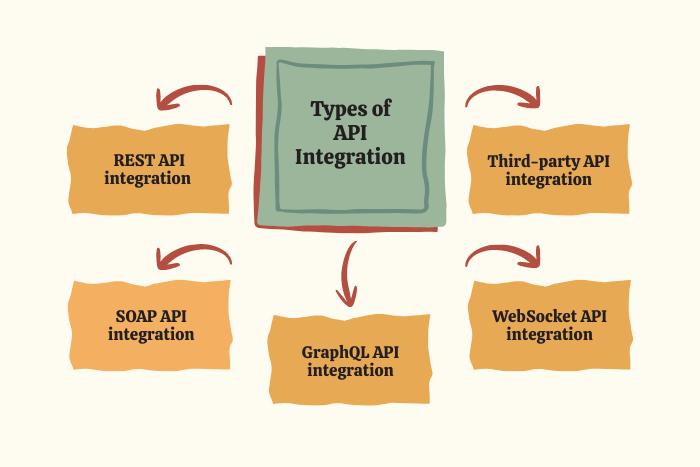
REST API Integration
REST (Representational State Transfer) APIs are the most commonly used APIs in modern web and mobile applications.
Lightweight and scalable architecture
Uses HTTP methods like GET, POST, PUT, and DELETE
Supports JSON and XML data formats
SOAP API Integration
SOAP (Simple Object Access Protocol) APIs provide structured communication for enterprise applications.
Highly secure and reliable
Common in financial and enterprise systems
GraphQL API Integration
GraphQL allows developers to request specific data from APIs.
Reduces unnecessary data transfer
Improves performance in complex applications
WebSocket API Integration
WebSocket APIs provide real-time communication between client and server.
Ideal for chat applications
Used in live dashboards and gaming apps
Third-Party API Integration
External APIs provide ready-made services.
Payment APIs (Stripe, PayPal)
Social media APIs
Cloud storage APIs
Mapping and geolocation APIs
Each integration method serves different development needs to Integrate API in an App.
Key Features of API Integration
A well-implemented API integration system includes several important features.
Secure authentication and authorization mechanisms
Fast data exchange between systems
Scalability for handling large volumes of requests
Compatibility with multiple platforms and devices
Real-time data synchronization
Error handling and monitoring tools
High reliability and uptime
Flexible architecture for future integrations
These features ensure stable and efficient application performance.
Development Process to Integrate API in an App
Integrating APIs into an application requires a structured approach to ensure stability and security.
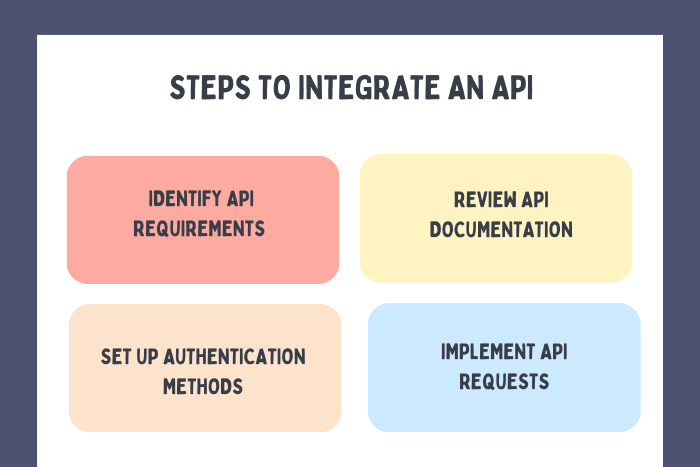
Define Integration Requirements
Identify which services and data sources the application needs to connect with.Choose the Appropriate API Type
Select REST, GraphQL, SOAP, or WebSocket APIs depending on the application requirements.Review API Documentation
Understand endpoints, authentication methods, and request formats.Set Up Authentication and Security
Implement authentication methods such as API keys, OAuth, or JWT.Develop API Requests and Endpoints
Write code to send requests and handle responses from the API.Test the API Integration
Use tools like Postman to test requests and ensure proper functionality.Implement Error Handling and Monitoring
Manage failures and ensure stable communication between systems.Deploy and Maintain Integration
Monitor API performance and update integrations when needed.
This process ensures reliable and efficient API implementation.
Technology Stack to Integrate API in an App
A modern API integration system uses multiple technologies and tools.
- Programming Languages: JavaScript, Python, Java, PHP, Go
- Backend Frameworks: Node.js, Django, Spring Boot, Laravel
- API Protocols: REST, GraphQL, SOAP, gRPC, WebSocket
- Databases: MongoDB, PostgreSQL, MySQL, Firebase
- API Testing Tools: Postman, Swagger, Insomnia
- Cloud Platforms: AWS, Google Cloud Platform, Microsoft Azure
- DevOps Tools: Docker, Kubernetes, GitHub Actions
- Security Tools: OAuth 2.0, JWT authentication, SSL encryption
These technologies help developers create scalable and secure API integrations.
Cost Factors to Integrate API in an App
The cost of API integration depends on several factors:
Complexity of the integration
Number of APIs involved
Custom API development requirements
Security and compliance requirements
Third-party API usage costs
Infrastructure and cloud services
Maintenance and monitoring requirements
Simple API integrations may require minimal investment, while enterprise-level integrations with multiple services may involve higher development costs.
Latest Trends in API Integration
API technology continues to evolve as businesses rely more on interconnected systems.
Some key trends to integrate API in an app include:
Growth of microservices-based architecture
Increasing adoption of GraphQL APIs
Serverless API integration using cloud platforms
Expansion of API marketplaces and developer portals
AI-powered APIs for machine learning services
Event-driven APIs for real-time data processing
Enhanced API security and authentication frameworks
Increased use of low-code API integration platforms
These trends are shaping the future of software integration.
Why Choose Us for API Integration Services?
Choosing the right development partner for API integration ensures your application remains scalable, secure, and future-ready.
Here’s why businesses trust our API integration services:
Expert API Developers – Experienced in REST, GraphQL, SOAP, and WebSocket integrations.
Secure Integration Architecture – Implementation of advanced authentication and security protocols.
Scalable System Design – APIs designed to support high traffic and large data volumes.
Cloud Integration Expertise – Seamless integration with AWS, Azure, and Google Cloud services.
Custom API Development – Tailored API solutions to match unique business requirements.
Performance Optimization – Efficient API calls and reduced latency.
Reliable Monitoring and Maintenance – Continuous monitoring to ensure stable integrations.
End-to-End Development Support – From API design to implementation and optimization.
We help businesses build powerful digital ecosystems through efficient API integrations to integrate API in an app seamlessly
Ready to integrate powerful APIs into your application?
Let our experts connect your app with secure and scalable API solutions.
Contact us today for a free consultation and customized integration strategy.
Key Points :
- API integration connects an app with external services to exchange data.
- APIs help add features like payments, maps, and social login.
- REST APIs are the most commonly used in modern app development.
- API integration improves app functionality and scalability.
- Developers use tools like Postman and Swagger to test APIs.
- API integration enables real-time data sharing between systems.
- Businesses use APIs to automate workflows and enhance user experience.
FAQ's
API integration connects an application with external services or systems to exchange data and functionality.
You integrate an API by sending requests to API endpoints and handling responses using programming languages and frameworks.
Common API types include REST, SOAP, GraphQL, and WebSocket APIs.
Tools like Postman, Swagger, and Insomnia help test and manage APIs.
Yes, when implemented with security protocols like OAuth, API keys, and encryption.
The timeline depends on complexity but typically ranges from a few days to several weeks.
API integration is widely used in fintech, healthcare, eCommerce, logistics, and SaaS platforms.