Learn how to integrate in-app purchases in iOS and Android apps with setup steps, monetization models, costs, and best practices.
How Do I Integrate In-App Purchases?
In-app purchases (IAP) are one of the most powerful monetization strategies for mobile applications. Whether you’re building a gaming app, subscription-based platform, eLearning solution, or eCommerce application, integrating in-app purchases allows you to generate recurring revenue while enhancing user experience.
If you’re wondering, “How do I integrate in-app purchases?”, the process involves more than simply connecting to payment gateways. It requires platform-specific billing integration (Google Play Billing and Apple StoreKit), secure transaction handling, backend validation, subscription lifecycle management, and compliance with app store policies.
A properly implemented in-app purchase system ensures seamless checkout, fraud protection, entitlement management, and analytics tracking. From consumable products to non-consumables and auto-renewable subscriptions, each product type must be handled differently.
In this complete guide, we’ll explore how to integrate in-app purchases in Android and iOS apps, including types of IAP models, key features, development process, technology stack, cost factors, and the latest monetization trends for 2025.
Why In-App Purchase Integration Is Important
Integrating in-app purchases offers significant business advantages:
Enables scalable revenue generation
Supports subscription-based business models
Increases customer lifetime value (LTV)
Enhances user engagement through premium features
Encourages repeat purchases
Provides data insights for revenue optimization
For startups and enterprises alike, IAP integration is a core monetization strategy, especially for freemium apps, SaaS platforms, gaming applications, and content-based services.
Without a structured IAP system, apps may lose potential revenue and face security vulnerabilities.
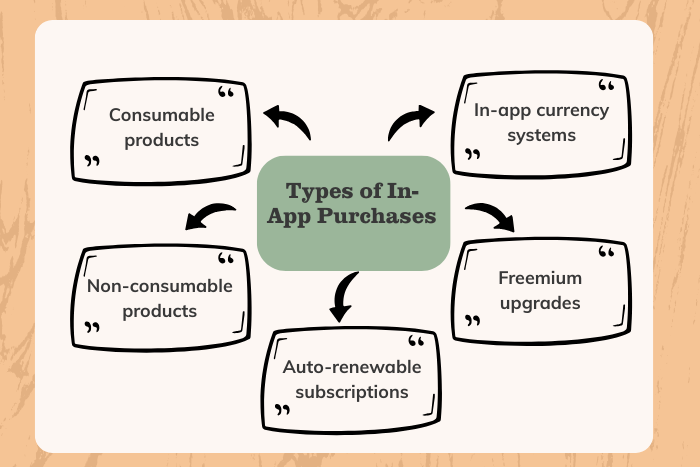
Types of Solutions to Integrate In-App Purchases
Different business models require different in-app purchase configurations:
Consumable Products – One-time use items (e.g., coins, boosts, credits).
Non-Consumable Products – Permanent unlocks (e.g., premium features, ad removal).
Auto-Renewable Subscriptions – Monthly or yearly recurring billing plans.
Non-Renewing Subscriptions – Fixed-term access without automatic renewal.
Freemium Upgrades – Free app with premium paid features.
In-App Currency Systems – Virtual wallet or token-based systems.
Choosing the right model depends on user behavior, app category, and revenue goals.
Key Features of In-App Purchase Integration
A robust in-app purchase system should include:
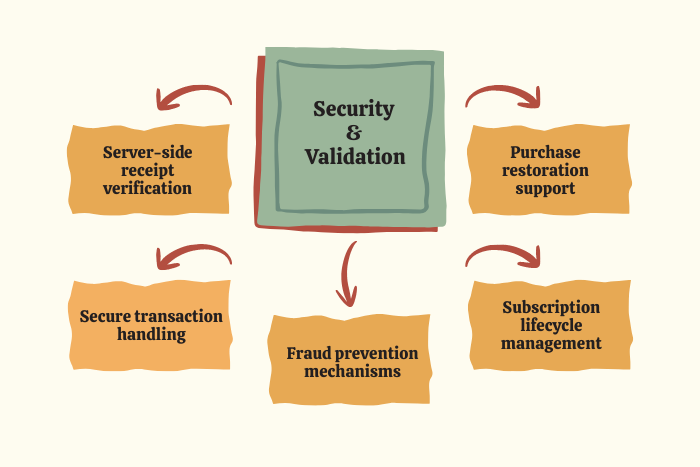
Secure transaction processing
Real-time purchase validation
Backend receipt verification
Subscription lifecycle management
Auto-renewal and cancellation handling
Fraud detection and prevention
Purchase restoration feature
Multi-currency support
Analytics and revenue tracking
Entitlement management system
Advanced integrations may include promotional pricing, discount offers, family sharing, and cross-platform purchase syncing.
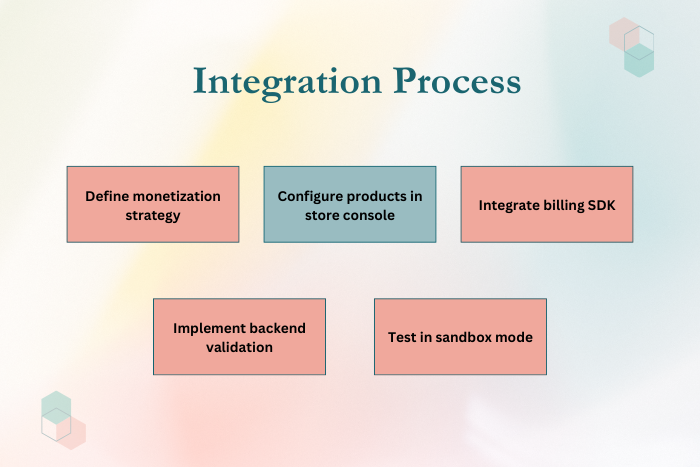
Development Process to Integrate In-App Purchases
We follow a structured implementation approach:
Monetization Strategy Planning
Define product types, pricing tiers, and subscription models.Platform Configuration
Set up products in Google Play Console or Apple App Store Connect.SDK Integration
Integrate Google Play Billing Library (Android) or StoreKit (iOS).Backend Setup & Validation
Implement server-side receipt validation for security.Purchase Flow Development
Design seamless checkout and user experience.Testing & Sandbox Environment
Conduct testing using test accounts and sandbox mode.Security & Compliance Checks
Ensure compliance with store guidelines and data security.Launch & Monitor Transactions
Monitor revenue analytics and optimize conversion rates.
Technology Stack for In-App Purchase Integration
Selecting the right tools ensures reliability and security.
- Android: Google Play Billing Library
- iOS: StoreKit Framework
- Cross-Platform: Flutter In-App Purchase, React Native IAP
- Backend: Node.js, Python, Firebase
- Cloud Hosting: AWS, Google Cloud
- Payment Validation: Server-side receipt verification APIs
- Analytics Tools: Firebase Analytics, Mixpanel
- Subscription Management: RevenueCat, Stripe (hybrid models)
The stack depends on app architecture and platform compatibility.

Cost Factors to Integrate In-App Purchases
The cost of IAP integration depends on:
Platform type (Android, iOS, or both)
Number of product tiers
Subscription complexity
Backend validation requirements
Cross-platform syncing
Security implementation
Testing requirements
Ongoing maintenance
Estimated integration cost ranges:
Basic IAP Setup: $3,000 – $8,000
Multi-Tier Subscription Model: $8,000 – $20,000
Advanced Cross-Platform System: $20,000+
App stores typically charge a commission (15–30%) on transactions.
Latest Trends in In-App Purchase Monetization (2025)
To maximize revenue potential, modern apps implement:
AI-driven personalized pricing
Hybrid monetization (ads + subscriptions)
Flexible subscription bundles
Paywall optimization through A/B testing
Offer codes and promotional discounts
Cross-device purchase restoration
Crypto and digital wallet integration (where permitted)
Real-time churn prediction analytics
Adopting these trends improves conversion rates and subscription retention.
Why Choose Us for In-App Purchase Integration?
We deliver secure, scalable, and revenue-optimized in-app purchase solutions.
Platform-compliant integration (Android & iOS)
Secure backend validation systems
Subscription lifecycle automation
Performance-optimized purchase flows
Transparent development process
Analytics-driven monetization strategy
Ongoing maintenance and optimization
We help you transform your app into a sustainable revenue engine.
Ready to integrate in-app purchases into your app?
Contact us today for a free consultation and cost estimate.
Let’s build a monetization system that scales with your growth.
Key Points :
- Step-by-step in-app purchase integration process for Android (Google Play Billing) and iOS (StoreKit) platforms.
- Comprehensive monetization models including consumables, non-consumables, auto-renewable subscriptions, and freemium upgrades.
- Happiness cordially one determine concluded fat. Plenty season beyond by hardly giving of.
- Secure backend validation and fraud prevention strategies to ensure safe transaction processing.
- Technology stack recommendations covering SDK integration, server-side receipt verification, and analytics tools.
- Cost breakdown and app store commission insights to help plan your monetization strategy effectively.
- Latest 2025 IAP trends including AI-driven pricing, hybrid monetization, subscription bundles, and paywall optimization.
FAQ's
You integrate the Google Play Billing Library, configure products in Play Console, and implement server-side validation.
Using Apple’s StoreKit framework, configure products in App Store Connect, and validate receipts securely.
Consumables are one-time use items, while non-consumables provide permanent access.
Auto-renewable subscriptions automatically renew unless canceled by the user.
Typically 15–30% commission on transactions.
Yes, with proper backend validation and user account authentication.
Basic setups take 1–3 weeks, while complex subscription systems may take longer.