
Learn how to integrate location-based services in an app using GPS, geofencing, maps APIs, and real-time tracking for scalable solutions.
How Do I Integrate Location-Based Services in an App?
If you’re asking, “How do I integrate location-based services in an app?”, you’re likely planning to build a solution that leverages real-time geolocation data to enhance user experience, improve operational efficiency, or drive location-driven engagement. Location-based services (LBS) are widely used in ride-hailing apps, food delivery platforms, travel applications, retail apps, social networking platforms, and logistics systems.
Integrating location-based functionality involves more than simply embedding a map. It requires secure permission handling, GPS and network-based tracking, geofencing capabilities, route optimization, battery efficiency management, and scalable backend infrastructure. Businesses that properly implement geolocation services gain competitive advantages through personalized content delivery, proximity marketing, live tracking, and intelligent routing.
In this complete guide, we explain how to integrate location-based services in an app, covering solution types, essential features, development process, technology stack, cost factors, latest trends, and best practices for scalable implementation.
Why Location-Based Services Integration Is Important
Location-based services have become essential for modern digital applications. Integrating geolocation features allows businesses to deliver contextual and real-time experiences.
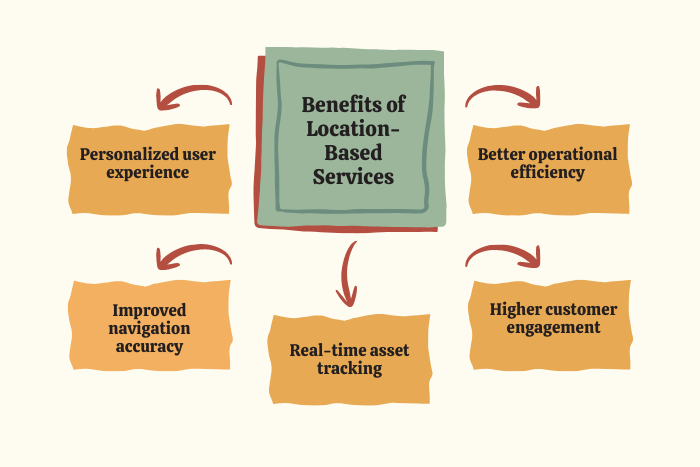
Here’s why LBS integration matters:
Personalized User Experience – Deliver content based on user location.
Improved Navigation & Routing – Optimize travel paths and logistics.
Real-Time Tracking – Monitor assets, drivers, or deliveries live.
Proximity Marketing – Send targeted offers based on geographic proximity.
Enhanced Operational Efficiency – Optimize fleet and workforce management.
Increased Engagement – Location-triggered notifications boost retention.
Whether for startups or enterprise applications, proper LBS integration significantly enhances usability and revenue potential.
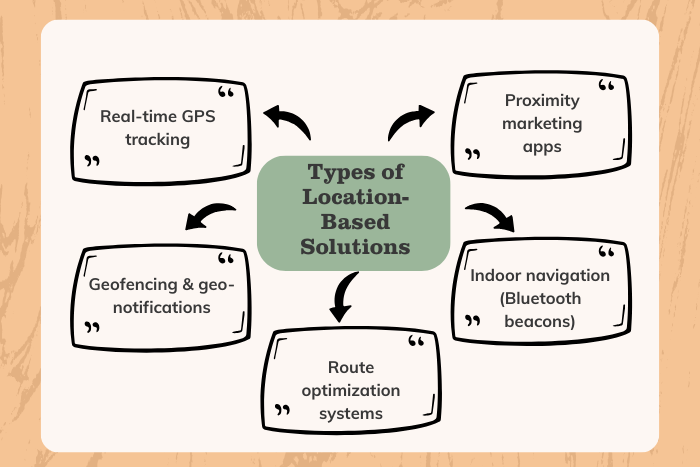
Types of Solutions to Integrate Location-Based Services in an App
When exploring how to integrate location-based services in an app, consider the following solution types:
GPS-Based Tracking Apps – Real-time location tracking for users, vehicles, or devices.
Geofencing Solutions – Virtual boundaries triggering notifications or actions.
Navigation & Route Optimization Apps – Intelligent path calculation and traffic updates.
On-Demand Service Apps – Ride-hailing, food delivery, courier tracking.
Indoor Location Services – Bluetooth beacons and Wi-Fi positioning systems.
Location-Based Social Networking Apps – Nearby friend discovery and location sharing.
Retail & Proximity Marketing Apps – Geo-targeted promotions and push notifications.
Each solution requires different APIs, backend logic, and data management strategies.
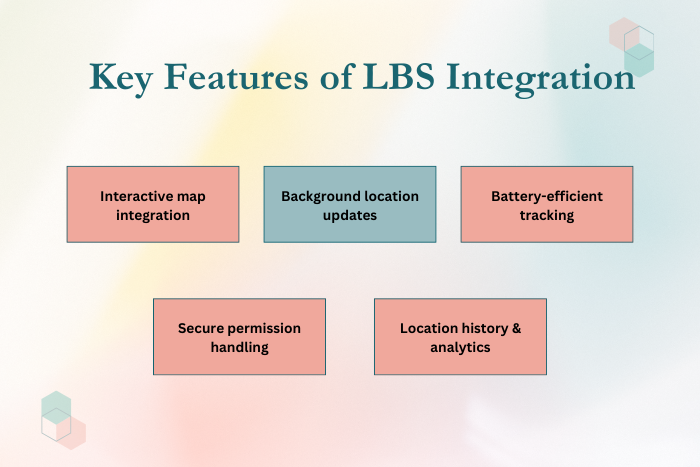
Key Features to Integrate Location-Based Services in an App
A scalable LBS-enabled application includes:
Real-time GPS tracking
Map integration with custom markers
Geofencing & geo-trigger notifications
Route optimization algorithms
Background location updates
Battery-efficient tracking
Permission management
Location history & analytics
Offline map support
Multi-device compatibility
Real-time data synchronization
Security & data encryption
Efficient location tracking must balance accuracy, battery usage, and privacy compliance.
Development Process for Location-Based Service Integration
To successfully integrate LBS into your app, follow a structured process:
Define Business Requirements
Identify whether you need tracking, navigation, or geofencing.Choose the Right Location Technology
Decide between GPS, Wi-Fi positioning, Bluetooth beacons, or hybrid solutions.Implement Permission Handling
Ensure compliance with privacy regulations and platform guidelines.Integrate Map APIs
Add interactive maps with real-time updates.Backend Development for Location Processing
Build APIs to process, store, and analyze location data.Optimize Battery Consumption
Implement smart tracking intervals and adaptive updates.Test Accuracy & Performance
Conduct real-world testing for location precision.Deploy & Monitor
Continuously monitor performance and optimize tracking logic.
A well-planned development approach ensures smooth integration and scalability.
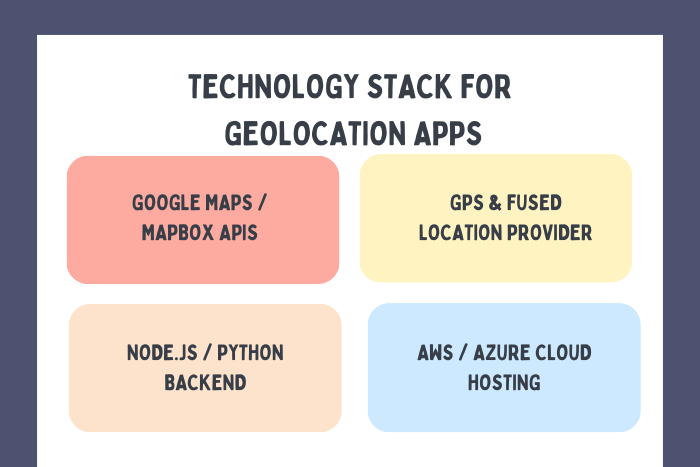
Technology Stack for Location-Based App Development
Choosing the right tools is critical for scalable and accurate geolocation services.
- Frontend:
React Native, Flutter, Swift (iOS), Kotlin (Android) - Backend:
Node.js, Python (Django/FastAPI), Java Spring Boot - Maps & Geolocation APIs:
Google Maps API, Mapbox, Apple MapKit - Location Services:
GPS, Fused Location Provider, Bluetooth Beacons - Cloud Infrastructure:
AWS, Microsoft Azure, Google Cloud - Database:
PostgreSQL, MongoDB - Real-Time Communication:
WebSockets, Firebase
Using cloud-native infrastructure ensures high availability during traffic spikes.
Cost Factors in Location-Based App Development
The cost of integrating location-based services depends on:
Complexity of location features
Real-time tracking requirements
API usage limits and map services
Indoor vs outdoor positioning systems
Backend infrastructure and data storage
Security and privacy compliance
Cross-platform support
Ongoing maintenance and updates
Apps with advanced route optimization and large-scale tracking require higher infrastructure investment.
Latest Trends to Integrate Location-Based Services in an App
Location-based technology continues evolving. Emerging trends include:
AI-Powered Route Optimization
Edge Computing for Faster Geolocation
5G-Enabled Real-Time Tracking
Indoor Navigation with IoT Sensors
Location-Based AR Experiences
Privacy-Focused Location Controls
Smart City Integration
Predictive Traffic Analysis
Adopting these trends enhances efficiency and user satisfaction.
Why Choose Us for Location-Based App Integration?
Integrating location-based services requires precision, performance optimization, and privacy compliance. Our team specializes in building scalable, secure, and real-time location-enabled applications.
Here’s why businesses partner with us:
Expertise in GPS & geofencing integration
Scalable cloud-native architecture
Battery-efficient tracking implementation
Real-time data processing capabilities
Privacy-first development approach
Continuous performance monitoring
We don’t just integrate maps — we build intelligent, location-driven digital ecosystems.
Ready to integrate location-based services into your app?
Let’s create a scalable and high-performance geolocation solution.
Contact us today for a free consultation and project estimate.
Key Points :
- Learn how to integrate location-based services in an app using GPS, geofencing, and map APIs.
- Explore different LBS solutions including real-time tracking, route optimization, and proximity marketing.
- Understand key features like background location updates, battery optimization, and secure permissions.
- Discover the best technology stack for scalable geolocation app development.
- Identify cost factors affecting location-based app integration and infrastructure.
- Stay updated with trends like AI-powered routing, 5G tracking, and indoor navigation systems.
FAQ's
You integrate LBS by using GPS APIs, map services, secure permission handling, backend processing, and real-time data synchronization.
Geofencing creates virtual geographic boundaries that trigger actions when users enter or exit specific areas.
Yes, when implemented with encryption, proper permission management, and compliance with privacy laws.
GPS accuracy depends on device capability, environment, and signal strength, typically within a few meters outdoors.
Google Maps API, Mapbox, and Apple MapKit are widely used.
Offline maps can be supported, but real-time updates require connectivity
Yes, we offer ongoing monitoring, performance optimization, and feature enhancements.