




Learn how to integrate payment gateway in a website for secure online payments. Explore methods, features, technologies, and costs in this complete guide.
How Do I Integrate Payment Gateway in a Website?
Online payments have become an essential part of modern businesses, especially for eCommerce platforms, service providers, and subscription-based websites. Customers expect secure, fast, and convenient payment options when making purchases online. This is where payment gateway integration plays a crucial role. If you are wondering how do I integrate payment gateway in a website, the process involves connecting your website to a secure payment processing system that allows customers to complete transactions online.
A payment gateway acts as a bridge between a website and financial institutions, enabling secure payment processing through credit cards, debit cards, digital wallets, and other online payment methods. Proper payment gateway integration ensures secure transactions, protects sensitive user data, and improves the overall user experience.
Businesses that integrate payment gateways into their websites can increase sales, enhance customer trust, and streamline payment processing. Modern payment systems support multiple currencies, fraud detection tools, and real-time transaction verification.
In this guide, we will explore the process of integrating payment gateways into websites, the available solutions, essential features, technologies used, cost considerations, and emerging trends in digital payment systems.
Why Payment Gateway Integration Is Important
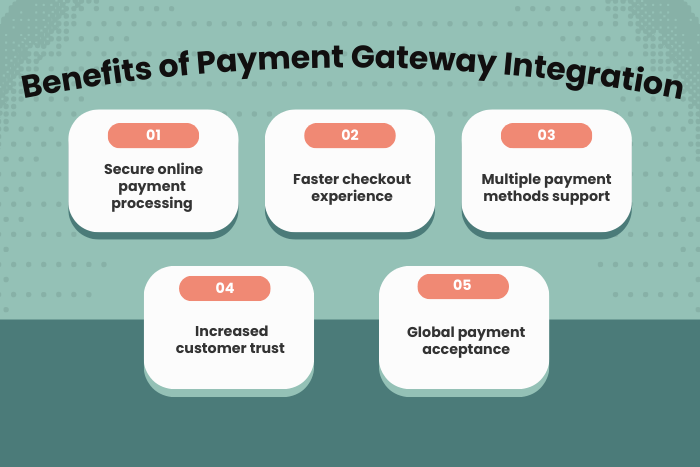
Payment gateway integration offers several advantages for businesses and customers.
Key benefits include:
Secure Online Transactions
Payment gateways encrypt sensitive payment information to protect users.
Improved Customer Experience
Customers can make payments quickly without leaving the website.
Multiple Payment Options
Support for credit cards, debit cards, UPI, and digital wallets.
Global Payment Acceptance
Businesses can accept payments from customers worldwide.
Automated Payment Processing
Reduces manual payment handling and errors.
Faster Business Growth
Seamless payments increase conversions and customer trust.
For businesses operating online, integrating a payment gateway is essential for smooth and secure financial transactions.
Types of Solutions to Integrate Payment Gateway in a Website
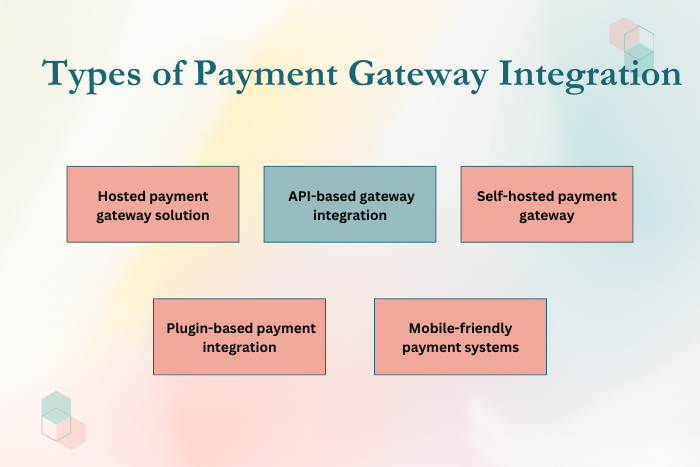
There are several methods available for integrating payment gateways into a website.
Hosted Payment Gateway Integration
Customers are redirected to a secure payment page hosted by the payment provider.
Easy to implement
High security standards
Minimal development effort
API-Based Payment Gateway Integration
Payment processing happens directly within the website using gateway APIs.
Fully customizable payment experience
Seamless checkout process
More control over payment flow
Self-Hosted Payment Gateway
Payment data is collected on the website and processed via secure backend systems.
Complete payment control
Advanced customization options
Requires strong security measures
Plugin-Based Payment Gateway Integration
Many CMS platforms provide plugins for quick payment gateway integration.
Ideal for platforms like WordPress and Shopify
Fast implementation
Minimal coding required
These solutions allow businesses to choose the best approach based on their technical needs and security requirements.
Key Features Required to Integrate Payment Gateway in a Website
A well-integrated payment gateway should provide reliable and secure payment functionality.
Important features include:
Secure payment processing with encryption
Multi-currency payment support
Integration with multiple payment methods
Real-time payment verification
Fraud detection and prevention systems
Recurring payment support for subscriptions
Mobile-friendly payment interfaces
Detailed transaction reporting and analytics
These features help ensure smooth and secure payment experiences for customers.
Payment Gateway Integration Development Process
Integrating a payment gateway into a website involves several technical steps.
Define Business Payment Requirements
Identify the payment methods and currencies required.
Choose the Right Payment Gateway Provider
Select a reliable provider that supports your business needs.
Create Merchant Account
Register with the payment gateway provider to obtain credentials.
Obtain API Keys and Documentation
Access the integration tools and developer resources.
Integrate Payment Gateway APIs
Implement payment APIs within the website’s checkout system.
Implement Security Measures
Apply encryption, tokenization, and fraud detection.
Test Transactions in Sandbox Mode
Simulate payment scenarios before going live.
Deploy Payment System
Launch the payment gateway integration for real transactions.
Monitor and Maintain System
Regularly monitor transactions and update security systems.
This structured approach ensures secure and reliable payment integration.
Technology Stack for Payment Gateway Integration
Various technologies are used to integrate payment gateways into websites.
- Frontend Technologies:
HTML, CSS, JavaScript, React, Angular - Backend Technologies:
Node.js, PHP, Python, Java - Databases:
MySQL, PostgreSQL, MongoDB - Payment Gateway APIs:
Stripe, PayPal, Razorpay, Square - Security Technologies:
SSL encryption, tokenization, PCI DSS compliance - Cloud Platforms:
AWS, Google Cloud, Microsoft Azure
These technologies help create secure, scalable, and high-performance payment systems.


Cost Factors for Payment Gateway Integration
The cost of payment gateway integration depends on several factors.
Payment gateway provider fees
Transaction processing fees
Integration complexity
Development time and expertise
Security implementation requirements
Custom payment features
Maintenance and updates
Infrastructure and hosting costs
Some payment gateways charge setup fees, while others charge only per transaction.
Latest Trends When You Integrate Payment Gateway in a Website
The digital payment industry continues to evolve with new innovations.
Key trends include:
AI-powered fraud detection systems
Contactless and mobile payments
Cryptocurrency payment integration
Biometric authentication for payments
Subscription-based recurring payment systems
Multi-currency global payment support
Real-time payment processing technologies
Integration with digital wallets and UPI systems
These trends are shaping the future of online payment systems.
Why Choose Us for Payment Gateway Integration?
Choosing the right development partner ensures a smooth and secure payment system for your website.
Here’s why businesses trust our payment gateway integration services:
Expert Payment Integration Developers
Experienced in integrating multiple payment systems.
Secure Payment Infrastructure
Advanced security protocols and encryption technologies.
Custom Payment Solutions
Tailored payment systems for eCommerce and business platforms.
Multiple Payment Gateway Support
Integration with popular global and regional gateways.
Scalable Payment Systems
Solutions designed for high transaction volumes.
Fast Implementation
Efficient integration with minimal downtime.
Reliable Technical Support
Ongoing monitoring and system optimization.
Cost-Effective Payment Integration
Affordable solutions for businesses of all sizes.
Ready to add secure online payments to your website?
Our experts can integrate reliable payment gateways tailored to your business.
Contact us today for a free consultation and payment integration solution.
Key Points :
- Payment gateway integration enables secure online transactions on websites
- Businesses can accept credit cards, debit cards, and digital wallet payments
- API-based payment gateway integration offers seamless checkout experience
- Hosted payment gateways provide easy and secure payment processing
- Secure encryption protects customer payment information
- Payment gateway integration improves eCommerce conversion rates
- Proper testing ensures smooth and reliable payment transactions
FAQ's
Payment gateway integration connects a website with a secure payment processing system to accept online payments.
Popular options include Stripe, PayPal, Razorpay, Square, and Authorize.net.
Yes, secure gateways use encryption, tokenization, and PCI DSS compliance to protect transactions.
The integration time depends on complexity and customization requirements.
Yes, many payment gateways support multiple currencies and global transactions.
Payment gateways support credit cards, debit cards, UPI, net banking, and digital wallets.
Yes, most payment gateways require a merchant account to process payments.
Yes, many payment gateways support subscription-based recurring billing systems.