



Learn how to integrate a payment gateway in an app with secure APIs, backend flow, testing, and compliance. Enable seamless in-app payments today.
How Do I Integrate Payment Gateway in an App?
If you’re asking, “How do I integrate payment gateway in an app?”, you’re likely building a mobile or web application that requires secure online transactions. Whether it’s an eCommerce platform, subscription-based SaaS app, marketplace, on-demand service, or digital wallet, payment gateway integration is essential for processing payments safely and efficiently.
A payment gateway acts as the bridge between your app, customers, and financial institutions. It securely authorizes credit cards, debit cards, UPI, net banking, digital wallets, and other payment methods. However, integrating a payment gateway involves more than embedding a checkout button — it requires backend logic, secure APIs, encryption protocols, webhook handling, fraud prevention, and compliance with industry regulations like PCI-DSS.
This comprehensive guide explains how to integrate a payment gateway in an app step by step — covering technical architecture, security best practices, cost considerations, and modern trends — so you can enable smooth, secure, and scalable in-app payments.
Why Payment Gateway Integration Is Important
Integrating a secure payment gateway directly impacts user trust and revenue generation.
Here’s why it matters:
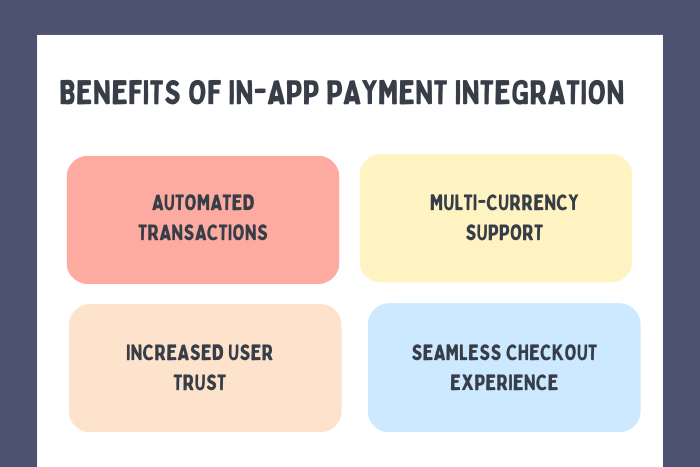
Enables secure online transactions
Builds customer trust with encrypted payment processing
Supports multiple payment methods
Automates transaction validation
Reduces fraud risks
Ensures regulatory compliance
Improves checkout experience and conversions
Supports global scalability
Without proper integration, payment failures, data breaches, and poor user experience can damage your brand reputation.
Types of Payment Gateway Integration Solutions in an App
Different business models require different integration approaches.
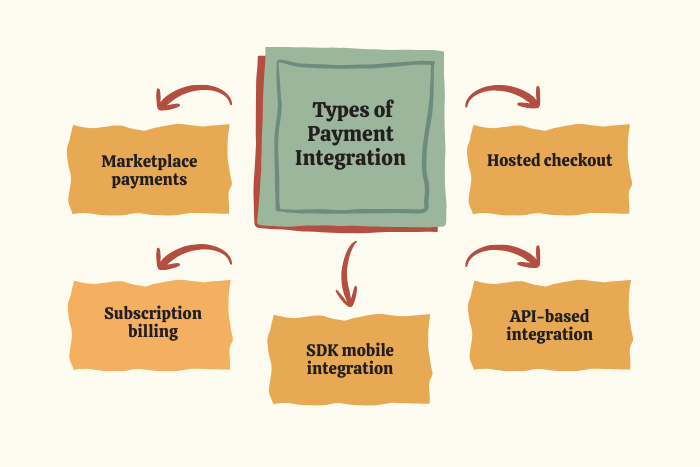
Hosted Payment Gateway Integration
Redirects users to a secure hosted payment page managed by the gateway provider.API-Based (Direct) Integration
Fully customized checkout flow embedded within your app.SDK-Based Mobile Integration
Uses official SDKs for iOS and Android to streamline implementation.Subscription Payment Integration
Recurring billing systems for SaaS and membership apps.Marketplace Payment Integration
Multi-vendor payment splitting and escrow handling.In-App Wallet Integration
Digital wallet balance and stored payment methods.
Choosing the right integration model depends on user experience goals, security requirements, and business logic.
Key Features of Secure Payment Gateway Integration in an App
A robust payment integration should include:
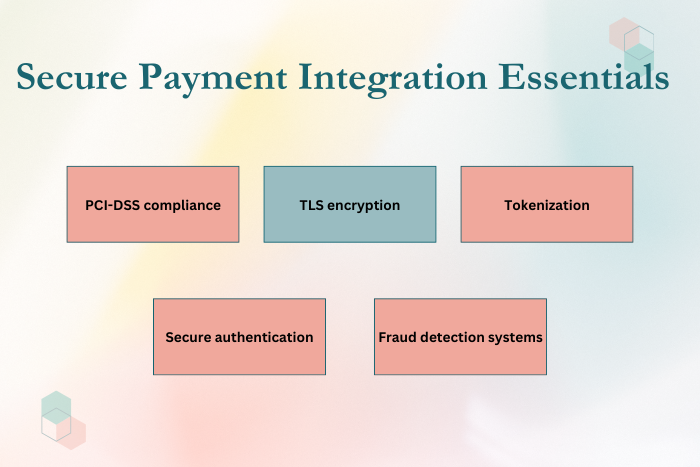
PCI-DSS compliance
Secure tokenization of card details
End-to-end encryption (TLS/HTTPS)
Multi-factor authentication (3D Secure)
Real-time payment authorization
Webhook-based transaction updates
Fraud detection and risk scoring
Refund and dispute handling
Multi-currency support
Detailed transaction logging
Security and reliability are critical when handling financial data.
Development Process
Business Requirement Analysis
Define payment methods, regions, currencies, subscription models, and transaction volume expectations.Choose the Payment Gateway Provider
Select a provider based on security, fees, global support, and developer documentation.Set Up Merchant Account
Complete onboarding, KYC verification, and API credential generation.Frontend Checkout Integration
Implement secure payment UI using SDKs or hosted checkout.Backend API Integration
Connect server-side logic to process payments, validate transactions, and store transaction records securely.Webhook Configuration
Set up webhooks to receive payment confirmations, failures, refunds, and subscription updates.Security & Compliance Implementation
Ensure encryption, tokenization, and compliance standards.Testing in Sandbox Environment
Perform functional, security, and performance testing before going live.Go Live & Monitor Transactions
Switch to production keys and continuously monitor transaction performance.
A structured integration process reduces payment failures and security risks.
Technology Stack for Payment Gateway Integration
Secure payment integration requires reliable technologies.
Frontend Frameworks: React, Angular, Vue.js, Swift, Kotlin
Backend Technologies: Node.js, Django, .NET Core, Ruby on Rails
Payment APIs & SDKs: Stripe API, PayPal SDK, Razorpay API
Security Protocols: TLS 1.3, AES-256 encryption
Authentication Methods: OAuth 2.0, JWT
Database Systems: PostgreSQL, MongoDB
Cloud Hosting: AWS, Azure, Google Cloud
Monitoring & Logging: Datadog, Splunk
Using a secure and scalable tech stack ensures reliable transaction processing.
Cost Factors in Payment Gateway Integration in an App
Payment gateway integration costs depend on:
Development complexity
Integration type (hosted vs API)
Custom UI/UX checkout design
Subscription or recurring billing logic
Fraud detection tools
Compliance requirements
Gateway transaction fees
Cross-border payment handling
Ongoing maintenance and updates
Typical transaction fees range between 1.5%–3% per transaction depending on provider and region.
Development costs vary based on feature complexity and app architecture.
Latest Trends in Payment Gateway Integration
The payments ecosystem is evolving rapidly.
Key trends include:
One-click checkout solutions
Biometric payment authentication
AI-driven fraud detection
Cryptocurrency payment integration
Buy Now, Pay Later (BNPL) support
Embedded finance solutions
Real-time payment processing
Tokenized and contactless transactions
Adopting modern payment technologies enhances customer experience and revenue growth.
Why Choose Us for Payment Gateway Integration?
Integrating a payment gateway requires technical expertise, security knowledge, and regulatory compliance understanding.
Here’s why businesses trust us:
Secure-by-Design Integration – Strong encryption and compliance standards.
Custom Checkout Experiences – Optimized for higher conversions.
Scalable Payment Architecture – Supports growth and multi-currency transactions.
Marketplace & Subscription Expertise – Advanced payment models implemented seamlessly.
End-to-End Support – From integration to post-launch monitoring.
Transparent Cost Planning – Clear breakdown of development and transaction costs.
We don’t just integrate payments , we build secure and scalable transaction systems.
Ready to integrate a secure payment gateway into your app?
Let’s enable seamless and reliable in-app transactions.
Contact us today for a free consultation.
Key Points :
- Step-by-step guide explaining how to integrate a payment gateway in a mobile or web app securely.
- Covers hosted, API-based, SDK, subscription, and marketplace payment integration models.
- Highlights essential security measures including PCI-DSS compliance, encryption, and tokenization.
- Explains backend API handling, webhook configuration, and transaction validation.
- Breaks down cost factors including development effort and transaction fees.
- Includes modern payment trends such as biometric authentication and BNPL solutions.
- Provides scalable technology stack recommendations for secure payment processing.
FAQ's
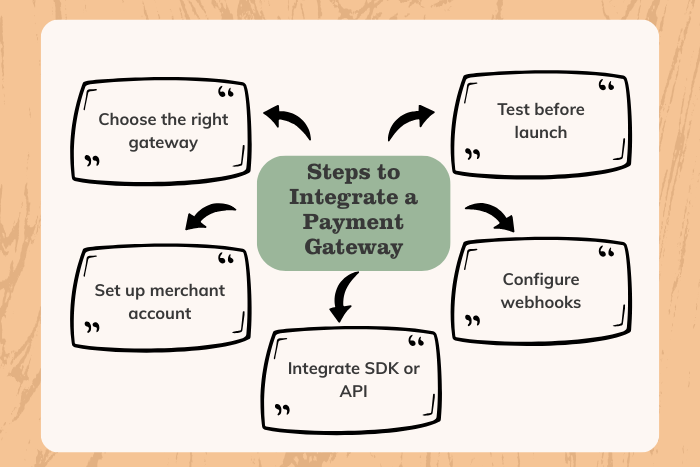
Choose a provider, set up a merchant account, integrate SDK/API, implement backend validation, and test thoroughly.
Hosted redirects users to the provider’s page; API integration keeps the checkout within your app.
Yes, when using encryption, tokenization, and PCI-DSS compliance.
Basic integration may take 1–2 weeks, while complex systems may take longer.
Webhook misconfiguration, security compliance issues, and poor UX design.
Yes, most gateways support cards, wallets, UPI, and international payments.
Development costs plus transaction fees (usually 1.5%–3% per transaction).
Yes, we offer monitoring, updates, optimization, and compliance support.