Learn how to integrate push notifications in an app with step-by-step process, tools, tech stack, cost factors, and best practices for iOS and Android.
How Do I Integrate Push Notifications in an App?
If you’re wondering, “How do I integrate push notifications in an app?”, you’re already thinking about improving user engagement, retention, and real-time communication. Push notifications are one of the most powerful tools in mobile app development, enabling businesses to send instant updates, promotional messages, reminders, and transactional alerts directly to users’ devices.
Whether you’re building a native iOS app, Android application, or cross-platform mobile solution, integrating push notifications requires careful configuration of operating system services, backend infrastructure, APIs, and secure authentication mechanisms. From setting up SDKs to handling device tokens and configuring cloud messaging platforms, the process must be handled correctly to ensure reliability and performance.
In this comprehensive guide, we explain how to integrate push notifications in an app step by step — covering architecture, service providers, implementation process, technology stack, costs, and industry best practices — so you can deliver seamless real-time communication experiences.
Why Push Notification Integration Is Important
Push notifications are not just alerts — they are strategic engagement tools that directly impact user retention and conversion rates.
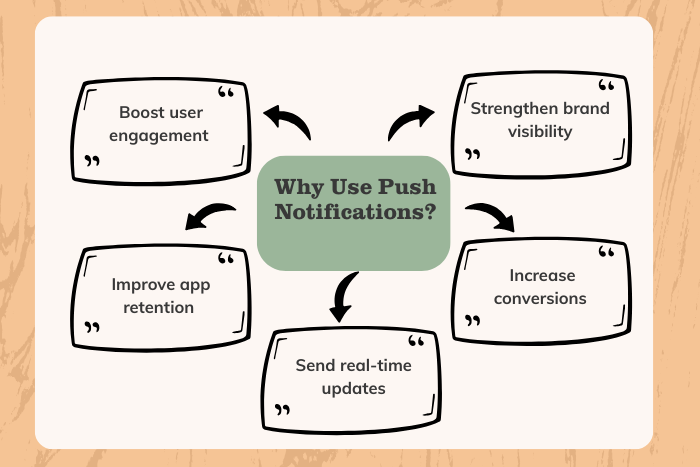
Here’s why integrating push notifications in your app is essential:
Improves user engagement through real-time updates
Increases app retention and reactivation rates
Enables personalized marketing campaigns
Supports transactional alerts (payments, bookings, deliveries)
Enhances customer communication without SMS costs
Drives conversions with targeted offers
Strengthens brand visibility
Modern apps rely heavily on push messaging for everything from order confirmations and ride updates to appointment reminders and breaking news alerts. Without a reliable push notification system, your app risks losing user attention and competitive advantage.
Types of Solutions to Integrate Push Notifications in an App
When deciding how to integrate push notifications in an app, selecting the right solution model is crucial. Below are the primary approaches:
Operating System Push Services (OSPNS)
Native platform services such as Apple Push Notification Service (APNs) for iOS and Firebase Cloud Messaging (FCM) for Android.Cloud Messaging Platforms
Third-party services like Firebase that simplify token management, message delivery, and analytics.Enterprise Push Notification Systems
Custom backend-driven systems integrated with CRM and marketing automation tools.Transactional Push Notifications
Automated alerts triggered by user actions such as payments, order confirmations, or account updates.Promotional & Marketing Push Notifications
Campaign-based notifications for promotions, discounts, and user re-engagement.Rich Push Notifications
Media-enhanced notifications including images, buttons, and interactive content.
Choosing the right model depends on your app type, scalability requirements, and engagement strategy.
Key Features of Push Notification Integration
A well-implemented push notification system includes advanced functionality beyond basic alerts.
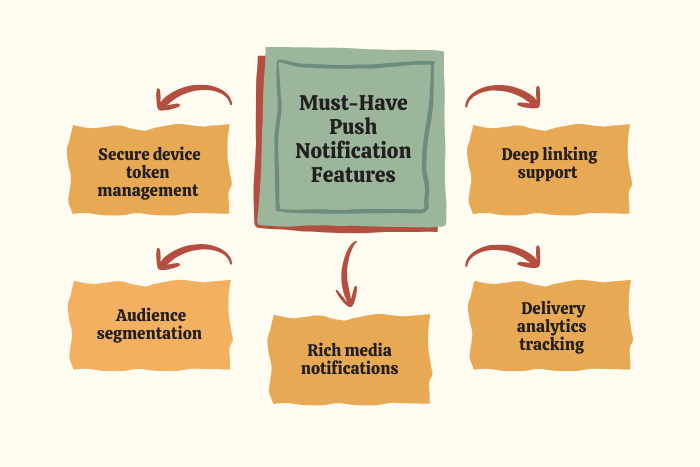
Device token registration and management
Secure authentication with APNs or FCM
Real-time message triggering via backend APIs
Segmentation and audience targeting
Scheduled notifications
Rich media support (images, action buttons)
Analytics and delivery tracking
Silent push notifications for background updates
Deep linking to specific app screens
GDPR-compliant opt-in/opt-out management
Proper implementation ensures reliability, security, and scalability.
Development Process
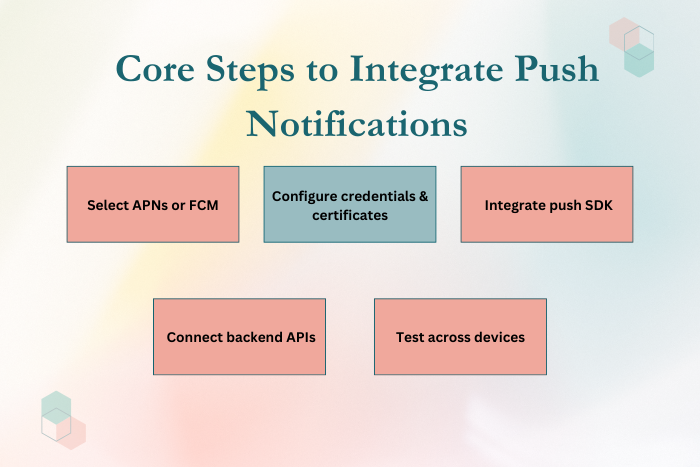
To properly answer “How do I integrate push notifications in an app?”, follow this structured process:
Define Notification Strategy
Identify use cases — transactional alerts, marketing campaigns, or system updates.Choose Push Notification Service Provider
Select between APNs (iOS), FCM (Android), or unified cloud platforms.Configure Platform Credentials
Generate certificates and keys for iOS (APNs) and configure Firebase project for Android.SDK Integration
Install and configure push notification SDKs within the mobile application.Device Token Implementation
Register devices and securely transmit tokens to backend servers.Backend Configuration
Set up APIs to send notifications using secure server authentication.Notification Handling Logic
Implement foreground and background message handling on both Android and iOS.Testing & Debugging
Test real-device notifications, edge cases, and delivery performance.Deployment & Monitoring
Deploy production credentials and monitor analytics dashboards.
This systematic approach ensures high deliverability and seamless user experience.
Technology Stack to Integrate Push Notifications in an App
Choosing the right technology stack ensures scalable and secure push notification integration.
Mobile Platforms: Swift (iOS), Kotlin (Android), React Native, Flutter
Push Services: Apple Push Notification Service (APNs), Firebase Cloud Messaging (FCM)
Backend Technologies: Node.js, Django, .NET Core
Cloud Infrastructure: AWS, Microsoft Azure, Google Cloud Platform
Databases: PostgreSQL, MongoDB
Authentication: OAuth 2.0, JWT
Analytics: Firebase Analytics, custom dashboards
DevOps: Docker, Kubernetes, CI/CD pipelines
Cloud-based infrastructure allows auto-scaling during high notification traffic.
Cost Factors to Integrate Push Notifications in an App
The cost of integrating push notifications in an app depends on several variables:
Native vs cross-platform development
Backend complexity and automation requirements
Rich media and interactive notification features
Integration with CRM or marketing tools
Analytics and segmentation features
Compliance requirements (GDPR, CCPA)
Ongoing maintenance and monitoring
Basic integration using Firebase may be cost-effective, while enterprise-grade automation systems require larger investment. A clearly defined notification strategy helps control costs.
Latest Trends in Push Notification Integration
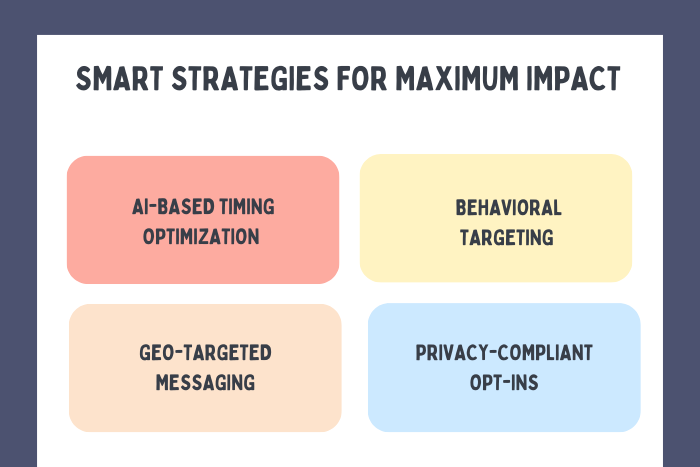
Push notification systems continue evolving with advanced personalization and AI-driven automation.
AI-powered notification timing optimization
Behavioral targeting and predictive engagement
Interactive push notifications with quick actions
Geo-targeted notifications
Silent push updates for background syncing
Omnichannel messaging integration
Progressive Web App (PWA) push notifications
Privacy-first opt-in frameworks
Leveraging modern trends ensures higher open rates and improved user retention.
Why Choose Us for Push Notification Integration?
Integrating push notifications requires technical precision, secure infrastructure, and strategic planning. We provide end-to-end mobile app push notification integration services tailored to your business goals.
Here’s why clients trust us:
Platform Expertise – Deep experience in iOS, Android, and cross-platform frameworks.
Secure Implementation – Proper certificate management and encrypted communication.
Scalable Backend Architecture – Designed to handle millions of notifications.
Advanced Segmentation & Automation – Smart targeting to maximize engagement.
Analytics-Driven Optimization – Continuous performance tracking and improvements.
Compliance & Privacy Focused – Opt-in frameworks aligned with global regulations.
Agile & Transparent Workflow – Clear milestones and consistent updates.
We don’t just integrate push notifications — we design intelligent communication systems that increase engagement and drive measurable growth.
Ready to integrate push notifications into your app?
Let’s build a real-time messaging system that boosts engagement and retention.
Contact us today for a free consultation and technical assessment.
Key Points :
- Step-by-step guide to integrating push notifications in iOS and Android apps, including SDK setup, device token management, and backend configuration.
- Comprehensive coverage of APNs and Firebase Cloud Messaging (FCM) for reliable, real-time message delivery across platforms.
- Detailed push notification architecture explanation, including cloud infrastructure, APIs, authentication, and analytics integration.
- Clear breakdown of push notification types — transactional, promotional, rich media, geo-targeted, and silent push updates.
- Scalable technology stack recommendations covering mobile frameworks, backend systems, databases, and DevOps tools.
- Cost factors and implementation considerations for MVP apps and enterprise-grade notification systems.
FAQ's
You need to configure platform push services (APNs or FCM), integrate SDKs, manage device tokens, set up backend APIs, and test message handling across devices.
APNs is Apple’s native push service for iOS devices, while FCM supports Android and cross-platform messaging through Firebase.
Services like Firebase Cloud Messaging are free, but development, backend setup, and advanced automation features may incur costs.
Yes. Push notifications can be delivered even when the app is closed or running in the background.
When implemented correctly with secure certificates, authentication tokens, and encrypted communication, push notifications are highly secure.
Yes. Timely and relevant notifications significantly increase engagement and app retention rates.
Yes. We offer monitoring, analytics optimization, security updates, and continuous improvements for long-term success.