Learn how to integrate social media in an app with APIs, login, sharing, feeds, and analytics. Build secure, scalable social integrations.
How Do I Integrate Social Media in an App?
If you’re asking, “How do I integrate social media in an app?”, you’re likely looking to increase user engagement, improve retention, and create seamless sharing experiences. Social media integration allows users to log in, share content, invite friends, and interact with external platforms directly from your mobile or web application.
Modern users expect frictionless connectivity between apps and their favorite social platforms. Whether it’s social login via Google or Facebook, content sharing to Instagram or X (Twitter), or embedding live feeds, integrating social media APIs enhances user experience and boosts app visibility.
However, successful integration goes beyond adding share buttons. It requires secure authentication, scalable backend systems, API management, privacy compliance, and performance optimization. In this comprehensive guide, we’ll explain how to integrate social media in an app step by step — covering solution types, key features, development processes, technology stack, cost factors, and emerging trends — helping you build a secure and scalable social-enabled application.
Why Social Media Integration Is Important
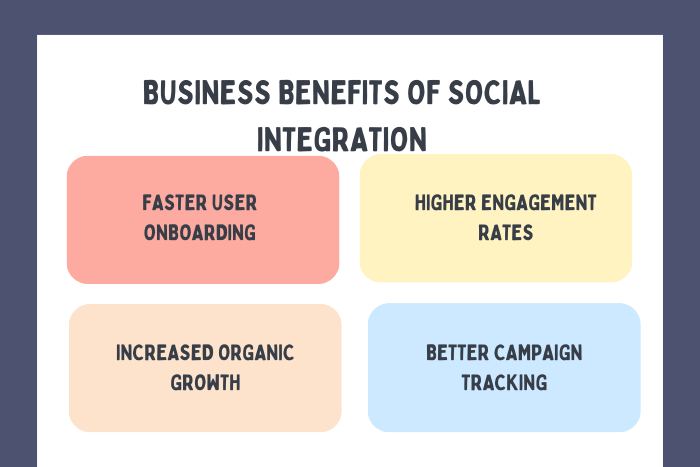
Integrating social media into your application offers significant business and user experience benefits:
Faster User Onboarding – Social login reduces sign-up friction.
Higher Engagement Rates – Easy sharing increases user interaction.
Organic Growth & Virality – Shared content drives new downloads.
Improved Personalization – Access to social data enhances recommendations.
Community Building – Enables user-generated content and interactions.
Better Analytics Insights – Track referral traffic and campaign performance.
Whether you’re developing a social networking app, eCommerce platform, gaming app, or enterprise solution, social media integration plays a vital role in user acquisition and retention strategies.
Types of Social Media Integration Solutions
When planning how to integrate social media in an app, you can implement various integration models:
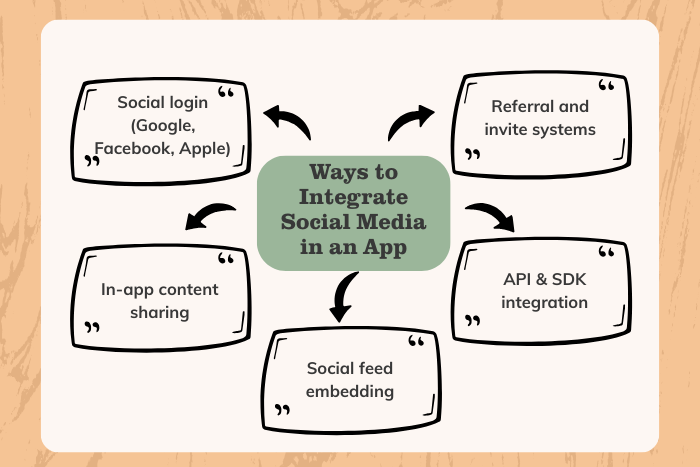
Social Login Authentication – Enable sign-in using Google, Facebook, Apple, or LinkedIn credentials.
Content Sharing Integration – Allow users to share app content directly to social platforms.
Social Feed Embedding – Display real-time social media feeds within the app.
Social Media APIs & SDK Integration – Use official APIs for deeper interaction like posting, messaging, or fetching profile data.
Social Analytics Integration – Connect tools like Facebook Pixel or Google Analytics for tracking engagement.
Community & User-Generated Content Modules – Build in-app commenting, reactions, and sharing features.
Influencer & Referral Tracking Systems – Track campaign performance through social sharing links.
Choosing the right integration strategy depends on your app’s purpose, audience, and monetization model.
Key Features of Social Media Integration in Apps
To ensure smooth and secure functionality, your app should include:
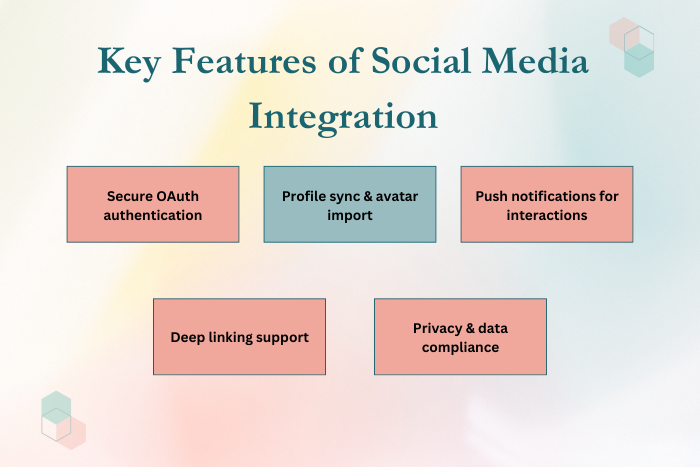
OAuth-Based Secure Authentication
API Rate Limit Management
Customizable Share Options
Deep Linking for Social Campaigns
Push Notifications for Social Interactions
Data Privacy & GDPR Compliance
Profile Syncing & Avatar Import
Social Graph Connectivity
Cross-Platform Compatibility
Performance Optimization & Caching
A well-integrated social module enhances usability without slowing down your app.
Development Process for Social Media Integration
Following best practices ensures reliable and scalable integration:
Define Integration Objectives
Determine whether you need login, sharing, feed display, or advanced API interactions.Choose the Social Platforms
Select relevant platforms based on your target audience demographics.Register & Configure Developer Accounts
Create apps in developer consoles (e.g., Facebook Developers, Google Cloud Console).Implement OAuth Authentication Flow
Secure user login via access tokens and permissions management.Integrate Social Media SDKs & APIs
Use official SDKs to ensure stability and compliance.Backend Token Management & Security
Safely store and refresh access tokens.Test API Calls & Error Handling
Validate responses and handle failures gracefully.Optimize Performance & UI Experience
Ensure smooth transitions and minimal load times.Deploy & Monitor Integration Metrics
Track engagement, login success rates, and referral traffic.
A structured approach reduces risks related to API changes and compliance updates.
Technology Stack for Social Media App Integration
Choosing the right technology stack ensures seamless performance:
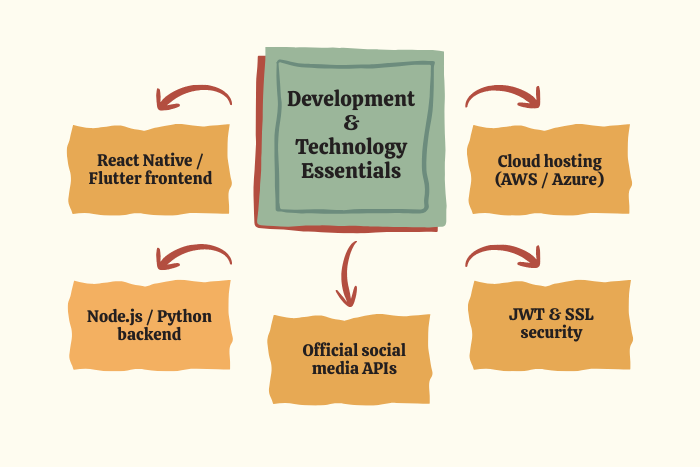
- Frontend Technologies:
React Native, Flutter, Swift, Kotlin, React.js - Backend Technologies:
Node.js, Python (Django/FastAPI), .NET Core - Authentication & Security:
OAuth 2.0, JWT Tokens, SSL/TLS Encryption - Social Media SDKs & APIs:
Facebook SDK, Google Sign-In API, Instagram Graph API, LinkedIn API - Databases:
PostgreSQL, MongoDB, Firebase - Cloud & Hosting:
AWS, Microsoft Azure, Google Cloud - Analytics & Tracking Tools:
Google Analytics, Firebase Analytics, Meta Pixel
Using official APIs and secure backend handling ensures compliance and scalability.
Cost Factors in Social Media Integration
The cost of integrating social media into an app depends on:
Number of social platforms integrated
Complexity of API features (login vs full data sync)
Backend security and token management
UI customization requirements
Analytics and tracking implementation
Maintenance for API updates and policy changes
Compliance and data protection measures
Simple social login integration costs less than advanced real-time feed synchronization and marketing tracking systems.
Latest Trends in Social Media App Integration
The social ecosystem continues evolving. Key trends include:
AI-Powered Social Personalization
Social Commerce Integration
Short-Form Video & Reels Embedding
Influencer Affiliate Tracking Systems
Decentralized Social Platforms
Enhanced Privacy & Data Consent Tools
Social Gamification Features
In-App Live Streaming Integration
Keeping up with emerging trends helps your app stay competitive and engaging.
Why Choose Us for Social Media App Integration?
Integrating social media in an app requires technical precision, security compliance, and user-focused design. We provide end-to-end social media integration services tailored to your business goals.
Here’s why clients trust us:
Secure OAuth Implementation – Compliance-ready authentication systems.
Scalable API Architecture – Handles high traffic seamlessly.
Custom UI/UX Integration – Native-feel social interactions.
Performance Optimization – Zero compromise on app speed.
Continuous API Monitoring – Adaptation to platform updates.
Analytics-Driven Approach – Measurable ROI from social engagement.
We don’t just connect your app to social platforms — we create powerful engagement ecosystems that drive growth.
Ready to integrate social media into your app?
Let’s build a secure, scalable, and high-engagement social integration strategy.
Contact us today for a free consultation and project estimate.
Key Points :
- Learn how to integrate social media in an app using secure OAuth authentication and official APIs.
- Understand the complete development process for seamless and scalable social app integration.
- Explore the best technology stack for secure social media API and SDK implementation.
- Identify key cost factors affecting social media integration in mobile and web apps.
- Stay updated with the latest trends like social commerce, AI personalization, and in-app live streaming.
- Ensure data privacy, compliance, and performance optimization in social-enabled applications.
FAQ's
You integrate social media by using official APIs and SDKs, implementing OAuth authentication, managing access tokens securely, and connecting backend systems.
Social login allows users to sign in using existing credentials from platforms like Google, Facebook, or Apple.
Yes, when implemented with OAuth 2.0, encrypted token storage, and compliance with privacy regulations.
Basic integration can take 1–3 weeks, while advanced integrations may require several weeks depending on complexity.
Popular platforms include Facebook, Instagram, LinkedIn, X (Twitter), Google, Apple, and TikTok.
Yes. Social sharing and referral tracking significantly improve organic user acquisition.
Yes. We offer continuous monitoring, updates, and performance optimization to ensure long-term success.