


Learn how to plan an app development project with strategy, features, tech stack, costs, and roadmap. Build scalable mobile apps the right way.
How Do I Plan an App Development Project?
If you’re asking, “How do I plan an app development project?”, you’re already taking the most important step toward building a successful digital product. Proper planning determines whether your mobile app becomes a scalable business asset or an expensive experiment. Many startups and enterprises rush into development without validating their idea, defining a clear roadmap, or aligning technical architecture with long-term goals — leading to delays, budget overruns, and poor user adoption.
Planning an app development project involves structured market research, feature prioritization, UX strategy, technical architecture design, budgeting, timeline estimation, and risk assessment. It requires balancing business objectives with technical feasibility while ensuring scalability, performance, and security from day one.
Whether you’re developing a startup MVP, enterprise mobile solution, SaaS platform, or on-demand marketplace, a strategic app development plan ensures predictable outcomes, faster time-to-market, and measurable ROI. This guide walks you through everything you need to plan your app development project effectively — from concept validation to post-launch scaling.
Why Planning an App Development Project Is Important
Strategic planning reduces risk and maximizes return on investment. Without a clear roadmap, projects often suffer from scope creep, miscommunication, and technical debt.
Here’s why proper planning matters:
Defines clear business objectives and success metrics
Aligns stakeholders around features and priorities
Reduces development costs by preventing rework
Improves time-to-market efficiency
Ensures scalability and performance readiness
Identifies security and compliance requirements early
Enables accurate budgeting and resource allocation
A structured planning phase transforms your idea into a validated product strategy. It ensures that design, development, testing, and deployment follow a cohesive roadmap rather than reactive decision-making.
Types of App Development Planning Solutions
Different businesses require different planning approaches depending on complexity, industry, and scalability goals.
Startup MVP Planning
Focused on rapid validation, core feature prioritization, and lean development to test market demand.Enterprise App Roadmapping
Long-term planning for complex systems with integrations, security protocols, and compliance requirements.On-Demand App Planning
Real-time architecture design, geolocation systems, payment integrations, and marketplace logic.SaaS Product Strategy Planning
Subscription models, multi-tenant architecture, scalable backend infrastructure.Cross-Platform App Strategy
Planning for iOS, Android, and web applications using shared codebases for faster delivery.Legacy App Modernization Planning
Migrating outdated systems to modern, cloud-native architectures.
Selecting the right planning framework depends on your industry, audience, and digital transformation goals.
Key Features of a Well-Planned App Development Project
A properly structured app development plan includes the following core components:
Clear Product Vision & Value Proposition
Defined Target Audience & User Personas
Competitive Market Analysis
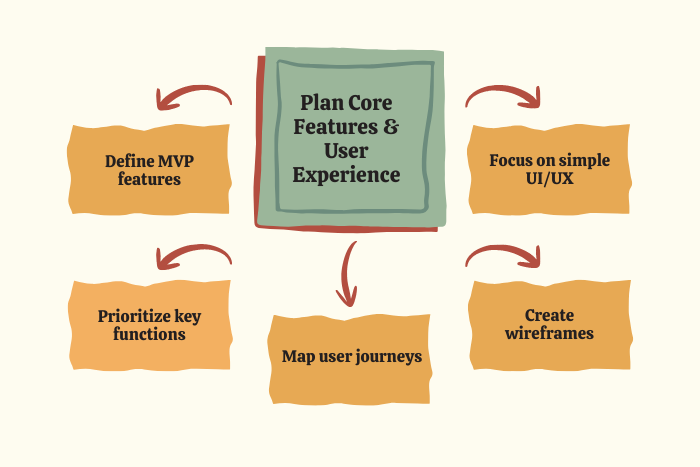
Feature Prioritization (MVP vs Future Releases)
User Journey Mapping & Wireframes
Technical Architecture Blueprint
Security & Compliance Planning
Scalability Strategy
Budget & Timeline Estimation
Risk Assessment & Mitigation Plan
Post-Launch Growth Strategy
Combining business strategy with technical foresight ensures that your app is not just functional — but sustainable and scalable.
Development Process
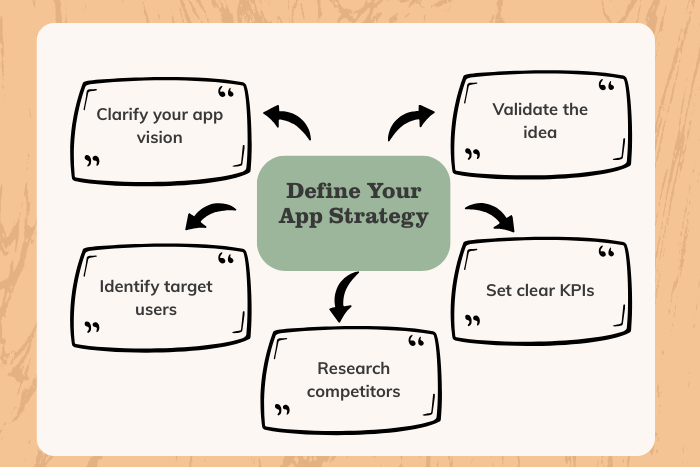
Market Research & Competitor Analysis
Identify market gaps, analyze competitors, validate demand, and assess user expectations to reduce business risk.Define Business Goals & KPIs
Establish measurable objectives such as revenue targets, user acquisition goals, retention metrics, and performance benchmarks.Identify Target Audience & User Personas
Create detailed user personas to understand behaviors, pain points, preferences, and usage patterns.Define Core Features (MVP Planning)
Prioritize essential features that deliver immediate value while keeping development lean and cost-efficient.Platform & Technology Selection
Choose between native, cross-platform, or web development and finalize the backend, database, and cloud infrastructure.UX/UI Strategy & Prototyping
Design wireframes and interactive prototypes to validate user journeys and improve usability before development begins.Technical Architecture Planning
Define system architecture, API structures, database schemas, scalability strategy, and integration requirements.Security & Compliance Planning
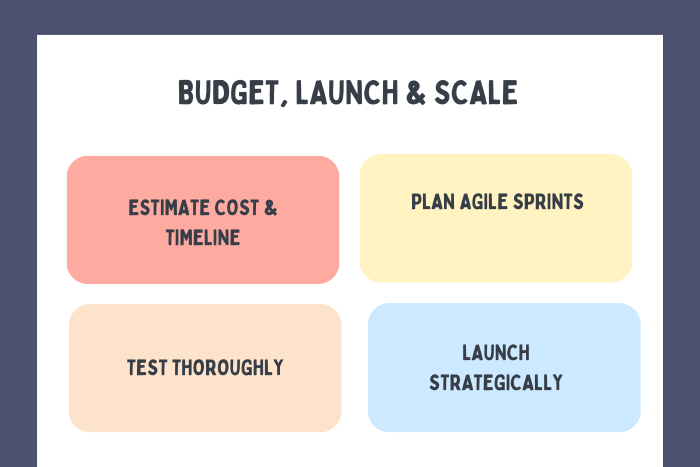
Implement data encryption standards, authentication mechanisms, and regulatory compliance requirements from the start.Budgeting & Timeline Estimation
Break down project phases into clear milestones with cost forecasting and realistic delivery timelines.Agile Roadmap & Sprint Planning
Organize development into structured sprints with iterative releases, feedback loops, and continuous improvement.
Technology Stack for App Development Planning
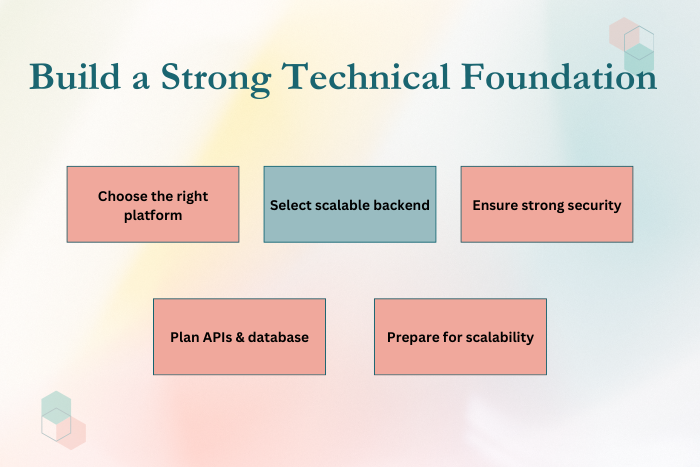
Selecting the right technology stack impacts scalability, maintenance, and performance.
Mobile Development: Swift (iOS), Kotlin (Android), React Native, Flutter
Backend Development: Node.js, Django, .NET Core, Ruby on Rails
Databases: PostgreSQL, MongoDB, MySQL
Cloud & Hosting: AWS, Microsoft Azure, Google Cloud Platform
APIs & Integrations: RESTful APIs, GraphQL
Real-Time Services: WebSockets, Firebase
DevOps & Deployment: Docker, Kubernetes, CI/CD pipelines
Security: OAuth 2.0, JWT authentication, SSL encryption
Choosing scalable, cloud-native technologies ensures your app can handle traffic growth and evolving feature requirements.
Cost Factors in App Development Planning
Planning helps you forecast and control development costs effectively. Major cost factors include:
App complexity and feature set
Number of supported platforms (iOS, Android, Web)
Custom UI/UX design requirements
Backend infrastructure needs
Third-party API integrations
Real-time features (chat, tracking, notifications)
Security and compliance standards
Ongoing maintenance and updates
A well-defined MVP reduces upfront costs while enabling future scalability. Clear scope definition during planning prevents unexpected budget expansion.
Latest Trends in App Development Planning
Modern app planning increasingly incorporates emerging technologies and methodologies:
AI-driven user personalization
Low-code and rapid prototyping tools
Microservices architecture
Cloud-native development strategies
DevSecOps integration
Super app ecosystems
Blockchain-based security systems
Predictive analytics for feature prioritization
Staying ahead of technological trends ensures long-term competitiveness and operational efficiency.
Why Choose Us to Plan Your App Development Project?
Planning an app development project requires both strategic thinking and deep technical expertise. We combine business consulting with advanced engineering knowledge to deliver structured, scalable roadmaps.
Here’s what sets us apart:
Strategy-First Approach – We align app functionality with measurable business goals.
Scalable Architecture Planning – Built to grow with your user base.
Security & Compliance Focused – Enterprise-grade security standards.
Agile & Transparent Workflow – Clear milestones and predictable timelines.
Cost-Optimized Planning – Preventing unnecessary development expenses.
End-to-End Support – From idea validation to post-launch optimization.
We don’t just plan apps — we build structured digital product strategies designed for success.
Ready to plan your app development project the right way?
Let’s turn your idea into a clear, actionable roadmap.
Contact us today for a free consultation and project strategy session.
Key Points :
- Clear step-by-step framework explaining how to plan an app development project from idea validation to launch.
- Covers essential planning stages including market research, MVP definition, UX strategy, architecture planning, and security.
- Includes structured development roadmap with actionable, practical implementation guidance.
- Highlights scalable technology stack options for iOS, Android, and cross-platform app development.
- Explains cost factors and budgeting strategies to prevent scope creep and overspending.
- Integrates modern app development trends such as AI, microservices, and cloud-native infrastructure.
FAQ's
Begin with market research, define your business goals, identify your target audience, and outline core features before selecting technologies.
App planning typically takes 2–6 weeks depending on complexity, research depth, and stakeholder alignment.
An MVP (Minimum Viable Product) includes essential features required to validate your app idea in the market with minimal investment.
The choice depends on your budget, performance needs, and target audience. Native offers higher performance; cross-platform offers faster development.
Planning costs vary based on research scope, technical documentation depth, and complexity of architecture.
Yes. A well-planned architecture allows feature updates and scalability without major system disruption.
Skipping market validation, unclear feature scope, underestimating security needs, and ignoring scalability planning.
Yes. We provide full-cycle development, testing, deployment, and long-term support after the planning phase.