


Learn how long it takes to develop a mobile app, key timeline stages, factors affecting development time, and tips to launch faster.
How Long Does It Take to Develop a Mobile App?
Businesses planning to build digital products often ask an important question: How long does it take to develop a mobile app? The timeline for mobile app development can vary significantly depending on factors such as the app’s complexity, required features, design requirements, platform selection, and the development team involved.
A simple mobile application with basic functionality may take only a few weeks to build, while a feature-rich application with advanced integrations, real-time data processing, and custom design elements may require several months of development. The development timeline is also influenced by the number of platforms targeted, such as Android, iOS, or cross-platform solutions.
Understanding the typical stages of the app development lifecycle helps businesses plan their product launch effectively. From initial discovery and planning to design, development, testing, and deployment, each phase contributes to the overall timeline.
In this guide, we explore how long it takes to develop a mobile app, the stages involved in the development process, the factors that influence timelines, and how businesses can accelerate delivery without compromising quality.
Why Mobile App Development Timeline Planning Is Important
Proper timeline planning is essential for successful mobile application development. Without a clear development schedule, projects can experience delays, cost overruns, and inefficient workflows.
Here’s why timeline planning matters:
Faster Product Launch
A well-planned timeline ensures that the application reaches the market quickly.Efficient Resource Management
Development teams can allocate resources and tasks effectively.Reduced Development Risks
Structured timelines help identify potential delays early in the project.Improved Project Transparency
Clear milestones allow stakeholders to track progress throughout the development process.Better Budget Control
Development timelines often impact overall project costs.
By planning development timelines carefully, businesses can build reliable applications while maintaining control over project scope and budget.
Types of Mobile App Development Solutions
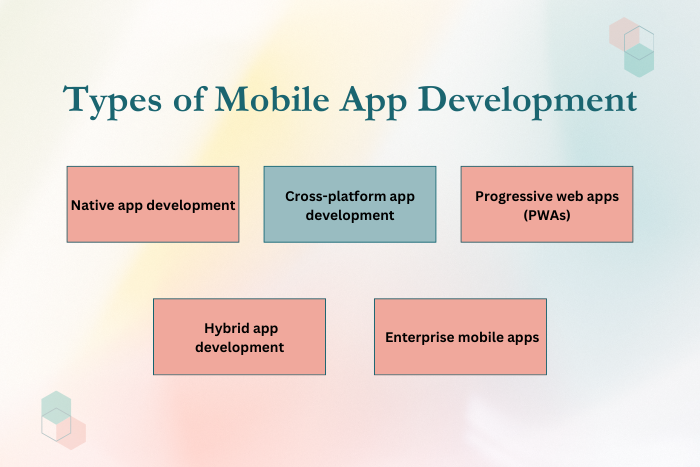
Different types of mobile applications require different development timelines based on complexity and platform requirements.
Native Mobile App Development
Native apps are built specifically for Android or iOS platforms. They offer high performance and deep integration with device features but may require longer development timelines.
Cross-Platform App Development
Cross-platform frameworks allow developers to build apps for both Android and iOS using a single codebase, reducing development time and cost.
Hybrid App Development
Hybrid apps combine web technologies with mobile frameworks, enabling faster development compared to fully native applications.
Progressive Web Applications (PWAs)
PWAs function like mobile apps but run in web browsers, making them faster to develop and easier to maintain.
Enterprise Mobile Applications
Enterprise-level apps often require complex integrations, security measures, and data management systems, which can increase development timelines.
Each solution offers different benefits depending on project requirements and expected user experience.
Key Features of Modern Mobile Applications
Modern mobile applications include a variety of features that influence development time and determine how long it takes to develop a mobile app.
Intuitive and user-friendly interface design
Secure authentication and user data protection
Real-time notifications and messaging systems
Integration with third-party services and APIs
Cloud-based infrastructure for scalability
Offline functionality and data synchronization
Analytics and user behavior tracking
Cross-device compatibility and responsive design
These features help create engaging digital experiences while supporting long-term application growth.
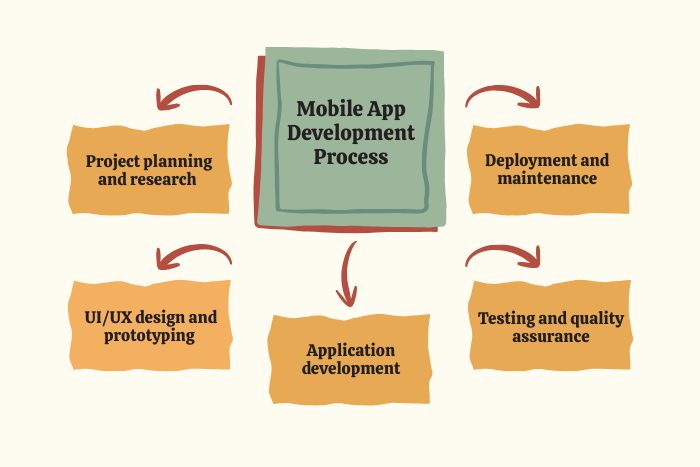
Mobile App Development Process
A structured development process helps ensure that projects stay on schedule and deliver high-quality results.
Discovery and Planning
The development process begins with understanding business objectives, defining target users, and identifying required features.
Market Research and Requirement Analysis
Teams analyze competitors, user expectations, and industry trends to refine the product concept.
UI/UX Design and Prototyping
Designers create wireframes and prototypes that illustrate the user interface and user journey.
Application Development
Developers build frontend interfaces, backend services, APIs, and databases using selected technologies.
Testing and Quality Assurance
QA teams conduct functional testing, performance testing, and security assessments to ensure reliability.
Deployment and Launch
The application is released on app stores or deployed to cloud servers.
Post-Launch Support and Updates
Developers continue to monitor performance, release updates, and add new features.
Each stage contributes to the total timeline of mobile application development.
Technology Stack Used in Mobile App Development
The choice of technology stack influences development speed, application performance, and how long it takes to develop a mobile app.
Mobile Development: Swift, Kotlin, Java, Dart
Cross-Platform Frameworks: Flutter, React Native, Xamarin
Frontend Technologies: HTML5, CSS3, JavaScript, TypeScript
Backend Technologies: Node.js, Python, Java, PHP
Databases: PostgreSQL, MySQL, MongoDB, Firebase
Cloud Platforms: AWS, Microsoft Azure, Google Cloud Platform
DevOps Tools: Docker, Kubernetes, GitHub Actions, Jenkins
Security Technologies: OAuth 2.0, JWT authentication, SSL encryption, RBAC
Selecting the right technologies helps development teams optimize both performance and development timelines.
Cost Factors That Influence Development Time
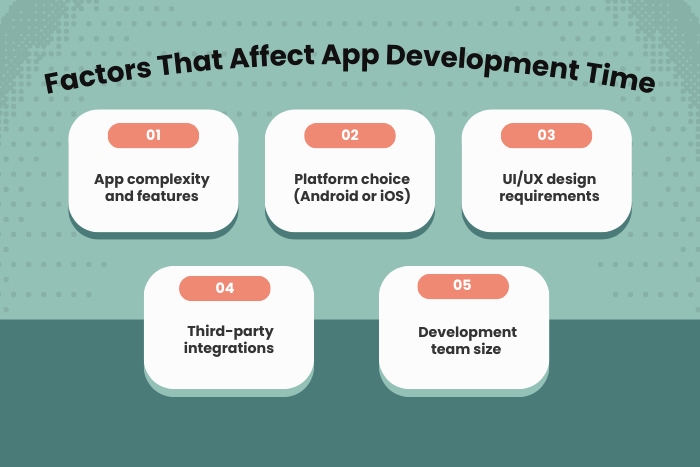
The time required to build a mobile application depends on several key factors.
Application Complexity
Simple applications with limited features can be built quickly, while complex apps require longer development cycles.
Platform Selection
Building separate native apps for Android and iOS increases development time.
Design Requirements
Custom UI/UX designs and animations require additional development effort.
Third-Party Integrations
Integrating payment gateways, maps, or analytics services can extend the development timeline.
Development Team Size
Larger teams may accelerate development, while smaller teams may require more time.
Requirement Changes
Frequent changes in project scope can significantly delay development.
Careful planning helps businesses manage these factors and maintain efficient project timelines.
Latest Trends Affecting Mobile App Development Timelines
The mobile development industry continues to evolve with new tools and technologies that influence how long it takes to develop a mobile app.
Some major trends include:
Growing adoption of cross-platform development frameworks
Use of low-code and no-code development tools
Integration of artificial intelligence and machine learning features
Increased adoption of cloud-native architectures
Development of progressive web applications (PWAs)
Automation through DevOps and CI/CD pipelines
Use of pre-built APIs and microservices
Improved app security and compliance frameworks
These trends help businesses build applications faster while maintaining high performance and reliability.
Why Choose Us for Mobile App Development
Choosing the right development partner plays a key role in delivering mobile applications on time and within budget. Our team focuses on building scalable, secure, and high-performance applications tailored to your business goals.
Here’s what makes our development services stand out:
Experienced Development Team – Skilled engineers with expertise in modern mobile technologies.
End-to-End Development Services – From concept and design to deployment and maintenance.
Agile Development Methodology – Faster delivery through iterative development cycles.
Scalable Application Architecture – Applications designed for long-term growth.
User-Centered Design Approach – Interfaces optimized for usability and engagement.
Secure Development Standards – Implementation of modern security practices.
Cloud-Ready Infrastructure – Applications optimized for scalable cloud environments.
Ongoing Support and Optimization – Continuous updates and performance monitoring.
We help businesses transform ideas into reliable mobile applications that deliver measurable results.
Ready to turn your app idea into reality?
Let our experts guide you through the development process and timeline.
Contact us today for a free consultation and project estimate.
Key Points :
- Mobile app development time depends on app complexity, features, and platform selection.
- Simple apps may take a few weeks, while complex apps can take several months to develop.
- The development timeline includes planning, design, development, testing, and deployment stages.
- Choosing cross-platform frameworks can reduce overall development time.
- Factors like UI/UX design, integrations, and team size influence the timeline.
- Proper planning and agile development help launch mobile apps faster and efficiently.
FAQ's
Development timelines vary depending on complexity, features, and platform requirements. Simple apps may take a few weeks, while complex apps may take several months.
Key factors include app complexity, design requirements, technology stack, integrations, and development team size.
Yes. Cross-platform frameworks allow developers to build apps for multiple platforms using a single codebase, reducing development time.
App store approval usually takes a few days, but timelines may vary depending on platform guidelines.
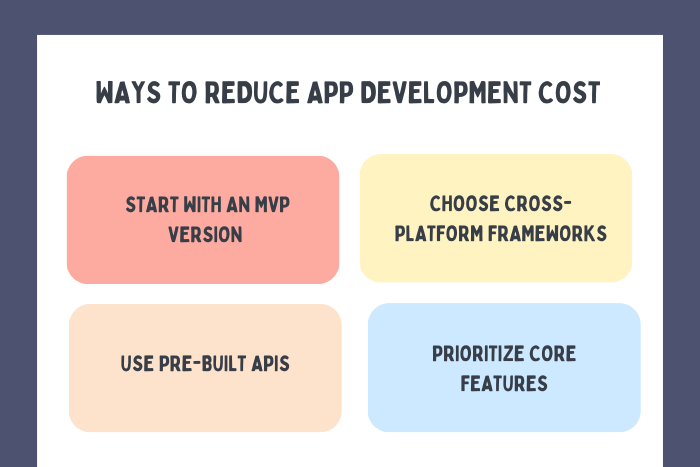
Yes. Starting with an MVP, using cross-platform frameworks, and prioritizing essential features can accelerate development.
The team size depends on the project scope but typically includes developers, designers, testers, and project managers.
Consulting an experienced development team can help analyze your requirements and provide an accurate timeline estimate.