
Professional hybrid app development services to build scalable, cost-effective mobile apps for iOS and Android using a single codebase.
Hybrid App Development
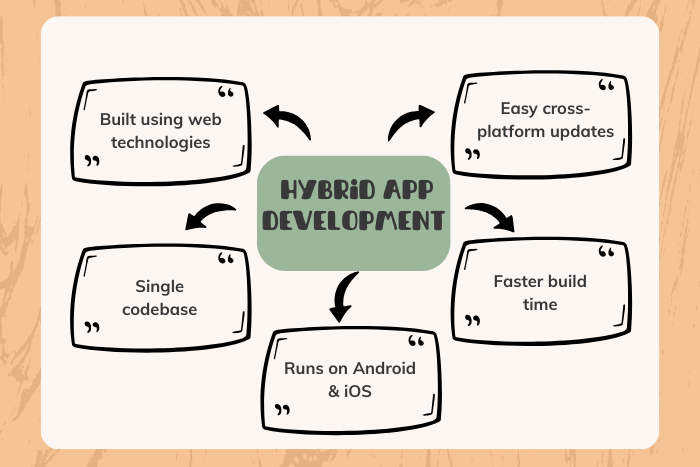
Hybrid app development is an efficient and flexible approach to building mobile applications that work across multiple platforms using a single codebase. By combining web technologies such as HTML, CSS, and JavaScript with native wrappers, hybrid apps deliver a balance between cost-efficiency, faster development, and wide platform compatibility. For businesses aiming to reach both iOS and Android users without investing in separate native apps, hybrid application development offers a practical and scalable solution.
Our hybrid app development services help startups, growing businesses, and enterprises create feature-rich mobile applications with faster time-to-market and reduced development costs. We focus on building apps that look and feel native while leveraging the speed and flexibility of web-based development. From MVPs and business apps to customer-facing platforms, we design hybrid applications that are reliable, secure, and easy to maintain.
By combining strong UI/UX design, optimized performance, and modern hybrid frameworks, we ensure your application delivers consistent user experiences across devices while remaining adaptable to future updates and business growth.
Why Hybrid App Development Is Important
Hybrid app development is ideal for businesses that need speed, flexibility, and cost control without sacrificing functionality. It allows companies to launch apps faster and reach a broader audience with fewer resources.
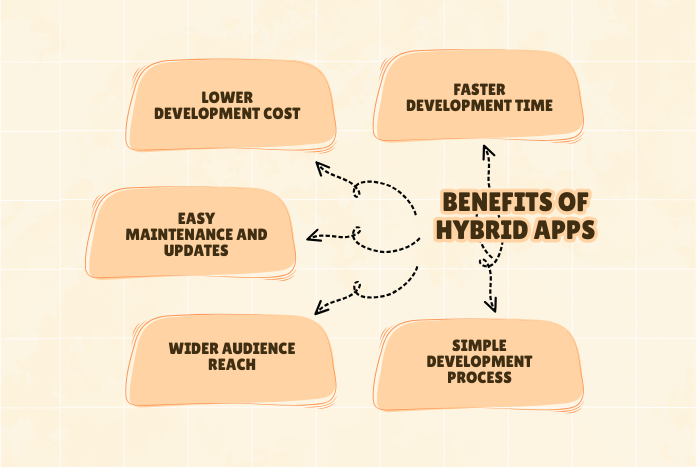
Key reasons hybrid application development is important:
Faster development using a shared codebase
Lower development and maintenance costs
Simultaneous deployment on iOS and Android
Easier updates and feature enhancements
Consistent user experience across platforms
Simplified long-term maintenance
Hybrid apps are especially effective for content-driven apps, business tools, and MVPs that require rapid validation and scalability.
Types of Hybrid App Development Solutions
Business & Enterprise Hybrid Apps
Applications designed for internal operations, dashboards, CRM systems, workflow automation, and analytics.
Consumer-Focused Hybrid Apps
Customer-facing applications for eCommerce, education, healthcare, travel, and on-demand services.
MVP & Startup Hybrid Apps
Rapidly built minimum viable products to validate ideas, attract investors, and test markets quickly.
Hybrid App Migration
Converting existing web or native apps into hybrid solutions to reduce maintenance overhead and improve scalability.
Content-Driven Hybrid Apps
Apps focused on delivering content, media, or information with frequent updates and minimal native dependencies.
Key Features of Our Hybrid App Development Services
Single codebase for multiple platforms
Faster development and deployment cycles
Cost-effective app maintenance
Consistent UI across devices
Offline functionality and caching
API and third-party integrations
Secure authentication and data handling
Easy scalability for future growth
Each feature is designed to ensure performance, usability, and long-term value.
Hybrid App Development Process
Our hybrid application development process is structured to deliver speed without compromising quality.
Discovery & Planning – Understanding business goals, users, and technical requirements
UI/UX Design – Designing responsive and intuitive interfaces
Architecture Setup – Selecting frameworks and defining app structure
Development – Building hybrid apps using agile methodologies
Quality Assurance – Cross-device and performance testing
Deployment – App store submission and release management
Support & Optimization – Continuous updates and performance improvements
Technology Stack
We use modern and reliable technologies for hybrid apps development:
Frameworks: Ionic, React Native, Flutter, Apache Cordova
Languages: HTML5, CSS3, JavaScript, TypeScript
UI: Responsive and component-based design systems
Backend: Node.js, Python, Java, .NET
Databases: Firebase, MongoDB, PostgreSQL
Cloud Platforms: AWS, Google Cloud, Azure
APIs: REST, GraphQL
DevOps: CI/CD pipelines
Security: OAuth, JWT, encryption standards
Our technology stack ensures flexibility, scalability, and ease of maintenance.
Cost Factors in Hybrid App Development
The cost of hybrid application development depends on several factors:
App complexity and feature requirements
UI/UX design depth
Backend infrastructure and integrations
Third-party APIs and plugins
Security and compliance needs
Ongoing maintenance and updates
Hybrid apps are generally more cost-effective than native apps, especially for multi-platform projects.
Latest Trends in Hybrid App Development
Progressive Web App (PWA) integration
Improved WebView performance
Component-based UI frameworks
Cloud-backed hybrid applications
AI-driven personalization
Enhanced security and data protection
Integration with device features via plugins
These trends help hybrid apps achieve better performance and user acceptance.
Why Choose Us for Hybrid App Development
Experienced hybrid app developers
Strong focus on performance and usability
Cost-effective and scalable solutions
Agile and transparent development process
End-to-end delivery and long-term support
Proven experience across industries
We don’t just build hybrid apps—we help businesses launch faster and scale smarter.
Ready to build a cost-effective mobile app for multiple platforms?
Contact us for a free consultation and discuss your hybrid app idea.
Let’s launch a scalable hybrid application together.
Key Points :
- Hybrid app development uses web technologies like HTML, CSS, and JavaScript to build mobile apps.
- Hybrid apps run on multiple platforms using a single codebase.
- Businesses choose hybrid apps to reduce time and development costs.
- Modern hybrid frameworks deliver improved performance and user experience.
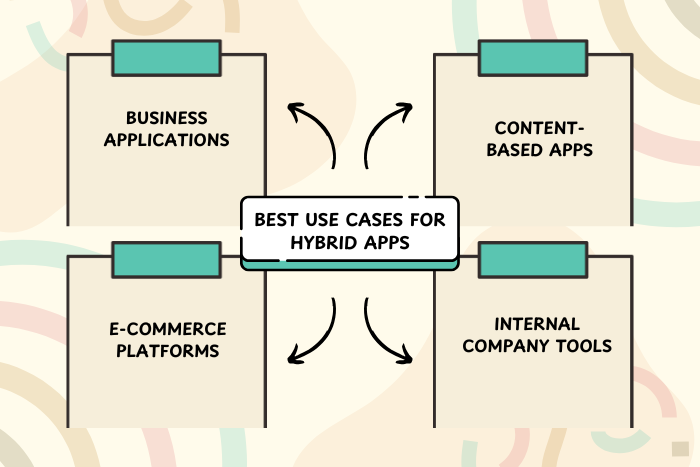
- Hybrid apps are suitable for business, e-commerce, and content-based applications.
- Startups benefit from hybrid apps due to faster launch and easy updates.
- Security in hybrid app is strong when best practices are followed.
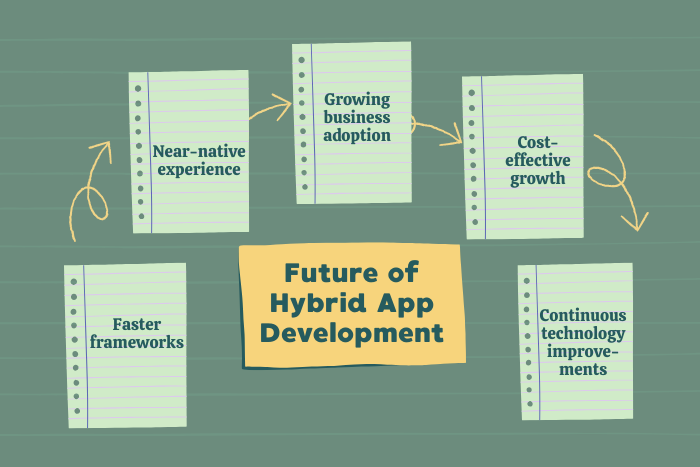
- Hybrid application development continues to grow with better tools and frameworks.
FAQ's
Hybrid app development involves building mobile apps using web technologies wrapped in a native container to run on multiple platforms.
Hybrid apps use a shared codebase, while native apps are built separately for each platform.
Yes, when built using best practices and secure frameworks, hybrid apps can be highly secure.
Yes, hybrid apps can support offline functionality with proper caching and storage.
Most hybrid apps are developed within 3–5 months, depending on complexity.
Yes, it’s ideal for startups due to faster development and lower costs.
Absolutely. Hybrid apps can be enhanced or migrated as business needs grow.