




Learn the important features of a scrum development framework including sprint planning, team collaboration, backlog management, and iterative delivery.
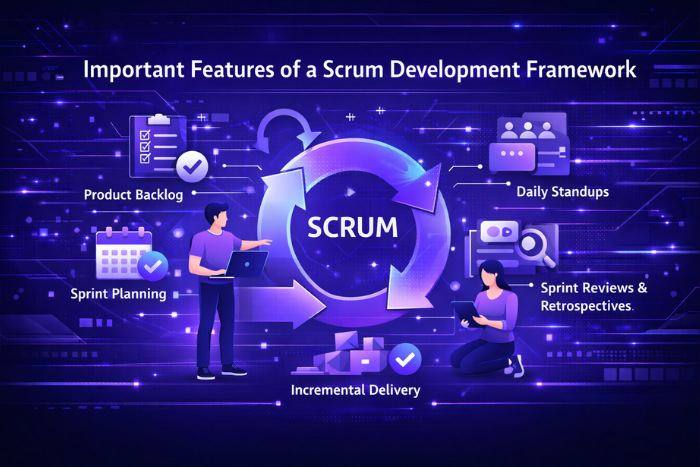
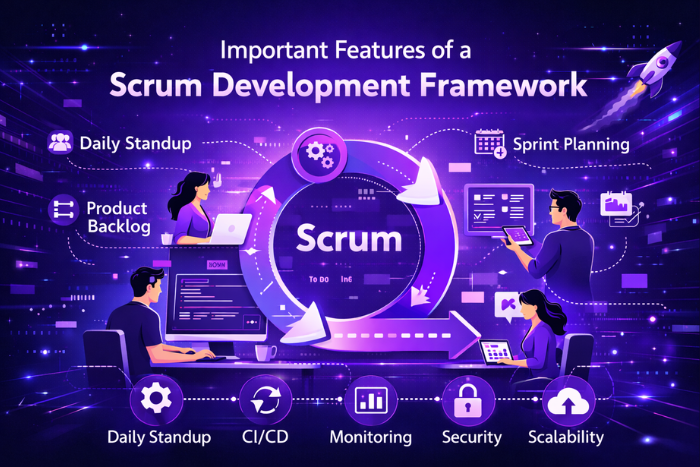
Important Features of a Scrum Development Framework
Modern software development requires flexibility, speed, and continuous collaboration between development teams and stakeholders. Traditional development models often struggle to adapt to changing requirements, which is why many organizations adopt Agile frameworks like Scrum. Understanding the important features of a scrum development framework helps businesses manage complex projects efficiently while delivering high-quality software.
Scrum is an Agile project management framework that focuses on iterative development, collaboration, and incremental delivery. Instead of building an entire product at once, Scrum divides development into smaller time-boxed cycles known as sprints. Each sprint delivers functional increments of the product, allowing teams to gather feedback and continuously improve.
A typical Scrum framework includes defined roles such as the Product Owner, Scrum Master, and Development Team. It also uses structured events like sprint planning, daily stand-ups, sprint reviews, and retrospectives to ensure transparency and progress tracking.
By implementing Scrum effectively, organizations can accelerate product delivery, improve team communication, reduce project risks, and create products that better meet customer needs.
Why Important Features of a Scrum Development Framework Are Important
Scrum is widely adopted because it improves collaboration, productivity, and adaptability in software development projects. Its structured yet flexible approach helps teams manage complex workflows and respond quickly to changes.
Here are some key reasons why the features of Scrum are important:
Faster Product Delivery
Short sprint cycles allow teams to release working software regularly.Improved Team Collaboration
Scrum encourages daily communication and teamwork.Better Adaptability to Changes
Teams can adjust project priorities based on feedback.Higher Product Quality
Continuous testing and reviews improve reliability.Enhanced Transparency
Scrum ceremonies and artifacts keep stakeholders informed.Improved Customer Satisfaction
Frequent product updates ensure alignment with user needs.
These benefits make Scrum an effective framework for managing dynamic development environments.
Types of Scrum Development Framework Solutions
Scrum can be adapted to different project sizes and development environments depending on organizational needs.
Product Development Scrum
Used for developing new digital products such as software applications.Enterprise Scrum Implementation
Scrum frameworks scaled for large organizations and multiple teams.Scrum for Web and Mobile Development
Agile development cycles tailored for digital product creation.Hybrid Scrum-Kanban Approach
Combines Scrum structure with Kanban workflow visualization.Scrum for DevOps Teams
Integrates development and operations workflows for faster deployment.Scaled Scrum Frameworks
Methods like SAFe or LeSS that allow Scrum to operate across large teams.
These approaches help organizations apply Scrum principles across different development scenarios.
Key Features of a Scrum Development Framework
A successful Scrum implementation includes several defining features that ensure smooth project management and efficient development.
Sprint-Based Development Cycles
Work is divided into short, fixed-length sprints typically lasting two to four weeks.Product Backlog Management
A prioritized list of features, improvements, and tasks maintained by the Product Owner.Sprint Backlog Planning
Tasks selected from the product backlog to be completed during a sprint.Defined Scrum Roles
Product Owner, Scrum Master, and Development Team collaborate to deliver results.Daily Scrum Meetings
Short stand-up meetings that help teams review progress and resolve obstacles.Sprint Review Sessions
Demonstrating completed features to stakeholders for feedback.Sprint Retrospectives
Evaluating team performance and identifying improvements.Incremental Product Delivery
Each sprint produces a functional product increment.Transparency and Accountability
Scrum processes ensure visibility into project progress.
These features allow teams to deliver high-quality products while maintaining flexibility.
Scrum Development Process
Implementing Scrum requires a structured workflow that promotes collaboration and continuous improvement.
Product Vision and Requirement Gathering
Define project goals, user needs, and key product features.Product Backlog Creation
Organize tasks and features in a prioritized backlog.Sprint Planning Meeting
Select backlog items to be completed in the upcoming sprint.Sprint Execution and Development
Developers build and integrate features during the sprint.Daily Scrum Meetings
Short stand-ups to review progress and address challenges.Sprint Review
Demonstrate completed work to stakeholders for feedback.Sprint Retrospective
Analyze the development process and identify improvements.Continuous Iteration and Improvement
Update the backlog and start the next sprint cycle.
This process ensures efficient project management and continuous product enhancement.
Technology Stack for Scrum Development
Scrum teams rely on various tools and technologies to manage development workflows effectively.
Project Management Tools: Jira, Trello, ClickUp
Version Control Systems: Git, GitHub, GitLab
Continuous Integration Tools: Jenkins, CircleCI
Collaboration Tools: Slack, Microsoft Teams
Testing Tools: Selenium, Cypress, JUnit
Cloud Platforms: AWS, Google Cloud Platform, Microsoft Azure
These technologies help teams automate workflows and maintain productivity.
Cost Factors in Scrum Development
Several factors influence the cost of implementing a Scrum development framework.
Team size and expertise level
Project complexity and feature requirements
Development tools and infrastructure
Integration with existing systems
Testing and quality assurance processes
Number of sprint cycles required
Maintenance and post-launch support
While Scrum requires continuous collaboration, it often reduces overall project costs by minimizing development risks.
Latest Trends in Scrum Development
Scrum continues to evolve with new technologies and project management practices.
Key trends shaping Scrum development include:
AI-Powered Project Management Tools
Intelligent tools that analyze sprint performance.Integration of Scrum with DevOps
Faster software delivery through automated pipelines.Remote Scrum Collaboration
Distributed teams working through digital collaboration platforms.Scaled Agile Frameworks
Applying Scrum across large enterprise teams.Automated Testing and Continuous Delivery
Enhancing development efficiency and reliability.Data-Driven Sprint Optimization
Using analytics to improve sprint planning and performance.
These trends demonstrate how Scrum continues to adapt to modern development environments.
Why Choose Us for Scrum Development Services?
Choosing the right development partner is critical for implementing Scrum successfully. Our team combines Agile expertise with modern development practices to deliver scalable and efficient software solutions.
Here’s why businesses choose our Scrum development services:
Certified Agile and Scrum Professionals – Experienced developers trained in Agile frameworks.
Efficient Sprint Management – Structured workflows that accelerate delivery.
Transparent Project Communication – Regular updates and stakeholder collaboration.
Scalable Development Architecture – Systems designed to support future growth.
Continuous Testing and Quality Assurance – Ensuring reliable software performance.
Long-Term Support and Optimization – Ongoing improvements and maintenance.
We help organizations adopt Scrum practices to deliver innovative software faster and more efficiently.
Ready to implement Scrum for your next development project?
Let our Agile experts help you build high-performance software using modern Scrum practices.
Contact us today for a free consultation and project discussion.
Key Points :
- The Scrum development framework uses short sprint cycles to deliver working software in incremental stages.
- Key roles in Scrum include the Product Owner, Scrum Master, and Development Team who collaborate throughout the project.
- Product backlogs and sprint backlogs help prioritize tasks and manage development efficiently.
- Daily stand-up meetings improve communication and allow teams to track progress and resolve issues quickly.
- Sprint reviews and retrospectives enable continuous feedback and improvement after each development cycle.
- Scrum promotes transparency, adaptability, and collaboration, helping teams deliver high-quality software faster.
FAQ's
Key features include sprint planning, backlog management, daily stand-up meetings, incremental delivery, and continuous feedback.
Scrum is an Agile framework used for managing complex software development projects through iterative cycles.
The main roles include Product Owner, Scrum Master, and the Development Team.
A sprint is a short development cycle, usually lasting two to four weeks, where teams deliver product increments.
Common tools include Jira, Trello, GitHub, Slack, and CI/CD automation platforms.
Yes, Scrum is used in marketing, product management, and other project-based industries.
Scrum improves quality through continuous testing, feedback, and iterative improvements.