




Discover the important features of an online marketplace including vendor management, product listings, payment systems, and customer reviews.
Important Features of an Online Marketplace
Online marketplaces have transformed the digital commerce landscape by connecting buyers and sellers on a single platform. From global giants like Amazon and eBay to niche industry marketplaces, these platforms allow businesses and individuals to sell products or services efficiently while providing customers with a wide variety of choices.
Understanding the important features of an online marketplace is essential for entrepreneurs and businesses planning to build scalable marketplace platforms. A successful marketplace must support multiple vendors, enable seamless product listings, provide secure payment processing, and deliver an intuitive shopping experience for users.
Modern marketplace platforms also incorporate advanced technologies such as intelligent search engines, recommendation systems, analytics dashboards, and vendor management tools. These features help marketplace owners manage operations efficiently while ensuring that both sellers and buyers benefit from the platform.
By implementing the right features and technology infrastructure, businesses can create online marketplaces that support thousands of vendors, attract customers, and generate sustainable revenue in the competitive eCommerce ecosystem.
Why the Important Features of an Online Marketplace Are Important
Online marketplaces act as digital ecosystems where multiple vendors and customers interact. The success of a marketplace depends heavily on the functionality and user experience provided by the platform.
Implementing the right features ensures that marketplace participants can interact smoothly while maintaining operational efficiency.
Key benefits include:
Seamless buyer-seller interactions through structured product listings and communication tools.
Efficient vendor management for marketplace administrators.
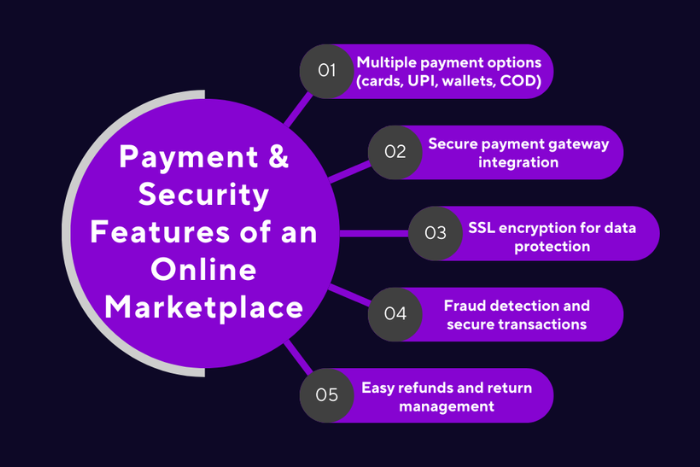
Secure transactions through integrated payment systems.
Enhanced customer experience with smart search and personalized recommendations.
Scalable platform growth capable of supporting thousands of vendors and customers.
When these features are properly implemented, an online marketplace becomes a powerful revenue-generating platform.
Types of Marketplace Solutions
Online marketplaces can be developed for different industries and business models depending on the target audience.
Business-to-Consumer (B2C) Marketplaces
Platforms where businesses sell products directly to consumers.Business-to-Business (B2B) Marketplaces
Platforms where businesses trade products or services with other businesses.Peer-to-Peer (P2P) Marketplaces
Platforms where individuals can buy and sell products or services directly.Service Marketplaces
Platforms that connect customers with service providers such as freelancers or consultants.Niche Industry Marketplaces
Marketplaces focused on specific industries such as travel, education, or healthcare.
Each marketplace model requires specific features tailored to its business needs.
Key Features of an Online Marketplace
A successful marketplace must provide functionality for buyers, sellers, and administrators. The following are the important features of an online marketplace.
User Registration and Account Management
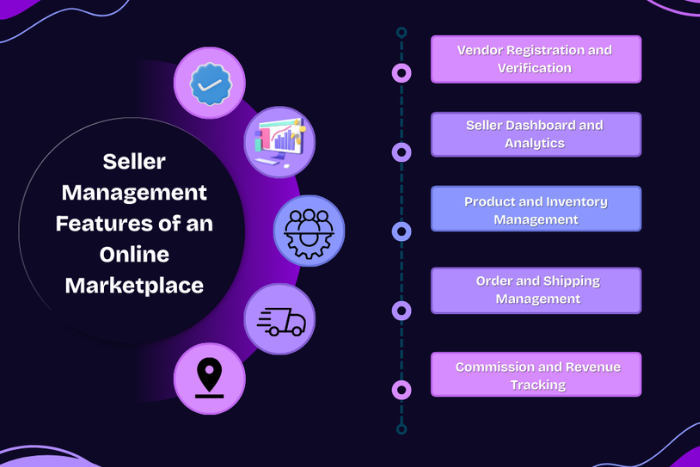
Buyers and sellers should be able to create accounts and manage their profiles easily.Vendor Onboarding and Seller Dashboard
Vendors should have access to dashboards where they can manage products, inventory, and orders.Product Listing and Catalog Management
Sellers should be able to upload product details, images, descriptions, and pricing.Advanced Search and Filtering System
Customers should be able to find products quickly using filters such as price, category, and ratings.Secure Payment Processing
Multiple payment options should be available for smooth and secure transactions.Order Management System
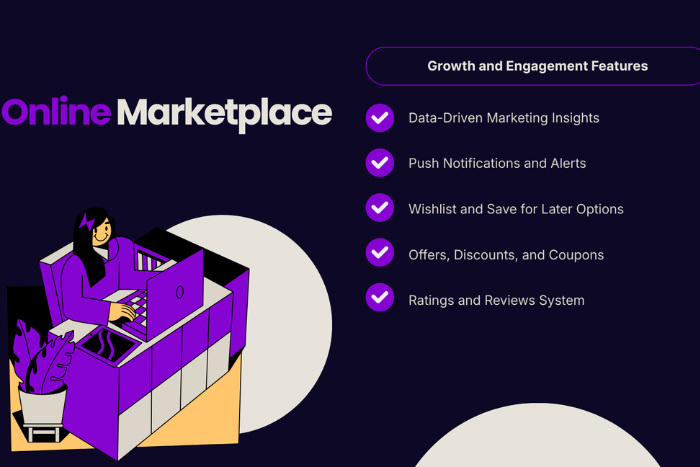
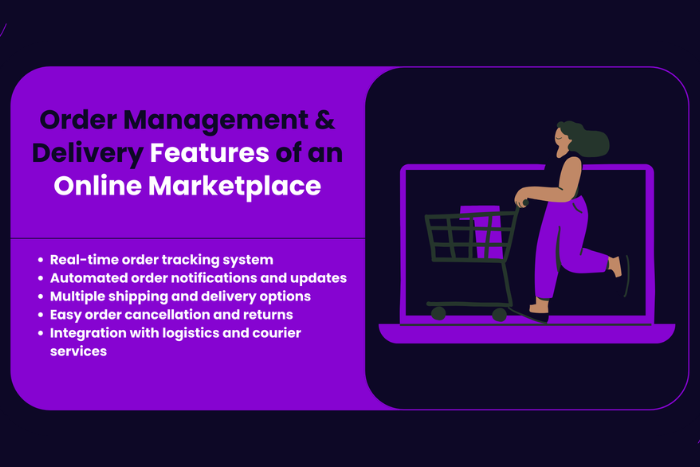
Both buyers and sellers should be able to track orders, shipments, and delivery status.Ratings and Reviews System
Customer feedback helps improve trust and product credibility.Personalized Product Recommendations
AI-based recommendations enhance customer engagement and increase sales.Messaging and Customer Support Tools
Communication channels help buyers and sellers resolve queries efficiently.Promotions and Marketing Tools
Features such as discounts, coupons, and promotional banners attract customers.
Development Process
Developing an online marketplace with key features requires a structured development approach to ensure scalability and performance.
Market Research and Business Model Planning
Identify target users and define the marketplace structure.Platform Architecture and Feature Planning
Design workflows for buyers, sellers, and administrators.UI/UX Design and Prototyping
Create intuitive interfaces that simplify browsing and purchasing.Backend Development and API Integration
Implement product catalogs, vendor management systems, and payment integrations.Testing and Quality Assurance
Conduct usability, security, and performance testing.Marketplace Deployment and Launch
Deploy the platform on scalable cloud infrastructure.Vendor Onboarding and Platform Promotion
Attract sellers and promote the marketplace to customers.Maintenance and Continuous Updates
Improve features and performance based on user feedback.
Technology Stack for Online Marketplace Development
Choosing the right technology stack ensures scalability, performance, and security.
Front-End: React.js, Angular, Vue.js
Back-End: Node.js, Python, Java, Ruby on Rails
Database: PostgreSQL, MongoDB, MySQL
Cloud Infrastructure: AWS, Google Cloud Platform, Microsoft Azure
Payment Integration: Stripe, PayPal, Razorpay
Search Engine: Elasticsearch, Algolia
Analytics Tools: Google Analytics, Mixpanel
Security: SSL encryption, secure authentication, fraud detection systems
This technology stack enables marketplace platforms to handle large volumes of products and transactions.
Cost Factors in Online Marketplace Development
The cost of developing an online marketplace with advanced features depends on multiple factors.
Platform complexity and number of features
Vendor management system implementation
Payment gateway integrations
UI/UX design customization
Cloud infrastructure and hosting
Mobile app development requirements
Security and compliance measures
Ongoing maintenance and updates
Basic marketplaces may require moderate budgets, while advanced multi-vendor platforms require higher investments.
Latest Trends in Online Marketplace Development
Online marketplaces continue to evolve with emerging technologies and digital commerce trends.
AI-powered product recommendations
Voice search and conversational commerce
Mobile-first marketplace platforms
Blockchain-based payment systems
Subscription-based marketplaces
Social commerce integration
Augmented reality product visualization
Sustainable and ethical marketplaces
These innovative features help online marketplace platforms improve customer engagement and increase transaction volumes.
Why Choose Us for Online Marketplace Development
Building a successful online marketplace requires expertise in eCommerce technology, scalable infrastructure, and user-focused design. Our development team specializes in creating powerful marketplace platforms tailored to your business model.
Here’s why businesses choose our marketplace development services:
Custom Marketplace Platform Development designed for your industry
Scalable Infrastructure capable of supporting thousands of vendors
Secure Payment and Transaction Systems
Advanced Search and Product Discovery Tools
Modern UI/UX Design optimized for customer engagement
Vendor Management and Analytics Tools
Continuous Support and Maintenance
We help businesses build online marketplaces that attract sellers, engage buyers, and generate sustainable revenue.
Ready to launch your own online marketplace platform?
Let’s build a scalable marketplace tailored to your business goals.
Contact us today for a free consultation and project estimate.
Key Points :
- Vendor onboarding and seller dashboards allow multiple sellers to register, manage products, and track sales easily.
- Product listing and catalog management enable vendors to upload product details, images, pricing, and inventory.
- Advanced search and filtering help customers quickly find products based on categories, price, ratings, and keywords.
- Secure payment gateway integration supports multiple payment methods for safe and seamless transactions.
- Order management systems allow buyers and sellers to track orders, deliveries, and returns efficiently.
- Ratings and reviews build trust by allowing customers to share feedback about products and sellers.
FAQ's
Key features include vendor management, product listings, secure payments, search functionality, and order management systems.
It connects multiple sellers with buyers through a digital platform that manages product listings, payments, and order fulfillment.
Revenue models include commissions, subscription fees, listing fees, and advertising.
Technologies such as React, Node.js, cloud infrastructure, and search engines like Elasticsearch are commonly used.
Yes. Multi-vendor functionality allows multiple sellers to list products and manage orders independently.
Yes. Secure payment gateways, encryption, and fraud detection systems protect transactions.
Yes. Regular updates help improve platform performance, security, and user experience.