




Key Features of a Real Estate Website
Discover the key features of a real estate website including advanced property search, virtual tours, mobile design, and lead generation tools.
Key Features of a Real Estate Website
The real estate industry has rapidly embraced digital transformation, making online platforms essential for property buyers, sellers, and real estate agents. Today, most property searches begin online, which means a professional and feature-rich website plays a crucial role in attracting potential clients. Understanding the key features of a real estate website is vital for building a platform that showcases property listings effectively and generates qualified leads.
A successful real estate website allows users to browse property listings, filter results based on location and price, view high-quality images, and schedule property visits directly from the platform. Buyers expect intuitive navigation, interactive property maps, and detailed listing information that helps them make informed decisions. At the same time, real estate agents and agencies need tools to manage listings, communicate with potential buyers, and track inquiries.
Modern real estate websites integrate advanced technologies such as virtual tours, AI-powered search filters, and mobile-friendly interfaces to deliver seamless user experiences. By incorporating the right features, businesses can improve customer engagement, streamline property management, and increase conversions in a competitive property market.
Why the Key Features of a Real Estate Website Are Important
A real estate website must deliver an efficient and engaging experience for potential buyers, sellers, and agents. The right features help users easily discover properties and connect with real estate professionals.
Here’s why these features matter:
Improved Property Discovery
Advanced search and filtering tools allow users to find properties based on specific preferences.Enhanced User Experience
User-friendly navigation ensures visitors can explore listings effortlessly.Better Lead Generation
Contact forms, chat tools, and inquiry systems help convert visitors into potential clients.Stronger Buyer Confidence
High-quality images, detailed descriptions, and virtual tours build trust.Increased Market Reach
Mobile-friendly websites allow users to search for properties anytime and anywhere.Efficient Property Management
Real estate professionals can manage listings and track inquiries efficiently.
These benefits help real estate businesses stay competitive and attract more potential buyers.
Types of Real Estate Website Solutions with Important Features
Real estate websites can serve various purposes depending on the type of property services offered.
Property Listing Websites
Platforms that display residential and commercial properties available for sale or rent.Real Estate Marketplace Platforms
Websites where multiple agents and property owners list properties for potential buyers.Real Estate Agency Websites
Platforms designed for individual agencies to showcase property listings and services.Rental Property Websites
Platforms focused on rental property listings and tenant management.Property Investment Websites
Websites designed for real estate investment opportunities and property analytics.
Each type of solution requires specific features tailored to the needs of buyers, sellers, and agents.
Key Features of a Real Estate Website
A high-performing real estate website must include essential features that help users search, explore, and inquire about properties.
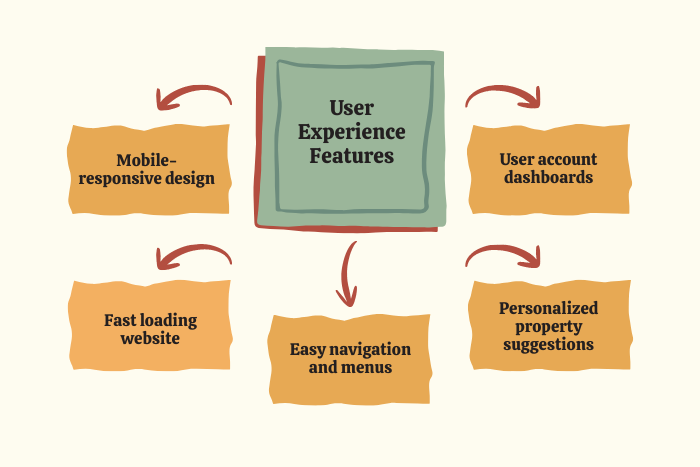
User-Friendly Navigation and Responsive Design
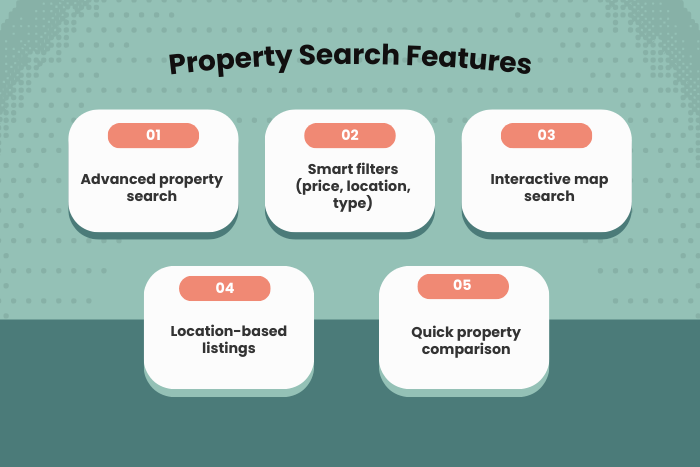
A clear layout and mobile-friendly interface ensure smooth browsing across devices.Advanced Property Search and Filters
Users can filter properties based on location, price, size, property type, and amenities.High-Quality Property Listings
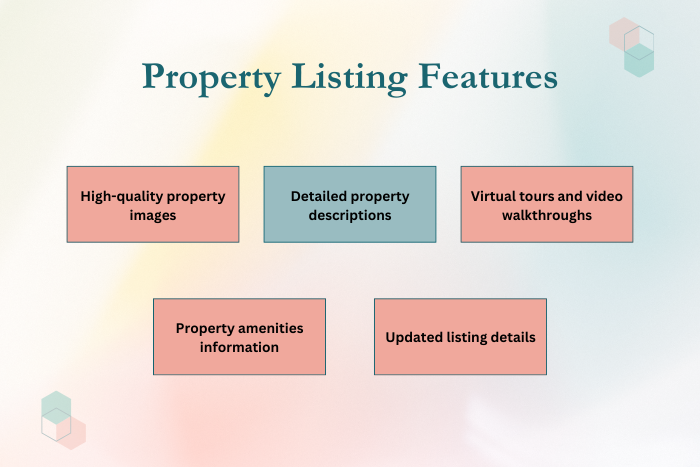
Detailed property descriptions, photos, and videos provide a comprehensive view of listings.Interactive Maps and Location Insights
Maps help users explore nearby amenities, schools, and transportation options.Virtual Tours and 3D Property Views
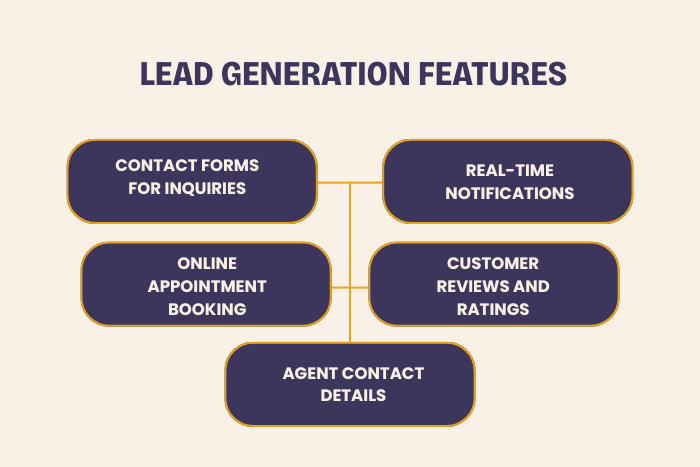
Virtual tours allow potential buyers to explore properties remotely.Lead Capture and Contact Forms
Inquiry forms allow users to contact agents directly for more information.Appointment Scheduling System
Users can book property viewings and consultations online.Customer Reviews and Testimonials
Feedback from past clients builds credibility and trust.Secure Document Management
Tools for uploading contracts, agreements, and property documents securely.Real-Time Notifications and Updates
Alerts inform users about new property listings and price changes.
These features create an engaging and informative property browsing experience.
Development Process for a Real Estate Website
Developing a real estate website requires a structured approach to ensure scalability and functionality.
Market Research and Requirement Analysis
Identify target users, property categories, and business goals.Feature Planning and System Architecture
Define essential features and design the website architecture.UI/UX Design and Prototyping
Create visually appealing layouts that simplify property browsing.Frontend and Backend Development
Develop user interfaces and backend systems for listing management.Integration with Property APIs and Tools
Integrate mapping tools, CRM systems, and analytics platforms.Testing and Quality Assurance
Conduct performance testing, security testing, and usability checks.Deployment and Launch
Release the website and ensure stable performance.Maintenance and Continuous Updates
Update property listings and improve functionality based on feedback.
This process ensures the website remains reliable and user-friendly.
Technology Stack for Real Estate Website Development
Modern real estate websites rely on advanced technologies for high performance and scalability.
Frontend Technologies: React.js, Angular, Vue.js
Backend Technologies: Node.js, Python, PHP, Java
Databases: MongoDB, PostgreSQL, MySQL
Mapping Tools: Google Maps API, Mapbox
Cloud Platforms: AWS, Google Cloud Platform, Microsoft Azure
Search Technologies: Elasticsearch, Algolia
DevOps Tools: Docker, Kubernetes, CI/CD pipelines
Security Technologies: SSL encryption, OAuth authentication
These technologies enable seamless property browsing and secure data management.
Cost Factors in Real Estate Website Development
The cost of developing a real estate website depends on several factors.
Complexity of features and functionalities
Number of property listings and categories
Integration with mapping tools and CRM systems
Custom UI/UX design requirements
Platform compatibility and mobile responsiveness
Third-party API integrations
Cloud hosting and server infrastructure
Ongoing maintenance and updates
Websites with advanced features like virtual tours and AI-powered recommendations require higher investment.
Latest Trends in Real Estate Website Development
The real estate industry continues to adopt new technologies to improve property browsing experiences.
AI-Powered Property Recommendations
Artificial intelligence suggests properties based on user preferences.Virtual Reality Property Tours
VR technology allows users to explore properties remotely.Voice-Based Property Search
Users can search for listings using voice commands.Augmented Reality Property Visualization
AR tools help buyers visualize properties and interiors.Smart CRM Integration
Real estate businesses can manage leads and customer interactions efficiently.Data Analytics for Property Insights
Analytics tools provide valuable insights into property demand and market trends.
These innovations are shaping the future of digital real estate platforms.
Why Choose Us for Real Estate Website Development?
Choosing the right development partner is essential for building a professional real estate platform that attracts buyers and generates leads. Our team specializes in developing high-performance real estate websites tailored to the needs of property businesses.
Here’s why clients trust our services:
Experienced Real Estate Web Developers – Skilled in building property listing platforms.
User-Centered Design Approach – Intuitive interfaces that enhance property browsing.
Advanced Property Search Integration – Powerful filters and location-based search features.
Secure Document and Data Management – Strong security for property transactions.
Scalable Cloud Infrastructure – Websites designed to support growing property databases.
CRM and Marketing Integration – Tools for lead tracking and customer engagement.
Agile Development Process – Transparent workflows and continuous collaboration.
Long-Term Support and Maintenance – Ongoing improvements and performance optimization.
We help real estate agencies and property businesses build powerful digital platforms that drive leads and increase property sales.
Ready to build a high-performance real estate website?
Let our experts develop a feature-rich property platform for your business.
Contact us today for a free consultation and project estimate.
Key Points :
- A successful real estate website should include advanced property search and filtering options that help users quickly find properties based on location, price, and amenities.
- High-quality property listings with detailed descriptions, images, and videos help buyers better understand property features before scheduling visits.
- Virtual tours and interactive property views allow potential buyers to explore homes remotely and improve engagement.
- Mobile-responsive design ensures users can browse property listings easily on smartphones, tablets, and desktop devices.
- Lead generation tools such as contact forms, inquiry options, and appointment booking help real estate agents connect with potential buyers.
- Integration of interactive maps and location insights helps users explore nearby facilities like schools, transport, and shopping areas.
FAQ's
Important features include advanced property search, high-quality listings, virtual tours, contact forms, and mobile-friendly design.
Development timelines typically range from two to four months depending on complexity and features.
Technologies such as React.js, Node.js, MongoDB, and cloud platforms like AWS are commonly used.
Yes. Many modern property websites integrate virtual tours and 3D property views.
Costs depend on features, integrations, design complexity, and development platform.
Yes. Many users search for properties on mobile devices, making responsive design essential.
Yes. CRM integration helps manage leads and customer interactions efficiently.