

Discover the key features of a restaurant website including online menus, reservations, food ordering, and mobile-friendly design.
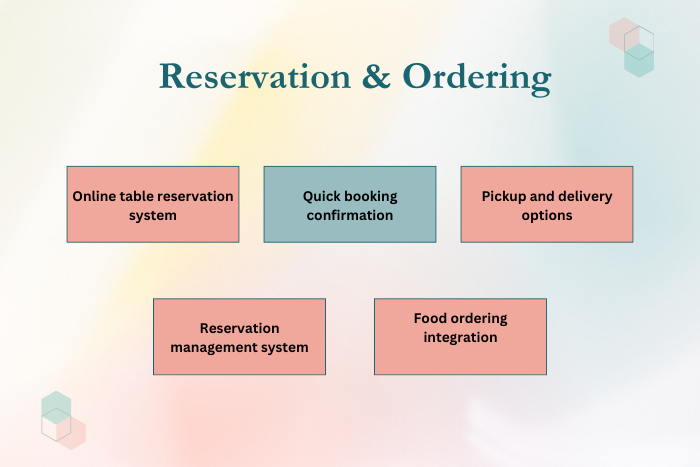
Key Features of a Restaurant Website
In today’s digital-first world, a restaurant website is more than just an online presence—it’s a powerful tool for attracting customers, showcasing your menu, and increasing reservations or orders. Whether customers are searching for a place to dine, checking menu prices, or ordering food online, they often begin their journey with a restaurant’s website.
Understanding the key features of a restaurant website is essential for restaurant owners, hospitality businesses, and food entrepreneurs looking to grow their brand online. A well-designed restaurant website should provide easy access to menus, reservations, contact information, and ordering options while delivering an engaging visual experience that reflects the restaurant’s brand and atmosphere.
Modern restaurant websites also integrate features such as online table reservations, food ordering systems, customer reviews, and mobile-friendly layouts to enhance user experience. These features help restaurants attract new customers, improve operational efficiency, and increase revenue.
By implementing the right design, technology, and functionality, businesses can create restaurant websites that not only inform visitors but also convert them into loyal customers.
Why the Key Features of a Restaurant Website Are Important
A restaurant website plays a vital role in marketing, customer engagement, and operational efficiency. Many customers check a restaurant’s website before deciding where to eat, making it a critical part of the dining decision process.
Implementing the key features of a restaurant website offers several advantages:
Improved online visibility through search engines and local listings.
Better customer experience by providing menus, contact details, and booking options.
Increased reservations and online orders through integrated booking and ordering systems.
Stronger brand identity through visuals, design, and storytelling.
Convenient access to information for customers using mobile devices.
A feature-rich restaurant website helps restaurants stay competitive in a highly digital hospitality market.
Types of Restaurant Website Solutions and Their Features
Restaurant websites can be developed in different formats depending on the business model and services offered.
Restaurant Showcase Websites
Websites designed to present menus, ambiance, and restaurant information.Restaurant Reservation Websites
Platforms that allow customers to book tables online.Online Food Ordering Websites
Websites that enable customers to order food directly for delivery or pickup.Multi-Location Restaurant Websites
Platforms designed for restaurant chains with multiple branches.Restaurant Marketplace Platforms
Websites that list multiple restaurants and allow users to explore different dining options.
Each solution focuses on improving customer engagement while providing convenient access to restaurant services.
Key Features of a Restaurant Website
A successful restaurant website must combine appealing design, clear information, and interactive features that help visitors easily explore and interact with the restaurant.
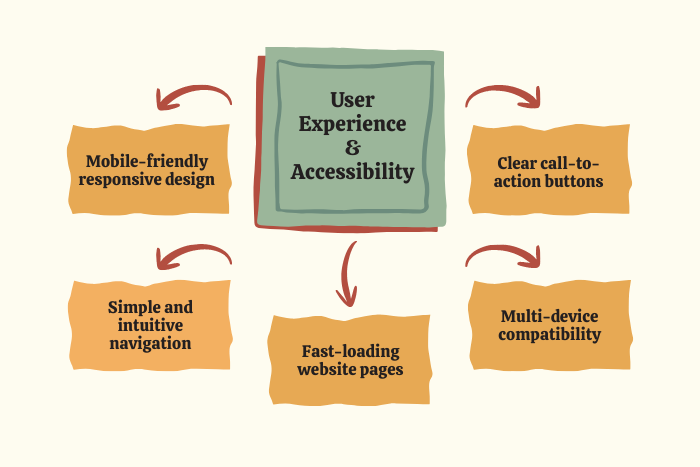
User-Friendly Navigation
Visitors should be able to quickly find menus, contact details, and reservation options.Online Menu Display
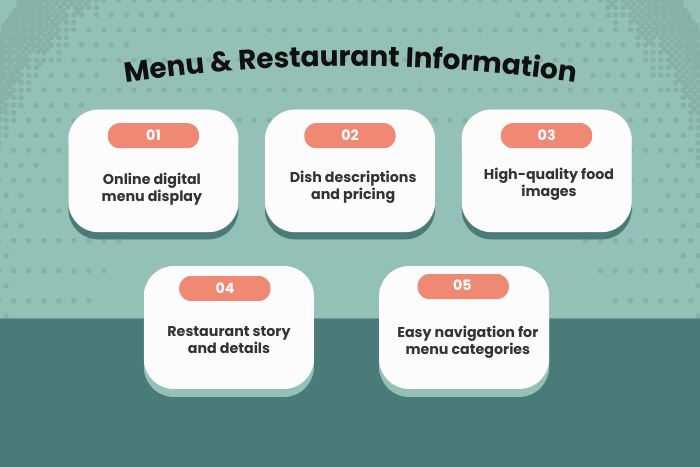
A digital menu with descriptions, pricing, and images helps customers explore available dishes.High-Quality Food Photography
Attractive images of food, interiors, and ambiance enhance the visual appeal of the website.Online Table Reservation System
Customers should be able to book tables directly through the website.Online Food Ordering Integration
Restaurants offering delivery or pickup services should allow customers to order online.Mobile-Friendly and Responsive Design
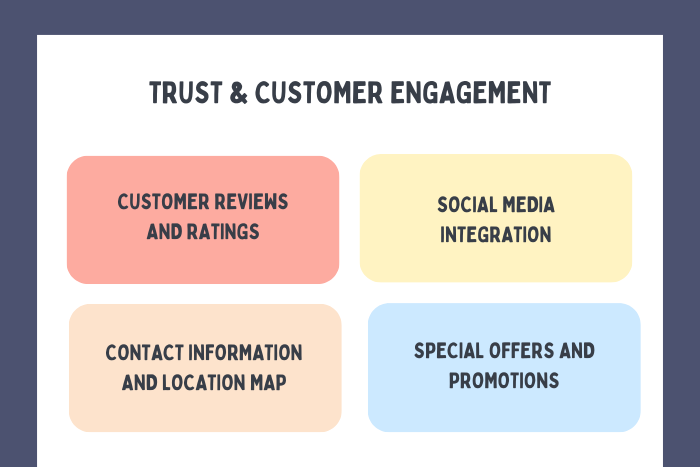
A responsive layout ensures the website works smoothly across smartphones and tablets.Customer Reviews and Testimonials
Positive feedback from customers builds credibility and encourages new visitors.Contact Information and Location Map
Easy access to address, phone number, and map integration helps customers locate the restaurant.Social Media Integration
Linking social media profiles helps restaurants engage with customers and promote content.Special Offers and Promotions
Displaying deals and discounts encourages customers to visit or order more often.
Restaurant Website Development Process
Developing a successful restaurant website requires a structured process that focuses on design, functionality, and user experience.
Business Research and Strategy Planning
Understand the restaurant’s brand, target audience, and service offerings.Content Planning and Information Architecture
Plan essential website pages such as menu, reservations, and contact information.UI/UX Design and Visual Branding
Create a visually appealing design that reflects the restaurant’s atmosphere.Website Development and Integration
Implement booking systems, ordering features, and interactive elements.SEO Optimization and Performance Setup
Optimize the website for search engines and fast loading speeds.Testing and Quality Assurance
Conduct usability, compatibility, and performance testing.Website Launch and Deployment
Publish the website on secure hosting infrastructure.Maintenance and Updates
Update menus, offers, and content regularly to keep the website relevant.
Technology Stack for Restaurant Website Development
Choosing the right technology stack ensures performance, scalability, and smooth user experiences.
Front-End: React.js, Angular, Vue.js
Back-End: Node.js, Python, PHP, Ruby on Rails
Database: MySQL, PostgreSQL, MongoDB
Cloud Infrastructure: AWS, Google Cloud Platform, Microsoft Azure
Reservation Systems: OpenTable API, custom booking modules
Payment Integration: Stripe, PayPal, Razorpay
Analytics Tools: Google Analytics, Hotjar
Security: SSL encryption, secure authentication protocols
This technology stack allows restaurants to build scalable and feature-rich websites.
Cost Factors in Restaurant Website Development
The cost of developing a restaurant website depends on several factors.
Number of website pages and features
Online ordering or reservation system integration
UI/UX design customization
Third-party integrations
Mobile responsiveness and cross-device compatibility
Hosting and domain costs
Maintenance and updates
Simple restaurant websites may require smaller budgets, while advanced platforms with online ordering systems may require larger investments.
Latest Trends in Restaurant Website Development
Restaurant websites are evolving with new technologies that enhance customer engagement.
AI-powered chatbots for reservations
Voice-enabled restaurant search
Online ordering and delivery integration
Virtual restaurant tours
Mobile-first website design
Interactive menus with images and videos
Personalized dining recommendations
Integration with food delivery platforms
These trends help restaurants provide modern digital experiences to customers.
Why Choose Us for Restaurant Website Development
Creating a successful restaurant website requires expertise in hospitality design, user experience, and online ordering systems. Our development team specializes in building engaging restaurant websites that attract customers and increase reservations.
Here’s why restaurants choose our services:
Custom Website Design tailored to your restaurant’s brand and atmosphere
Integrated Reservation and Ordering Systems
Mobile-Optimized and SEO-Friendly Websites
Secure Payment and Data Protection Systems
Fast and Scalable Website Infrastructure
User-Friendly Navigation and Menu Presentation
Ongoing Maintenance and Technical Support
We help restaurants build powerful websites that enhance their online presence and attract more customers.
Ready to build a stunning restaurant website for your business?
Let’s create a website that showcases your menu and attracts more diners.
Contact us today for a free consultation and project estimate.
Key Points :
- Online menu display allows customers to easily browse dishes, prices, and food descriptions before visiting or ordering.
- Online table reservation systems enable customers to book tables directly through the website.
- Mobile-friendly and responsive design ensures the website works smoothly across smartphones, tablets, and desktops.
- High-quality food images and restaurant visuals attract customers and showcase the dining experience.
- Contact information and location map help customers quickly find the restaurant and reach out for inquiries.
- Customer reviews and testimonials build trust and influence new visitors to try the restaurant.
FAQ's
Essential features include an online menu, reservation system, contact details, customer reviews, and mobile-friendly design.
A website helps restaurants attract new customers, showcase menus, and enable online reservations or ordering.
Yes. Many restaurant websites integrate ordering systems for delivery or pickup services.
A basic restaurant website may take 3–5 weeks depending on complexity and features.
Yes. Modern restaurant websites are designed to work smoothly across smartphones and tablets.
Yes. Booking systems allow customers to reserve tables directly from the website.
Yes. Restaurants should update menus, offers, and events regularly to keep customers informed.