
Key Features of a Successful App Development Project
Discover key features of a successful app development project including user-focused design, secure architecture, scalability, and performance optimization.
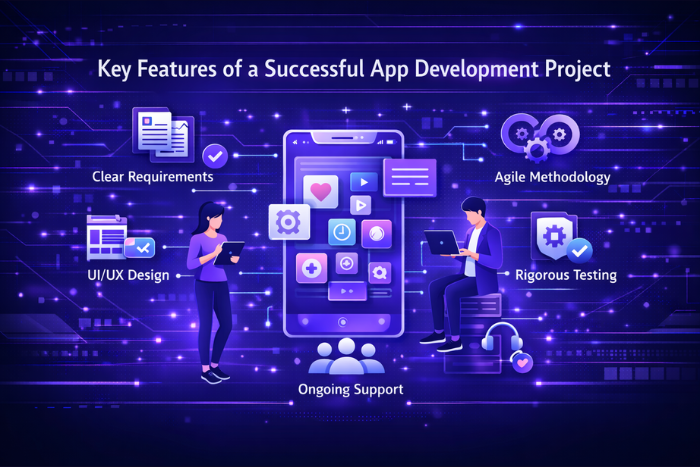
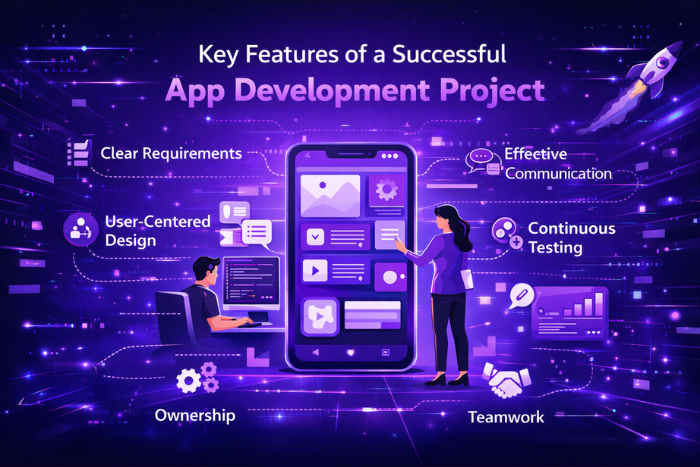
Key Features of a Successful App Development Project
Mobile and web applications have become essential tools for businesses looking to connect with customers, streamline operations, and create new revenue opportunities. However, building a successful application requires more than just coding—it requires strategic planning, user-focused design, scalable technology, and continuous optimization. Understanding the key features of a successful app development project helps businesses create applications that deliver value, performance, and long-term growth.
A successful app development project focuses on solving real user problems while offering a seamless digital experience. From concept validation and user experience design to testing, deployment, and maintenance, every stage of development contributes to the overall success of the application.
Modern apps must also be secure, scalable, and optimized for performance across multiple devices and operating systems. Features such as intuitive navigation, push notifications, real-time data synchronization, and analytics tracking play a critical role in ensuring high user engagement and retention.
Whether developing a startup MVP, enterprise application, or cross-platform mobile app, focusing on the essential features of app development ensures that the final product is reliable, user-friendly, and ready to compete in today’s digital marketplace.
Why Key Features of a Successful App Development Project Are Important
Developing an application without a well-defined strategy often leads to usability issues, poor performance, and low user retention. Implementing the right features during development ensures that the application meets user expectations and business objectives.
Here are several reasons why focusing on these key features is important:
Improved User Experience
Applications with intuitive interfaces and smooth navigation increase user satisfaction.Higher User Engagement
Interactive features encourage users to spend more time within the app.Better App Performance
Optimized code and architecture ensure fast loading and smooth functionality.Enhanced Security
Strong security protocols protect sensitive user data.Scalability for Future Growth
Modern architecture allows apps to support growing user bases.Higher Return on Investment
Apps that meet user needs effectively generate better revenue and engagement.
By incorporating these features, businesses can create applications that deliver long-term value and strong market performance.
Types of App Development Project Solutions
Different app development approaches are used depending on the platform, functionality, and business requirements.
Native App Development
Applications designed specifically for iOS or Android platforms for maximum performance.Cross-Platform App Development
Apps built using frameworks that allow deployment across multiple operating systems.Enterprise App Development
Applications designed to support internal business operations and productivity.eCommerce App Development
Mobile apps that enable product browsing, purchasing, and secure payment processing.On-Demand Service Apps
Platforms connecting users with services such as transportation, delivery, or bookings.Progressive Web Applications (PWAs)
Web-based applications that offer app-like experiences.
These solutions allow businesses to choose the most suitable development approach for their goals.
Key Features of a Successful App Development Project
A successful application integrates several critical features that ensure usability, reliability, and scalability.
User-Centric Design
Designing the application based on user behavior and preferences.Intuitive Navigation and Interface
Clear user flows that allow users to complete tasks easily.High Performance and Speed Optimization
Apps must respond quickly and handle user interactions smoothly.Strong Security Architecture
Data encryption, secure authentication, and compliance with privacy standards.Cross-Platform Compatibility
Ensuring the app works across different operating systems and devices.Offline Functionality
Allowing certain features to function even without an internet connection.Push Notifications and Messaging
Real-time communication to engage users and provide updates.Integration with Third-Party Services
Payment gateways, APIs, analytics tools, and social media integrations.Scalable Backend Infrastructure
Systems capable of handling increased traffic and usage.Analytics and User Behavior Tracking
Data insights that help improve app performance and user experience.
These features help ensure applications remain efficient, secure, and user-friendly.
App Development Process
Building a successful app involves a structured development lifecycle.
Concept Validation and Market Research
Analyze user needs, competitors, and business opportunities.Project Planning and Strategy Development
Define app features, architecture, and development roadmap.UI/UX Design and Prototyping
Design user interfaces and interactive prototypes.App Development and Coding
Implement front-end and back-end functionality.Testing and Quality Assurance
Evaluate performance, security, and compatibility across devices.Deployment and App Store Launch
Publish the application on relevant platforms.Monitoring and Performance Tracking
Analyze usage data and identify improvement opportunities.Maintenance and Continuous Updates
Release updates and new features based on user feedback.
This structured process ensures apps are reliable and optimized for long-term success.
Technology Stack for Successful App Development Project
Modern app development relies on a range of technologies that support scalability and performance.
Programming Languages: Swift, Kotlin, Java, Dart
Cross-Platform Frameworks: Flutter, React Native, Xamarin
Backend Technologies: Node.js, Python, Firebase
Database Systems: MongoDB, PostgreSQL, MySQL
Cloud Platforms: AWS, Google Cloud Platform, Microsoft Azure
Analytics Tools: Firebase Analytics, Mixpanel
Security Tools: OAuth authentication, SSL encryption, biometric authentication
These technologies help developers build scalable and secure applications.
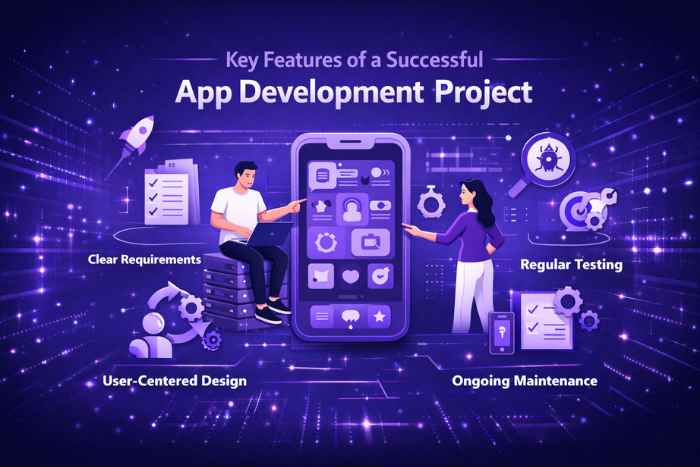

Cost Factors in App Development Project
The cost of an app development project varies depending on several factors.
App complexity and number of features
Platform choice (iOS, Android, or cross-platform)
UI/UX design requirements
Third-party integrations and APIs
Security and compliance features
Development timeline
Testing and quality assurance processes
Maintenance and support services
Businesses can start with a minimum viable product (MVP) and scale the application over time.
Latest Trends in App Development
App development continues to evolve as new technologies transform digital experiences.
Key trends shaping modern app development include:
Artificial Intelligence and Machine Learning Integration
Intelligent features that personalize user experiences.Augmented Reality (AR) Applications
Immersive user experiences in retail, education, and gaming.Super Apps and Multi-Service Platforms
Applications offering multiple services within one ecosystem.Voice and Gesture-Based Interfaces
New interaction methods improving accessibility.Edge Computing for Real-Time Performance
Faster processing with reduced latency.Low-Code and No-Code Development Platforms
Faster development cycles with simplified coding.
These trends show how app development is becoming more innovative and user-focused.
Why Choose Us for App Development Services?
Selecting the right development partner is crucial for building a successful application. Our team combines technical expertise, innovative design, and strategic planning to deliver high-performance apps.
Here’s why businesses trust our app development services:
User-Focused Development Approach – Every feature is designed with user needs in mind.
Modern Technology Stack – We use the latest frameworks and tools for scalable applications.
Secure and Reliable Architecture – Built with strong security and data protection.
Cross-Platform Development Expertise – Apps that work seamlessly across devices.
Continuous Optimization and Support – Ongoing improvements and feature updates.
Conversion and Engagement Focus – Apps designed to maximize user interaction and retention.
We help businesses turn ideas into powerful digital applications that drive growth.
Ready to build a powerful mobile or web application for your business?
Let our development experts turn your vision into a scalable and high-performing app.
Contact us today for a free consultation and project estimate.
Key Points :
- A successful app development project focuses on user-centric design, ensuring the app solves real problems and delivers an intuitive experience.
- High performance, fast loading speed, and smooth navigation are essential for keeping users engaged.
- Strong security features such as data encryption and secure authentication protect user information.
- Cross-platform compatibility ensures the app works seamlessly across different devices and operating systems.
- Integration with third-party services like payment gateways, APIs, and analytics improves functionality.
- Continuous monitoring, analytics tracking, and regular updates help maintain performance and improve user retention.
FAQ's
Key features include user-focused design, strong security, high performance, scalable architecture, and cross-platform compatibility.
Good user experience improves engagement, increases retention, and ensures users can easily complete tasks.
Common technologies include Swift, Kotlin, Flutter, React Native, Node.js, and cloud platforms.
Development timelines vary depending on complexity but typically range from several weeks to several months.
An MVP (Minimum Viable Product) is a basic version of an app with core features used to validate the idea.
Apps increase customer engagement, improve brand visibility, and provide convenient services.
Costs vary depending on app features, platform selection, and development complexity.
Yes, apps can be continuously improved with updates, new features, and performance optimizations.