




Discover the key features of a successful e-commerce website including product management, secure checkout, mobile optimization, and scalable design.

Key Features of a Successful E-commerce Website
E-commerce has revolutionized the way businesses sell products and services. From small startups to global brands, companies rely on online stores to reach customers worldwide and generate consistent revenue. However, building a successful online store requires more than just listing products. Understanding the key features of a successful e-commerce website is essential for creating a platform that attracts visitors, converts them into customers, and provides a seamless shopping experience.
A modern e-commerce website must combine intuitive design, efficient product management, secure payment systems, and fast performance. Customers expect smooth navigation, high-quality product displays, easy checkout processes, and responsive mobile experiences. At the same time, business owners need powerful backend tools to manage inventory, orders, promotions, and analytics.
Successful e-commerce platforms also integrate advanced technologies such as AI-driven recommendations, automated marketing tools, and scalable cloud infrastructure. These capabilities help businesses improve customer engagement, increase conversion rates, and grow online revenue.
In this guide, we explore the key features of a successful e-commerce website, the development process, and the technologies required to build a high-performing online store.
Why Key Features of a Successful E-commerce Website Are Important
An e-commerce website is more than just an online catalog—it is a complete digital storefront that represents your brand and drives sales. Without the right features, an online store may struggle with slow performance, poor user experience, and low conversion rates.
Here’s why the key features of a successful e-commerce website are important:
Improved Customer Experience
Intuitive navigation, fast loading speeds, and easy checkout create a smooth shopping journey.Higher Conversion Rates
Optimized product pages and secure payment systems encourage visitors to complete purchases.Efficient Store Management
Backend tools help businesses manage inventory, orders, pricing, and promotions efficiently.Mobile Shopping Optimization
Mobile-friendly design ensures customers can shop seamlessly on smartphones and tablets.Secure Transactions and Data Protection
Secure payment gateways and encryption build trust and protect sensitive customer information.Scalable Online Business Growth
Feature-rich e-commerce platforms can support expanding product catalogs and increasing traffic.
Implementing these features ensures that your e-commerce website remains competitive and capable of delivering excellent customer experiences.
Types of Successful E-commerce Website Solutions
Different types of e-commerce platforms serve different business models and customer segments.
B2C (Business-to-Consumer) E-commerce Platforms
Businesses sell products directly to customers through online stores.
B2B (Business-to-Business) E-commerce Platforms
Businesses sell products or services to other businesses, often with bulk pricing and account-based purchasing.
Marketplace E-commerce Platforms
Platforms that allow multiple vendors to sell products to customers on a shared marketplace.
Subscription-Based E-commerce Platforms
Businesses offer recurring product deliveries through subscription models.
Dropshipping E-commerce Websites
Online stores that sell products without holding inventory, with suppliers handling fulfillment.
Each type of e-commerce solution requires different features and integrations to meet specific business needs.
Key Features of a Successful E-commerce Website
A successful e-commerce platform includes several features designed to enhance customer experience, streamline operations, and increase sales.
User-Friendly Navigation
Clear menus, search functionality, and category organization help customers find products quickly.
Advanced Product Management
Businesses should be able to manage product listings, descriptions, images, pricing, and inventory easily.
High-Quality Product Images and Descriptions
Detailed product visuals and descriptions improve customer confidence and purchasing decisions.
Secure Shopping Cart and Checkout System
A simple and secure checkout process reduces cart abandonment and improves conversions.
Multiple Payment Options
Support for credit cards, digital wallets, bank transfers, and alternative payment methods increases flexibility.
Mobile-Responsive Design
A responsive design ensures customers can browse and purchase products seamlessly on mobile devices.
Customer Accounts and Profiles
Users can create accounts, track orders, save preferences, and manage shipping addresses.
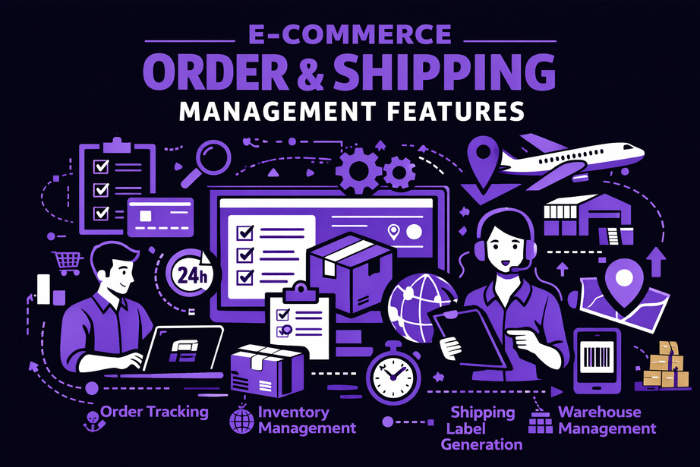
Order Management System
Businesses can monitor orders, shipments, returns, and delivery status from a centralized dashboard.
Customer Reviews and Ratings
Product reviews increase credibility and influence purchasing decisions.
Search and Filter Functionality
Advanced filtering options help customers quickly locate products based on price, category, brand, or rating.
Discount and Promotion Tools
Coupon codes, seasonal discounts, and promotional offers help increase sales.
Analytics and Reporting
Business owners can track sales performance, customer behavior, and product demand.
These features work together to create a powerful and conversion-focused e-commerce platform.
Development Process for an E-commerce Website
Building a high-performing e-commerce website requires careful planning and structured development.
Requirement Analysis
Identify business goals, target audience, product categories, and platform requirements.
Platform Architecture Design
Design scalable infrastructure including product catalogs, payment systems, and order management modules.
UI/UX Design
Create visually appealing interfaces that improve usability and customer engagement.
Frontend and Backend Development
Implement features such as product listings, search filters, shopping carts, and payment integration.
Integration with Payment and Logistics Systems
Connect the platform with payment gateways, shipping providers, and inventory systems.
Testing and Quality Assurance
Conduct performance testing, security checks, and usability testing.
Deployment and Cloud Setup
Launch the e-commerce website on reliable cloud infrastructure.
Maintenance and Continuous Optimization
Monitor performance and introduce feature updates to enhance user experience.
Following a structured development process ensures the online store performs efficiently and scales as the business grows.
Technology Stack for E-commerce Website Development
Modern e-commerce websites rely on advanced technologies to ensure performance, security, and scalability.
Frontend Technologies: React.js, Angular, Vue.js, Next.js
Backend Technologies: Node.js, Python, PHP, Java
E-commerce Platforms: Shopify, WooCommerce, Magento, BigCommerce
Databases: PostgreSQL, MySQL, MongoDB
Payment Gateways: Stripe, PayPal, Razorpay, Square
Cloud Platforms: AWS, Google Cloud Platform, Microsoft Azure
Security Technologies: SSL encryption, OAuth authentication, PCI DSS compliance
DevOps Tools: Docker, Kubernetes, GitHub Actions, CI/CD pipelines
This technology stack enables businesses to build scalable and secure online stores.


Cost Factors in E-commerce Website Development
The cost of developing an e-commerce website depends on various factors including platform complexity and feature requirements.
Key cost factors include:
Number of products and categories
Custom design and branding requirements
Payment gateway integration
Inventory and order management systems
Third-party integrations (CRM, ERP, marketing tools)
Mobile optimization and app development
Security and compliance requirements
Hosting and infrastructure setup
Maintenance and support services
Businesses should plan their e-commerce platform based on long-term scalability and growth objectives.
Latest Trends in E-commerce Website Development
E-commerce technology continues to evolve with new innovations enhancing online shopping experiences.
Key trends include:
AI-powered product recommendations to personalize shopping experiences
Voice commerce integration for voice-based product searches
Augmented reality (AR) product previews for interactive shopping
Mobile-first e-commerce platforms designed for smartphone users
Headless commerce architectures for flexible frontend experiences
Chatbots and AI customer support for real-time assistance
Subscription-based product models for recurring revenue
Social commerce integration with platforms like Instagram and Facebook
These innovations are shaping the future of online retail.
Why Choose Us for E-commerce Website Development?
Building a successful e-commerce website requires a combination of technical expertise, strategic planning, and user-focused design. Our team specializes in creating high-performance e-commerce platforms tailored to your business needs.
Here’s why businesses choose us:
Custom E-commerce Development – Tailored solutions designed to meet your brand and product requirements.
Conversion-Focused Design – Optimized product pages and checkout processes that improve sales performance.
Scalable Infrastructure – Platforms designed to support growing traffic and product catalogs.
Secure Payment and Data Protection – Advanced security measures that ensure safe transactions.
SEO-Friendly E-commerce Architecture – Online stores optimized for search engine visibility and organic traffic.
Mobile-Optimized Shopping Experience – Responsive design that works seamlessly across devices.
Advanced Analytics Integration – Insights that help businesses understand customer behavior and improve marketing strategies.
Long-Term Support and Maintenance – Continuous updates, monitoring, and technical support.
We help businesses build powerful e-commerce websites that drive growth, increase conversions, and deliver exceptional shopping experiences.
Ready to launch your online store?
Let’s build a powerful e-commerce website tailored to your business goals.
Contact us today for a free consultation and customized development plan.
Key Points :
- A successful e-commerce website should offer easy navigation, advanced search, and product filters to help customers quickly find what they need.
- High-quality product images, detailed descriptions, and customer reviews help build trust and improve purchase decisions.
- A secure shopping cart and seamless checkout process reduce cart abandonment and increase conversion rates.
- Multiple payment options such as credit cards, digital wallets, and online banking provide flexibility for customers.
- Mobile-responsive design ensures smooth shopping experiences across smartphones, tablets, and desktops.
- Analytics and reporting tools help businesses track sales, customer behavior, and product performance.
FAQ's
Important features include user-friendly navigation, product management systems, secure checkout, mobile responsiveness, payment integration, and analytics tools.
Most online shoppers use mobile devices, so mobile-friendly design ensures a smooth shopping experience and improves conversions.
Online stores should support credit cards, digital wallets, bank transfers, and other popular payment methods.
Reviews build trust and help potential buyers make informed purchasing decisions.
Popular platforms include Shopify, WooCommerce, Magento, and custom-built e-commerce solutions.
Development timelines vary depending on complexity, but basic online stores may take 4–6 weeks while advanced platforms may require several months.
Optimizing product pages, simplifying checkout, offering multiple payment options, and improving site speed can increase conversions.